
Beyond the Panels: Essential Plumbing for Your Solar Hot Water System
By Brian on December 5, 2025
Why Proper Plumbing for Solar Water Heater Systems Matters
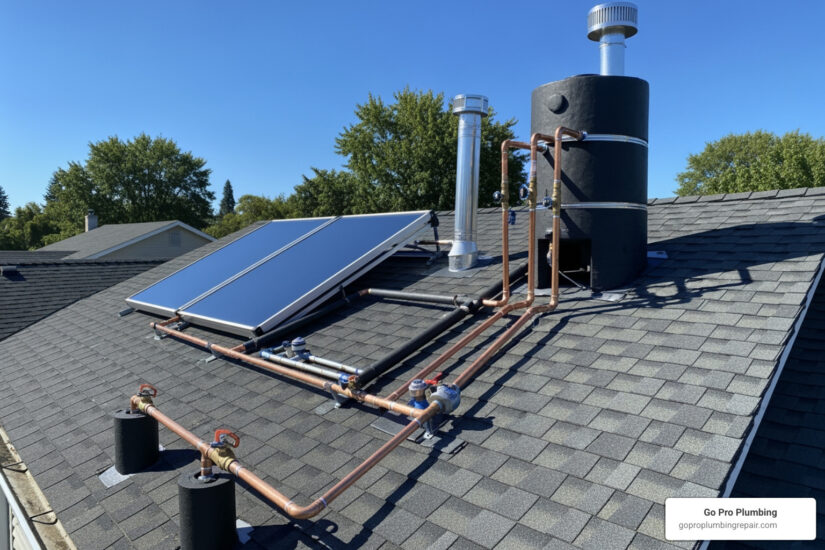
Plumbing for solar water heater systems is the critical foundation that determines whether your investment will deliver decades of reliable, energy-saving performance. While solar panels capture the sun’s energy, it’s the pipes, fittings, and valves that deliver hot water to your home.
Essential plumbing requirements for solar water heaters include:
- High-temperature rated pipes capable of withstanding up to 250°F.
- Proper pipe materials like Type L/M copper or flexible stainless steel for collector loops (never PEX or CPVC).
- Insulated supply and return lines with minimum 1/2-inch closed-cell insulation to prevent heat loss.
- Safety valves, including pressure relief and temperature & pressure relief valves.
- UV-resistant jacketing for pipes exposed to sunlight.
- Correct pipe sizing, typically 1/2-inch minimum for short runs and 3/4-inch for longer distances.
- Proper integration with your existing water heater and household plumbing.
A typical solar water heater can reduce your annual energy costs by 40 to 50 percent and eliminate up to 2 tonnes of CO2 emissions per year, but only if the plumbing is installed correctly. Poor plumbing can lead to scalding, leaks, corrosion, and system failure. The right materials and installation techniques, however, ensure your system operates safely and efficiently for 20+ years.
This guide covers what Northern California homeowners need to know about solar water heater plumbing—from choosing materials to understanding installation and maintenance.
Understanding Solar Water Heater Systems and Components
Solar water heating systems, also known as solar domestic hot water (SDHW) systems, can generate 1,500 to 3,000 kWh of energy per year, leading to significant savings and a smaller carbon footprint. The good news for Northern California residents is that solar water heaters work in any climate, from the Sacramento Valley to the cooler coast, with designs that handle freezing temperatures.
Main Components and How They Connect
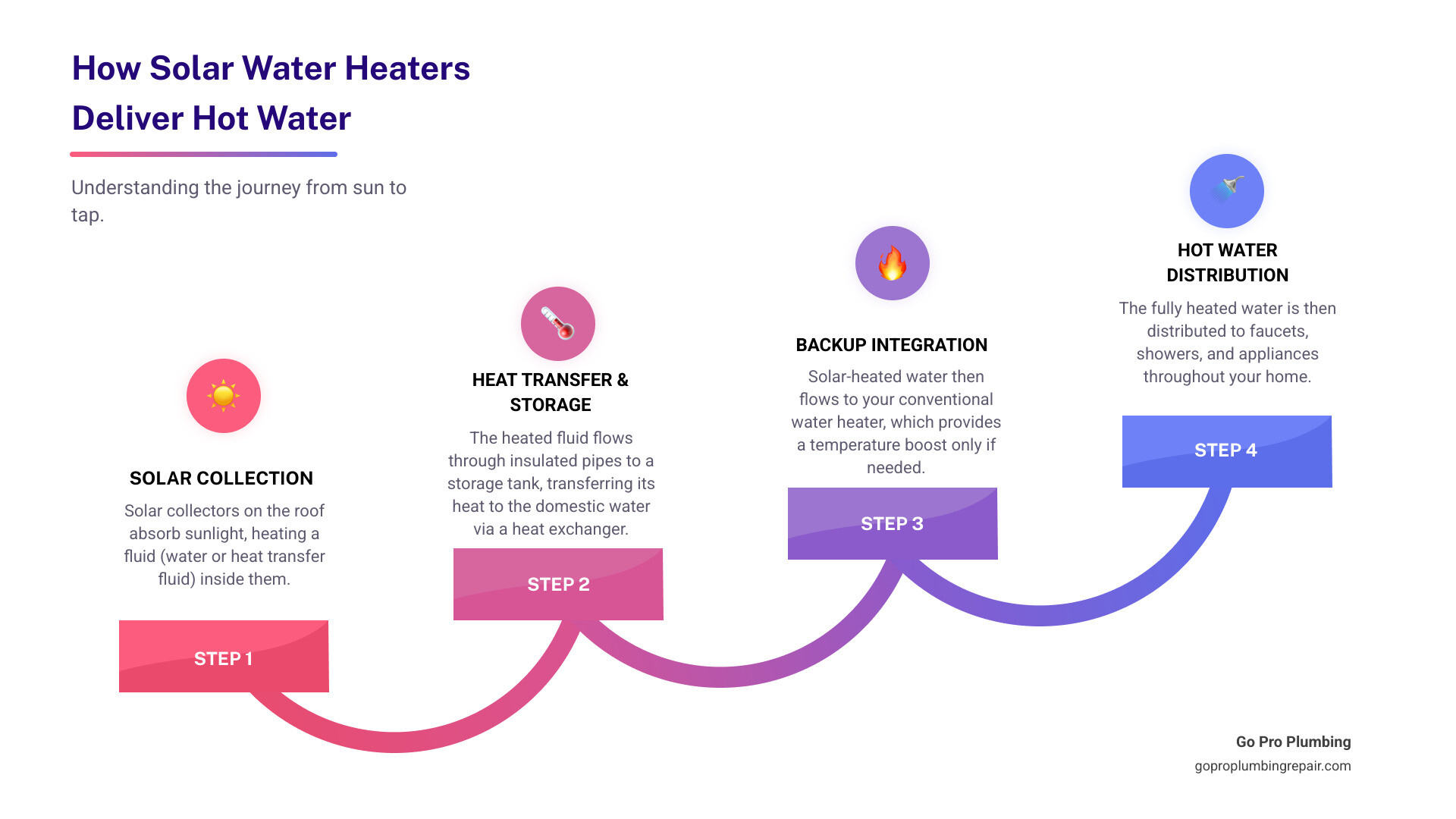
A solar water heating system relies on several key components working in harmony:
- Solar collectors absorb solar energy and transfer it to a heat transfer fluid (water or an antifreeze solution).
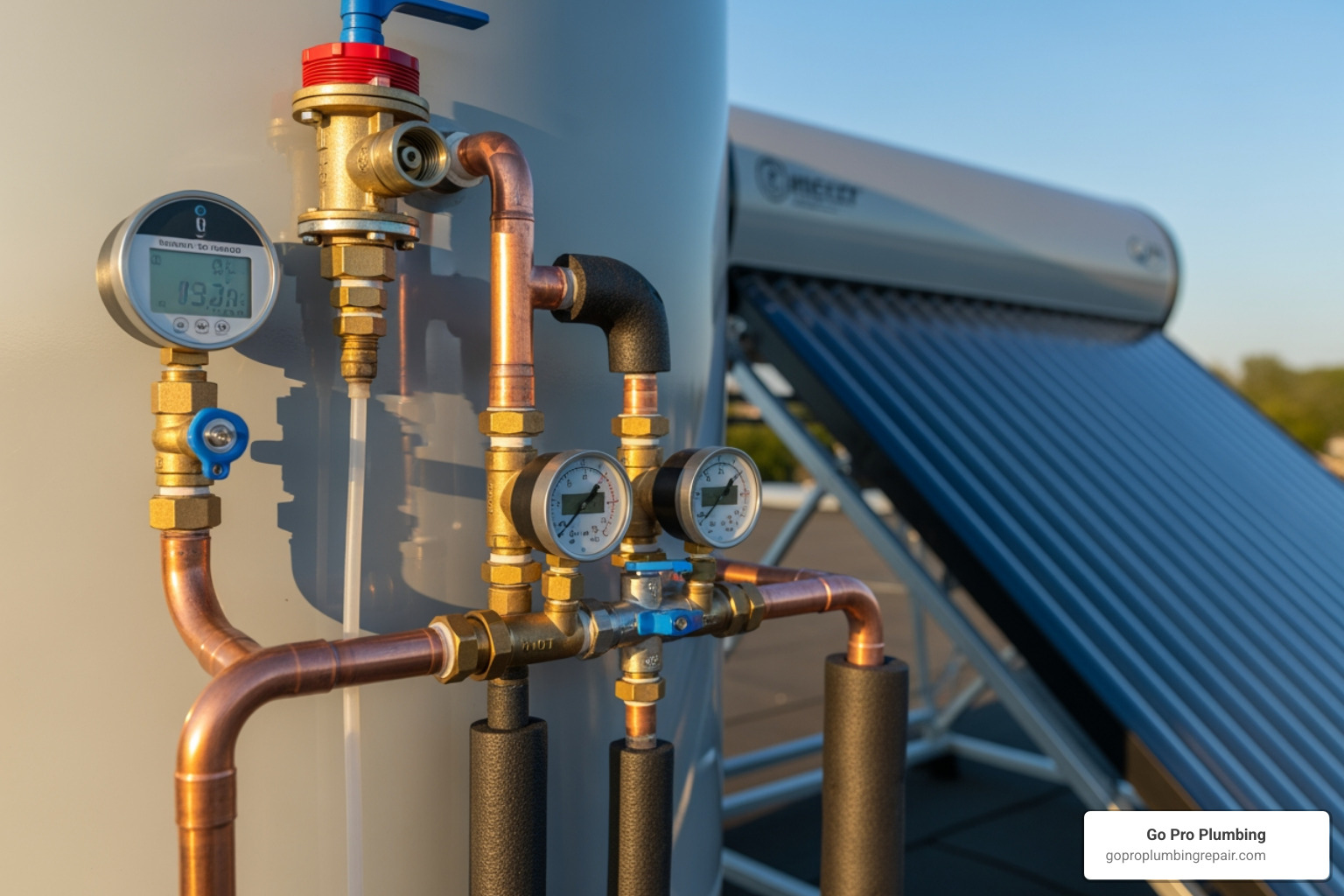
- The heated fluid moves to an insulated storage tank, which is specially designed with extra inlets and outlets for the collector loop.
- In systems using antifreeze, a heat exchanger transfers warmth from the collector fluid to your household’s potable water without the two mixing.
- A controller uses temperature sensors to monitor the collectors and tank, activating pumps when the collectors are hotter than the tank to move heat where it’s needed.
- Pumps are the heart of active systems, circulating fluid between the collectors and storage tank.
- Every system includes a backup heating system—your existing water heater, a tankless unit, or an integrated element—for cloudy days or high demand.
- The connecting pipework links all these components. This is where proper plumbing for solar water heater systems is absolutely critical for performance.
For more details, the experts at energy.gov have more about solar water heaters.
Active vs. Passive Systems: What’s the Difference?
Solar water heaters are categorized as either active or passive, based on how fluid moves through the system.
Active systems use electric pumps and controllers for forced circulation. They are generally more efficient and offer more installation flexibility.
- Direct circulation systems pump household water directly through the collectors. They are best for climates where freezing is rare.
- Indirect circulation systems are more common in Northern California. They circulate an antifreeze solution through the collectors and use a heat exchanger, eliminating the risk of frozen pipes.
Passive systems use natural convection and gravity, with no pumps or controllers. This simplicity means fewer potential points of failure, though they are often less efficient.
- Thermosiphon systems place the storage tank above the collectors. As water heats, it rises naturally into the tank, while cooler water flows down to the collectors.
- Integral collector-storage (ICS) systems combine the collector and storage into a single unit. They are simple and work well in climates that stay above freezing.
Choosing the right system depends on your climate, hot water usage, and budget. We help Northern California homeowners find the perfect fit for their needs.
The Heart of the System: Choosing the Right Pipes and Fittings
Your solar water heater’s longevity depends on its circulatory system—the pipes and fittings. The plumbing for solar water heater systems must endure harsh conditions, including extreme temperatures, pressure fluctuations, and UV radiation. Using the right materials is not an area to cut corners.

Key Considerations for Your Plumbing for a Solar Water Heater
When selecting plumbing materials, several factors are critical for system survival and performance:
- Temperature Rating: During stagnation (sunny days with no water use), collector loop temperatures can spike to 250°F (121°C). Pipes and fittings must handle this heat without failing. This rules out materials like CPVC (max 199°F) and PPR (max 158°F) for collector loops.
- Pressure Rating: Systems operate up to 120 PSI, and all components must be rated accordingly.
- UV Protection: In sunny Northern California, exposed pipes require a UV-resistant and waterproof jacketing (like ABS, PVC, or aluminum) to prevent degradation.
- Chemical Compatibility: For indirect systems using antifreeze (propylene glycol), all materials must be compatible to prevent chemical breakdown.
- Corrosion Prevention: We use dielectric unions between dissimilar metals (like copper and steel) to prevent galvanic corrosion and leaks.
Comparing Piping Materials for Solar Applications
Choosing the right pipe material is the most important decision for your system’s longevity.
-
Copper (Type L or K): The gold standard for solar, copper handles temperatures well above 250°F. It is durable and reliable, though it requires skilled brazing for installation. It must be properly insulated and protected from UV rays.
-
Flexible Corrugated Stainless Steel: An increasingly popular choice, this material handles the same extreme temperatures and pressures as copper. Its flexibility simplifies installation, requiring fewer joints and less labor. It has higher head loss than smooth copper, so we often size it larger to ensure proper flow.
What Not to Use in the Collector Loop:
- PEX, CPVC, and PPR Pipe: These plastic pipes are unsuitable for solar collector loops. Their maximum temperature ratings (180°F for PEX, 199°F for CPVC, and 158°F for PPR) are far too low to handle the 250°F stagnation temperatures. Using them will lead to system failure.
At Go Pro Plumbing, we exclusively use Type L/K copper or flexible corrugated stainless steel for collector loops to ensure decades of reliable performance. For more details, this technical guidance on solar water heater flow lines offers valuable insights.
The Complete Guide to Plumbing for Solar Water Heater Installation
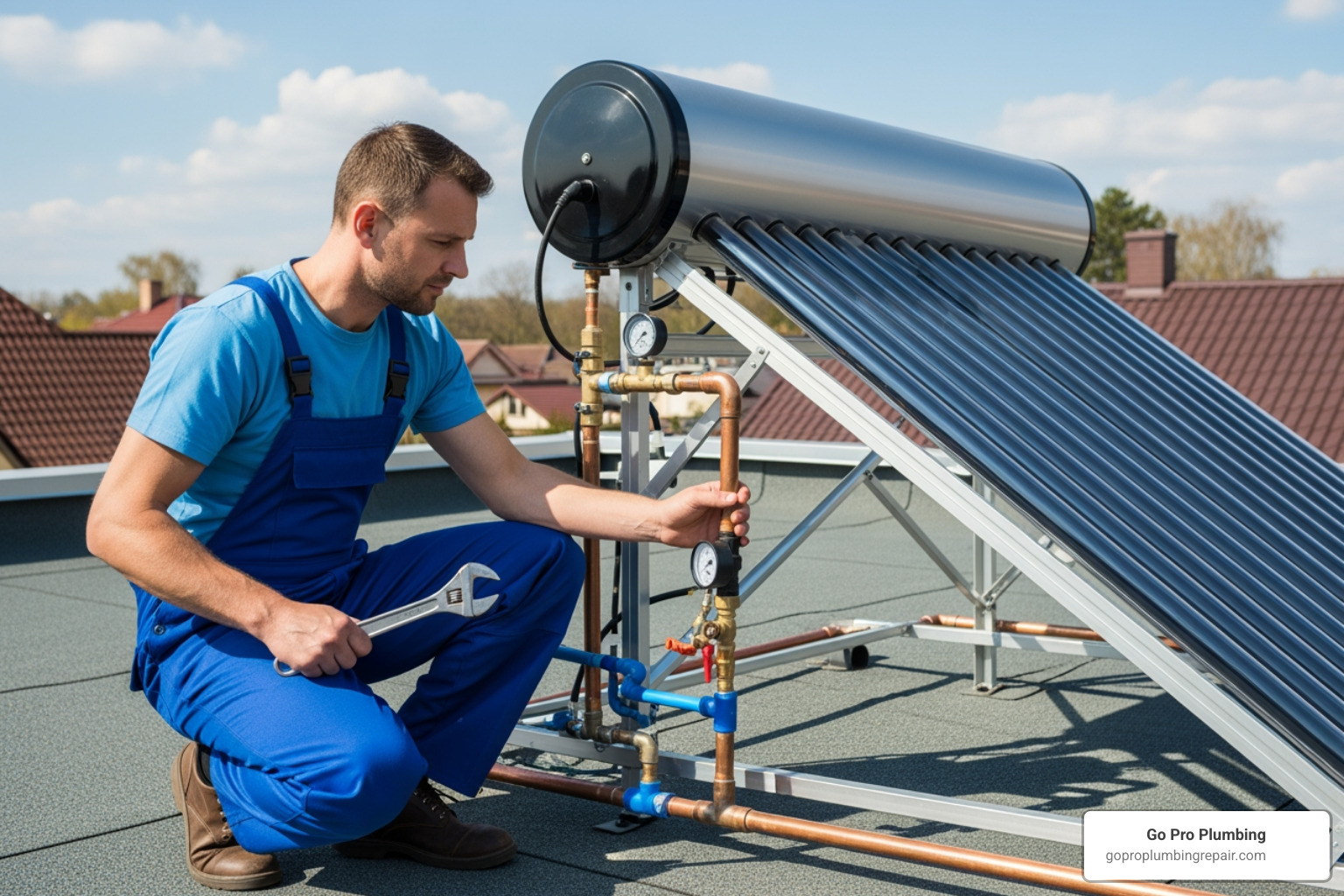
Installing a solar water heating system is a complex project that combines roofing, electrical, and advanced plumbing skills. Proper plumbing for solar water heater systems is what makes the difference between 20+ years of savings and a future of leaks and inefficiency.
Pre-Installation Planning: The First Step in Plumbing for a Solar Water Heater
Successful installations begin with thorough planning. Our process includes:
- Site Assessment: We evaluate your roof space and mechanical area to ensure a smooth installation.
- Sun Exposure Analysis: We use specialized tools to find the optimal, unshaded placement for collectors, typically on a south-facing roof tilted at an angle equal to your latitude.
- Roof Structure and Orientation: We verify your roof can support the system’s weight and is in good condition.
- System Sizing: We calculate your household’s hot water needs (e.g., a medium household uses ~225 liters daily) to determine the right collector area and tank capacity.
- Local Codes and Permits: We handle all paperwork and inspections to ensure your system complies with all Northern California regulations. For general information, see the Department of Energy’s guidance on building codes for solar systems.
The Installation Process: Connecting the System
With planning complete, our expert installation begins:
- Roof Installation: We securely mount collectors, using proper flashing to create watertight seals around all roof penetrations.
- Running Insulated Lines: We run supply and return lines with at least one inch of closed-cell insulation from the collectors to the mechanical room, protecting them from the elements.
- Mechanical Room Plumbing: We connect the lines to a pump station (for active systems) and integrate the heat exchanger (for indirect systems).
- Backup Water Heater Connection: Solar-heated water from the storage tank feeds into the cold inlet of your existing water heater. If the water is already hot, your backup heater doesn’t turn on. We also install a solar bypass valve for easier maintenance. Learn more about this at information on installing a solar thermal bypass valve.
Essential System Controls and Safety Features
Safety controls are non-negotiable for managing the high temperatures (up to 250°F) a solar water heater can produce.
- System Controller & Sensors: The system’s brain uses temperature sensors to automatically activate the pump when collectors are hotter than the tank, maximizing efficiency.
- Pressure Relief Valves (PRV): Installed on the collector loop, these valves release pressure if it exceeds safe limits (125-150 PSI), preventing damage.
- Temperature & Pressure (T&P) Relief Valve: This critical device on the storage tank opens if water temperature exceeds 210°F or pressure exceeds 150 PSI, preventing tank rupture.
- Tempering Valves: Installed on the hot water outlet, these mix hot water with cold to deliver a safe, consistent temperature (around 120°F) to your faucets, preventing scalding.
- Check Valves: These small but vital components ensure fluid flows in only one direction, preventing heat loss at night.
Maintenance and Best Practices for Long-Term Performance
To ensure your solar water heater provides savings for its 20+ year lifespan, consistent maintenance is key. The quality of the plumbing for solar water heater systems directly impacts long-term performance.
Key best practices include:
- Insulating all hot water lines to minimize heat loss.
- Plumbing multiple collectors in a reverse return configuration for balanced flow.
- Installing flush and fill valves to simplify maintenance like replacing antifreeze.
- Maintaining the proper collector tilt and orientation by keeping them free of new obstructions like tree growth.
- Scheduling regular professional inspections to catch small issues before they become major problems.
Routine Maintenance Checks
Between professional visits, you can perform these simple checks:
- Check for leaks: Periodically inspect visible pipes and fittings for any signs of moisture or drips.
- Inspect pipe insulation: Ensure all exterior insulation is intact and free from sun damage or cracks.
- Clean solar collectors: After dry, dusty periods, a gentle rinse with a hose can remove debris and improve absorption. Avoid abrasive cleaners.
- Check antifreeze fluid: For indirect systems, the antifreeze solution should be checked and possibly replaced by a professional every 1-2 years per manufacturer guidelines.
- Monitor system performance: If you notice less hot water or higher energy bills, it may signal an issue that needs professional diagnosis.
Costs, Savings, and System Longevity
While there is an upfront cost, the long-term financial benefits of a solar water heater are substantial.
- Installation Costs: Costs vary by system type and size, but they should be weighed against decades of savings.
- Long-Term Savings: Homeowners typically see a 40 to 50 percent reduction in water heating energy costs, saving hundreds of dollars annually in Northern California.
- Increased Home Value: A professionally installed system is a valuable upgrade that appeals to buyers and can increase your property’s value.
- System Lifespan: With proper installation and maintenance, a system can last 20+ years, far longer than a conventional water heater’s 10-15 year lifespan.
- Payback Period: While the financial payback period can be 5-10+ years, the environmental benefits—like eliminating up to 2 tonnes of CO2 emissions annually—begin immediately.
Frequently Asked Questions about Solar Water Heater Plumbing
Should I install a solar water heater myself or hire a professional?
Professional installation is highly recommended. Solar water heating systems are complex, involving high-pressure (up to 120 PSI) and high-temperature (up to 250°F) plumbing, roofing, and electrical work. A professional ensures the system is safe, compliant with Northern California codes, and operates at peak efficiency. Mistakes in DIY installations can lead to dangerous conditions, leaks, and a significant loss of the 40-50% energy savings you expect. At Go Pro Plumbing, our expertise in plumbing for solar water heater systems guarantees a safe and effective installation.
What type of pipe is best for the solar collector loop?
Metal pipes are the only acceptable choice. Specifically, Type L or M copper or flexible corrugated stainless steel are required. These materials can safely withstand the extreme stagnation temperatures of up to 250°F (121°C). Plastic pipes like PEX (max 180°F) or CPVC (max 199°F) cannot handle this heat and will fail, leading to leaks and system damage. They are also susceptible to UV degradation outdoors. For more details, see this technical guidance on solar water heater flow lines.
How does a solar water heater connect to my existing water heater?
A solar water heater acts as a pre-heater for your existing system. The process is simple and automatic: solar-heated water from the storage tank is plumbed into the cold water inlet of your conventional water heater.
- On a sunny day, the water entering your backup heater may already be hot. The heater’s thermostat will recognize this and not turn on, saving 100% of the energy.
- On a cloudy day, the solar system will still pre-warm the water. Your backup heater will only need to boost the temperature slightly, still saving significant energy compared to heating cold water from scratch.
This setup ensures you always have reliable hot water while maximizing your energy savings. We typically install a solar bypass valve to simplify future maintenance. You can learn more about this component at information on installing a solar thermal bypass valve.
Conclusion
Investing in solar hot water is a smart choice for your home’s future, but its success hinges on one critical element: the plumbing. Your solar collectors capture the sun’s energy, but the plumbing for solar water heater systems is what delivers those savings and ensures reliable performance for 20+ years.
Choosing high-temperature materials, properly insulating lines, and installing essential safety features are not DIY tasks. They require specialized expertise to prevent leaks, inefficiency, and safety hazards. The difference between a high-performing system and a source of frustration lies in the quality of the installation.
At Go Pro Plumbing, we understand Northern California’s climate and know how to build solar water heating systems that deliver the 40-50% energy savings you’re investing in. Don’t compromise your long-term investment with improper plumbing.
For professional water heater installation in Sacramento, contact our team today. We’re ready to help you enjoy decades of reliable, sun-powered hot water.