
The Ins and Outs of Hot Water Recirculation
By Brian on December 3, 2025
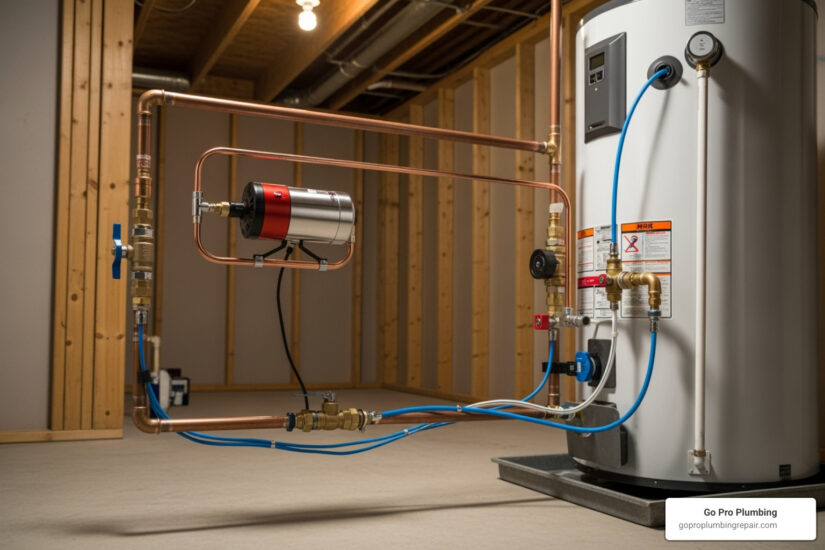
Why Waiting for Hot Water Costs You More Than You Think
Hot water recirculation is a plumbing system that provides instant hot water at every faucet and shower, eliminating the typical wait. Instead of letting cooled water go down the drain, a recirculation pump loops hot water from your water heater to your fixtures and back, keeping it constantly ready.
Quick Answer: What You Need to Know
- What it is: A pump-driven system that circulates hot water through your home’s pipes.
- Key benefit: Instant hot water at every tap—no more waiting.
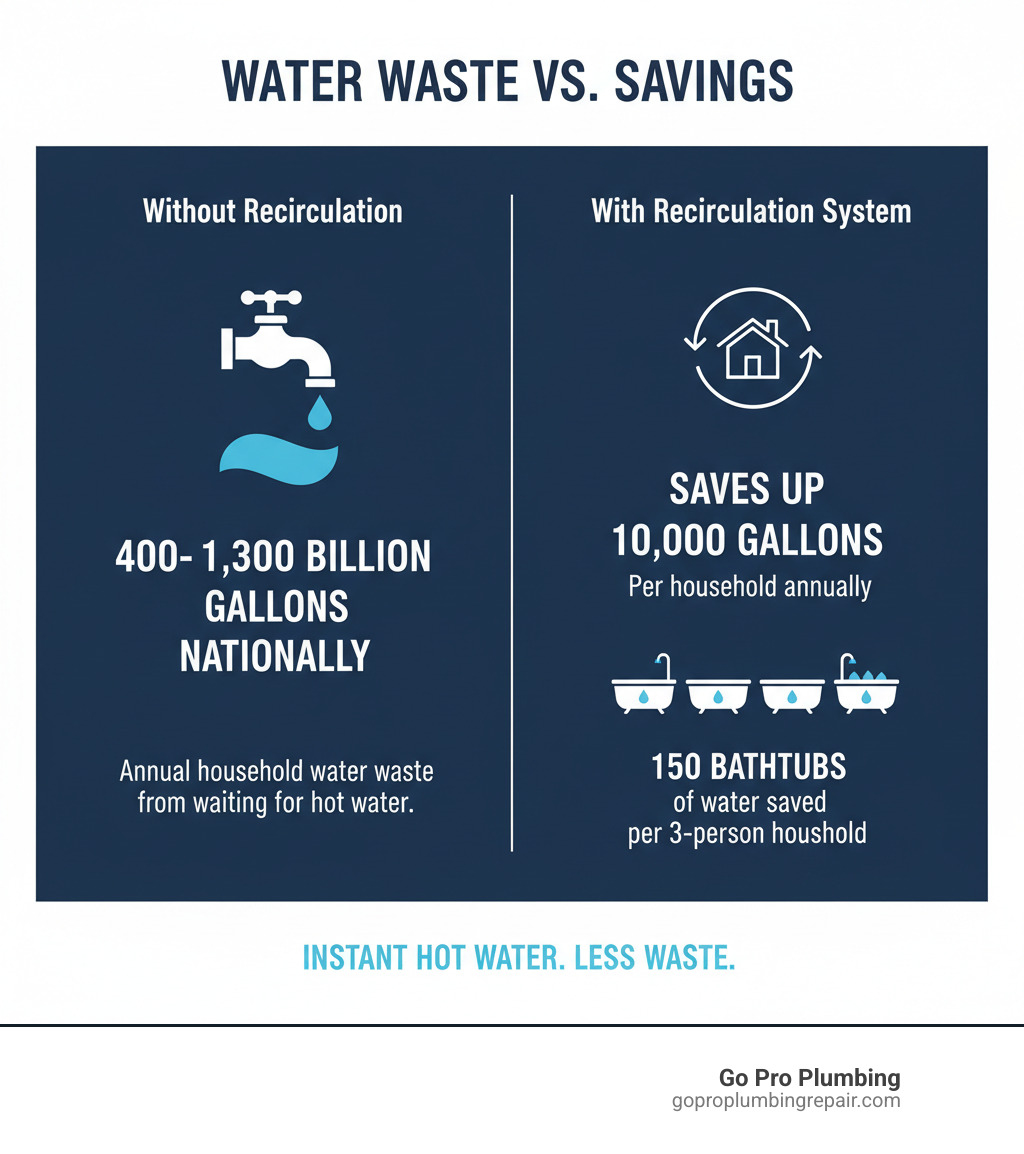
- Water savings: Up to 10,000-12,000 gallons per year for an average household.
- How it works: A pump sends cooled water back to your water heater instead of down the drain.
- Two main types: Dedicated return line systems (new homes) or integrated loop systems (retrofits).
- Energy use: Modern on-demand systems run less than 15 minutes per day.
Every time you turn on a faucet and wait for hot water, you’re watching clean, treated water disappear. Nationally, households waste between 400 billion and 1.3 trillion gallons of water each year just waiting for their taps to heat up. For an average person who waits about 2 minutes for hot water, a three-person household wastes enough water annually to fill 150 bathtubs. This also wastes the energy used to treat and deliver that water.
Hot water recirculation systems solve this problem. They eliminate the wait, reduce waste, and provide the convenience of instant hot water while potentially saving you money on water and energy bills.
What is a Hot Water Recirculation System?
Picture this: You step into your shower on a chilly morning and immediately feel warm water. No waiting, no watching gallons of water swirl down the drain. That’s what a hot water recirculation system delivers.
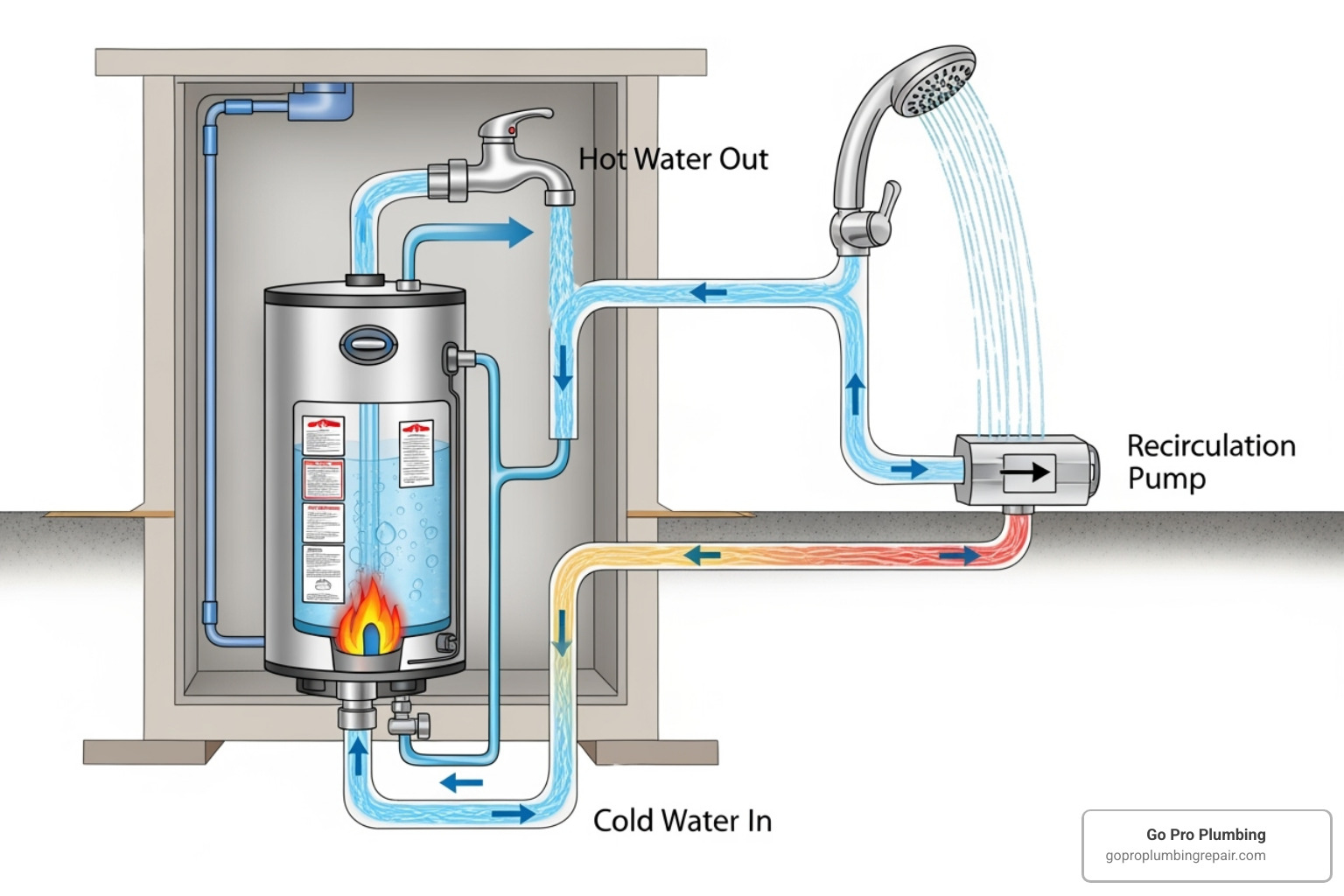
These systems solve a common problem. When your water heater is far from your faucet, the water in the pipes cools down. When you turn on the tap, you have to run all that cooled water down the drain while waiting for hot water to arrive from the heater. A hot water recirculation system changes this. Instead of letting cooled water go to waste, a small pump sends it back to your water heater to be reheated. This creates a continuous loop, keeping hot water ready near every faucet in your home for instant use.
How Hot Water Recirculation Works
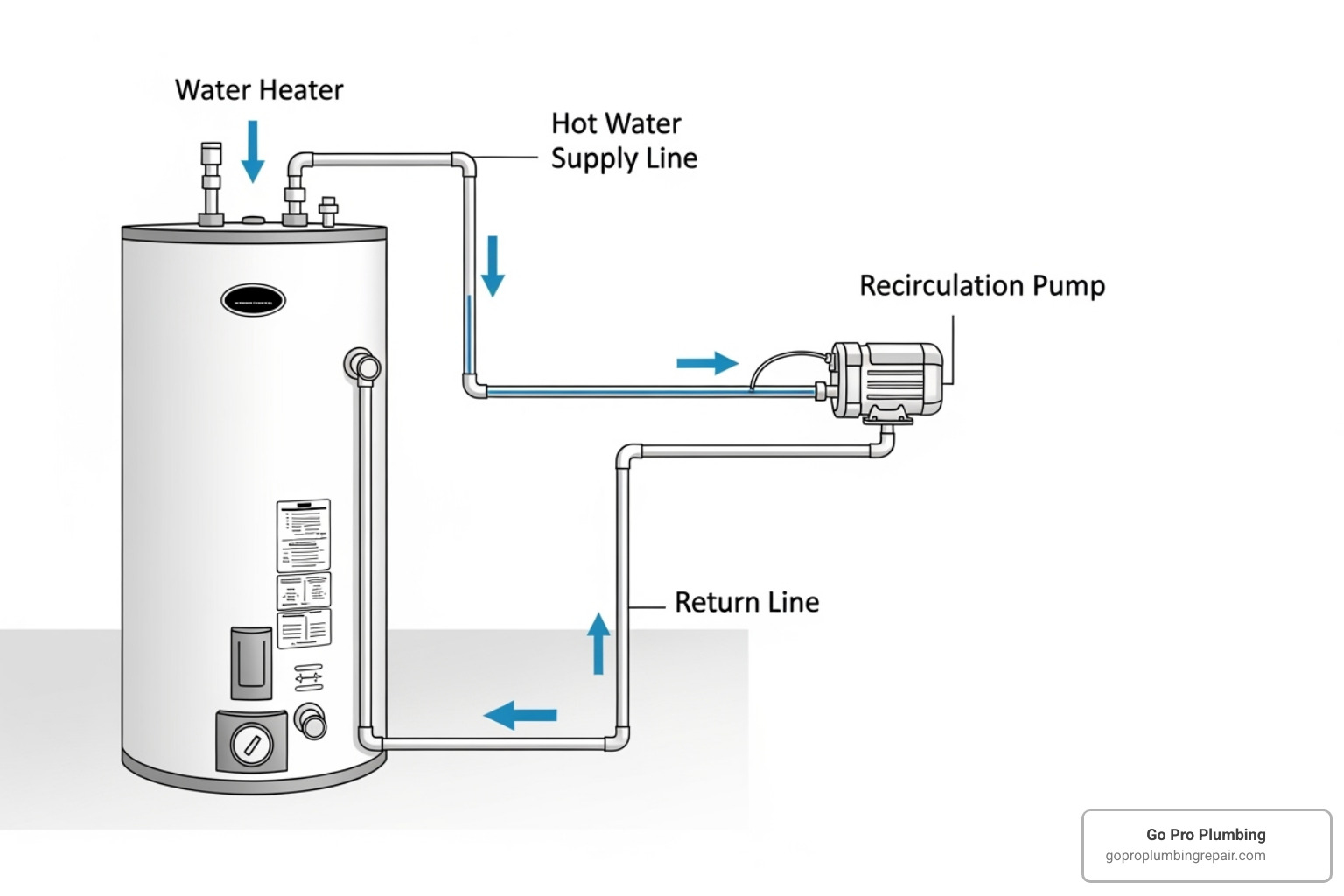
A hot water recirculation system uses a small pump to move water through your pipes. When water in the hot water lines cools, the pump activates and pushes that cooled water back to your water heater. As it does, fresh hot water from the heater flows into the supply lines, keeping the entire loop warm. The water that would’ve gone down your drain is returned to the heater to be used again. When you turn on any hot water tap, warm water is already in the pipe, ready to flow. The pump eliminates the wait and keeps your system efficient. For more details on demand-controlled systems, ENERGY STAR offers more detailed information.
Key Components of a System
Several components work together in a hot water recirculation system:
- Recirculation pump: The engine of the system, this compact device moves water through the loop. They are typically made from brass or stainless steel to resist corrosion and are safe for drinking water (never use a cast iron pump).
- Check valves: These one-way gates ensure water flows in the right direction and prevent backflow, keeping hot water from mixing into your cold supply.
- Sensor valves: For retrofits, these are installed under the sink farthest from the water heater. A temperature sensor opens the valve when water cools, allowing it to return to the heater through the cold water line. Once hot water arrives, the valve closes.
- Timers: These allow you to control when the pump runs, such as during peak usage times, to save energy.
- Thermostats: Also called aquastats, these monitor water temperature and activate the pump only when the temperature drops below a set point, preventing constant operation.
- Piping: New homes may have a dedicated return line, while retrofits often use the existing cold water pipes as the return path.
At Go Pro Plumbing, we help Northern California homeowners choose and install the right setup for their needs, ensuring you get instant hot water without the guesswork.
Types of Hot Water Recirculation Systems
Choosing the right hot water recirculation system depends on whether you are building a new home or retrofitting an existing one. The two main approaches are dedicated return line systems and integrated loop systems, each with its own strengths.
Full-Loop Systems with a Dedicated Return Line
Ideal for new construction, full-loop systems are the premium option for the fastest, most efficient hot water circulation. This system includes a separate, dedicated pipe that runs from the farthest fixture back to the water heater, creating a closed loop exclusively for hot water.
The hot water recirculation pump is installed on this return line near the water heater. It moves cooled water back for reheating while fresh hot water is sent to the taps. Because this system has its own pathway, hot water never mixes with the cold supply, ensuring maximum efficiency and instant delivery.
Installing a dedicated return line in an existing home is a major project, but for new builds, it can be easily integrated. When paired with smart controls like timers or thermostats, these systems offer top performance and energy savings.
Integrated Loop (Crossover) Systems
For older homes where adding new plumbing is impractical, the integrated loop system is a clever retrofit solution that uses your existing pipes. It uses the cold water line as the return path, eliminating the need for a dedicated return pipe.
A small pump and a special bridge valve are installed under the sink farthest from the water heater. When activated, the pump diverts cooled water from the hot water line into the cold water line, sending it back to the heater. The bridge valve has a built-in temperature sensor that closes automatically once hot water arrives (detecting about a 6-degree temperature rise), preventing hot water from mixing into the cold line.
These systems can be triggered by a wireless button, motion sensor, or timer. The accessibility of integrated systems makes them a practical choice for bringing hot water recirculation to almost any home without major construction. Installation is quick, typically taking just a few hours.
The Pros and Cons of Recirculation Systems
Like any home upgrade, a hot water recirculation system has both benefits and considerations. Understanding these will help you decide if it’s the right investment for your home.
The Benefits: Convenience, Conservation, and Cost Savings
The most immediate benefit is instant comfort. No more shivering while waiting for the shower to warm up. With a hot water recirculation system, hot water is ready when you are, improving your daily routine.
The water savings are also impressive. An average household can save 10,000 to 12,000 gallons of water per year. This is real, measurable conservation that reduces waste.
There are also energy savings. While a pump uses energy, modern on-demand systems are highly efficient. By not wasting gallons of heated water daily, you reduce your water heater’s overall energy load. These savings lead to reduced utility bills, especially when using smart controls like timers.
Finally, consider the environmental impact. In Northern California, where water conservation is crucial, a recirculation system is a tangible way to reduce your household’s environmental footprint.
Potential Drawbacks and Important Considerations
There are some factors to weigh before installation. The initial installation cost is a primary consideration. Costs can range from a few hundred dollars for a basic retrofit to several thousand for a full dedicated loop system. Many homeowners find the long-term savings and convenience justify the investment.
Energy use from continuous operation is another point. Older systems that ran 24/7 could increase energy bills, but modern on-demand systems with smart controls run for less than 15 minutes per day, minimizing energy consumption. The key is to match operation to your usage patterns.
Standby heat loss occurs as water cools in the pipes. This is more significant in homes without proper pipe insulation. The importance of pipe insulation cannot be overstated; it dramatically reduces heat loss and makes your system more efficient. Insulating pipes when installing a recirculation system is a wise investment.
Lastly, recirculation pumps require occasional system maintenance. Pumps can fail and sediment can build up. However, regular maintenance is minimal and helps extend the life of your system.
For most households, especially those with long pipe runs, the benefits of a hot water recirculation system outweigh the drawbacks. The key is choosing the right system and using smart controls to maximize efficiency.
What is a Hot Water Recirculation System?
Waiting for the shower to warm up is a daily frustration that wastes significant water and energy. A hot water recirculation system solves this by creating a smart highway for your hot water. Instead of letting water cool in the pipes, a recirculation system keeps it moving in a loop, ensuring hot water is always ready at every faucet and shower.
A small pump circulates water from your water heater through your pipes and back again. When you turn on a tap, hot water is already there—no waiting and no waste. The water that would have gone down the drain is returned to the heater, making your home more convenient and eco-friendly.
How Hot Water Recirculation Works
In a standard plumbing setup, water cools in the pipes between uses. You must flush this cold water before hot water from the heater arrives. A hot water recirculation system changes this by using a small, energy-efficient pump to move the cooled water back to the water heater instead of down the drain.
As the pump sends cooled water back to the heater, fresh hot water fills the supply lines. This continuous cycle keeps warm water circulating, so it’s ready the instant you need it. The closed-loop system saves water, energy, and the frustrating wait. To learn more about the efficiency of demand-controlled systems, see this resource from More about demand systems from ENERGY STAR.
Key Components of a System
A hot water recirculation system consists of several key components working together:
- Recirculation Pump: The heart of the system, this compact pump circulates the water. It’s made of corrosion-resistant materials like brass or stainless steel, making it safe for drinking water. (A cast iron pump should never be used for potable water.)
- Check Valves: These one-way gates ensure water flows in the correct direction, preventing backflow and stopping hot water from entering cold water lines.
- Sensor Valves (Bypass Valves): Used in integrated loop systems, these are installed at the farthest sink. A temperature sensor opens the valve to let cool water return to the heater via the cold water line and closes it once hot water arrives.
- Timers: These allow you to schedule pump operation for peak usage times, such as mornings and evenings, to save energy.
- Thermostats (Aquastats): These devices activate the pump only when the water temperature drops below a set point, preventing the pump from running continuously.
- Piping: New homes may have a dedicated return line for cooled water. Existing homes can be retrofitted with an integrated loop system that uses the cold water line as the return path, avoiding the need to install new pipes.
Together, these components provide the simple luxury of instant hot water throughout your home.
Types of Hot Water Recirculation Systems
When considering hot water recirculation, the two main system types are designed for different situations: new construction versus existing homes. Your choice will impact efficiency, cost, and installation method.
Full-Loop Systems with a Dedicated Return Line
Full-loop systems are the most efficient option and are typically installed during new home construction. They feature a dedicated return pipe running from the farthest fixture back to the water heater, creating a true closed loop for hot water.
How it works: A recirculation pump on this dedicated line pulls cooled water back to the water heater for reheating. This ensures hot water is always in the supply lines, ready for instant use. Since the return path is separate, there is no mixing with cold water, resulting in the fastest delivery.
Installation overview: While difficult to retrofit, installing a dedicated line is straightforward in new construction. Paired with smart controls, this system offers the best performance and efficiency.
Integrated Loop (Crossover) Systems
For most existing homes, integrated loop (or crossover) systems are the practical choice. These retrofit solutions use the home’s existing cold water line as the return path, avoiding costly and disruptive renovations.
How it works: A pump and a special “bridge valve” are installed under the sink farthest from the water heater. When activated, the pump draws cooled water from the hot line and the valve diverts it into the cold water line, sending it back to the heater. A built-in temperature sensor in the valve closes it once hot water arrives, preventing hot water from entering the cold supply.
Integrated systems can be activated on demand with buttons, motion sensors, or timers. They are a cost-effective and easy-to-install solution for bringing instant hot water to homes without a dedicated return line.
The Pros and Cons of Recirculation Systems
At Go Pro Plumbing, we believe in giving you the complete picture. A hot water recirculation system can transform your daily routine, but it’s important to weigh the benefits and considerations before making a decision.
The Benefits: Convenience, Conservation, and Cost Savings
- Instant Comfort: The most immediate benefit is having hot water the moment you need it. No more waiting for the shower to warm up.
- Water Savings: An average household can save 10,000 to 12,000 gallons of water per year. For a three-person household, that’s enough to fill 150 bathtubs. This is water you no longer pay to heat and treat.
- Energy Savings: Modern on-demand systems are highly efficient, often running less than 15 minutes per day. By heating water more efficiently, you’ll see reduced utility bills that help offset the initial investment.
- Environmental Impact: In California, where water conservation is essential, a recirculation system is a practical way to reduce your household’s water footprint.
Potential Drawbacks and Important Considerations
- Initial Installation Cost: This is the main barrier for many. A retrofit system can cost between $500 and $1,500, while a full-loop system in new construction can be several thousand dollars.
- Energy Use: While a system running 24/7 will increase energy costs, smart, on-demand systems that run only during peak times are very efficient, adding little to your monthly energy bill.
- Standby Heat Loss: Water naturally cools in the pipes. The importance of pipe insulation is critical here. Insulated pipes significantly reduce heat loss, making your system more efficient. It’s a simple upgrade that makes a big difference.
- System Maintenance: Like any mechanical device, recirculation pumps require occasional maintenance. However, they are reliable, and maintenance is typically minimal, consisting of an annual check-up.
The bottom line is that for most homeowners frustrated by long waits for hot water, the benefits of a hot water recirculation system far outweigh the drawbacks. The key is proper installation and maintenance, which is where our team at Go Pro Plumbing comes in.