
The Plumber’s Secret: A Household Trick to Clear Blocked Drains Fast
By Brian on July 14, 2026
When Blocked Drains Strike: What Every Homeowner Needs to Know First
Blocked drains are the most common drainage problem homeowners face — and if you’re dealing with one right now, here’s what to do immediately:
Quick answers for a blocked drain:
- Stop using the affected fixture — don’t flush or run more water into it
- Try a plunger first — a few firm plunges clear many simple blockages
- Pour baking soda + white vinegar down the drain, wait 15 minutes, then flush with hot water
- Check if neighbours are affected — if yes, it may be a public sewer issue (not your responsibility)
- Call a licensed plumber if water backs up into other fixtures, there’s a foul smell, or DIY methods fail
A slow-draining sink. A foul smell creeping up from the plughole. Water pooling around your feet in the shower. These are the early warning signs that most of us ignore — until a drain stops working entirely.
The truth is, over 40% of all drainage call-outs in the UK are for blocked drains, making it the single most reported plumbing problem. In Northern California, the story is no different.
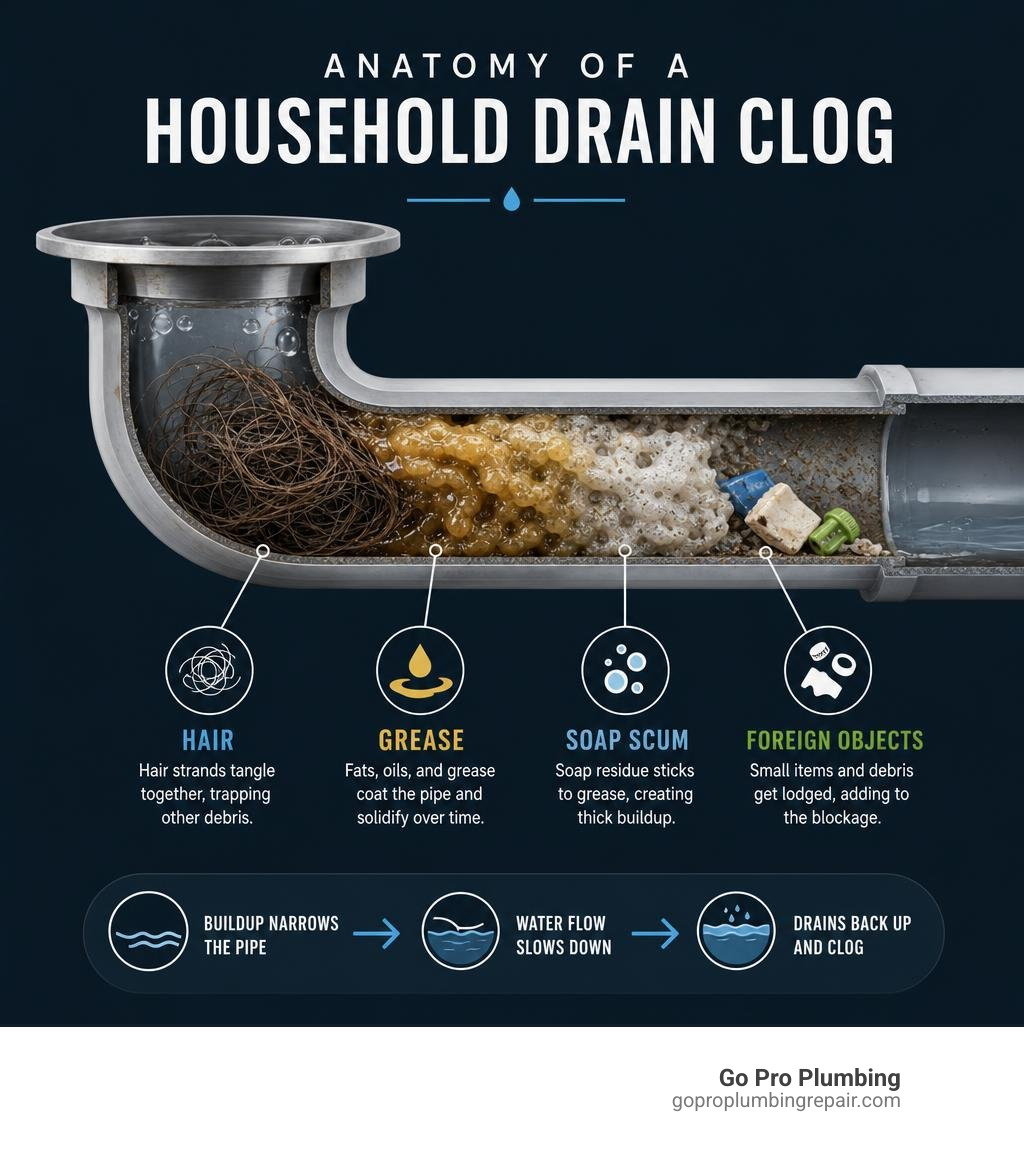
Most blockages don’t happen overnight. They build up gradually — grease, hair, soap scum, and debris slowly narrowing the pipe until water has nowhere to go.
The good news? Most blocked drains can be cleared without an expensive call-out — if you know the right approach. And that’s exactly what this guide covers.
Blocked drains terms to know:
The Plumber’s Secret: How to Clear Blocked Drains with a Simple Household Trick
If you have ever stared down at a sink full of dirty water, you have probably been tempted to run to the store for a harsh chemical drain cleaner. Before you do, we want to let you in on a little industry secret. There is a highly effective, chemical-free, and incredibly simple household trick that can clear minor blocked drains using items you already have in your kitchen: baking soda, white vinegar, and boiling water.
This method works because of a basic chemical reaction. When the alkaline baking soda meets the acidic white vinegar, it creates a bubbling, fizzing action (releasing carbon dioxide gas) that physically breaks up grease, organic matter, and soap scum clinging to the pipe walls.

Here are the step-by-step Steps to Unclog a Drain using this natural method:
- Prep the Drain: If there is standing water in the sink or tub, scoop out as much of it as possible.
- Add the Baking Soda: Pour about half a cup of dry baking soda directly down the drain. Try to get as much of it down the pipe as you can.
- Pour the Vinegar: Slowly pour one cup of white vinegar down after the baking soda. You will immediately hear it fizz and bubble.
- Seal It Up: Cover the drain plug or cover the opening with a clean rag to trap the fizzing action inside the pipe where the clog is. Let it sit for 15 to 20 minutes.
- Flush with Boiling Water: While you wait, boil a kettle of water. Carefully pour the hot water down the drain to flush away the loosened debris. (Note: If you have PVC pipes, use hot tap water instead of boiling water to prevent damaging the pipe joints).
This household trick is completely safe for your plumbing system, highly cost-effective, and environmentally friendly.
Understanding the Root Causes of Clogged Pipes
To stop drains from backing up, we first have to understand why they clog in the first place. Over our years serving Northern California homes, we have found that most blockages are caused by a few repeat offenders.
- Wet Wipes: Despite being marketed as “flushable,” wet wipes do not break down like toilet paper. They remain intact, catch on pipe imperfections, and are the single biggest cause of severe sewer blockages.
- Fat, Oil, and Grease (FOG): When poured down the kitchen sink as hot liquids, FOG cools down rapidly inside your cold underground pipes. It solidifies into a thick, waxy lining that catches other debris and eventually chokes off water flow.
- Hair Buildup: Hair is incredibly strong and does not decompose easily. It binds with sticky soap residue to form dense, web-like clogs deep inside bath and shower drains.
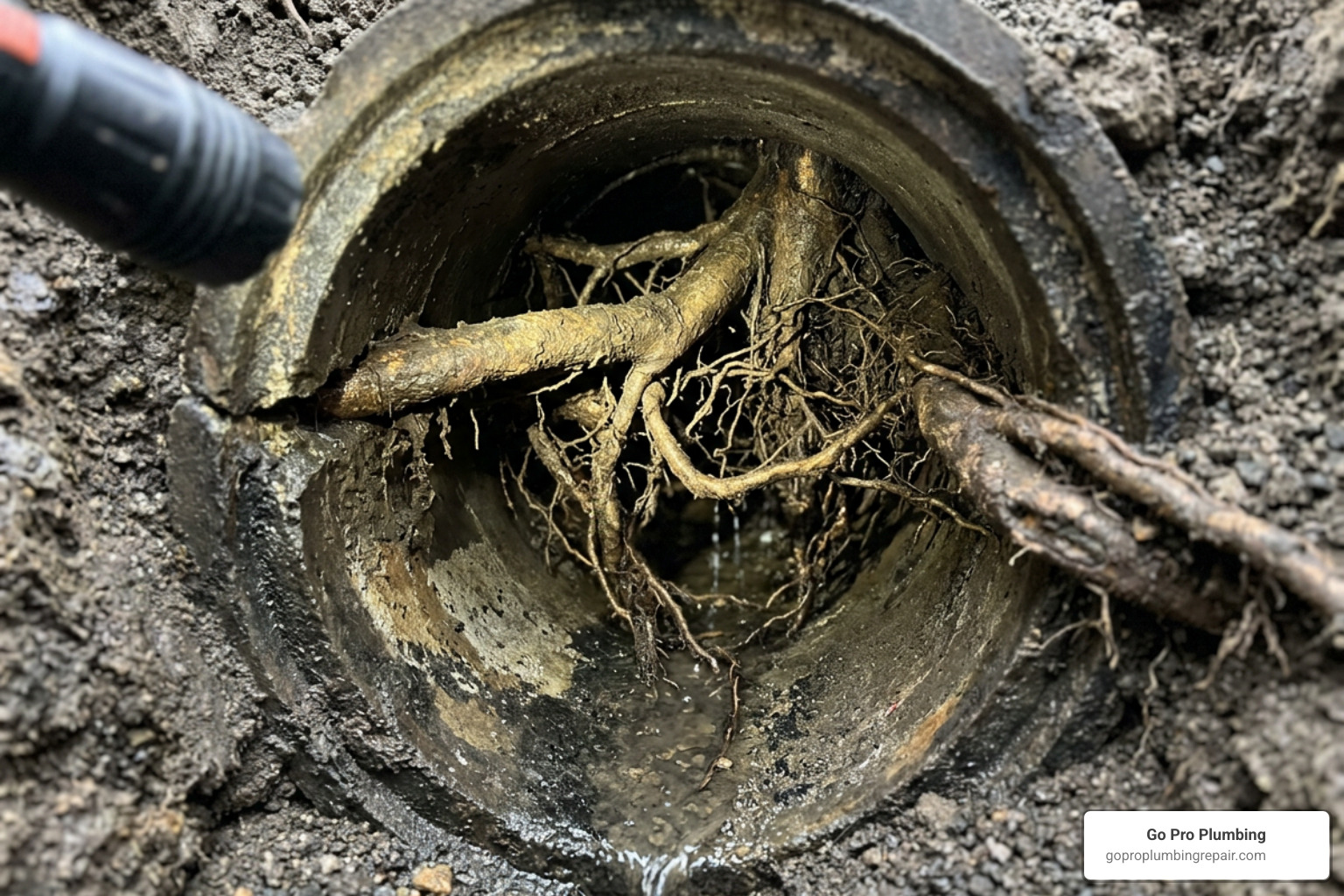
- Tree Root Intrusion: Underground pipes carry warmth and moisture, which tree roots naturally seek out. Even the tiniest crack in an older sewer line can invite fine root hairs inside. Once inside, they grow rapidly, creating a solid mass that traps waste and causes frequent backups.
Common Culprits Behind Residential Blocked Drains
Inside the home, different fixtures suffer from different types of blockages.
In the bathroom, shower and bath drains are primarily targeted by a combination of hair and soap scum. As soap residue binds with hair, it creates a hard, waterproof barrier. If you are struggling with a backup in your bathroom, check out our guide on How to Unclog a Shower Drain for targeted solutions.
In the kitchen, food scraps and cooking grease are the main culprits. Even if you have a garbage disposal, starchy foods like pasta, potato peels, and coffee grounds can create a thick paste that stops water in its tracks. For kitchen-specific trouble, we have compiled a list of Clogged Kitchen Sink Solutions to help you get things moving again.
Commercial vs. Residential Drainage Challenges
While residential drains mostly deal with hair and soap, commercial properties face much larger operational challenges.
Commercial kitchens, restaurants, and food processing facilities handle massive volumes of fats, oils, and grease daily. This requires specialized grease traps that must be regularly cleaned and maintained. If grease traps fail or are neglected, the resulting blockages can shut down a business, lead to health code violations, and cause costly property damage.
Additionally, commercial systems experience high-volume usage from customers and staff, making them far more vulnerable to foreign objects being flushed down toilets. Managing these heavy-duty systems requires advanced Professional Drain Cleaning Services to keep business operations running smoothly.
Private vs. Public Sewers: Who is Responsible?
When a drain backs up, one of the most important questions to answer is: Who owns the pipe that is blocked?
Plumbing systems are divided into private property and public utility lines. As a homeowner, you are legally responsible for all the drains and lateral lines within your property boundaries up to where they connect with the main municipal sewer line. Local rules can vary, so it is also wise to check your city or wastewater provider’s guidance; the EPA provides a helpful overview of sanitary sewer overflows and why fast reporting matters when public sewer systems are affected.
To help clarify these boundaries, we have put together this simple responsibility breakdown:
| Pipe Section | Description | Responsibility |
|---|---|---|
| Internal Plumbing | Drains under sinks, showers, toilets, and appliances | Homeowner |
| Private Lateral Drain | The underground pipe carrying waste from your house to the property boundary | Homeowner |
| Cleanout Fittings | Access points located near your foundation or property line | Homeowner |
| Public Sewer Main | The large shared municipal pipe carrying waste from multiple properties | City / Water Utility |
If you are dealing with a deeper blockage near these boundaries, our comprehensive Sewer Line Blockage Guide can help you figure out your next steps.
Legal and Insurance Implications of Wastewater Backups
If a blocked drain on your property causes sewage to back up into your home or, worse, overflows into a neighboring property, there can be significant legal and financial consequences.
Standard homeowners insurance policies do not always cover water damage caused by sewer backups unless you have a specific “sewer backup rider” added to your policy. If the blockage is determined to be the result of poor maintenance (such as ignoring a known tree root problem), you could be held personally liable for the cleanup costs of both your home and your neighbor’s property.
Understanding how to diagnose and address Main Line Plumbing Clogs early is the best way to protect yourself from these legal and financial headaches.
Immediate Steps to Take When a Drain Backs Up
A major drain backup can be incredibly stressful, but acting quickly can save you thousands of dollars in water damage and protect your family from health hazards. If you see water rising from your drains, follow these immediate steps:
- Shut Off the Water: If a fixture is overflowing, turn off the water supply valve directly behind it or shut off your home’s main water valve to prevent any more water from entering the system.
- Avoid Flushing: Do not flush toilets, run faucets, or use washing machines. Any water you put down one drain will likely back up out of another.
- Locate Your Cleanout: Find your main sewer cleanout—usually a white PVC pipe with a threaded cap located near your home’s foundation or close to the property line. Carefully opening this can sometimes relieve pressure and redirect water outside rather than inside your home.
For a detailed walkthrough on handling these high-pressure situations, refer back to our Sewer Line Blockage Guide.
DIY Methods vs. Professional Drain Cleaning
When a drain slows down, most homeowners reach for a plunger or a basic hand snake. These DIY tools are excellent for minor, shallow blockages. A standard cup plunger is perfect for sinks, while a flange plunger is designed to seal toilet bowls.
However, many homeowners make the mistake of relying on store-bought chemical drain cleaners. While they might provide a temporary fix, these chemicals are highly corrosive. Over time, they can eat away at older metal pipes, soften PVC joints, and cause irreversible structural damage. They are also incredibly toxic to the environment. If you want to know which products are safe to use, read our Best Clog Remover Guide and learn How to Clean Drains safely without ruining your plumbing.
When to Call a Professional for Blocked Drains
While a plunger can clear a simple toilet clog, deep-seated blockages require professional tools. If your drains are constantly backing up, or if multiple fixtures are gurgling at the same time, it is time to call in the experts.
Professional drainage specialists use advanced methods to clear and repair pipes:
- High-Pressure Hydro Jetting: Using specialized nozzles blasting water at up to 4,000 psi, hydro jetting doesn’t just poke a hole in a clog—it completely scours the inside of your pipes, removing years of built-up grease, soap scum, and tree roots.
- CCTV Drain Surveys: By sending a high-definition, waterproof camera down your pipes, we can see exactly what is causing the blockage, whether it is a collapsed line, a foreign object, or root intrusion.
- Trenchless Pipe Relining: If a pipe is cracked or damaged, we can install a resin-infused liner inside the old pipe, creating a brand-new, durable pipe-within-a-pipe without digging up your yard.
In Northern California, standard professional drain unblocking typically ranges from $150 to $300 depending on the severity and location of the clog. When hiring a service, always ask for upfront pricing to avoid hidden fees like travel surcharges or equipment fees. For reliable, transparent local assistance, you can book our certified Sacramento Drain Cleaning Services.
Long-Term Prevention Strategies for Your Home’s Plumbing
The best way to deal with a blocked drain is to prevent it from happening in the first place. By adopting a few simple habits, you can keep your home’s plumbing system running flawlessly:
- Install Drain Strainers: Place inexpensive mesh strainers over all shower, bath, and utility sink drains to catch hair and soap fragments before they enter your pipes.
- Run Cold Water: When using your kitchen garbage disposal, always run cold water. This keeps any residual grease solid so it can be chopped up and flushed completely through the pipes, rather than melting and coating the line.
- Dispose of Waste Properly: Keep a small bin in the bathroom for wet wipes, dental floss, and sanitary products. In the kitchen, scrape plates into the trash and pour cooking grease into an old can to cool and throw away.
For a complete breakdown of preventive maintenance, read our Ultimate Guide to Unblocking Drains.
Common Drainage Questions Answered
How do I know if a blockage is in my private line or the city sewer?
The easiest way to check is by inspecting your home’s main cleanout fitting. If you open the cleanout cap near your house and there is no standing water inside, the blockage is located inside your home’s private plumbing. If the cleanout is filled with standing water, the clog is located further down the line—either in your private lateral line or the city’s main sewer line. If your neighbors are also experiencing backups, it is highly likely a municipal sewer main issue, and you should contact your local wastewater department immediately.
When is a CCTV drain survey recommended?
We highly recommend a CCTV drain survey if you experience recurring blockages in the same line, as this usually indicates structural damage like a cracked, sagging, or collapsed pipe. It is also a smart investment when purchasing a new home, as it allows you to inspect the underground sewer system for hidden problems before finalizing the purchase.
How quickly should an emergency drainage service respond?
A reputable emergency plumbing service should offer rapid dispatch times, ideally arriving at your home within one to two hours of your call. Because water and sewage backups can cause rapid, severe damage to your property, 24/7 availability and fast response guarantees are essential when choosing an emergency plumber.
Conclusion
A blocked drain can quickly turn from a minor annoyance into a household emergency. While simple DIY tricks like baking soda and vinegar can resolve minor clogs, deep-seated issues require professional expertise.
At Go Pro Plumbing, we are proud to serve communities across Northern California—including Sacramento and Rancho Cordova—with top-tier residential and commercial plumbing services. Backed by our commitment to outstanding customer service and same-day availability, we have the tools, technology, and expertise to clear your drains safely and permanently.
Don’t let a stubborn clog disrupt your day. If you need fast, reliable plumbing assistance, contact us today to schedule our expert Sewer Line Services.