
The Great Under-Slab Leak Hunt: A DIYer’s Guide
By Brian on December 12, 2025

What’s Lurking Beneath Your Floors?
Leak detection under slab is the process of finding water or sewer line leaks hidden beneath your home’s concrete foundation. If your home in Northern California is built on a slab, your pipes are buried in or under that concrete, making leaks difficult to spot. A hidden slab leak can seep into your foundation and cause thousands of dollars in damage before you even know it’s there.
Quick Answer: How to Detect an Under-Slab Leak
- Water Meter Test: Turn off all water, check your meter, wait 15 minutes, and check again. If it moved, you have a leak.
- Listen for Running Water: With all fixtures off, listen for water flowing beneath your floors.
- Check for Hot Spots: Walk barefoot to find unusually warm areas, which indicate hot water line leaks.
- Monitor Your Water Bill: Sudden spikes without increased usage often signal hidden leaks.
- Call a Professional: For pinpoint accuracy, plumbers use acoustic listening devices, infrared cameras, and pressure testing.
This guide will walk you through simple DIY checks and professional methods to find and fix these destructive leaks.
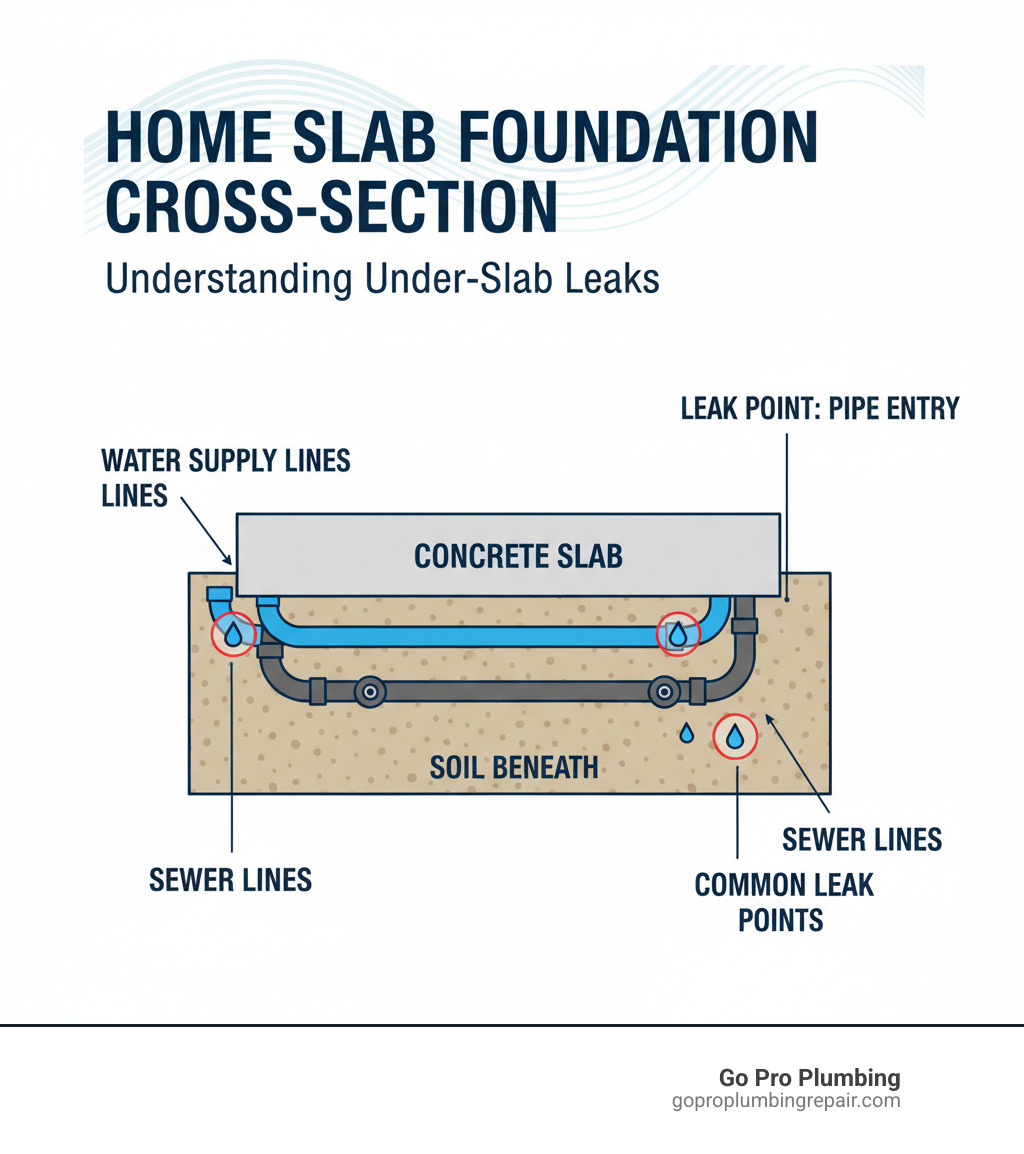
What is a Slab Leak and What Causes It?
A slab leak is a leak in the plumbing pipes buried beneath your concrete foundation. This is a common construction method; according to the US Census Bureau’s Characteristics of New Housing, over 63% of new single-family homes in 2019 had slab foundations. While efficient, it makes plumbing problems a major headache.
Common causes include:
- Pipe Corrosion: Older copper or galvanized steel pipes are prone to corroding over time due to soil and water chemistry.
- Shifting Soil: Seismic activity and soil expansion/contraction in California can put stress on pipes, causing them to bend or break.
- High Water Pressure: Excessively high pressure strains the entire plumbing system, leading to premature failure.
- Poor Installation: Pipes installed without proper protection against sharp rocks or abrasion can fail over time.
- Abrasion: Vibrations can cause pipes to rub against concrete or gravel, wearing them down until a leak forms.
Understanding these causes is the first step toward prevention. If you suspect a Water Leak Under House, it’s crucial to act fast.
The Telltale Signs: Is Your Foundation Hiding a Leak?
While the pipes are hidden, the effects of a slab leak are not. Your home will give you warnings that something is wrong; you just need to know what to look and listen for.

Obvious Symptoms You Can’t Ignore
Pay attention to these common red flags that point to a leak under your slab:
- Unexplained High Water Bills: A sudden spike in your bill without a change in usage is the number one sign of a hidden leak.
- Sound of Running Water: If you hear water running when all faucets and appliances are off, it’s likely escaping from a pipe.
- Low Water Pressure: A leak diverts water, reducing the pressure available throughout your home.
- Hot Spots on the Floor: Unusually warm spots on your floor are a classic sign of a Hot Water Slab Leak. The escaping hot water warms the concrete above it.
- Dampness and Damage: Look for damp carpets, warped flooring, musty smells, or visible mold and mildew. These indicate moisture is seeping up from below.
- Visible Cracks: New cracks in your foundation, walls, or floors can be caused by the soil shifting due to a persistent leak.
- Puddles of Water: Standing water near your foundation or seeping up through garage floors is a clear sign of trouble.
The Hidden Dangers of an Untreated Leak
Ignoring a slab leak leads to escalating problems and costs. What starts as a small plumbing issue can quickly become a crisis.
- Foundation and Structural Damage: Constant water exposure erodes the soil supporting your home, causing the foundation to crack, shift, and settle. This compromises your home’s entire structure, leading to sticking doors and uneven floors. Addressing the leak is the first step in any Foundation Water Leak Repair.
- High Utility Costs: A leak wastes thousands of gallons of water, driving up your monthly bills.
- Health Risks from Mold: Hidden moisture creates a breeding ground for mold and mildew, which can trigger allergies and respiratory issues.
- Damage to Finishes: Water can wick up into walls, destroying drywall, paint, and baseboards.
- Pest Infestation: Damp, dark spaces attract termites, ants, and other pests.
Early detection is crucial to prevent these serious consequences. Acting quickly can save you significant money, stress, and potential danger.
Your 15-Minute DIY Preliminary Leak Check
Before calling a professional, you can perform a few simple tests to confirm if you have a leak. These DIY checks are an excellent early warning system for leak detection under slab issues. They won’t pinpoint the location, but they will confirm if water is being lost somewhere in your system.
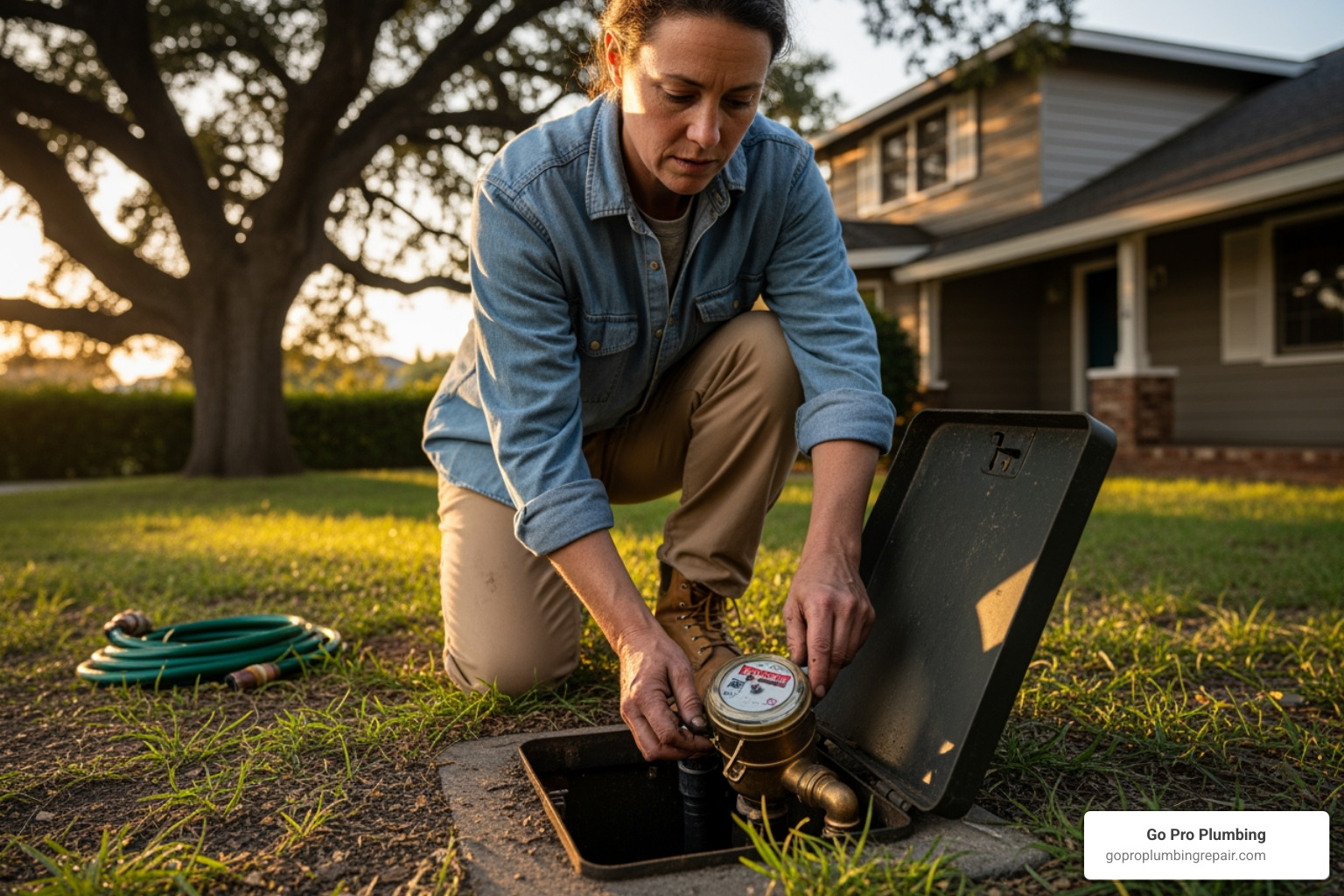
Step 1: The Water Meter Test
This is the most reliable DIY method for detecting a leak. It only takes about 15-30 minutes.
- Turn Off All Water: Ensure no faucets, toilets, sprinklers, or water-using appliances are running.
- Locate Your Water Meter: In Northern California, it’s usually in a concrete box near the street. Note the reading on the dial.
- Wait: Set a timer for 15-30 minutes. Do not use any water during this time.
- Re-Check the Meter: If the reading has changed or the small leak indicator (often a triangle or small dial) is moving, you have a leak.
This test confirms a leak in your main water line. If you still suspect a problem despite a static meter, you could have a leak in a hot water or sewer line. For more details, see our guide on How to Detect a Water Leak Under a Slab Foundation.
Step 2: A Walk-Through Inspection
Use your senses to gather more clues. Walk through your home and pay close attention to the following:
- Look: Search for water stains on floors or baseboards, warped flooring, peeling paint, or new cracks in the concrete slab, especially in a garage.
- Listen: In a quiet house, listen for faint hissing or dripping sounds coming from beneath the floors.
- Feel: Walk barefoot to detect warm spots on the floor, a key sign of a Hot Water Slab Leak. Check carpets and baseboards for any unusual dampness or sponginess.
If these tests raise red flags, it’s time to call Go Pro Plumbing. We have the professional equipment to find the exact source of the leak without unnecessary damage.
Professional Leak Detection Under Slab: The High-Tech Arsenal
While DIY checks confirm a leak exists, finding its exact location under concrete requires professional tools. Guesswork with a jackhammer is destructive and expensive. At Go Pro Plumbing, we use advanced, non-invasive technology for leak detection under slab to pinpoint the problem with minimal disruption to your Sacramento or Rancho Cordova home.
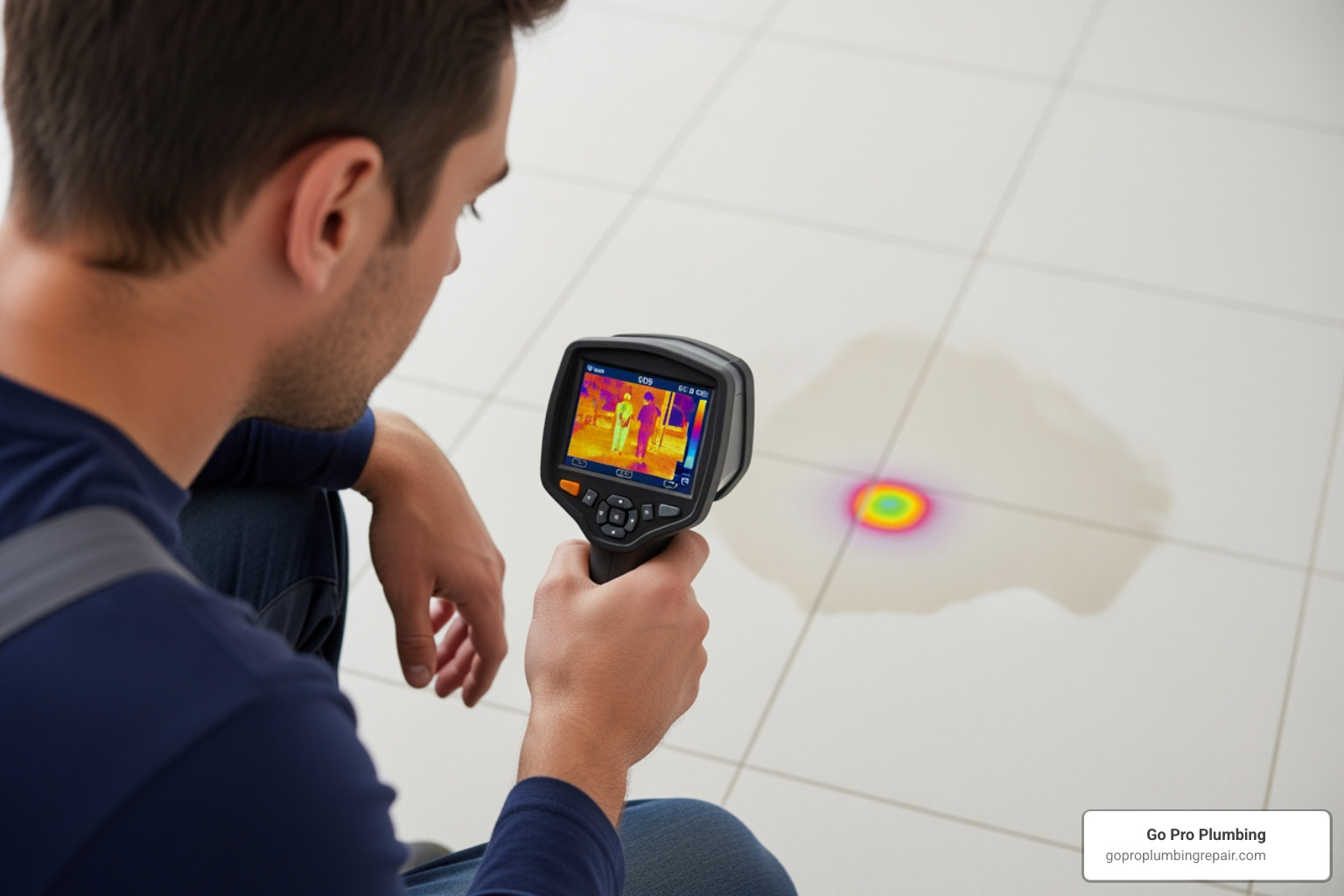
High-Tech Methods for Pinpoint Accuracy
Our goal is to find the leak precisely, which saves you time, money, and the headache of unnecessary demolition. We use a combination of specialized tools to get the job done right:
- Acoustic Listening Devices: These ultra-sensitive microphones amplify the specific sound of water escaping a pressurized pipe, allowing us to hear the leak through concrete and flooring.
- Infrared (IR) Thermal Imaging: For hot water leaks, IR cameras create a temperature map of your floor. The heat from the leaking water creates a clear thermal signature, showing us exactly where the problem is without removing a single tile.
- Pressure Testing: We isolate sections of your plumbing and pressurize them with air or water. A drop in pressure tells us which line contains the leak, narrowing the search area significantly.
- Tracer Gas Detection: For very small or deep leaks, we introduce a safe, non-toxic gas into the pipe. The gas escapes at the leak point and rises through the slab, where a specialized “sniffer” detects it on the surface.
- Video Camera Inspection: A small, waterproof camera is snaked through pipes to provide a direct visual of cracks, corrosion, or other damage from the inside.
Using this state-of-the-art equipment for Slab Leak Detection means we can often locate a leak within inches. This precision avoids widespread destruction, protects your property, and leads to faster, more cost-effective repairs. It’s a small investment that prevents thousands of dollars in unnecessary demolition and labor costs.
From Detection to Resolution: Your Slab Leak Repair Options
Once we’ve completed the leak detection under slab and pinpointed the source, it’s time to fix it. The best repair method depends on the leak’s location, your pipe’s condition, and your budget. We’ll explain the options so you can make an informed choice for your Northern California home.
Direct Access vs. Trenchless Repair
Your main choices are to go through the slab or work around it.
- Direct Access (Spot Repair): For a single, isolated leak, this is often the most direct solution. We use a jackhammer to create a small, precise opening in the slab to access and repair the damaged pipe section. While invasive, it’s fast and effective for localized problems.
- Trenchless Repair (Epoxy Pipe Lining): To avoid breaking the concrete, we can use epoxy lining. A resin-coated liner is inserted into the old pipe, creating a new, seamless pipe within the existing one. This is ideal for smaller leaks or pipes with widespread wear, often costing less and preserving your floors. It’s a key part of modern Slab Water Leak Repair.
When to Consider Re-Piping or Tunneling
If your plumbing system is old or you’ve had multiple leaks, a spot repair may not be enough.
- Re-Piping / Re-Routing: This involves installing entirely new pipes, often bypassing the slab by running them through the attic or walls. While a larger initial investment, it provides a long-term solution with modern, corrosion-resistant pipes (like PEX or CPVC) and eliminates future slab leak worries. It’s a smart choice for older homes. For cost context, see our article on Busted Water Pipe in Wall Cost.
- Tunneling: Instead of breaking through your floor, we can dig a tunnel under your foundation to access the pipes from below. This is an excellent option for preserving expensive or custom flooring. The work is done outside and underneath, leaving your home’s interior undisturbed. It is labor-intensive but can be the most cost-effective choice when factoring in floor replacement costs.
We’ll help you weigh the pros and cons of each method to find the right solution for you.
Frequently Asked Questions about Slab Leaks
Here are answers to the most common questions we hear from homeowners in Sacramento and Rancho Cordova about slab leaks.
How much does slab leak detection and repair cost?
Costs can vary, but here’s a typical range for Northern California:
- Leak Detection: Professional detection using specialized equipment usually costs $150 to $400. This investment prevents costly, destructive guesswork.
- Repair: The repair itself can range from a few hundred dollars for a simple epoxy patch to $2,000 – $6,000+ for more complex jobs like direct access repairs or re-piping. The final price depends on the method, accessibility, and extent of the damage.
- Secondary Damage: The cost to fix the plumbing is separate from repairing water damage to flooring, drywall, or the foundation itself. Foundation repairs can range from $250 to over $3,000, making early detection critical.
Does homeowner’s insurance typically cover slab leak repairs?
It depends on your policy. Most policies cover sudden and accidental water damage (like ruined floors) but often do not cover the cost of repairing the pipe itself, viewing it as a maintenance issue. Coverage for “tear-out and access” (the cost to break through the slab) also varies. Always call your insurance agent before work begins to confirm your specific coverage for leak detection under slab and the associated repairs.
How can I prevent slab leaks in the future?
While you can’t prevent everything, you can significantly reduce your risk:
- Get Regular Inspections: Have a professional plumber inspect your system periodically, especially in older homes.
- Manage Water Pressure: Install a pressure regulator if your home’s water pressure is consistently above 80 psi. High pressure strains pipes.
- Consider a Water Softener: In areas with hard water, a softener can reduce mineral buildup that leads to corrosion.
- Know Your Pipes: If you have older copper or galvanized pipes, be extra vigilant for warning signs.
- Fix Small Leaks Promptly: A dripping faucet can be a symptom of system-wide stress.
- Ensure Proper Drainage: Make sure water drains away from your foundation to prevent soil shifting that can damage pipes.
Conclusion: Winning the War Against Under-Slab Leaks

Slab leaks are a serious threat, but they are manageable with the right approach. This guide has armed you with the knowledge to spot the warning signs, perform your own preliminary checks, and understand your repair options.
Early detection is your best weapon. Listening to your home—whether it’s a high water bill, a warm spot on the floor, or the sound of running water—can save you thousands in potential damages.
While DIY checks are a great first step, professional expertise is essential for accurate leak detection under slab and effective repair. At Go Pro Plumbing, we use state-of-the-art technology to protect your foundation, your health, and your wallet. Serving homeowners across Northern California, including Sacramento and Rancho Cordova, we are committed to same-day service and outstanding customer care.
Don’t wait for a small leak to become a disaster. If you’ve noticed any warning signs or want the peace of mind of a professional inspection, take the next step. Contact us for professional slab leak services and let our team protect your home today.