
The Ultimate Guide to Fixing Low Water Pressure
By Brian on December 22, 2025

Why Low Water Pressure Affects Your Daily Life
Low water pressure solutions range from simple DIY fixes to professional interventions. While homeowners can often resolve minor issues, persistent problems usually require a licensed plumber.
Quick Solutions for Low Water Pressure:
- Clean faucet aerators and showerheads – Soak in vinegar to remove mineral buildup
- Check your main water valve – Ensure it’s fully open (turn counterclockwise)
- Test your water pressure – Attach a gauge to an outdoor spigot (ideal range: 40-60 psi)
- Inspect for leaks – Check pipes, look for wet spots, monitor your water bill
- Adjust or replace your pressure regulator – If faulty, it may need professional replacement
- Clear clogged pipes – Professional cleaning or repiping for severe corrosion
A weak shower stream, a washing machine that takes forever to fill, and a frustrating trickle from the kitchen tap—these are all signs of low water pressure. It’s more than an annoyance; it can signal serious plumbing problems.
Pressure below 30 psi is considered low, while the ideal range is 40-60 psi. Pressure above 80 psi can damage your plumbing. Fortunately, many issues have straightforward solutions. This guide will help you test your pressure, find the cause, and choose the right fix, whether it’s a quick DIY task or a job for Go Pro Plumbing.
Understanding and Diagnosing Your Water Pressure Problem
Before tackling low water pressure solutions, you must diagnose the problem. Water pressure is the force, measured in pounds per square inch (psi), that pushes water through your home. It’s different from water flow, which is the volume of water moving through pipes. A clogged aerator can cause weak flow even with good pressure.
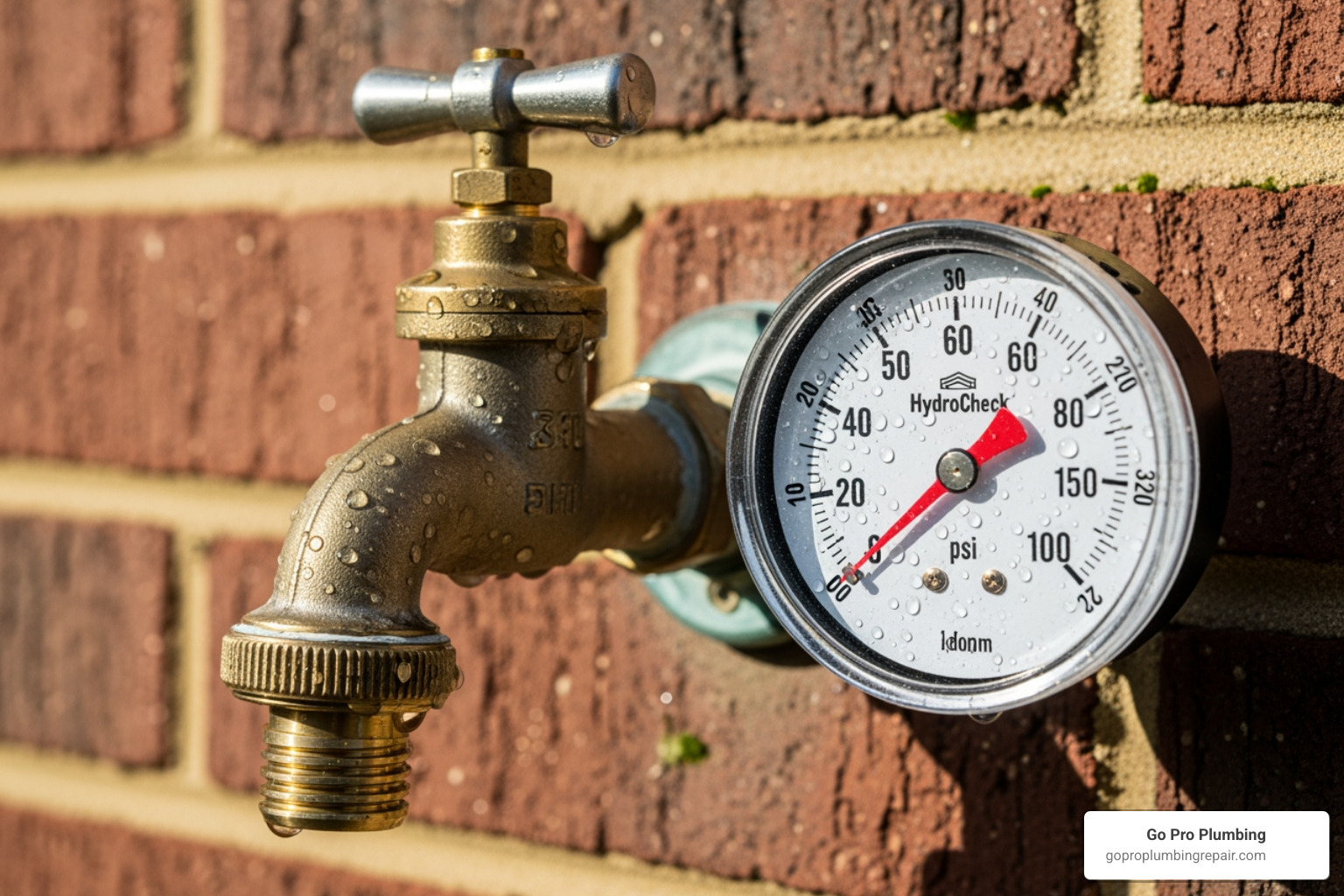
The ideal pressure for homes is 40-60 psi, a range confirmed by the U.S. Environmental Protection Agency. Below 30 psi, appliances struggle. Above 80 psi, you risk damaging pipes and fixtures. Telltale signs of low pressure include trickling faucets, slow-filling appliances, and weak showers.
Note whether the problem is consistent or intermittent. Consistent low pressure at all fixtures points to a larger issue like a failing pressure regulator or main supply problem. Intermittent low pressure, or pressure that only affects one area, suggests a localized clog or municipal supply fluctuations.
How to Test Your Home’s Water Pressure
Testing your pressure is simple and provides the data needed for the right low water pressure solutions. You’ll need a water pressure gauge, available at hardware stores or online, like this reliable pressure gauge.
- Turn off all water sources in your home (faucets, showers, appliances).
- Find an outdoor faucet (hose bib), preferably close to your main water line.
- Screw the pressure gauge onto the faucet threads until hand-tight.
- Turn the faucet fully open and read the settled number on the gauge.
A reading below 30 psi confirms a low pressure problem. A reading between 40-60 psi is ideal; if you still have issues, the problem is likely a localized clog. Pressure above 80 psi is too high and requires attention. If you suspect the issue is with the municipal supply in Sacramento or Rancho Cordova, contact your water department.
Common Causes of Low Water Pressure
Once you’ve tested your pressure, the next step in finding low water pressure solutions is identifying the cause.
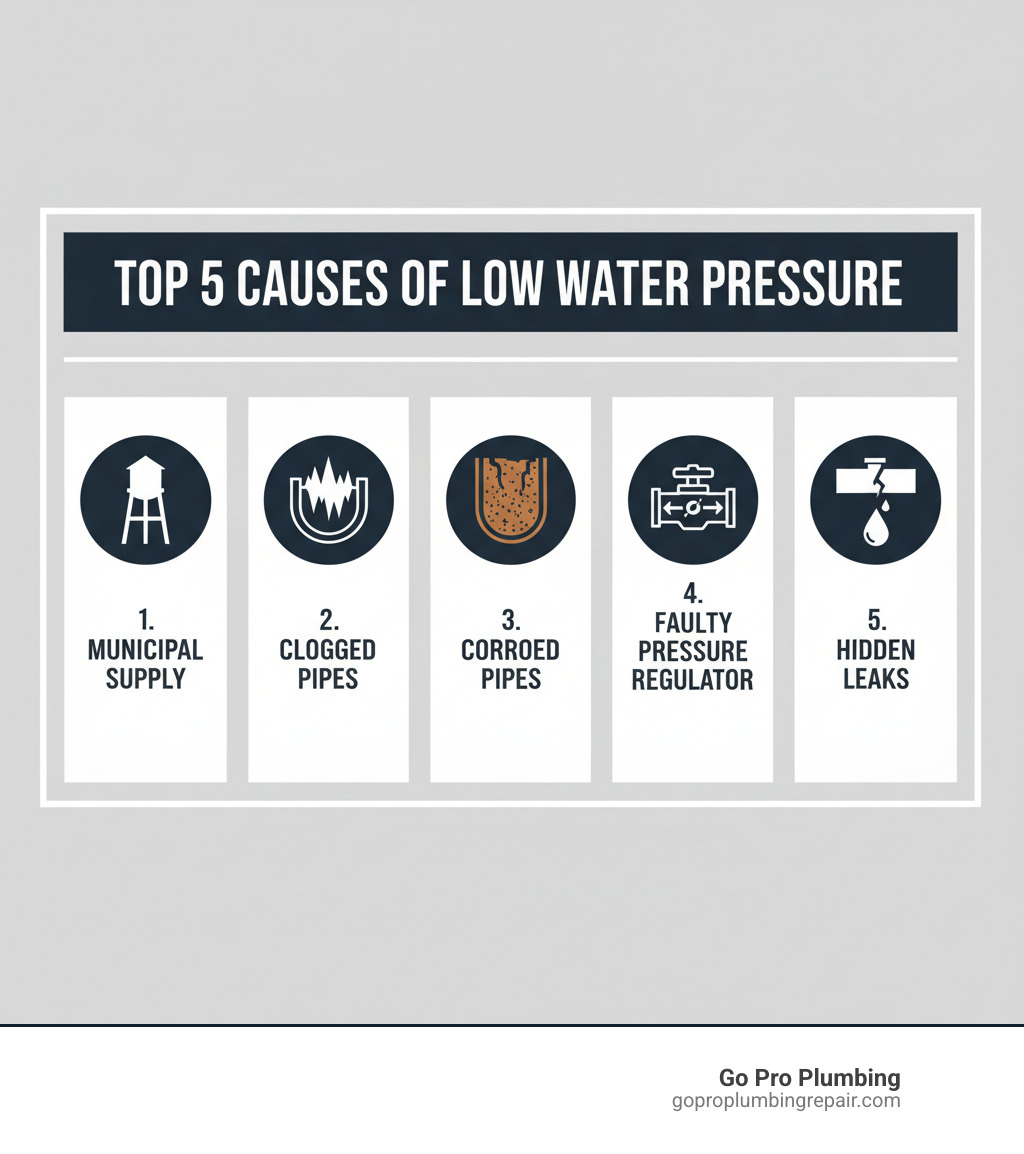
Common culprits include:
- Municipal supply issues: Problems affecting your whole neighborhood in Sacramento or Rancho Cordova.
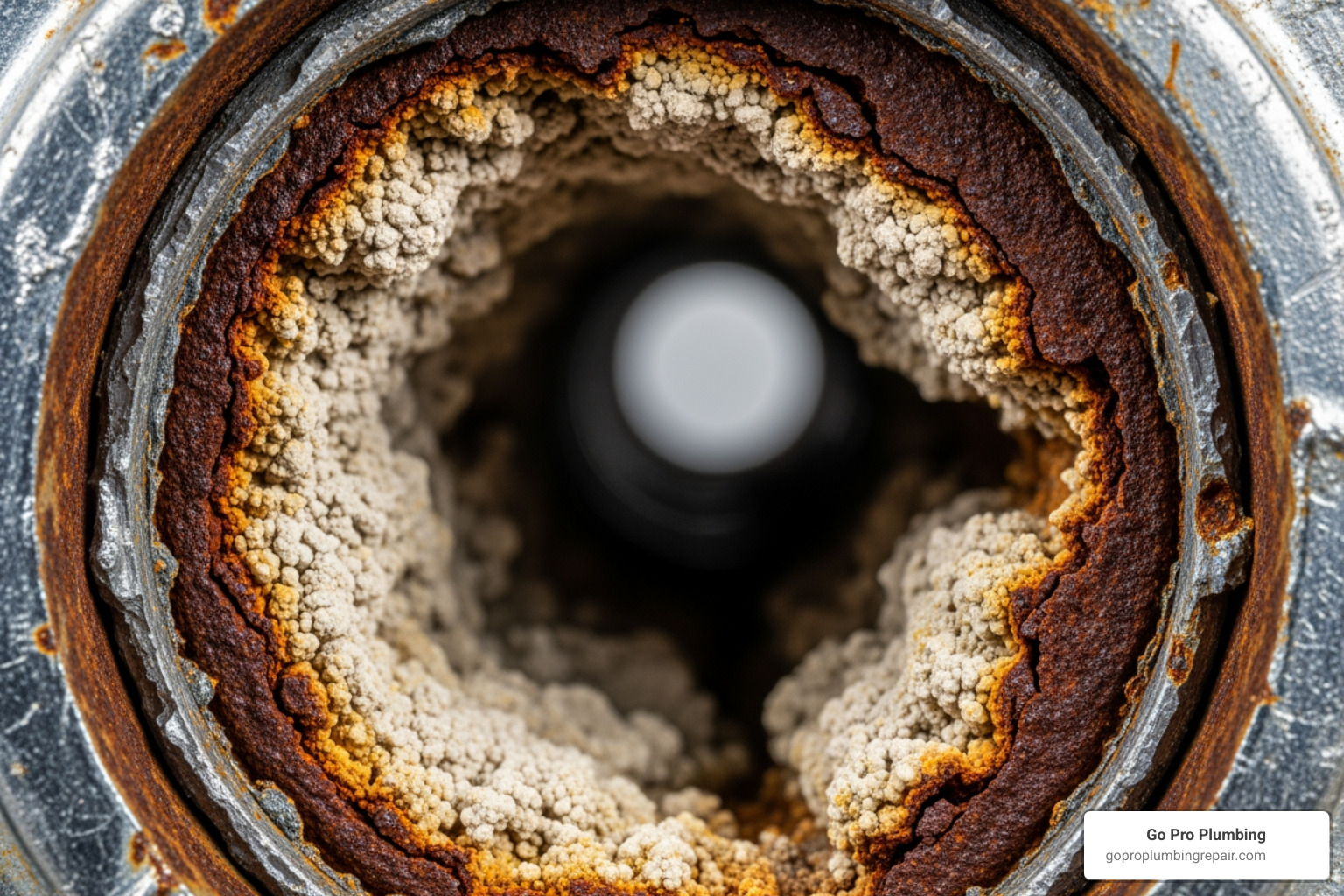
- Clogged or corroded pipes: Mineral and rust buildup narrows pipes, restricting flow.
- A faulty pressure regulator (PRV): A failed valve can restrict water flow to the entire house.
- Hidden leaks: Even small leaks reduce overall pressure.
- Obstructed fixtures: Localized clogs in faucet aerators or showerheads.
Clogged and Corroded Pipes
Mineral buildup and rust can choke your pipes, reducing water flow. This is especially true for older homes with galvanized steel pipes. After about 20 years, their protective zinc coating erodes, allowing rust to form and accumulate. We’ve seen pipes in older Northern California homes more than half-blocked by buildup. Pipe lifespans vary: galvanized (20-40 years), brass (40-70 years), and copper or PEX (50+ years). Signs of corroded pipes include house-wide low pressure, reddish-brown water, and a pressure drop when multiple fixtures are used.
A Faulty Water Pressure Regulator (PRV)
A PRV is a bell-shaped valve on your main water line that reduces high municipal pressure to a safe level (around 50 psi). When it fails, it can cause low or fluctuating pressure throughout the house. You might also hear chattering or humming noises from the valve. If you suspect your PRV is the issue after testing, you can try adjusting it or watch this video. However, an old or noisy valve often needs professional replacement.
Hidden Plumbing Leaks
A hidden leak is a silent pressure thief. The first sign is often an unexplained high water bill. Also look for wet spots on walls or floors, musty odors, or the sound of running water when all fixtures are off. To check, turn off all water and look at your water meter. If the dial is moving, you have a leak. Promptly fixing leaks is a key low water pressure solution.
Obstructed Fixtures and Faucets
If low pressure only affects one or two fixtures, the problem is likely a simple obstruction. Faucet aerators and showerheads collect mineral deposits and debris over time, blocking water flow. Federal law already limits showerheads to 2.5 gallons per minute, and buildup reduces this even further. This is one of the easiest problems to fix yourself.
DIY Low Water Pressure Solutions
Many low water pressure solutions are simple enough for a DIY fix, especially if the problem affects only one or two fixtures.
Before starting, turn off the water supply to the fixture or the whole house. Know your limits: cleaning fixtures is basic maintenance, but if you have house-wide low pressure, discolored water, or suspect corroded pipes, it’s time to call Go Pro Plumbing.
Simple Fix #1: Clean Your Fixtures
This is the best place to start.
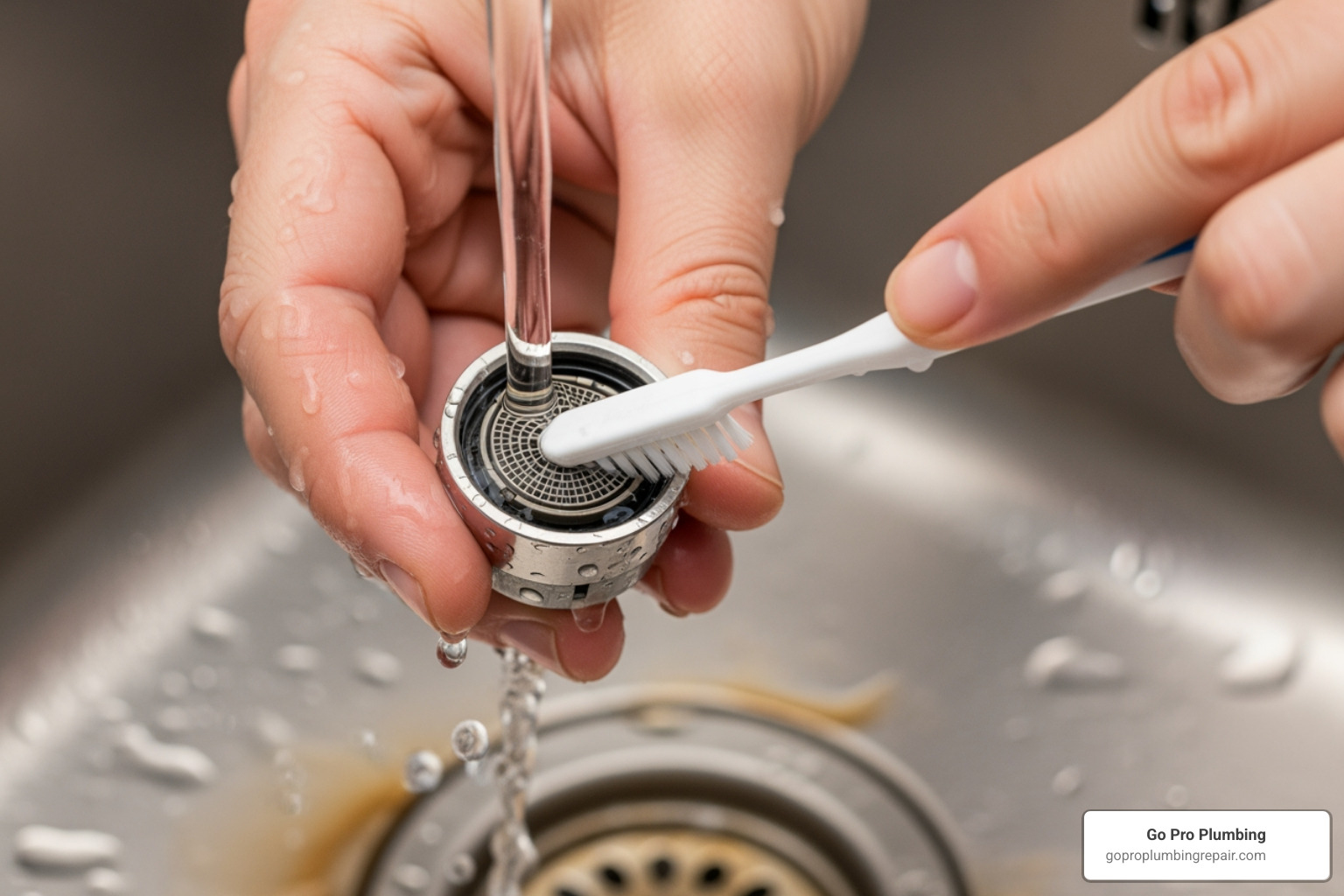
- Faucet Aerators: Unscrew the aerator from the faucet tip (use pliers with tape to prevent scratches). Disassemble it, noting the order of the parts. Soak the parts in white vinegar for a few hours to dissolve mineral buildup. Scrub with an old toothbrush, reassemble, and screw it back on.
- Showerheads: Fill a plastic bag with white vinegar, secure it over the showerhead with a rubber band so the head is submerged, and leave it overnight. In the morning, remove the bag and scrub away softened deposits. You can also remove the showerhead for a more thorough soak. While it’s off, you may see a flow restrictor, a plastic insert required by federal law. Removing it can increase flow but will also increase water usage.
Simple Fix #2: Check Your Water Valves
A partially closed valve is a common and easy-to-fix culprit.
- Main Shut-Off Valve: Locate this valve where the main water line enters your house (basement, garage, or utility closet). If it’s a round handle (gate valve), turn it counter-clockwise until it stops. If it’s a lever handle (ball valve), ensure the handle is parallel to the pipe.
- Water Meter Valve: This valve is near your water meter and should also be fully open.
Simple Fix #3: Adjust the Pressure Regulator
If your home has a pressure-reducing valve (PRV), a careful adjustment can help, but proceed with caution. The PRV is a bell-shaped valve on your main water line.
- Loosen the lock nut on top of the valve.
- Turn the adjustment screw clockwise in small increments (a quarter-turn at a time) to increase pressure.
- Run water for a minute, then re-check the pressure with your gauge.
- Aim for 50-60 psi. Do not exceed 75-80 psi, as this can damage your plumbing.
- Once set, tighten the lock nut.
If the PRV is old, noisy, or doesn’t respond to adjustment, it needs professional replacement. This is a clear sign to call Go Pro Plumbing.
Advanced and Professional Low Water Pressure Solutions
When DIY fixes aren’t enough, it’s time for professional low water pressure solutions. A licensed plumber has the tools and experience to diagnose complex issues, from hidden leaks to problems with the municipal supply connection.
Professional Pipe Cleaning and Replacement
For pipes choked with mineral deposits, plumbers use hydro-jetting, a high-pressure water stream that scours pipes clean and restores flow.
However, if your older Sacramento home has galvanized steel pipes, they are likely suffering from internal corrosion. Cleaning provides only a temporary fix, as the rust will continue to form. In this case, repiping is the most effective long-term solution. Replacing old pipes with modern PEX or copper eliminates the source of the problem. PEX is flexible and corrosion-resistant, while copper has a long history of durability. Repiping is an investment that gives your home a new plumbing system, ensuring strong, consistent pressure for decades.
When You Absolutely Need a Plumber
Knowing when to call a professional is key. Contact Go Pro Plumbing if you experience any of the following:
- A sudden, drastic drop in pressure throughout your home, which could signal a burst pipe or main line break.
- Signs of major leaks, such as wet spots on walls, pooling water, or a skyrocketing water bill. Professionals use specialized equipment to find hidden leaks without unnecessary damage.
- Discolored water (rusty or brown) combined with low pressure, a clear sign of internal pipe corrosion.
- Persistent low pressure after you’ve tried all the DIY fixes. This points to a systemic issue like a failing PRV or corroded pipes.
- Suspected main water line issues. Problems with the buried pipe from the street to your home require excavation and professional repair. For main water line repair in Northern California, trust the experts. Learn more about our main water line services.
- A failed pressure regulator (PRV). While adjustment can be a DIY task, replacement should be handled by a pro to ensure it’s correctly sized and installed.
The licensed team at Go Pro Plumbing can accurately diagnose and fix any low water pressure problem, offering same-day service to restore your home’s plumbing.
Frequently Asked Questions about Low Water Pressure
Here are answers to some of the most common questions we hear from homeowners in Sacramento and Rancho Cordova.
Why is my water pressure low in just one bathroom?
This is almost always a localized issue. The most likely causes are:
- An obstructed fixture: The faucet aerator or showerhead is clogged with mineral deposits. This is the easiest problem to fix.
- A partially closed shut-off valve: Check the small valves under the sink and behind the toilet to ensure they are fully open (turned counter-clockwise).
- A clog in the branch pipe: The specific pipe serving that bathroom may have a clog or corrosion issue that doesn’t affect the rest of the house.
Why is only my hot water pressure low?
When only the hot water is affected, the problem is almost always related to your water heater.
- Sediment buildup in the water heater: Minerals settle at the bottom of the tank over time, restricting the flow of hot water out of the unit. Flushing your water heater annually can prevent this.
- Clogged or kinked hot water lines: The pipes leading from the water heater can become clogged with mineral deposits.
- A partially closed valve on the water heater: Ensure the shut-off valve on the hot water outlet pipe is fully open.
How can I maintain optimal water pressure long-term?
Prevention is easier than repair. Follow these tips to maintain good pressure:
- Clean fixtures regularly: Soak faucet aerators and showerheads in vinegar every few months to remove mineral buildup.
- Schedule annual plumbing inspections: A professional can spot early signs of corrosion, leaks, or a failing PRV.
- Install a water softener: If you have hard water, a softener removes minerals that cause buildup in pipes and fixtures.
- Fix minor leaks promptly: A small drip can worsen over time and contribute to pressure loss.
- Know your plumbing: Understand where your main shut-off and PRV are located to help with basic troubleshooting.
Restore Your Flow and Comfort
You now have a clearer picture of what might be causing your water pressure issues. Many problems, like clogged fixtures or a partially closed valve, have simple DIY low water pressure solutions. These quick fixes can often restore your flow and comfort.
However, some problems run deeper. Corroded pipes, hidden leaks, and main water line issues require professional expertise. Attempting to fix these major problems yourself can lead to more damage and higher costs.
That’s where Go Pro Plumbing comes in. We’ve helped countless homeowners in Rancho Cordova and Sacramento diagnose and fix stubborn water pressure problems. From hydro-jetting to complete repiping with modern materials, we have the skills to handle any issue. Our commitment to outstanding customer service includes honest recommendations and same-day service to get your water flowing properly again.
Don’t let low water pressure disrupt your life. If DIY fixes haven’t worked or you suspect a serious issue, we’re here to help. Learn more about our main water line services or contact us to schedule a consultation and restore proper water pressure to your home.