
The Ins and Outs of Sewer Line Replacement Cost
By Brian on December 29, 2025
Understanding Your Sewer Line Replacement Costs
When your home’s main drain fails, the sewer line replacement cost is a primary concern. This major expense can be stressful, but understanding the factors involved can help. Typically, a full replacement costs between $3,000 and $6,000. The price per linear foot ranges from $50 to $250 for traditional methods and $60 to $250 for trenchless options.
For homeowners in Northern California, a failing sewer line is more than an inconvenience; it’s a potential health hazard and threat to your property. This vital pipe carries all wastewater from your home, and its failure requires immediate, expert attention.
At Go Pro Plumbing, we understand the urgency. This guide will walk you through everything you need to know about sewer line replacement costs, helping you steer the process with confidence.
Understanding the Sewer Line Replacement Cost Breakdown
Facing a sewer line problem can be overwhelming, but understanding the costs starts with a professional diagnosis. At Go Pro Plumbing, we begin with a sewer camera inspection, which typically costs between $100 and $500. This allows us to see the exact problem underground without guesswork, so we can provide an accurate quote for your sewer line replacement cost.
Once diagnosed, the cost generally ranges from $50 to $250 per linear foot for traditional methods and $60 to $250 per linear foot for trenchless options. While the national average is around $3,319, your specific cost depends on several key factors and potential additional expenses like permits or landscaping.
Key Factors Influencing Your Sewer Line Replacement Cost
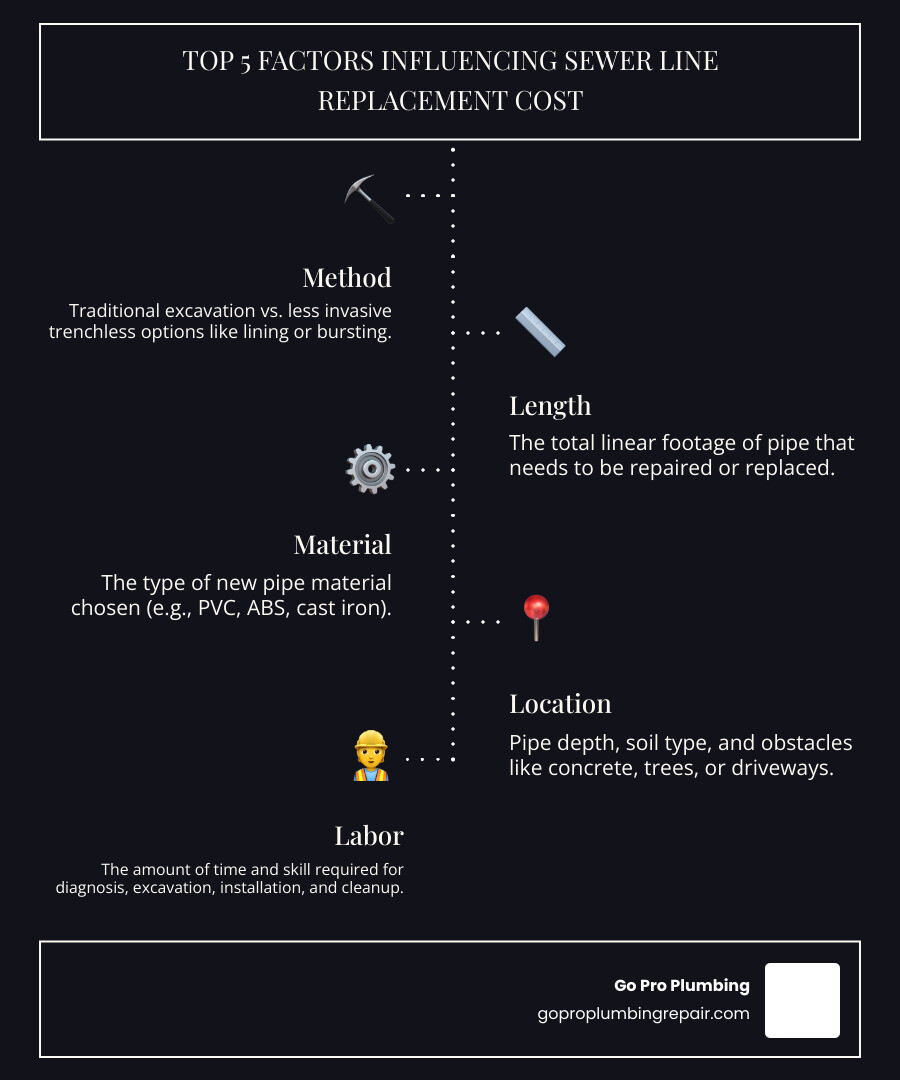
Several elements determine the final sewer line replacement cost:
- Pipe Length and Depth: Longer and deeper pipes require more materials and labor. Most residential lines are 5-6 feet deep, but pipes below the freeze line in colder climates cost more to access.
- Accessibility: A line under an open lawn is cheaper to access than one beneath a concrete patio, driveway, or mature trees.
- Obstacles: Tree roots are a common issue, and their removal can add $100 to $600 to the bill. Other obstacles include large rocks or existing utility lines.
- Concrete and Landscaping: Breaking through concrete can cost $2 to $25 per square foot, and repairing it adds to the total. Restoring landscaping after digging can range from $4.50 to $12 per square foot.
Most homes use a 4-inch diameter pipe, but the material chosen also significantly impacts the price.
| Material Type | Cost Per Linear Foot (Material Only) | Average Lifespan | Pros | Cons |
|---|---|---|---|---|
| PVC | $3 – $8 | 100+ years | Durable, affordable, corrosion-resistant, smooth interior (prevents clogs) | Can be damaged by extreme heat or certain chemicals |
| ABS | $3 – $11 | 50 – 100 years | Similar to PVC, good for cold climates, single-piece construction (fewer joints) | Not as widely accepted as PVC, can warp in heat |
| Cast Iron | $20 – $75 | 75 – 100 years | Very strong, durable, quiet, fire-resistant | Heavy, susceptible to corrosion (rust), more expensive |
| Copper | $30 – $85 | 70 – 100 years | Extremely durable, long lifespan, corrosion-resistant | Very expensive, vulnerable to certain soil conditions |
Cost of Different Pipe Materials
The material for your new sewer line is a major cost factor. Here’s a quick overview:
- PVC (Polyvinyl Chloride): A popular and affordable choice ($3-$8 per foot), PVC is durable, corrosion-resistant, and can last over 100 years.
- ABS (Acrylonitrile Butadiene Styrene): Similar to PVC, ABS ($3-$11 per foot) is strong in cold climates but can be sensitive to heat.
- Cast Iron: Found in older homes, this strong material ($20-$75 per foot) lasts 75-100 years but is heavy and can rust over time.
- Copper: While extremely durable, copper ($30-$85 per foot) is very expensive and less common for main sewer lines.
Older materials like Clay Pipes (brittle, 50-60 year lifespan) and Orangeburg pipe (compressed wood fiber, 30-60 year lifespan) almost always require a full replacement. We’ll always recommend the best, code-compliant material for your Northern California home. Most homes use 4-inch diameter pipe, which we’ll confirm for your project.
Additional Costs to Consider
Beyond the pipe and labor, be aware of these potential expenses:
- Permit Fees: Required for most replacements, permits cost $200 to $1,000 to ensure compliance with health and safety codes.
- Excavation and Backfill: Traditional digging can cost $4 to $12 per linear foot just for the trenching.
- Landscaping and Driveway Repair: Restoring your yard ($4.50-$12/sq ft) or driveway ($1-$25/sq ft) is a common post-project cost.
- Tree Root Removal: If roots are the cause, removal can add $100 to $600.
- Pipe Disposal: Disposing of the old pipe may cost around $250.
- Related Plumbing Work: Sometimes, a new cleanout ($500-$2,000) or backflow preventer ($150-$1,150) is needed. We will always discuss these options with you first.
Traditional vs. Trenchless Methods: A Cost and Method Comparison
When replacing your sewer line, you have two main options: traditional excavation or modern trenchless techniques. The choice significantly impacts the sewer line replacement cost, project timeline, and disruption to your yard.
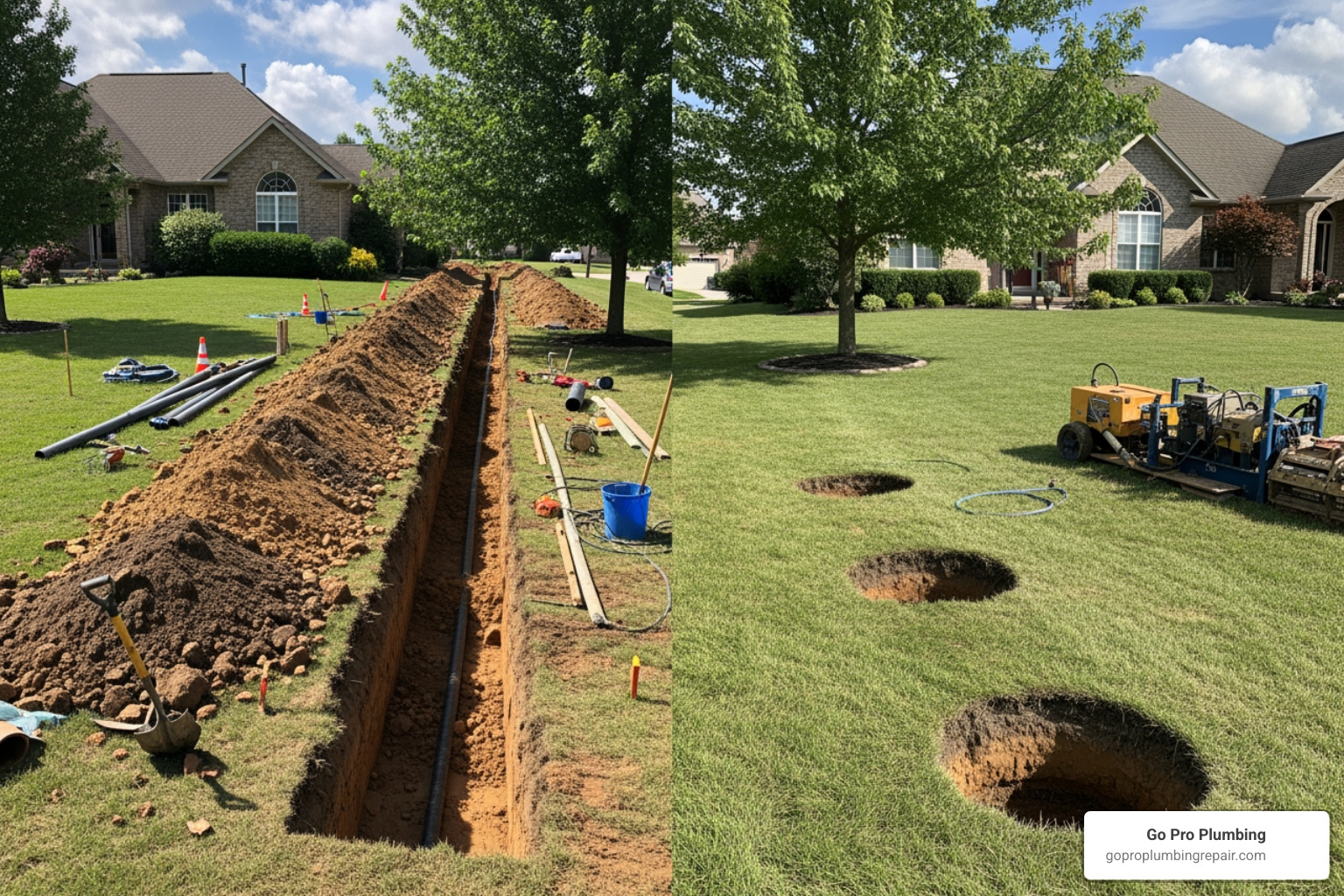
Traditional methods involve digging a large trench, disrupting landscaping and driveways. Trenchless methods minimize this by using small access points. Trenchless repairs are also faster, often completed in a day or two, while traditional jobs can take up to a week. Both methods offer long-term durability with modern materials. Our experts at Go Pro Plumbing will assess your situation to recommend the best option for your home.
Traditional Excavation Replacement
The traditional “dig-and-replace” method involves digging a trench to expose the damaged sewer line, removing the old pipe, and installing a new one. This method typically costs $50 to $250 per linear foot, not including landscape restoration.
While more disruptive, traditional excavation is sometimes the only option, especially for:
- Completely collapsed pipes.
- Extensive damage over a long section.
- Older, brittle pipe materials unsuitable for trenchless methods.
This labor-intensive process is a reliable solution for the most severe pipe failures.
Trenchless Pipe Lining (CIPP)
Trenchless pipe lining, or Cured-in-Place Pipe (CIPP), is a “no-dig” technology that repairs a pipe from the inside. We insert a flexible, resin-coated liner into the old pipe, inflate it, and allow the resin to cure, forming a new, seamless pipe within the old one.
CIPP is an excellent choice for repairing cracks, sealing leaks, and preventing tree root intrusion. The cost typically ranges from $80 to $250 per linear foot. While the per-foot cost can be similar to traditional methods, the significant savings on landscape restoration often make it a more budget-friendly choice overall. You can learn more about trenchless options and their benefits.
Trenchless Pipe Bursting
Pipe bursting is another trenchless technique used to replace a pipe entirely without digging a long trench. We pull a new, high-density polyethylene (HDPE) pipe through the old one using a cone-shaped “bursting head.” This head simultaneously breaks the old pipe apart, pushing the fragments into the surrounding soil while pulling the new pipe into place.
Pipe bursting is ideal for:
- Replacing severely damaged or collapsed pipes.
- Upsizing a sewer line that is too small for your home’s needs.
The cost for pipe bursting is generally $60 to $200 per linear foot. Like CIPP, the minimal digging saves you money on property restoration, making the total sewer line replacement cost more manageable.
When to Repair vs. Replace Your Sewer Line
Deciding between a repair and a full replacement is a critical choice that affects your budget and your home’s long-term plumbing health. At Go Pro Plumbing, we always start with a thorough camera inspection to understand the true condition of your pipes.

We consider the pipe’s age, the type and extent of damage, and the frequency of problems. A newer pipe with a single crack may only need a repair, but an older, deteriorating line with recurring issues is often best replaced. While a repair is cheaper upfront, a replacement can offer long-term savings and decades of peace of mind.
Warning Signs Your Sewer Line is Failing
Your home will often give you clues that the main sewer line is in trouble. Ignoring these can lead to more expensive problems. Look out for these common signs:
- Frequent Clogs: If multiple fixtures are clogging simultaneously, the issue is likely in the main line.
- Multiple Slow Drains: Widespread slow draining points to a blockage or damage in the main sewer line.
- Sewage Backups: Raw sewage backing up into toilets or tubs is an urgent sign of a severe blockage or break.
- Foul Odors: A persistent sewer gas smell inside or outside your home suggests a crack in the line.
- Gurgling Noises: Strange gurgling from drains can indicate trapped air from a partial blockage.
- Pests: A sudden increase in rodents or insects can mean they’re entering through a broken sewer pipe.
- Yard Indentations or Wet Spots: Soggy patches or unusually green spots in your lawn can be caused by a leaking pipe.
- Foundation Cracks: In severe cases, a long-term leak can erode soil and damage your home’s foundation.
If you notice these signs, call Go Pro Plumbing for a camera inspection to diagnose the problem accurately.
Repair vs. Replacement: Making the Right Choice
Once we identify the issue, we’ll help you decide between repair and replacement.
Sewer line repair is a good option for isolated issues in a relatively new pipe. It typically costs between $2,500 and $4,000. Consider repair for:
- A single, small crack or break (spot repair).
- Minor tree root intrusion in one area.
- A simple blockage in an otherwise healthy pipe.
Full replacement is a larger investment, costing between $3,000 and $7,000, but is often the best long-term solution. Replacement is necessary for:
- Completely collapsed or severely sagging pipes.
- Pipes made of old materials like Orangeburg or brittle clay.
- Widespread damage, cracks, or corrosion.
- Pipes that have reached the end of their functional lifespan.
We’ll provide clear information on all sewer line replacement cost scenarios so you can make an informed choice for your home.
How to Manage Your Sewer Line Replacement Project
A sewer line replacement is a major project, but it’s manageable with the right approach. This involves budgeting, choosing a qualified contractor, and understanding your financial options.
How to Save Money on Replacement Costs
While the sewer line replacement cost can be significant, there are ways to manage the expense:
- Get Multiple Quotes: Always get at least three detailed estimates from licensed plumbers to ensure a fair price.
- Consider Trenchless Methods: “No-dig” options like pipe lining or bursting can save you 30-40% on restoration costs for your landscaping and driveway.
- Schedule During the Off-Season: If it’s not an emergency, scheduling work in late fall or winter may lead to better rates from less busy plumbers.
- Invest in Preventative Maintenance: Regular camera inspections and drain cleanings can catch small problems before they become costly replacements.
- Protect Your Pipes: Avoid flushing “flushable” wipes, which cause clogs, and be mindful of planting trees too close to your sewer lines.
The Risks of DIY vs. Hiring a Professional
While the DIY spirit is admirable, sewer line replacement is a job exclusively for professionals. The risks of doing it yourself are immense and can lead to much higher costs in the long run.
This work requires specialized equipment, such as inspection cameras and hydro-jetters, that homeowners don’t have. It must also adhere to strict local building codes for public health and safety. Professionals like Go Pro Plumbing are licensed, insured, and know these codes thoroughly.
DIY attempts pose serious safety hazards, including trench collapses and exposure to raw sewage. Mistakes during installation can cause leaks and further damage, requiring expensive professional correction. Finally, a professional’s work is backed by a warranty, offering protection and peace of mind that a DIY job cannot. For your safety and financial well-being, always hire a licensed expert.
Financial Assistance and Insurance
Navigating the financial side of a sewer line replacement cost can be challenging, but help may be available.
Standard homeowner’s insurance typically does not cover damage from normal wear and tear or lack of maintenance. However, it might offer coverage if the damage was caused by a sudden, accidental event. Always review your policy to be sure.
Many insurers also offer sewer line insurance endorsements or separate service line coverage. This add-on can be a wise investment, as it’s designed to cover issues like root intrusion or corrosion that standard policies exclude.
In some cases, federal assistance programs may be available, particularly for homeowners in rural areas. For example, the USDA offers a Water & Waste Disposal Loan & Grant Program. It’s worth checking if you qualify for any local or federal assistance. You can learn more about some of these options here: Federal assistance programs.
Frequently Asked Questions about Sewer Line Replacement
How long do sewer lines typically last?
The lifespan of your sewer line depends heavily on its material.
- PVC (Polyvinyl Chloride): Modern PVC pipes are extremely durable and can last 100 years or more.
- Cast Iron: Common in older homes, these pipes are strong and last 75 to 100 years, but they can rust over time.
- Clay: Popular in mid-century construction, clay pipes are brittle and last 50 to 60 years. They are highly susceptible to cracks and root intrusion.
- Orangeburg: An outdated material made of wood fiber and tar, this pipe has a short lifespan of only 30 to 60 years and almost always requires a full replacement when it fails.
Other factors like aggressive soil conditions, invasive tree roots, and ground movement can also affect a pipe’s longevity. Regular maintenance is key to maximizing its lifespan.
Is trenchless sewer line replacement worth the cost?
Yes, in most cases, trenchless replacement is worth the investment. While the per-foot sewer line replacement cost can seem comparable to traditional digging, the overall savings are significant.
The primary advantage is the savings on landscape restoration. Traditional trenching can destroy lawns, driveways, and gardens, leading to thousands of dollars in repair costs. Trenchless methods use small access points, preserving your property and eliminating most of these extra expenses.
Other key benefits include:
- Speed: Trenchless repairs are often completed in a single day, compared to several days for excavation.
- Durability: The new pipe materials (HDPE or epoxy liners) are seamless, corrosion-resistant, and often warrantied for 50 years or more.
- Less Disruption: The process is quieter, cleaner, and far less invasive than digging a large trench across your property.
For these reasons, trenchless methods typically provide better value and greater peace of mind.
What are the health and environmental reasons for replacing a bad sewer line?
A failed sewer line is a serious health and environmental hazard that requires immediate action. Leaking raw sewage releases harmful bacteria and pathogens like E. coli and salmonella into your yard and soil, posing a significant health risk to your family and pets.
This wastewater contamination can pollute local groundwater and waterways, impacting the broader environment and potentially community drinking water sources. In severe cases, the soil erosion caused by a major leak can even lead to dangerous sinkholes on your property.
Furthermore, a functioning sewer system is fundamental to your property value. A history of sewer problems can make a home difficult or impossible to sell. Replacing a failing line is not just a repair—it’s a crucial investment in your family’s health, the environment, and the long-term value of your home.
Conclusion
We’ve covered the key aspects of sewer line replacement cost, and hopefully, you now feel more prepared. While the average project costs between $3,000 and $6,000, the final price depends on factors like pipe length, depth, material, accessibility, and the chosen replacement method.
Modern trenchless methods often provide the best value by minimizing damage to your property and saving you thousands in restoration costs. Warning signs like frequent clogs, foul odors, or soggy spots in your yard are your home’s cry for help. A professional camera inspection is the first step toward an accurate diagnosis and a lasting solution.
Think of a new sewer line as a long-term investment in your home’s health, safety, and value. It provides peace of mind knowing your wastewater system is reliable.
Here at Go Pro Plumbing, we’re ready to help you tackle your sewer line challenges. We pride ourselves on outstanding customer service and offer same-day service for homeowners across Rancho Cordova, Sacramento, and the wider Northern California area.
Ready to tackle your sewer line issues with confidence?