
No More Cold Showers: The Magic of Hot Water Recirculation
By Brian on January 15, 2026

The Frustrating Wait for Hot Water
A hot water heater return line is a dedicated pipe that carries cooled hot water back to your water heater for reheating. Together with a small pump, it creates a continuous circulation loop that delivers near-instant hot water to your faucets. This setup cuts the wait time for hot water and dramatically reduces water waste in your home.
Key Benefits of a Hot Water Return Line:
- Instant hot water at every faucet and shower
- Saves 3,000-12,000 gallons of water per household annually
- Reduces utility bills by eliminating wasted water and energy
- Available in three types: dedicated return line, retrofit comfort system, and on-demand system
Depending on your home’s size and plumbing length, you might wait several minutes for hot water, sending perfectly good water down the drain. Nationally, households waste between 400 billion and 1.3 trillion gallons of water each year waiting for it to heat up. For an average family of four, that’s up to 12,000 gallons annually—wasted water, time, and money, which is especially critical in drought-prone Northern California.
A hot water recirculating system solves this by creating a loop. Instead of letting cooled water sit in your pipes, the system sends it back to your water heater through a return line, ensuring hot water is always ready when you need it.

Easy hot water heater return line glossary:
- hot water recirculation
- does a hot water recirculating pump run all the time
- electric water heater recirculation pump
What is a Hot Water Recirculating System?
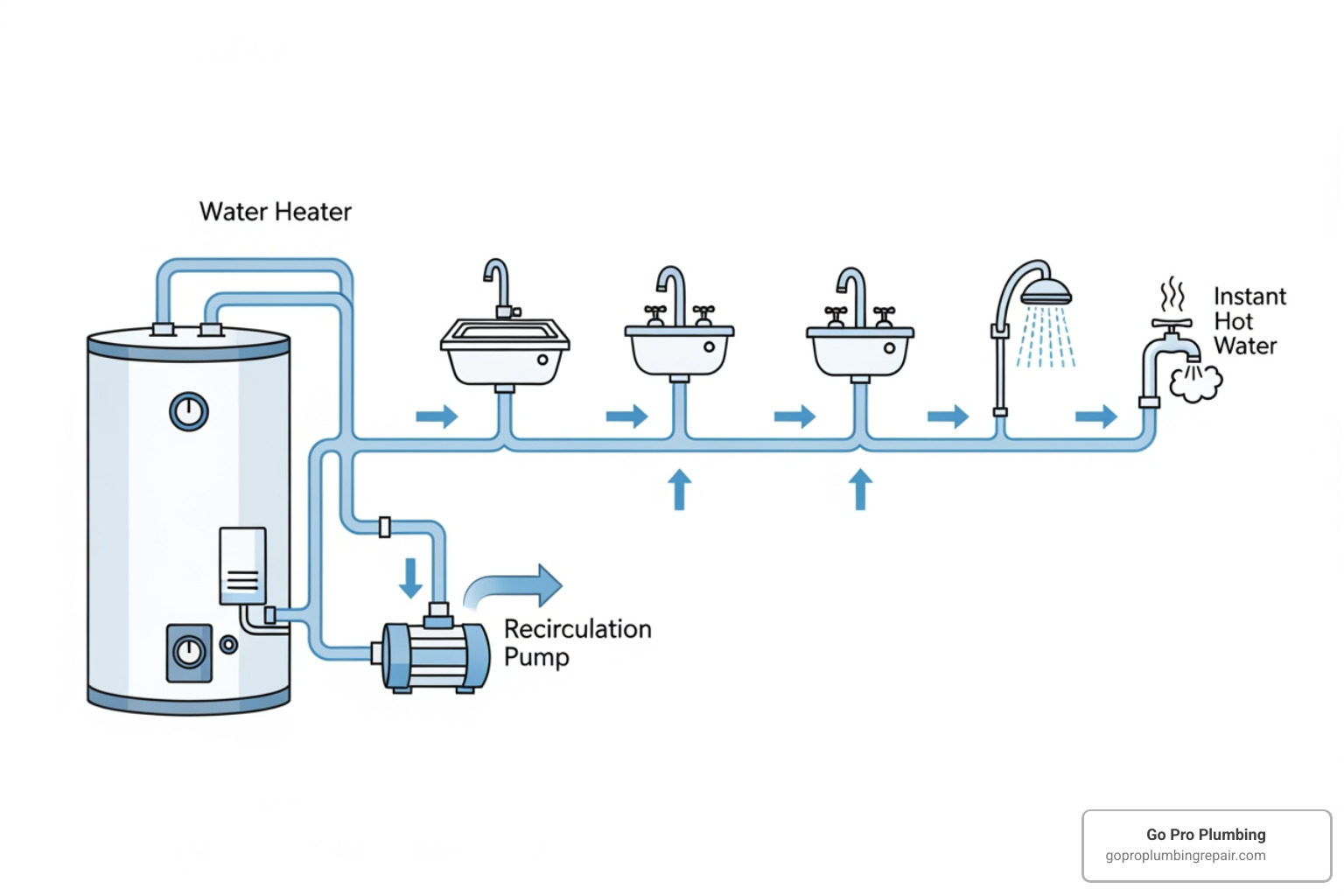
A hot water recirculating system delivers instant hot water to your faucets, eliminating the wait and the “cold water sandwich” effect—the slug of cooled water that sits in your pipes between uses. In a standard setup, water left in the pipes cools down after you turn off the faucet. The next time you need hot water, you must run the tap until that cooled water is purged, which is what causes significant water waste.
A recirculating system creates a continuous loop. A small pump circulates hot water through the lines and back to the heater via a dedicated hot water heater return line or the existing cold water line. This keeps hot water ready at the tap by pushing cooled water back for reheating. It’s a smart solution for comfort and conservation. Learn more in our guide on how does a hot water recirculating system work.
This continuous movement of water provides instant hot water and translates into significant water and energy savings. By not running the tap for minutes, you’re saving thousands of gallons of water annually, which is vital in regions like Northern California. While the pump uses a small amount of electricity, the savings from not wasting water and the energy used to treat it often outweigh this cost.
Gravity vs. Forced Recirculation
There are two primary methods for moving water in a recirculation system: gravity and forced.
- Gravity Systems: These pump-free systems use the natural principle of convection: hot water rises, and cooler, denser water sinks. Pipes are arranged so hot water rises from the heater and falls back through the hot water heater return line as it cools. However, they have limitations, requiring specific pipe layouts (best for multi-story homes) and often uninsulated return lines to function.
- Forced Systems: More common and versatile, these systems use an electric pump to push hot water through the loop. This allows for flexible installation in nearly any home in Northern California. You can insulate all hot water lines to reduce heat loss, and the pump can be controlled by a timer, thermostat, or on-demand sensor for precise operation. For a deeper dive, see our resource on More info about system design.
Types of Recirculation Systems: Finding Your Perfect Fit
Choosing the right hot water recirculating system depends on your home’s layout, existing plumbing, and budget. Let’s break down the main types to help you find the perfect fit for your Northern California home.
| System Type | Cost (System Only) | Installation Complexity | Efficiency | Ideal For |
|---|---|---|---|---|
| Dedicated Return Line | Moderate to High | High (new construction) | Highest | New builds, major renovations |
| Retrofit/Comfort System | Low to Moderate | Low to Moderate | Moderate | Existing homes without dedicated line |
| On-Demand System | Moderate | Low to Moderate | Highest (user-controlled) | Existing homes, energy-conscious users |
The right choice balances cost, long-term savings, and installation ease. A dedicated hot water heater return line is most efficient for new builds or major renovations. For existing homes, retrofit or on-demand systems are great solutions that avoid major plumbing work.
Systems with a Dedicated Return Line
A system with a dedicated return line is the gold standard for hot water recirculation, especially in new construction or during a major plumbing renovation. This setup involves a separate pipe, the hot water heater return line, that runs from the furthest hot water fixture back to the water heater.
Here’s why it’s a top choice:
- Maximum Efficiency: A dedicated path for returning water ensures efficient circulation and minimal heat loss without affecting the cold water supply.
- Consistent Hot Water: The loop provides instant hot water at every tap without temperature fluctuations in your cold water.
- No Cold Water Contamination: Unlike some retrofit systems, a dedicated line ensures hot water never mixes with your cold water supply.
The pump for this system is typically installed at the water heater. For comprehensive insights, our guide on a hot water recirculating system with dedicated return line provides a wealth of information. You can also explore Technical piping diagrams from A. O. Smith for detailed visual references.
Retrofit “Comfort” Systems (No Dedicated Return)
Many older homes in Northern California weren’t built with a dedicated hot water heater return line. Retrofit, or “comfort,” systems are the solution.
These systems use your existing cold water line as the return path via a special bridge or sensor valve, typically installed under the sink at the fixture farthest from your water heater.
- How it Works: A pump at the water heater pushes hot water through the lines. At the furthest fixture, a sensor valve opens when water cools, diverting it into the cold water line to return to the heater for reheating.
- Easier Installation: Since no new return pipe is needed, installation is less invasive, quicker, and more affordable for existing homes.
- “Warm Cold Water” Trade-off: The main drawback is that the cold water line near the sensor valve may feel temporarily warm after the system runs. For most, this minor issue is outweighed by the convenience of instant hot water.
If you’re considering this option, our how to install hot water recirculating system guide offers valuable step-by-step advice.
On-Demand Recirculation Systems
For those who want instant hot water with maximum energy efficiency, on-demand recirculation systems are a fantastic choice. Unlike continuous or timer-based systems, these pumps only run when you need them.
Here’s what makes them special:
- User-Activated: You activate the system with a push-button, motion sensor, or smart home control. The pump quickly circulates cooled water out of the hot water lines and back to the heater. Once hot water reaches the fixture, the pump automatically shuts off.
- Maximum Energy Savings: Because the pump only operates for short bursts when hot water is requested, it uses significantly less energy than systems that run continuously or on a timer. A case study on demand systems found significant water and energy savings, highlighting their efficiency. You can read more in A case study on demand systems.
- No “Warm Cold Water” Issue: Since circulation is demand-driven, there’s less chance of the cold water line getting warmed up, a common concern with some retrofit systems.
This system answers a common question: does a hot water recirculating pump run all the time? For on-demand systems, the answer is a resounding “no!” They offer the best of both worlds: instant hot water and smart energy use.
The Pros and Cons of Instant Hot Water
Deciding on a hot water recirculating system means weighing its advantages against a few drawbacks. Our article on are hot water recirculation systems efficient provides a deeper dive into the overall efficiency.
Key Benefits: Saving Water, Time, and Money
The advantages of installing a hot water heater return line are compelling for homeowners in Northern California:
- Significant Water Savings: An average family can waste up to 12,000 gallons of water each year waiting for it to heat up. A recirculation system eliminates this waste, lowering water bills and reducing your environmental impact.
- Best Convenience: Imagine instant hot water at every tap, every time. No more chilly surprises in the shower or impatiently waiting for the kitchen sink to warm up.
- Time Savings: You save precious minutes each day not waiting for taps to heat up, giving you more time for what matters.
- Energy and Money Savings: While the pump uses some energy, the system saves the substantial energy (800 to 1,600 kWh per year nationally) used to treat and pump the water you would have otherwise wasted. By preventing this waste, you contribute to a more efficient municipal water system and can see reductions in your water and sewer bills.
Potential Drawbacks to Consider
While the benefits are clear, it’s important to consider the potential downsides:
- Upfront Cost: The initial investment for a system and its installation can range from a few hundred to over a thousand dollars. A hot water recirculating pump typically costs between $200 and $400 for the unit itself. Our guide on recirculation pump installation cost can help you budget.
- Energy Consumption: The pump needs electricity to run. While on-demand systems minimize this, continuous or timer-based systems will add a small amount to your electricity bill, potentially 400 to 800 KWH a year.
- Standby Heat Loss: Continuously running systems can lose heat through the pipes, especially if they are uninsulated. This forces the water heater to work harder, potentially increasing energy use by up to 30%-40% of the water heating load.
- Potential for Noise: Some pumps can generate a low hum. While modern pumps are quiet, noise can be a concern if the pump is located near living areas. For solutions, our article on hot water recirculation system problems can offer guidance.
Your Guide to Installing a Hot Water Heater Return Line
Installing a hot water heater return line system is a significant upgrade for home comfort and efficiency. While some systems are designed for DIY, we always recommend professional installation, especially for dedicated return lines or complex setups.
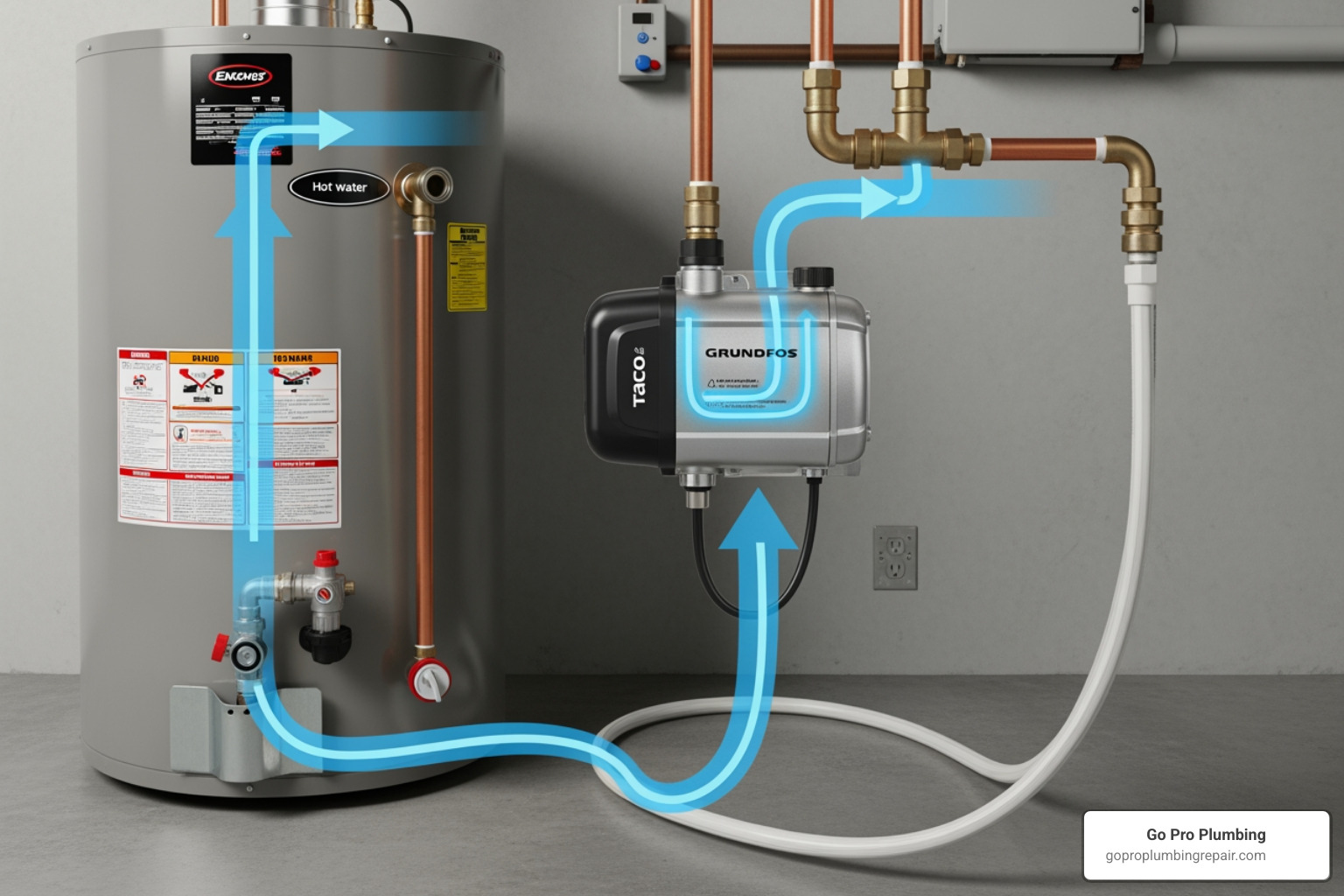
Safety First: Before any plumbing work, it’s crucial to prioritize safety by shutting off both the power to your water heater and the main water supply. Draining the hot water lines relieves pressure and prevents scalding. As This Old House emphasizes, Following safety guidelines is crucial. Our experienced Northern California plumbers are trained for safe, efficient installations. For a general overview, our hot water recirculation installation guide offers valuable insights.
Key Components of a Hot Water Heater Return Line System
A typical hot water recirculating system relies on several key components:
- Recirculation Pump: The heart of the system, pushing water through the loop. It’s usually a small pump made of bronze or stainless steel.
- Check Valve: Prevents water from flowing backward, ensuring proper circulation.
- Sensor/Bridge Valve: Used in retrofit systems, this valve is installed at the furthest fixture and allows cooled hot water to return via the cold water line.
- Timer/Aquastat: Many systems include a timer to program when the pump runs or an aquastat (temperature sensor) to activate it when water temperature drops.
- Isolation Valves: Allow for easy servicing of components without shutting off water to the entire house.
- Pipe Fittings: Various tees, elbows, and connectors are used to create the loop.
For a visual breakdown, consult our hot water recirculating pump diagram guide.
Compatibility with Tank and Tankless Water Heaters
Hot water recirculating systems can work with both traditional tank and modern tankless water heaters.
- Tank Water Heaters: Installation is straightforward. The hot water heater return line typically connects to the cold water inlet or the bottom drain valve of the tank. An expansion tank is usually required in closed-loop systems to handle thermal expansion.
- Tankless Water Heaters: Recirculation with a tankless heater requires some consideration, as these units need a minimum flow rate to activate. A pump helps meet this flow rate for instant hot water. Some newer tankless models have built-in pumps (like the Rinnai Smart-Circ), while others require an external kit. Our article on hot water recirculation for tankless system covers this in detail, and you can explore options for an electric tankless water heater with built-in recirculating pump.
Sizing and Installation Considerations for a Hot Water Heater Return Line
Proper sizing and installation are critical for efficiency and longevity.
- Pump Sizing: The pump must be powerful enough for your entire hot water loop, a factor determined by the total length and diameter of your piping (what plumbers call “friction loss”). An undersized pump is slow, while an oversized one wastes energy and can cause pipe erosion. Our experts at Go Pro Plumbing can correctly size the pump for your home. Find more information in our guide on hot water recirculating pump.
- Electrical Requirements: Most pumps require a standard 120V outlet near the installation point. Some systems may require hardwiring, which should be done by a qualified electrician to comply with local codes in Northern California.
- Pipe Length and Insulation: The longer your hot water lines, the more beneficial a system is. We highly recommend insulating all accessible hot water pipes, including the hot water heater return line, to maximize efficiency.
- Location of Pump: For dedicated systems, the pump is typically installed at the water heater. For retrofit systems, the pump is usually at the water heater, with a sensor valve at the furthest fixture.
Cost, Maintenance, and Long-Term Performance
Investing in a hot water recirculating system is an investment in comfort and conservation. Understanding the costs and maintenance will help you maximize its lifespan and get the most out of your system.
Typical Costs and Available Rebates
The cost of a hot water recirculating system varies based on the system type, plumbing complexity, and installation.
- System Cost: Recirculation pumps themselves typically range from $200 to $400. Stainless steel systems might be around $200, while bronze or cast iron options can be $400 or more.
- Installation Cost: Professional installation adds to the total cost. A retrofit system is less expensive to install than a dedicated hot water heater return line in an existing home. Our article on recirculation pump installation cost provides more detailed estimates.
- Rebates and Incentives: Many utility companies in water-conscious regions like Northern California offer rebates for installing water-saving devices like recirculation systems. We encourage you to check with your local water and energy providers for programs that could offset your upfront costs, making this smart home upgrade more affordable.
Maintenance for Optimal Performance
A hot water recirculating pump can last five to 15 years with proper care. Here’s what we recommend for maintenance:
- Annual Flushing: If you have hard water in Northern California, annually flushing your water heater can prevent sediment buildup and maintain efficiency.
- Check for Leaks: Periodically inspect all connections and the pump for any signs of leaks or corrosion.
- Test Timers and Sensors: Ensure your timer or sensor settings still align with your usage patterns.
- Pipe Insulation: Insulating your hot water lines, including the hot water heater return line, is crucial. It reduces heat loss, makes the system more efficient, and saves energy. It also helps in preventing burst pipes during colder months.
- Water Quality Impact: Hard water can lead to scale buildup, affecting the pump’s efficiency and lifespan. Consider a water softener to protect your entire plumbing system.
- Professional Check-ups: Annual professional maintenance can ensure your system is running perfectly and prevent future issues.
Alternatives to Recirculation Systems
While recirculation systems are excellent, they aren’t the only way to get faster hot water. Here are a few alternatives:
- Point-of-Use Water Heaters: These small heaters are installed directly at a fixture (e.g., under a sink) to provide instant hot water to that specific tap. They are a good option for a single, distant fixture.
- Insulated Pipes: Insulating your existing hot water pipes reduces heat loss, keeping the water warmer for longer and reducing, but not eliminating, the wait time.
- Smaller Diameter Pipes: In new construction, using smaller-diameter hot water lines reduces the volume of water that needs to be purged before hot water arrives.
- System Design Improvements: Re-routing or shortening long “dead leg” pipe branches where water sits stagnant can also noticeably improve hot water delivery time.
Frequently Asked Questions about Hot Water Recirculation
We get a lot of great questions about hot water recirculation. Here are some of the most common ones:
How much water can a recirculation system really save?
The savings can be truly impressive! An average family of four can save thousands of gallons of water per year. Statistics show that households can waste anywhere from 3,000 to a staggering 12,000 gallons annually just waiting for hot water. By eliminating this waste, a recirculation system significantly reduces your water consumption and, in turn, your water and sewer bills. It’s a win for your wallet and the environment in Northern California!
Will a recirculation system increase my energy bill?
While the recirculation pump itself uses a small amount of electricity, the energy cost is often minimal, especially with modern, efficient pumps. For on-demand or timer-based systems, the pump only runs when needed, further minimizing energy use. The slight increase in electricity for the pump is typically offset by the energy saved from not running your water heater as frequently to reheat cooled water that’s been sitting in the pipes. Also, you save the energy associated with treating and pumping the water that would otherwise be wasted down the drain. If your pipes are well-insulated, the overall energy impact is often neutral or even positive.
How long does a recirculation pump last?
With proper installation and regular maintenance, a quality hot water recirculating pump is a durable appliance. Most pumps are designed to last between 5 to 15 years. Factors like water quality (e.g., hard water causing mineral buildup), consistent maintenance, and the quality of the pump itself can influence its lifespan. Annual professional check-ups can help ensure your pump operates efficiently for many years to come.
Get Instant Hot Water and Expert Service
Say goodbye to the frustrating wait for hot water and hello to immediate comfort and efficiency! A hot water recirculating system, with its dedicated hot water heater return line, offers a wealth of benefits: significant water savings, unparalleled convenience, and potential energy cost reductions. It’s a smart upgrade for any home in Northern California.
For homeowners in Northern California looking for a professional and reliable installation, expert advice is key. Our team at Go Pro Plumbing understands the unique needs of our community and offers same-day service to diagnose your needs and install the perfect hot water recirculation system for your home. We’re here to help you achieve instant hot water and make your home more efficient.
Contact us for expert water recirculation pump services today!