
Demystifying Water Filters: Your Essential Guide to Cleaner Water
By Brian on November 17, 2025
Why Clean Water Matters for Your Home and Health
Water filtration systems remove contaminants from your home’s water supply to improve its quality, taste, and safety. Here’s a quick overview:
Quick Guide to Water Filtration Systems:
- Whole House Systems (Point-of-Entry): Filter all water entering your home at the main water line.
- Point-of-Use Systems: Target specific taps like kitchen sinks or showers.
- Common Technologies: Activated carbon, reverse osmosis, UV sterilization, and sediment filters.
- Contaminants Removed: Chlorine, lead, sediment, heavy metals, VOCs, bacteria, and more.
- Cost Range: $50-$100 for basic pitchers to $1,000+ for whole-house systems.
- Key Benefits: Better taste, healthier water, appliance protection, and reduced plastic waste.
Every day, your family uses water for drinking, cooking, and bathing. But what’s in the water flowing from your taps? Even when Northern California’s water utilities meet EPA standards, it can still contain chlorine, lead from old pipes, or other impurities affecting taste, smell, and health.
Fortunately, you have control over your water quality. Modern filtration technology offers solutions from simple pitchers to comprehensive whole-house systems. For example, reverse osmosis can remove up to 99% of impurities, while activated carbon filters are excellent for reducing chlorine and improving taste. Whether you’re concerned about lead, tired of bottled water, or just want better-tasting coffee, there’s a filtration solution for your needs and budget.
Understanding Your Water: What’s in Your H2O?
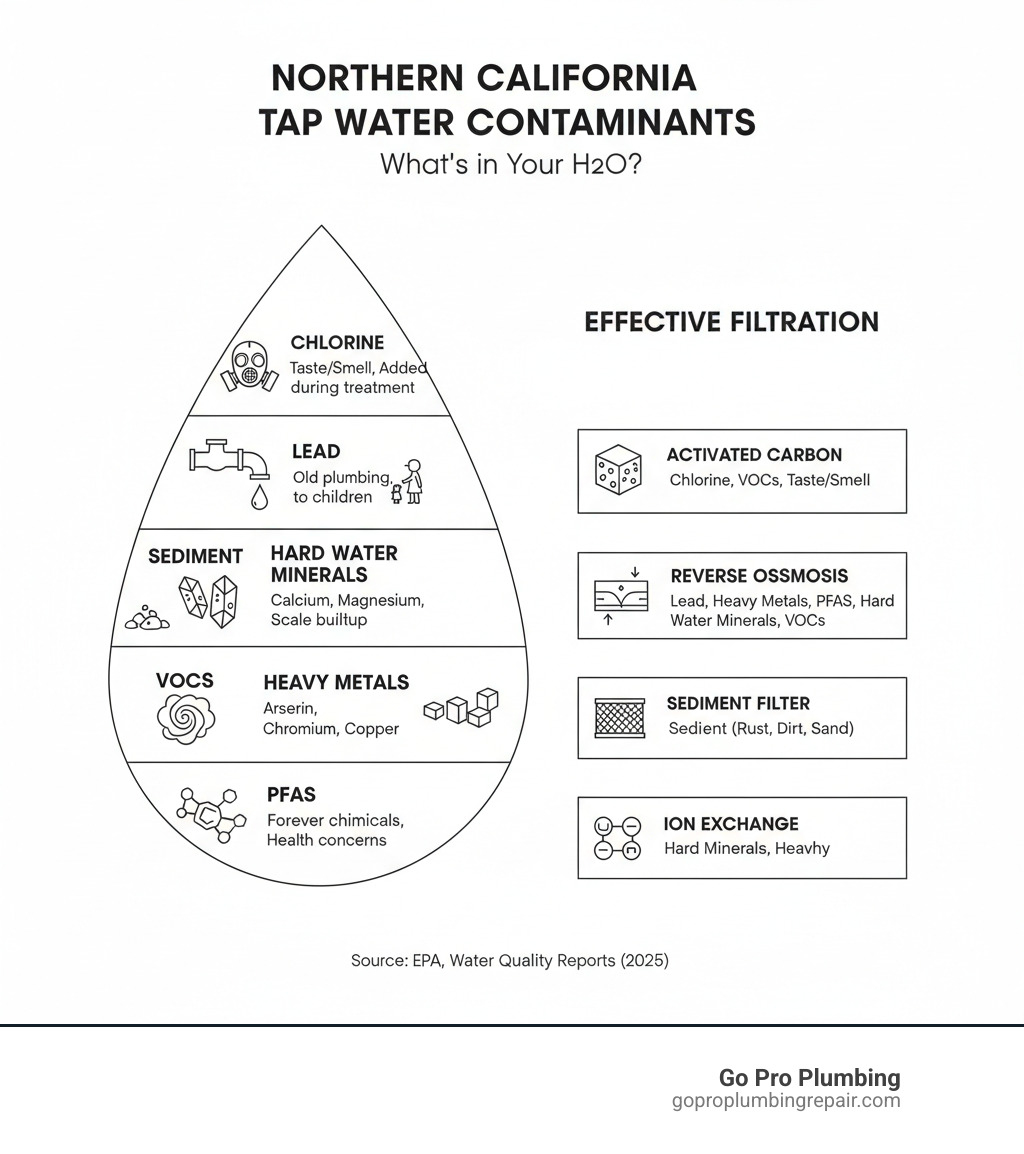
Before choosing a water filtration system, you need to know what you’re filtering out, as many contaminants are invisible. Water quality in Northern California varies significantly depending on your source.
Municipal water is treated to meet EPA standards, but it can pick up contaminants like lead and copper from aging pipes on its way to your home. If you rely on well water, your water quality is affected by the local environment, including agriculture and industry, and isn’t monitored by a utility.
Common contaminants include:
- Heavy metals like lead, arsenic, and mercury from pipes or mineral deposits.
- Chlorine and chloramines, which are disinfectants that affect taste and smell.
- VOCs (volatile organic compounds) from pesticides and industrial solvents.
- Sediment like rust and sand that makes water cloudy.
- PFAS (“forever chemicals”), a growing health concern.
- Nitrates from agricultural runoff, which are risky for young children.
Finding out what’s in your water is straightforward. For municipal water, review your annual Consumer Confidence Report (CCR) from your utility. It details detected contaminants and their levels. For well water users or for more specific concerns, a professional water test from a state-certified lab provides a complete picture. The EPA offers water testing guidance to help.
Northern California has unique water challenges, from agricultural runoff in valleys to aging infrastructure in older cities. Understanding these local water resources is key. At Go Pro Plumbing, we understand the common contaminants in different areas and can recommend the best water filtration systems for your situation.
Exploring Types of Water Filtration Systems
Water filtration systems come in two main types: whole-house systems that treat all water entering your home, and point-of-use systems that target specific taps. Your choice depends on your water quality goals, budget, and convenience needs.
What Are Whole House Water Filtration Systems?
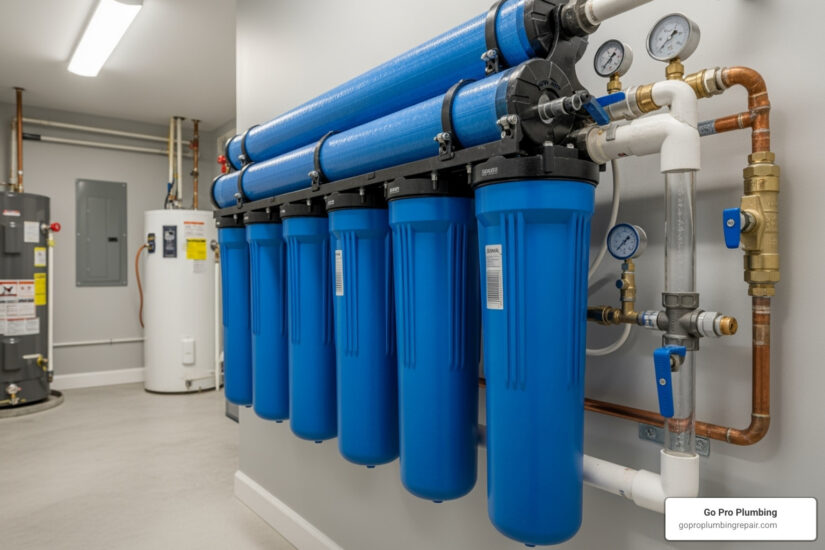
A whole-house system, or point-of-entry (POE) system, is installed at your main water line. This means every drop of water is filtered before it reaches any tap or appliance.
The primary benefit is filtered water at every tap. This improves water for drinking and cooking, but also for showering (reducing chlorine that dries skin and hair) and laundry. These systems also protect your appliances like water heaters and dishwashers from sediment and scale buildup, extending their lifespan and improving efficiency. Whole-house systems are ideal for tackling widespread issues like heavy metals, chlorine, sediment, and VOCs, providing comprehensive protection and peace of mind.
Exploring Point-of-Use (POU) Filters
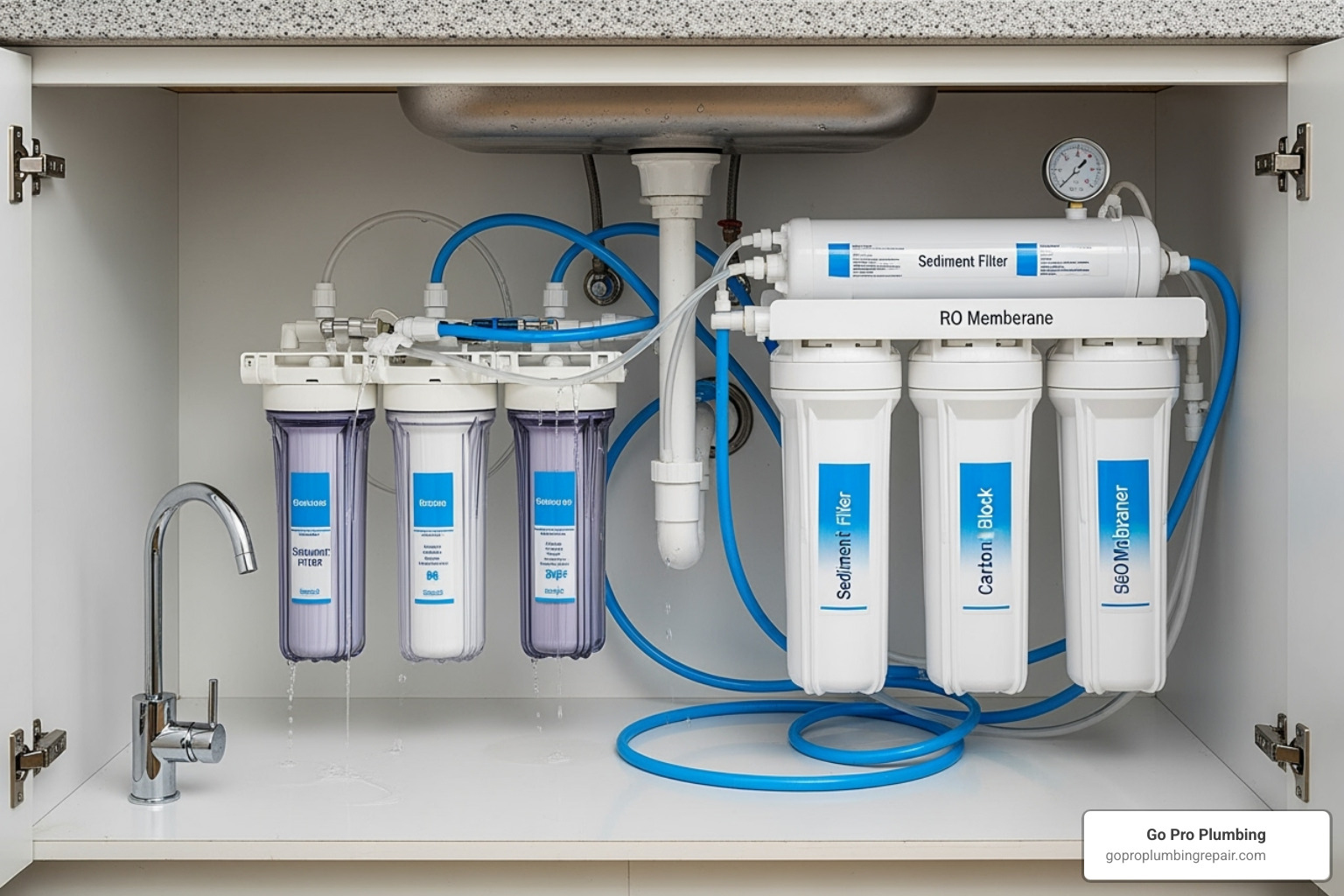
Point-of-use (POU) filters are installed at specific faucets or appliances to provide clean water exactly where you need it most. They are a great option if a whole-house system is more than you need or not in the budget.
Common types include:
- Faucet filters: Attach directly to your kitchen faucet for on-demand filtered water.
- Under-sink systems: Installed under the sink, they offer robust filtration through a dedicated faucet.
- Shower filters: Reduce chlorine and other chemicals in your shower water.
- Countertop filters & Pitchers: Simple, affordable, and require no installation, making them great for renters.
- Refrigerator filters: Built into many fridges to improve the taste of water and ice.
POU filters have a lower upfront cost and are often easy to install, making them accessible for any budget and ideal for renters. They allow you to focus filtration efforts on drinking and cooking water.
Comparing Whole-House (POE) vs. Point-of-Use (POU) Systems
| Feature | Whole-House (POE) Systems | Point-of-Use (POU) Systems |
|---|---|---|
| Effectiveness | Comprehensive filtration for all water entering the home. | Targeted filtration for specific taps (e.g., drinking water). |
| Cost | Higher upfront cost ($500 – $4,000+). | Lower upfront cost ($20 – $1,000). |
| Maintenance | Less frequent filter changes (e.g., annually), but filters can be larger and more expensive. | More frequent filter changes (e.g., monthly to semi-annually), filters are smaller and cheaper. |
| Installation | Professional installation is often recommended at the main water line. | Often DIY-friendly (faucet, pitcher), though under-sink systems may need minor plumbing. |
| Best For | Homes with widespread water quality issues, protecting appliances, and improving shower water. | Budget-conscious consumers, renters, and targeting specific drinking/cooking water needs. |
A Closer Look at Filtration Technologies
Effective water filtration systems often combine different methods, as no single technology removes everything. Many systems use multiple stages for progressively cleaner water. For information on certified systems, the NSF offers valuable resources on water treatment systems.
Activated Carbon Filters
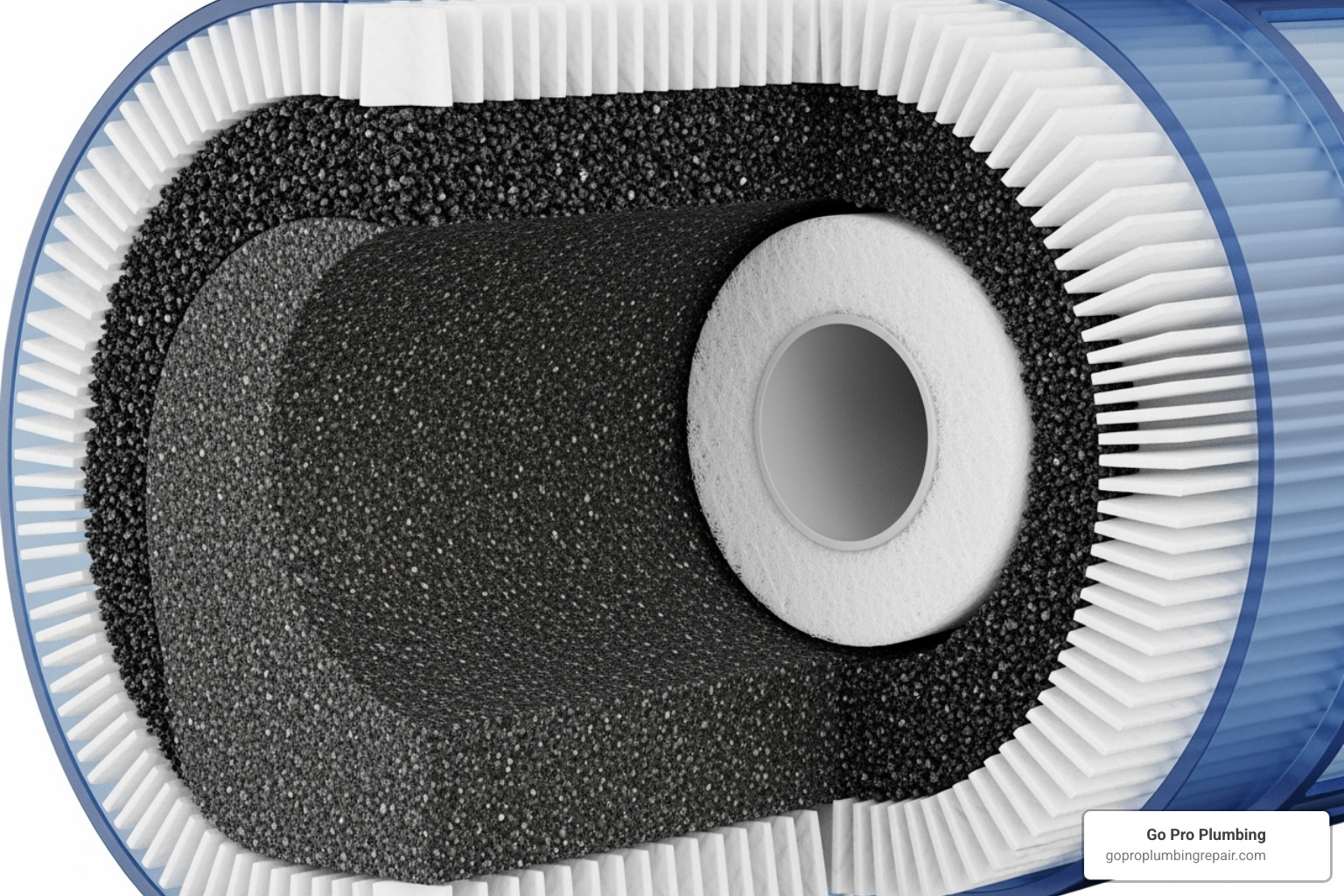
The most common technology, activated carbon uses porous charcoal to adsorb contaminants. It’s excellent for removing chlorine, chloramines, and VOCs, which dramatically improves water taste and odor. However, it does not remove heavy metals, nitrates, or fluoride.
Reverse Osmosis (RO)
RO is a highly thorough method that forces water through a membrane, blocking nearly all contaminants. It’s effective against heavy metals (lead, arsenic), fluoride, nitrates, and PFAS. Most RO systems also include carbon filters for taste and odor.
A key consideration is water waste. While traditional systems can be inefficient, newer models are much better at conserving water. Learn more with our domestic water conservation tips. Since RO also removes beneficial minerals, many systems include a remineralization stage to improve taste.
Other Key Technologies
- Ion Exchange: Used in water softeners, this technology swaps hardness minerals (calcium, magnesium) for sodium ions to prevent scale buildup.
- UV Sterilization: Inactivates bacteria and viruses with ultraviolet light, making it ideal for well water. It does not remove chemical contaminants.
- Sediment Filters: The first line of defense, these filters block dirt, rust, and sand, protecting other filters from clogging and extending the system’s life.
How to Choose the Right System for Your Home
Finding the perfect water filtration system depends on your specific needs. Here are the key factors to consider:
- Water Test Results: This is the most important step. Your water quality report will determine which contaminants you need to target. High chlorine may only require a carbon filter, while lead or PFAS will necessitate a more robust system like reverse osmosis.
- Household Size and Water Usage: A small household may only need an under-sink filter for drinking water, while a larger family will benefit more from a whole-house system that can handle higher demand without affecting water pressure.
- Budget (Upfront and Ongoing): Costs range from under $50 for a pitcher to several thousand for a whole-house system. Remember to factor in the long-term cost of replacement filters, which can vary significantly in price and frequency.
- Installation Space: Consider where the system will go. Under-sink systems require cabinet space, while whole-house systems need room near your main water line (often in a garage or basement).
- Maintenance Commitment: Be realistic about how much maintenance you’re willing to do. Pitcher and faucet filters are simple to change, while whole-house and RO systems require more effort. Choose a system with a maintenance schedule that fits your lifestyle.
Also, consider potential drawbacks. Some systems can cause a slight drop in water pressure, and reverse osmosis removes beneficial minerals (look for a remineralization stage to fix this). RO also produces wastewater, though newer models are far more efficient. We offer domestic water conservation tips to help you balance your water use. The right system is one that solves your water problems, fits your budget, and matches your lifestyle.
Installation, Maintenance, and Lifespan
A water filtration system requires proper installation and regular maintenance to perform effectively.
Professional vs. DIY Installation
While simple pitcher and faucet filters are easy to set up yourself, under-sink systems are more involved. For whole-house water filtration systems, we always recommend professional installation. These systems connect to your main water line, and an experienced plumber will ensure they are installed correctly without causing pressure drops or leaks. Go Pro Plumbing handles these installations for our Northern California customers, ensuring your system works efficiently from day one.
Maintenance and Filter Lifespan
Regular filter replacement is the most critical maintenance task. An old filter is not only ineffective but can also harbor bacteria. Filter lifespan depends on the type of filter, your water quality, and your household’s water usage.
- Pitcher/Faucet filters: 1-3 months
- Under-sink/Shower filters: 3-12 months
- RO membranes: 2-5 years
- Whole-house filters: 6 months to 10 years, depending on the model.
Always follow the manufacturer’s recommendations for replacement schedules.
Signs a Filter Needs Changing
Your system will tell you when it needs attention. Watch for these signs:
- Reduced water flow: This is the most common sign of a clogged filter.
- Return of bad taste or odor: If you notice a chlorine or metallic taste again, your carbon filter is likely exhausted.
- Cloudy water: Indicates your sediment filter needs to be replaced.
Staying on top of maintenance protects your investment and ensures your family continues to enjoy clean, healthy water.
Conclusion
Choosing the right water filtration system is a powerful step toward a healthier home. It’s about more than just removing contaminants; it’s about protecting your family’s health, extending the life of your appliances, and saving money by ditching bottled water. By reducing exposure to lead, chlorine, and PFAS, you gain peace of mind with every glass you drink and every meal you prepare.
In Northern California, our water challenges can be unique, from hard water to agricultural runoff. This is where local expertise matters. Professional installation ensures your system is correctly sized and integrated to handle your specific water quality issues.
At Go Pro Plumbing, we’ve helped countless Northern California families find the perfect water filtration solution. Whether you need a simple under-sink filter or a comprehensive whole-house system, our team can guide you through selection and provide expert, same-day installation. We believe every family deserves clean, healthy water.
Ready to take the next step? Contact us for your family plumbing needs in Northern California, and let’s find the perfect water filtration system for your home.