
Sewer Savvy: Your Guide to a Clog-Free Main Line
By Brian on January 23, 2026

Why Keeping Your Main Sewer Line Clear Matters
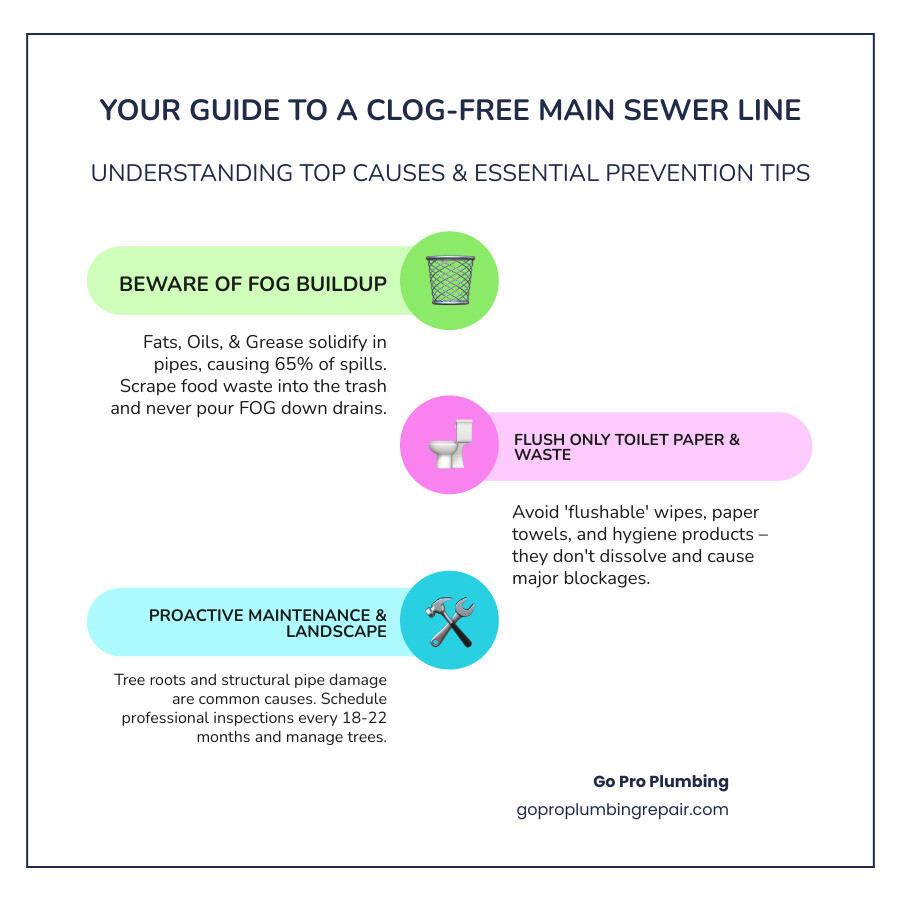
How to keep your main sewer line from clogging starts with understanding what’s at stake. Imagine waking up to find sewage backing up into your shower. According to the EPA, fats, oils, and grease (FOG) buildup is a leading cause of sanitary sewer spillsa problem that’s almost entirely preventable. You can read more about how FOG impacts sewer systems on the EPA’s sanitary sewer overflows page.
Quick Prevention Checklist:
- Never flush anything except human waste and toilet paper
- Never pour grease, oils, or fats down any drain
- Use drain strainers to catch food scraps and hair
- Schedule professional inspections every 18-22 months
- Be mindful of trees near your sewer line
- Scrape plates into the trash before washing
- Run hot water regularly to clear minor buildup
Most homeowners don’t think about their sewer system until it fails, but a major repair can cost thousands. In Northern California, you’re responsible for the sewer lateral connecting your home to the municipal main, so prevention is key.
The good news is that prevention is simple. Being mindful of what goes down your drains and scheduling regular maintenance can save you from the nightmare of a sewage backup.
The Telltale Signs: Recognizing a Main Sewer Line Clog Early
Recognizing the early warning signs of a main sewer line clog can save you from stress, damage, and costly repairs. Your home’s plumbing will often signal a problem before it becomes a disaster.
How do you know if you’re dealing with a main line issue rather than a simple drain clog? If you experience any of the following, the issue likely lies deeper within your main sewer line:
- Multiple Slow Drains: If multiple fixtures (sinks, tubs, toilets) are draining slowly, it’s a major red flag. A single slow drain is a local issue; multiple slow drains point to a main line blockage.
- Gurgling Noises from Toilets and Drains: Gurgling sounds from toilets or drains when other fixtures are used indicate a problem. This is the sound of trapped air escaping past a blockage in your main line.
- Water Backing Up in Low-Level Fixtures: If using one fixture (like flushing a toilet or running the washer) causes water to back up in another, low-level fixture (like a shower or floor drain), you have a main line clog. The wastewater has nowhere else to go.
- Sewage Smell in or Around the Home: A persistent sewage smell in or around your home means sewer gases aren’t venting properly. If you smell it near drains or your outdoor sewer cleanout, it’s a strong sign of a main line issue.
- Water Pooling Around the Sewer Cleanout Pipe: If you see water or sewage pooling around the capped sewer cleanout pipe outside your home, it’s a definitive sign of a main line clog. The system is backing up through its access point.
Don’t ignore these warning signs! A main sewer line clog left unaddressed will only get worse, leading to potential property damage and health hazards.
Uncovering the Culprits: What Causes Main Sewer Line Clogs?

Your main sewer line carries all wastewater from your home. When this single pipe gets blocked, your entire plumbing system can stop working. Understanding the common causes is the first step to prevention.
Let’s explore the usual suspects that lead to these plumbing headaches:
Fats, Oils, and Grease (FOG) Buildup
Pouring grease down the drain seems harmless when it’s hot liquid, but as it cools, it solidifies inside your pipes. This sticky residue builds up, narrows the pipe, and traps other debris, creating a major blockage.
FOG is a leading cause of sewer spills, affecting both homes and municipal systems. Once hardened, it requires professional equipment to remove. The best strategy for how to keep your main sewer line from clogging due to FOG is simple: never pour it down any drain. Scrape greasy plates and collect cooled oils for trash disposal.
Tree Root Intrusion
Tree roots naturally seek moisture, and your sewer line is an ideal source. Roots don’t break into intact pipes; they invade through existing cracks caused by age or ground shifting.
Once inside, roots thrive and expand, forming dense root balls that trap waste and can destroy the pipe. Older clay pipes are especially vulnerable. Regular inspections are key to catching this destructive process early.
Structural Pipe Damage
Sometimes, the problem isn’t what goes into your pipes, but the condition of the pipes themselves. Over decades, pipes can suffer structural damage that makes them prone to clogs:
- Sagging or Bellied Pipes: A “belly” is a sunken section of pipe that collects waste and water, leading to recurring blockages.
- Cracked or Broken Lines: Cracked or broken pipes can collapse, causing severe blockages. This can be caused by ground movement, heavy traffic, or age.
- Scale Buildup: In older metal pipes, mineral deposits and corrosion (scale) build up, creating a rough surface that catches debris and narrows the pipe.
Proactive Prevention: How to Keep Your Main Sewer Line From Clogging
The good news is that most main sewer line clogs are preventable. Mindful daily habits and routine maintenance are your best defense against plumbing disasters.
What You Flush Matters: The “Flushable” Myth
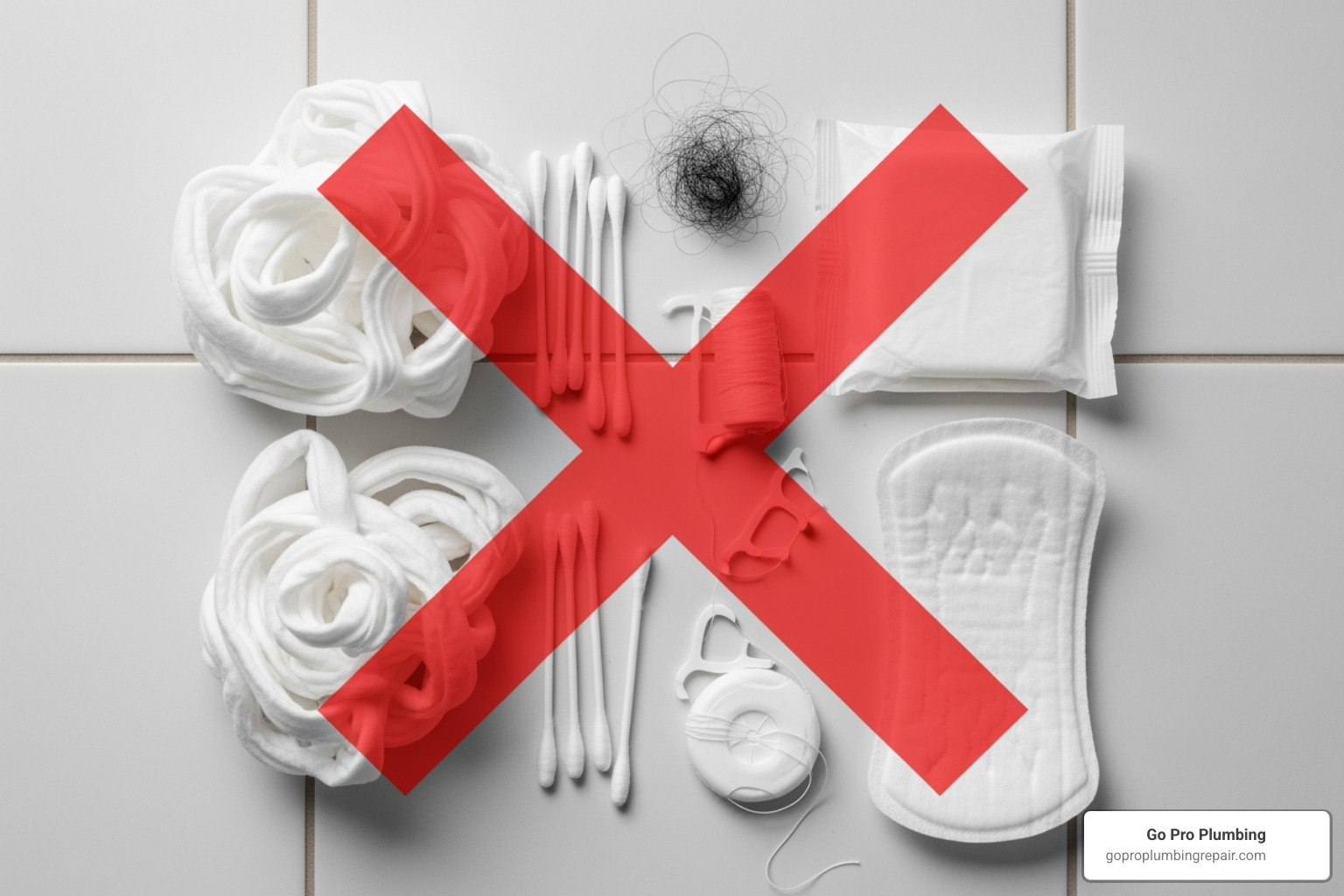
Many products are marketed as “flushable,” but they don’t break down like toilet paper. Plumbers agree: only human waste and toilet paper should be flushed. So-called “flushable” wipes are a primary cause of massive clogs.
Here’s a list of items to never flush down the toilet:
- “Flushable” wipes (baby wipes, cleaning wipes, makeup removers)
- Paper towels and tissues
- Feminine hygiene products (tampons, sanitary napkins)
- Dental floss
- Cotton swabs and cotton balls
- Disposable diapers
- Cat litter
- Hair
- Condoms
- Medications
Toilet Paper Choice: Even toilet paper can be a problem. Using too much, or thick, plush varieties, can cause clogs in older systems. One-ply paper is a safer choice as it dissolves more easily. Remember the golden rule for how to keep your main sewer line from clogging: only flush human waste and toilet paper.
Master Your Kitchen Drains
Your garbage disposal isn’t a trash can. It’s designed for small food scraps, and overloading it can lead to clogs.
Foods to avoid putting down your kitchen drain, even with a garbage disposal:
- Fats, Oils, and Grease (FOG): Scrape all grease and oil into a container or the trash.
- Starches: Rice, pasta, and bread can expand and congeal into a sticky paste.
- Stringy Vegetables: Celery, asparagus, and corn husks can wrap around the disposal’s blades.
- Coffee Grounds: They accumulate into a dense, sludge-like material.
- Eggshells: The membranes can stick to pipe walls.
Scrape food scraps into the trash or compost. Use a drain strainer to catch particles. When using the disposal, run cold water before, during, and after to flush debris down the line. These habits are crucial for preventing clogs.
The Dangers of Chemical Drain Cleaners
While tempting for a slow drain, we strongly advise against chemical drain cleaners. They pose significant risks and are ineffective on main line clogs:
- Pipe Corrosion: The harsh chemicals can corrode and damage pipes, leading to costly leaks.
- Environmental Harm: These toxic chemicals harm local waterways and the environment.
- Health Hazards: They emit dangerous fumes and can cause severe skin burns.
- Ineffective on Major Clogs: They are ineffective on main line clogs and can even make them worse by solidifying the blockage.
For minor clogs, use safer alternatives. For serious issues, always call a professional.
DIY Fixes vs. Professional Solutions: Knowing When to Make the Call
When your drains start acting up, some minor clogs can be resolved with DIY methods. However, knowing the limits of DIY is crucial for how to keep your main sewer line from clogging safely. Attempting to fix a major clog yourself can make the situation worse.
Here’s a comparison of common DIY methods versus professional solutions:
| Method | Effectiveness | Cost | Safety | Type of Clog |
|---|---|---|---|---|
| DIY Methods | ||||
| Plunger (Flange type) | Good for localized toilet/sink clogs | Low | Safe | Minor, localized blockages |
| Baking Soda & Vinegar | Good for dissolving grease/soap scum buildup | Low | Safe, eco-friendly | Minor, organic buildup |
| Hot Water Flush | Helps clear minor grease/soap residue | Low | Safe | Preventative, very minor buildup |
| Clearing P-Traps | Excellent for localized sink clogs | Low | Safe, but can be messy | Hair, small objects in sink P-trap |
| Professional Methods | ||||
| Camera Inspection | High (identifies exact problem/location) | Moderate | Safe | Any clog, especially recurring or unknown |
| Hydro Jetting | Very High (clears FOG, roots, scale, debris) | Moderate-High | Safe, non-invasive | Stubborn, deep, recurring clogs, FOG, roots |
| Snaking (Power Auger) | High (breaks through solid obstructions) | Moderate | Safe (when done by pro) | Solid clogs, roots, large debris |
| Sewer Line Repair/Repl | Very High (permanent fix for structural issues) | High | Safe (when done by pro) | Collapsed pipes, severe root damage, bellies |
Effective DIY Methods for Minor Clogs
For small, localized annoyances, here are a few safe DIY approaches:
- Flange Plunger Technique: A flange plunger creates a tight seal on toilets and drains. Use 10-20 forceful plunges to dislodge minor, localized clogs.
- Baking Soda and Vinegar Solution: For organic buildup, pour one cup of baking soda, then one cup of vinegar down the drain. Let it sit for at least 30 minutes before flushing with hot water.
- Monthly Hot Water Flush: As a preventative measure, fill a sink or tub with hot water and drain it all at once. The large volume of water helps flush out minor debris.
- Clearing P-Traps: For a blocked sink, the clog may be in the P-trap (the U-shaped pipe). Place a bucket underneath, unscrew the trap, and clear it by hand. Reassemble it tightly to prevent leaks.
When to Immediately Call a Professional
Know when to stop DIY attempts and call us. Ignoring these signs can lead to costly consequences:
- Recurring Clogs: If a clog keeps returning, it signals a deeper problem that DIY methods can’t fix.
- Multiple Fixtures Affected: If multiple fixtures are slow or backing up, it’s a main line problem requiring a professional.
- Sewage Backup: Any sewage backup is an emergency. It’s a serious health hazard that requires immediate professional help.
- Suspected Tree Root or Pipe Damage: If you suspect roots or pipe damage, a professional camera inspection is needed for an accurate diagnosis.
- DIY Methods Fail: If safe DIY methods fail, stop. Further attempts could damage your pipes. It’s time to call us.
A main sewer line clog is a serious issue. Our team serves Rancho Cordova, Sacramento, and throughout Northern California, and we’re always ready to help when you need us.
The Long-Term Benefits of Professional Maintenance
Preventative maintenance is the secret to avoiding main sewer line clogs. Like an oil change for your car, a small investment in professional maintenance offers peace of mind and prevents costly emergencies.
How often should sewer lines be professionally inspected and cleaned?
We recommend a professional sewer line inspection and cleaning every 18-22 months. This schedule prevents backups and can be adjusted based on:
- Age of your home: Older homes with original clay or cast iron pipes may need more frequent checks.
- Presence of large trees: With mature trees nearby, annual inspections can catch root intrusion early.
- Past issues: If you’ve had clogs before, a proactive schedule can prevent them from recurring.
A professional video camera inspection is a non-invasive way to see the exact condition of your pipes. It allows us to:
- Identify the exact cause and location of clogs.
- Assess pipe integrity by spotting cracks, breaks, or corrosion.
- Determine the best course of action for an effective repair.
These inspections, combined with professional cleaning, are the cornerstone of a healthy sewer system.
How to keep your main sewer line from clogging with preventative cleaning
Professional cleaning is key. While snaking only pokes a hole in a clog, hydro jetting is a superior method that thoroughly cleans the entire pipe.
Hydro jetting uses a high-pressure stream of water to blast away:
- Accumulated FOG
- Scale and mineral buildup
- Tree roots
Hydro jetting is chemical-free, safe for your pipes, and environmentally friendly. Regular cleaning extends your sewer line’s life and prevents clogs. For hydro jetting services in Sacramento and Rancho Cordova, we’re here to help.
How to keep your main sewer line from clogging by managing your landscape
Smart landscaping can protect your sewer line from tree roots, a leading cause of damage.
- Strategic Planting: Plant new trees with less aggressive roots a safe distance from sewer lines. A professional can help locate your lines.
- Root Barriers: For trees near sewer lines, install root barriers to redirect root growth away from pipes.
- Professional Root Trimming: If roots are already in the pipe, professional root trimming can clear them. This is a temporary fix that can delay the need for a full repair.
- Knowing Your Sewer Line Location: Know where your sewer line is located. This is vital for landscaping and any future plumbing work.
Frequently Asked Questions about Main Sewer Line Clogs
We often hear similar questions from homeowners across Northern California about their sewer lines. Let’s address some of the most common ones to help you better understand how to keep your main sewer line from clogging.
What are the consequences of ignoring a clogged main sewer line?
Ignoring a main line clog will lead to severe consequences:
- Sewage Backup: Raw sewage backing up into your home, creating an unsanitary mess.
- Water Damage: Extensive water damage to floors, walls, and belongings.
- Health Hazards: Serious health risks from bacteria and pathogens in sewage, plus mold growth.
- Expensive Property Repairs: Costly structural damage to your home’s foundation and plumbing.
- Environmental Contamination: Contamination of your yard and local waterways if the pipe leaks or bursts.
Can the type of toilet paper I use really clog my sewer line?
Yes. Thick, plush toilet papers don’t dissolve as quickly as standard types. Using too much can cause clogs, especially in older plumbing systems.
For older or sensitive systems, we recommend opting for one-ply toilet paper because it breaks down more easily, reducing the risk of clogs.
How much does it cost to fix a main sewer line clog?
The cost to fix a main sewer line clog varies widely depending on the cause and the method required for removal.
- Minor Clog (Snaking): A simple clog cleared with a professional snake (power auger) may cost a few hundred dollars.
- Stubborn Clog (Hydro Jetting): Hydro jetting for tougher clogs (grease, roots) costs more but provides a far more thorough cleaning.
- Major Damage (Repair/Replacement): Full repair or replacement for a damaged line (collapsed, crushed by roots) can cost thousands of dollars, whether it involves excavation or trenchless methods.
This wide range underscores the importance of preventative maintenance. Addressing small issues early is the most cost-effective approach to how to keep your main sewer line from clogging.
Conclusion: A Clear Path Forward for Your Plumbing
Knowing how to keep your main sewer line from clogging is an investment in your home’s health and your peace of mind. Mindful habits—watching what goes down your drains, avoiding chemicals, and smart landscaping—significantly reduce your risk of a plumbing emergency.
While DIY efforts can help with minor issues, knowing when to call a professional is crucial. Routine professional inspections and cleanings, especially hydro jetting, are your best defense against the most stubborn and costly clogs. Don’t wait until you’re knee-deep in a sewage backup to take action.
For residents in Rancho Cordova, Sacramento, and throughout Northern California, the experts at Go Pro Plumbing are ready to help. Whether you’re facing persistent drain issues, suspect a main sewer line problem, or simply want to schedule a preventative inspection, we’re committed to providing outstanding customer service and same-day service. Let us help you maintain a healthy, clog-free plumbing system.