
5 Practical Ways to Get Your Water Main Break Repaired
By Brian on December 16, 2025
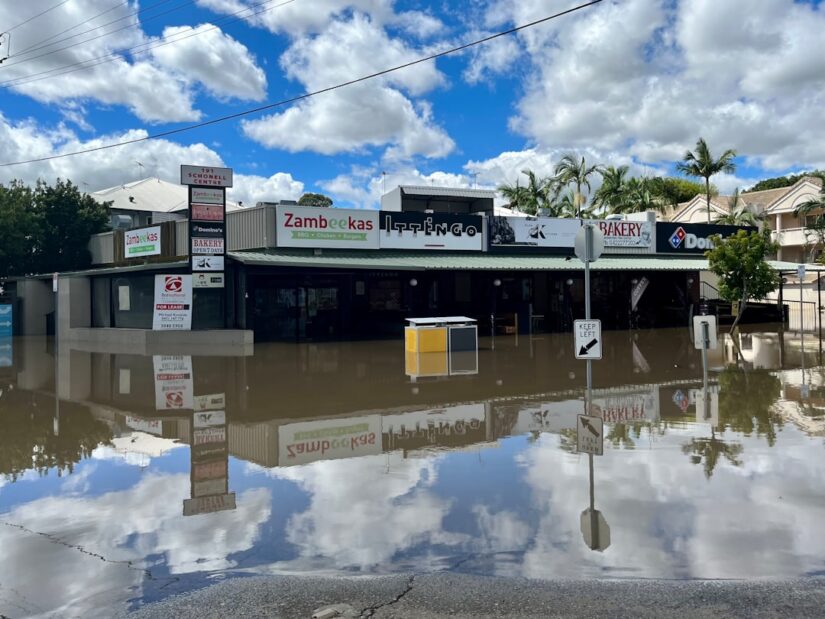
When a Water Main Break Threatens Your Northern California Home
Water main break repair is a critical emergency affecting an estimated 240,000 properties across the U.S. annually. Whether you see flooding on your street or lose water pressure at home, a quick response can minimize damage and restore service faster.
Quick Answer: The 5 Key Steps to Get Your Water Main Break Repaired
- Identify and Report – Call your local water department immediately if you see pooling water, sinkholes, or experience sudden pressure loss.
- Determine Responsibility – Find out if the break is on the public water main (city’s responsibility) or your private service line (your responsibility).
- Protect Your Property – Shut off your main valve if needed, move valuables, and follow boil water advisories.
- Understand the Timeline – Expect 6-12 hours for most repairs, though complex breaks may take several days.
- Restore Your Plumbing – Flush all pipes for 5-15 minutes after repair to clear sediment and air.
Telltale signs like a trickle from your taps or water pooling in your yard during dry weather require immediate action. These breaks happen for many reasons, including aging cast iron pipes, temperature fluctuations, ground shifting, and corrosion. With approximately 20% of water pipes in some cities being around 100 years old, they are particularly vulnerable to failure.
The good news is that most water main breaks can be repaired within 6-12 hours once crews begin work. However, your response time and understanding who is responsible for the repair can make all the difference in protecting your property.
Way 1: Immediately Identify and Report the Break
When it comes to water main break repair, speed is everything. The moment you spot a potential break, report it. Don’t assume someone else has already made the call; your report could be the one that dispatches the repair crew.
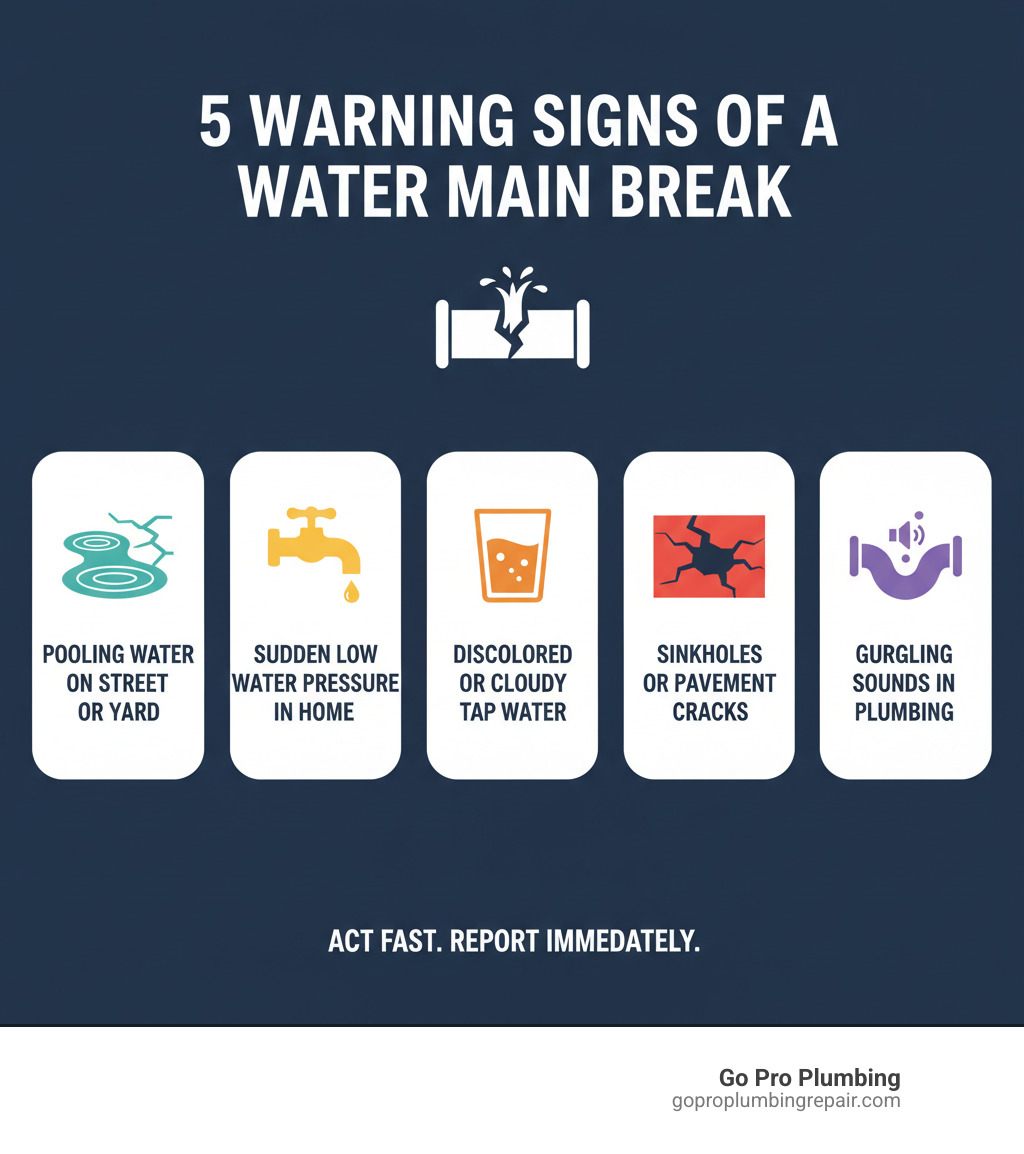
Recognizing the Telltale Signs
Water main breaks often start with subtle clues. Spotting these early warnings can prevent a much bigger problem.
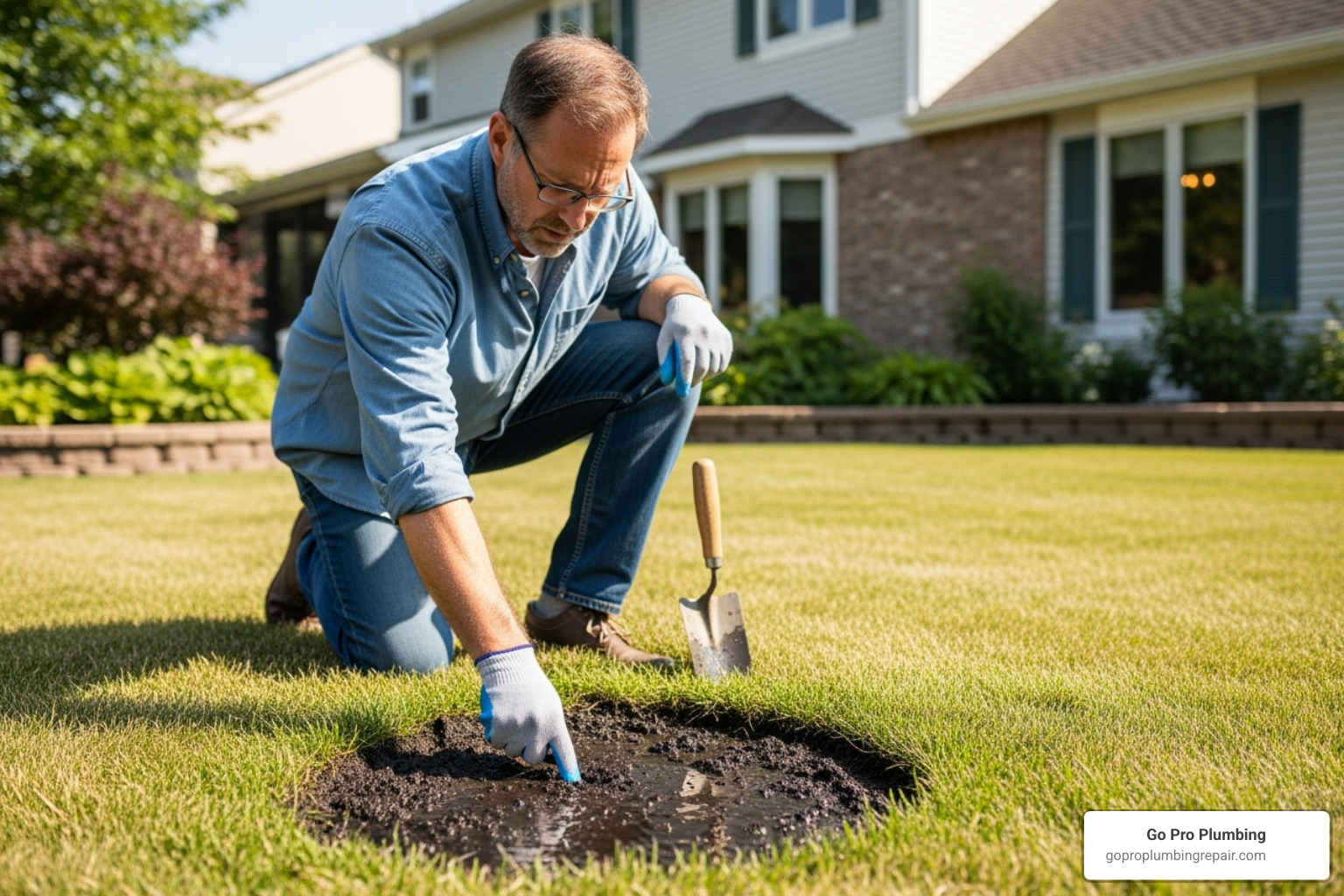
Outside your home, look for water appearing from nowhere, such as puddles on a dry day or water running down the street. This escaping water can erode soil, creating dangerous sinkholes or cracks in the pavement. A muddy patch in your yard during dry weather is another key indicator.
Inside your home, a sudden drop in water pressure is a primary sign. You might also see discolored or cloudy water from your taps, which indicates dirt has entered the system. Strange gurgling or banging sounds from pipes when no water is running also point to a problem.
If something seems off, it’s better to report it. For immediate help with your home’s water lines, our team at Go Pro Plumbing offers leak detection and emergency repair.
Who to Call and What to Say
Once you spot the signs, call your local water department’s 24/7 emergency hotline. Be ready to provide:
- Your contact information
- The exact location of the problem (use street addresses or cross-streets)
- A clear description of what you see (e.g., “water bubbling from the pavement” or “no water pressure”)
After reporting, check your utility’s website or social media for updates. Many utilities post real-time information on crew dispatch and service restoration times. If you are experiencing a water, power, or sewer emergency or service problem, call your local 24-hour hotline or visit your city’s official website for updates.
For immediate assistance with any plumbing emergency in Northern California, you can always reach out to Go Pro Plumbing for emergency plumbing in Sacramento. We’re here when you need us most.
Way 2: Determine Who is Responsible for the Water Main Break Repair
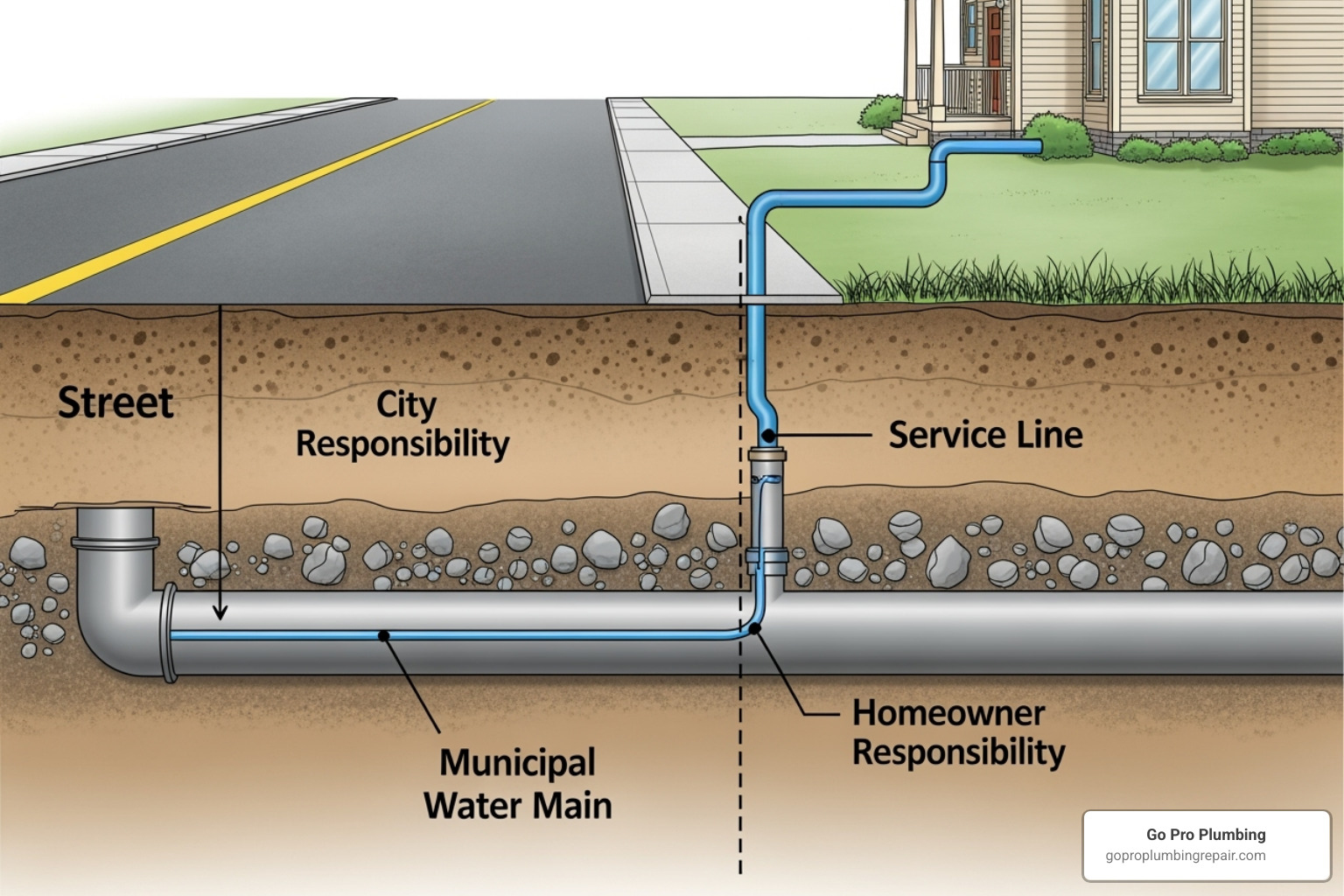
After a water main break, a key question is who pays for the water main break repair. Responsibility depends on the break’s location. There’s an invisible line where the city’s responsibility ends and yours begins, usually at your property line or water meter.
When the City or Utility is Responsible
If the break is in the public water main, the city or water utility is financially responsible. Public water mains are the large pipes running under streets that serve entire neighborhoods. When one of these breaks, the utility handles everything from excavation to pipe replacement and repaving.
Generally, the utility is responsible for the water main and plumbing up to the curb stop valve, which is typically near your property line or water meter. Everything on the street side of this valve is the utility’s problem.
If you see water bubbling up in the street or your whole block loses pressure, it’s likely a public main issue. Your only job is to report it. For more on how these systems work, check out resources like What is a water main break?.
When the Homeowner is Responsible for the water main break repair
Homeowners are responsible for the private service line that connects their house to the public main. This pipe runs from the curb stop or water meter to your home’s plumbing.
If you see a muddy patch in your yard or water bubbling up on your property, it’s likely a break in your private service line. The city will not fix pipes on private property, so this repair is your responsibility. These breaks are caused by the same issues that affect public mains, such as aging pipes, ground shifting, or corrosion. Ignoring them can lead to foundation damage and sky-high water bills.
For a private line break, you must hire a licensed plumber. At Go Pro Plumbing, we specialize in water line repair in Sacramento, CA and can quickly diagnose the issue. We offer comprehensive water main & water line repair services and emergency plumbing repair service to help you figure out what’s going on and fix it fast.
For more details, see our guide on repair and responsibility for main water line replacement in Sacramento, CA.
Way 3: Protect Your Property and Use Water Safely
During a water main break repair, you need to protect your home from damage and ensure your family’s safety. Quick action can save you thousands of dollars.
Immediate Steps to Prevent Water Damage
- Shut off your main water valve: If water is pooling near your home or the break is on your service line, turn off your home’s main shut-off valve to prevent interior flooding.
- Move valuables to safety: If flooding is a risk, move important documents, electronics, and furniture to higher ground.
- Document everything: Take photos and videos of any damage for your insurance claim.
Water damage can be extensive, affecting foundations, landscaping, or even causing pipes inside your home to burst, requiring emergency burst pipe repair. It can also lead to water leaks under your house. Standard homeowner’s insurance may not cover all damage, so review your policy and consider a service line rider. Our guide on water line insurance can help.
Do’s and Don’ts for Water Usage During an Outage
While crews work, your water quality may be compromised. Handle it safely to protect your health.
- Do use your emergency water supply for drinking and hygiene.
- Do take boil water advisories seriously. Boil water for at least one minute before using it for drinking, cooking, or brushing teeth.
- Don’t run hot water immediately after a break. This can pull sediment into your water heater.
- Don’t use water filters until the water runs clear, as sediment will clog them. Plan to replace cartridges after the repair.
- Do drive with caution. The Ministry of Transportation warns that puddles can hide potholes, damage your vehicle, or cause you to stall.
- Do check your water before use. If it’s discolored, run a cold tap for a few minutes until it clears. Don’t use discolored water for cooking or drinking.
Way 4: Understand the Utility’s Repair Process and Timeline
Fixing a water main break repair is a complex process. Utility crews follow a methodical procedure to ensure safety and restore clean water, which explains why repairs can take time.
Common Causes of Water Main Breaks
Water mains break for several reasons:
- Aging infrastructure: Many cities rely on cast iron pipes that are over 100 years old and prone to failure.
- Corrosion: Old pipes rust from the inside out, weakening them until they can no longer handle the pressure.
- Temperature changes: Freeze-thaw cycles cause the ground to shift, stressing buried pipes.
- Ground shifting: Soil erosion, settling, or seismic activity can bend and crack pipes.
- Accidental damage: Construction crews can accidentally strike water lines.
The Step-by-Step Repair Procedure
Utility crews work around the clock to get your water back on. Here’s a look at their process:
- Site Security: Crews arrive and set up traffic control to secure the area for workers and the public.
- Locate Utilities: They contact services to mark all nearby gas, electric, and sewer lines to prevent accidental damage during excavation.
- Isolate the Pipe: Nearby valves are slowly closed to stop water flow to the broken section without causing pressure surges elsewhere.
- Excavate and Drain: Heavy equipment digs to expose the pipe, while pumps remove water from the trench.
- Repair or Replace: Depending on the damage, crews may apply a clamp for a small crack or cut out and replace a larger section of pipe. Simple repairs take 6-8 hours, but complex jobs can take days.
- Flush and Disinfect: The repaired section is thoroughly cleaned and tested to ensure water is safe.
- Restore Service: Valves are reopened gradually to bring the main back online without causing new breaks.
- Road Restoration: The trench is filled, usually with a temporary patch, followed by permanent paving weeks later.
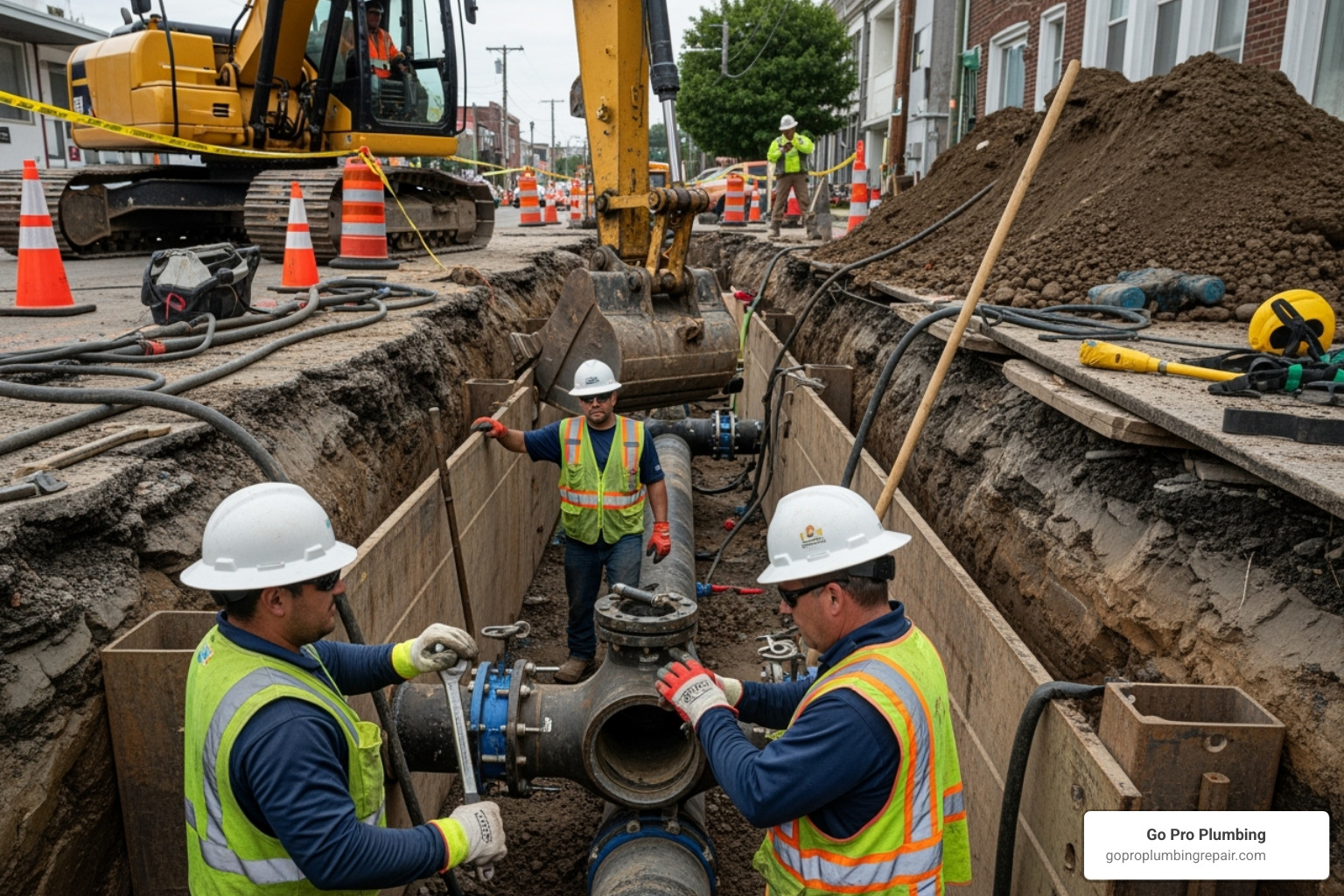
This process ensures a safe, lasting repair. For more insight, see resources from the Portland Water Bureau or the Philadelphia Water Department.
If the break is on your private line, you need a licensed plumber. Go Pro Plumbing specializes in water main & water line repair and can often respond faster than municipal crews for private issues.
Way 5: Restore Your Home’s Plumbing After the Repair
After the water main break repair is complete, don’t just turn on the tap. You need to flush your home’s plumbing system to clear out air, sediment, and discolored water. This final step protects your pipes and appliances.
The Correct Procedure for Flushing Your Pipes
Sputtering faucets and rusty-looking water are normal after a repair. This is just trapped air and harmless sediment. Follow these steps to clear your lines:
- Remove aerators from all your faucet spouts to prevent them from clogging with sediment.
- Start with cold water on the highest floor. Open a cold water tap (a bathtub is ideal) and let it run for 5-15 minutes, or until the water is clear and stops sputtering.
- Work your way down. Systematically flush all cold water taps, moving from the highest floor to the lowest.
- Flush everything else. Flush all toilets a few times and run outdoor spigots until the water is clear.
- Clean and replace aerators once the water runs clear throughout your home.
If water remains discolored after 30 minutes, turn it off, wait an hour, and repeat. For routine maintenance, consider our water heater flush service in Sacramento, CA or drain cleaning services in Sacramento.
What to Do About Appliances and Filters
Sediment can also affect your appliances and filters. Take these steps to clear them:
- Dishwasher and Washing Machine: Run two empty, water-only cycles, followed by a normal cycle with detergent.
- Refrigerator: Dispense several cups of water and discard the first few batches of ice. Replace the water filter.
- Water Heater: After flushing all cold lines, run a hot water tap until it runs cold. This helps flush sediment from the tank. For more tips, see our water heater maintenance complete guide.
- Whole-House Filters: Replace the filter cartridges, as they will likely be clogged with sediment.
Frequently Asked Questions about Water Main Break Repair
Dealing with a water main break repair can be overwhelming. Here are answers to the most common questions we hear from homeowners.
How long does it typically take to repair a water main break?
Most water main break repairs take 6 to 12 hours once crews begin work. The average repair time for a water main break in Philadelphia, for example, is 8 to 12 hours. However, several factors can extend this timeline, including the break’s location, pipe size, weather conditions, and other unforeseen complications like unstable soil or unmarked utility lines.
Does my homeowner’s insurance cover damage from a water main break?
This is tricky. Most standard homeowner’s policies do not cover the cost of repairing the broken pipe itself, viewing it as a maintenance issue. Coverage for resulting property damage depends on your specific policy, and some exclude damage from external “clean water” sources. If the break is on your private service line, you are responsible for the repair and any damage. We strongly recommend reviewing your policy with your agent and considering a special service line insurance rider. For more information, see our guide on water line insurance.
Is the water safe to drink after a repair?
Utilities take water safety seriously, disinfecting and flushing pipes during the repair. If there is any risk of contamination, your utility will issue a boil water advisory. Always follow these advisories until you get the all-clear.
It’s common to see discolored or cloudy water after a repair. This is usually harmless sediment or air bubbles. It is generally not a health risk, but you should flush your home’s pipes by running cold water taps for 5-15 minutes until the water runs clear. If discoloration persists or you have concerns, contact your water utility or a professional plumber.
Conclusion: Your Next Steps for a Secure Water System
A water main break repair is disruptive, but with these five steps, you can handle it confidently, minimize damage, and restore your water service quickly. While the utility handles public mains, you are responsible for the service line running to your home.
Proactive maintenance is key. Just as you service your car to prevent breakdowns, regular plumbing inspections can catch small leaks before they become costly emergencies. A little preventative care can help you avoid the stress of an unexpected water main break repair.
At Go Pro Plumbing, we help Northern California homeowners and businesses prevent plumbing problems. We know emergencies are inconvenient, which is why we offer same-day service with a commitment to customer care. Whether you need an assessment of your water lines, suspect a leak, or have an urgent plumbing need, our experienced team is here to help.
Don’t wait for a disaster. For an expert assessment of your home’s water lines or for emergency plumbing needs in Northern California, explore our water line services. Let’s work together to keep your water system secure and worry-free.