
Adding a Gas Line: Finding the Right Installer for Your Home
By Brian on February 25, 2026
Why Homeowners Consider Adding a Gas Line
Adding a gas line to your home opens up a world of possibilities, from efficient cooking with a professional-grade gas range to cozy evenings by a backyard fire pit. Natural gas is often more cost-effective than electricity and provides the precise temperature control that chefs prefer. However, this is not a DIY project. Gas line installation is critical infrastructure work that requires a licensed professional to ensure your family’s safety.
Quick Answer: What You Need to Know About Adding a Gas Line
- Always hire a licensed professional – Gas line work is dangerous and typically illegal for DIYers in most jurisdictions
- Expect to pay $10-$15 per linear foot plus materials, permits, and inspection fees
- Plan for 4-6 weeks total including permitting, installation, and inspection
- Common reasons to add a gas line:
- Installing new gas appliances (stoves, water heaters, fireplaces)
- Converting from electric to gas for energy efficiency
- Adding outdoor features (grills, fire pits, pool heaters)
- Home renovations or expansions
The national average cost for professional installation is around $523, but complex projects can run $1,000 to $2,000. This cost is an investment in safety, as one improperly sealed connection can lead to a catastrophic gas leak, fire, or explosion. In Northern California, where Go Pro Plumbing serves homeowners, strict building codes and permitting requirements exist to protect you and your investment. This is why hiring a licensed installer is essential.
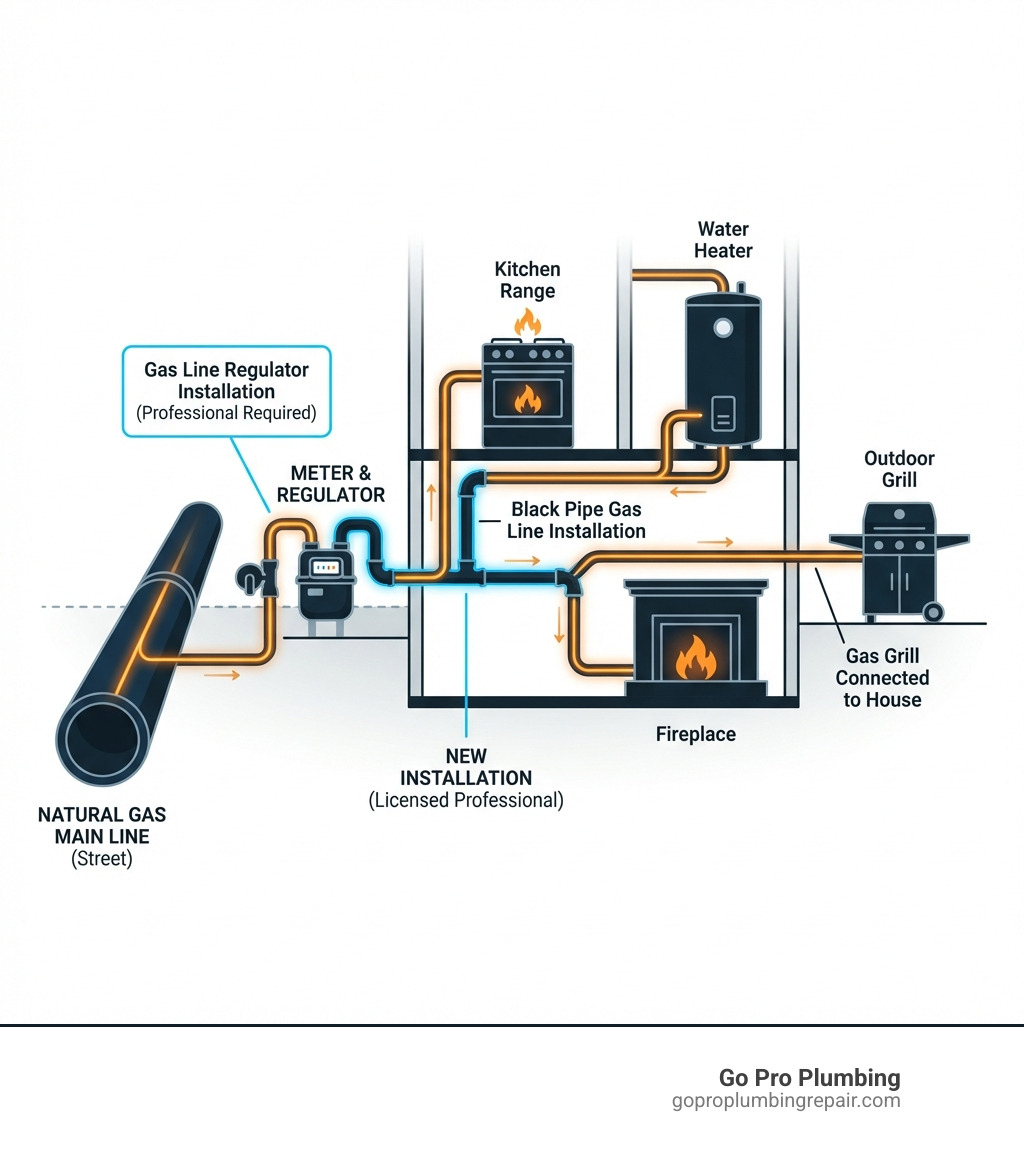
Basic adding a gas line terms:
Why and When You Might Need a New Gas Line
Homeowners in Northern California consider adding a gas line to improve their home’s comfort, efficiency, and functionality. Whether upgrading a kitchen or expanding an outdoor living space, gas lines are the backbone of many modern amenities.
A primary driver is new appliance installation. Many homeowners want to install a professional gas range, an efficient gas dryer, or a gas-powered water heater, furnace, or fireplace, all of which require a dedicated gas supply.
Switching from electric to gas appliances is another common reason. Gas often provides more consistent heat and can be more cost-effective to operate, improving your home’s energy efficiency and lowering utility bills, especially during home renovations.
Renovations themselves often require gas line work. Moving a kitchen or adding an extension may mean rerouting or extending existing lines. Likewise, upgrading aging infrastructure that shows signs of corrosion or leaks is a critical safety measure.
We’re also seeing more homeowners extending service to outdoor features. A built-in natural gas grill, a cozy fire pit, or an efficient pool heater all rely on a safely installed gas line. Finally, if you notice signs of a failing gas line, such as unusual smells or corrosion, professional intervention is crucial for your family’s safety.
Common Reasons for Adding a Gas Line
Here are some of the most popular appliances that make adding a gas line a necessity:
- Gas Ranges and Cooktops: A favorite for their precise temperature control and instant heat.
- Water Heaters: Gas models often heat water faster and more efficiently than electric ones.
- Furnaces and Boilers: Natural gas is an efficient fuel source for whole-home heating.
- Clothes Dryers: Gas dryers typically dry clothes faster, saving time and energy.
- Fireplaces and Log Lighters: Provide the warmth and ambiance of a fire without the mess of wood.
- Outdoor Kitchens and Grills: A natural gas grill eliminates the need for propane tanks.
- Pool and Spa Heaters: An efficient gas heater can extend your swimming season.
- Outdoor Fire Pits: A gas fire pit offers instant warmth for outdoor entertaining.
Assessing Your Home’s Needs
Before any work begins, a thorough assessment of your home’s gas needs is paramount. A key step is calculating the BTU load (British Thermal Units) for all existing and new gas appliances. This calculation determines the required sizing of the new line to ensure all appliances receive adequate gas pressure without being starved of fuel.
We also carefully plan the pipe route, identifying the safest and most efficient path from the gas meter to the new appliance. This includes checking your existing system capacity. If the new total BTU load exceeds your meter’s capacity, an upgrade coordinated with your local gas utility may be necessary. We also help you consider future appliance needs, potentially sizing the new line to accommodate future additions, which can save you money on later upgrades.
The Professional Process of Adding a Gas Line
Adding a gas line is a specialized process that is not a DIY project due to the inherent dangers of working with natural gas. Our professional process prioritizes safety and includes comprehensive assessment and planning, securing permits, executing the installation with precision, and conducting rigorous testing and inspection.
Entrusting this work to a licensed professional is not just about convenience; it’s about safeguarding your home and family from the severe risks associated with improper gas line installation.
Step 1: Planning and Permitting
Before any pipe is laid, careful planning and permitting are essential for a safe and legally compliant installation. The first step involves creating a detailed gas line diagram that maps the proposed route and BTU requirements for each appliance. We then handle submitting plans to local authorities to secure the necessary permits, ensuring full compliance with all Northern California codes. You can review general information on understanding permit requirements, but we ensure all specific local codes are met.
This initial planning and permitting phase is crucial, and it’s important to set realistic timeline expectations. The entire process, from planning and permit acquisition to final inspection, typically takes 4-6 weeks. We keep you informed every step of the way.
Step 2: Material Selection and Installation
Selecting the right material is crucial for the safety and longevity of your gas line. Our professionals choose code-compliant piping based on your project’s needs in Northern California.
| Material | Pros | Cons | Typical Use Cases |
|---|---|---|---|
| Black Iron Pipe | Very durable, rigid, strong, resistant to damage, widely accepted by codes. | Requires threading and specialized tools, less flexible, prone to corrosion if exposed to moisture, heavier. | Primarily for indoor, exposed, or underground (with corrosion protection) gas lines in residential and commercial settings. |
| CSST (Corrugated Stainless Steel Tubing) | Flexible, easier and faster to install (fewer joints), can snake through walls/ceilings. | More susceptible to lightning strikes (requires bonding/grounding), can be damaged by mechanical abuse if not properly protected, specific fittings needed. | Often used for interior gas lines in newer constructions or renovations, providing flexibility for routing. |
| HDPE (Heavy-Duty Polyethylene) | Highly resistant to corrosion, flexible, ideal for underground applications, fusion welding creates strong joints. | Not suitable for above-ground use (UV degradation), requires specialized fusion equipment for connections, can be damaged by digging. | Exclusively for outdoor, underground gas lines (e.g., to outdoor kitchens, fire pits, detached garages). |
| Copper Pipe | Flexible, resistant to corrosion (under certain conditions), relatively easy to work with. | Not universally permitted for natural gas in the US due to concerns about hydrogen sulfide corrosion and mechanical damage; requires brazing (not soldering) if allowed. | Limited use for natural gas in some regions; more common for LP gas or in other countries (e.g., UK). |
We typically use robust black iron pipe for indoor lines, flexible CSST for complex interior routes (with proper grounding), and corrosion-resistant HDPE for underground lines to outdoor features. The installation involves expert techniques like proper trenching for underground lines, securing pipes to prevent damage, and installing critical shutoff valves near each appliance for safety.
Step 3: Connection and Leak Testing
This phase ensures your system is airtight and safe. We seal every connection using gas-grade plumber’s tape and high-quality pipe sealant to make it completely gas-tight.
Next, we conduct a pressure test. Using an air compressor, we fill the pipes with air to a specified pressure and monitor a gauge for any drop, which would indicate a leak. As a backup, we perform a soapy water test on every joint—bubbles signify a leak that must be fixed.
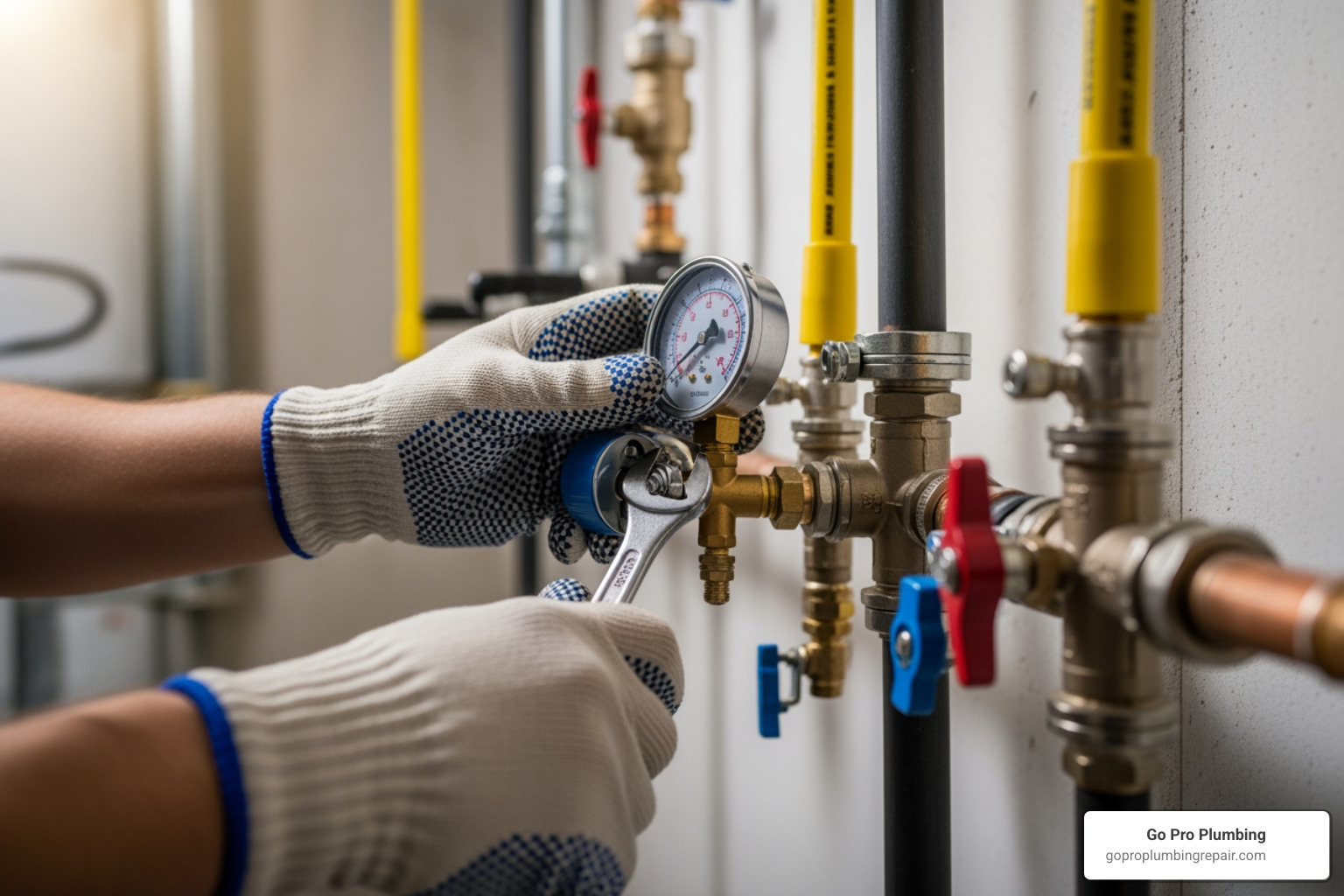
The final step is the final inspection sign-off. It is illegal and dangerous to activate gas service without approval from a city or state inspector. Our team coordinates this inspection. Only after the inspector signs off will the gas be turned on, guaranteeing your new line is safe and compliant.
Safety, Regulations, and Cost
When adding a gas line, safety is the absolute foundation of the project. Adhering to strict regulations is crucial to mitigate the inherent risks of working with natural gas. Understanding the costs involved also helps homeowners budget for this essential improvement.
Key Safety Protocols
We follow rigorous protocols to ensure the safety of your home and family. Key measures include:
- Proper Ventilation: Gas appliances produce combustion byproducts that must be vented outside. We ensure any new appliance has adequate ventilation to maintain healthy indoor air quality.
- Installing Shutoff Valves: A mandatory safety feature installed near each appliance, allowing you to cut the gas supply for emergencies or maintenance without shutting down the whole system.
- Grounding CSST Piping: If CSST (Corrugated Stainless Steel Tubing) is used, it must be properly bonded and grounded to protect against lightning-induced leaks.
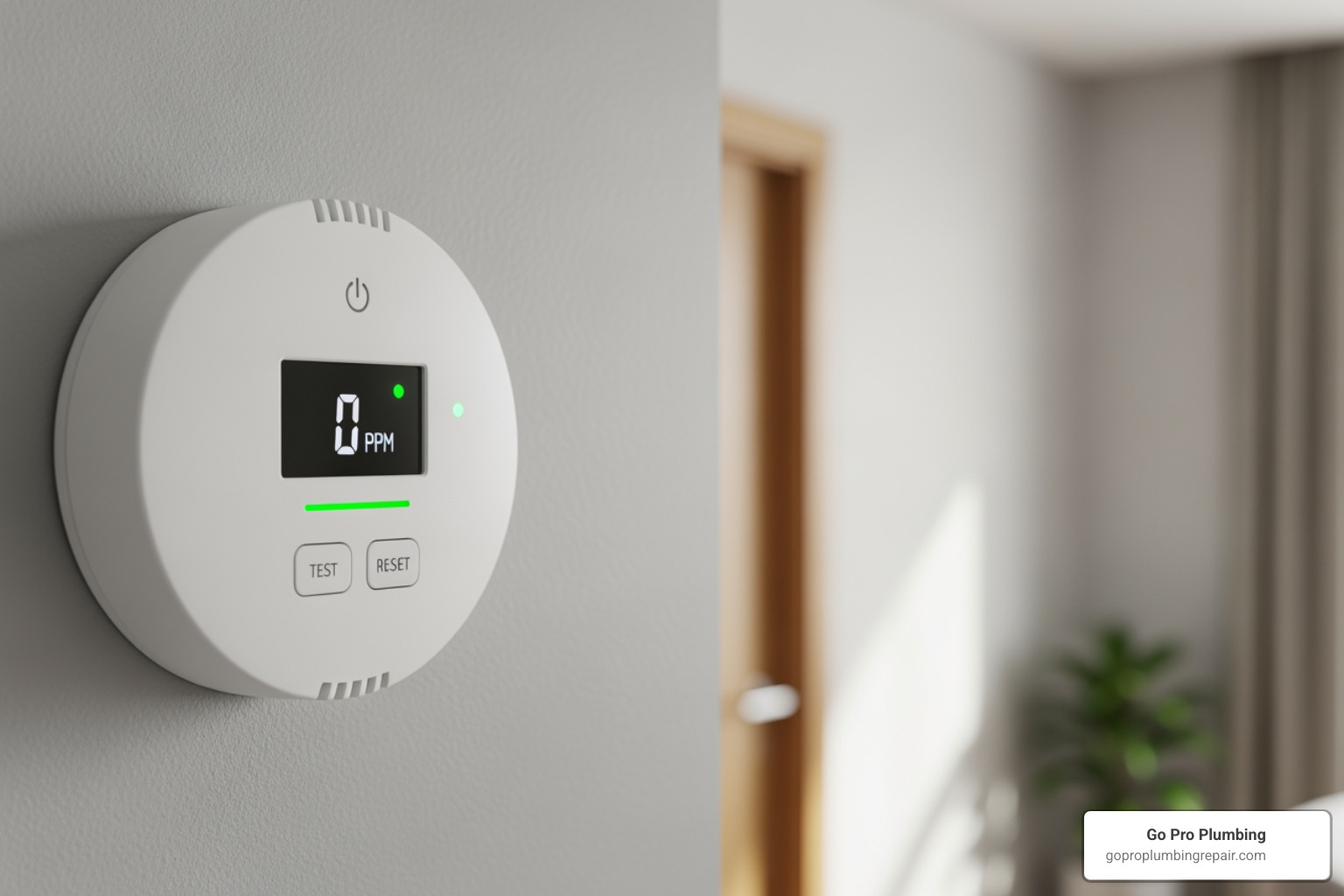
- Carbon Monoxide (CO) Detectors: CO is an odorless, deadly gas. A detector provides an essential layer of protection, and we recommend installing them throughout your home.
- Knowing What to Do if You Smell Gas: If you detect a rotten-egg odor:
- Do not use lights, appliances, or phones.
- Evacuate everyone immediately.
- From a safe distance, call your gas utility and 911.
- Do not re-enter until emergency personnel say it’s safe.
Understanding the Costs of Adding a Gas Line
The cost of adding a gas line varies. While the national average is around $523, projects typically cost $10 to $15 per linear foot plus fees, with total costs often ranging from $1,000 to $2,000 or more.
Factors influencing price include:
- Pipe length: Longer runs require more material and labor.
- Material choice: The cost of black iron, CSST, or HDPE pipe will affect the price.
- Project complexity: Routing lines through finished walls or trenching for underground pipes increases labor costs.
- Permit and inspection fees: These mandatory fees vary by jurisdiction in Northern California.
- Labor rates: Hiring licensed professionals is a key component of the cost. The risks of improper installation far outweigh any potential savings from a DIY attempt.
We provide detailed, transparent estimates for all gas line projects, so you understand every cost before work begins.
Why You Must Hire a Licensed Plumber
We cannot stress this enough: you must hire a licensed plumber for any gas line work. This is not a project for a DIYer, as the risks associated with natural gas are too severe to take chances.
The Dangers and Risks of Improper Installation
The consequences of an improperly installed gas line can be catastrophic. Key dangers and technical risks include:
- Gas Leaks and Poorly Sealed Joints: The most common risk, often from improperly sealed connections, can lead to a buildup of flammable gas.
- Explosions and Fire Hazards: A gas leak can be ignited by a simple spark, causing a devastating explosion or fire.
- Carbon Monoxide (CO) Poisoning: Improper venting or installation errors can cause incomplete combustion, producing this invisible, deadly gas.
- Incorrect Pipe Sizing: Improperly sized pipes can starve appliances of fuel, causing poor performance and potential safety issues.
- Failure to Meet Code: Non-compliant work creates safety hazards and will fail inspection, requiring costly rework.
- Lack of Proper Testing: Skipping pressure and leak tests means a dangerous flaw could go undetected, creating a ticking time bomb.
- Voided Homeowner’s Insurance: Most policies will not cover damages resulting from unpermitted or DIY gas line work, leaving you financially responsible.
Finding a Qualified Gas Line Installer
When adding a gas line, finding the right professional is key to ensuring safety and compliance. Here’s what to look for:
- Verify licenses and insurance: Ask for proof of a valid plumbing license and comprehensive insurance to ensure they are legally qualified and you are protected.
- Check for gas line experience: Inquire about their specific experience with gas line installations and local codes. Our team at Go Pro Plumbing has experience in this area.
- Read customer reviews: Look for consistent positive feedback regarding gas line work to gauge reliability and professionalism.
- Ask for detailed estimates: A qualified pro will provide a transparent, itemized estimate. Be wary of vague or unusually low quotes.
- Understand qualifications: Look for certified Master or Journeyman Plumbers with specific training in gas piping, as this demonstrates a higher level of expertise.
Our team at Go Pro Plumbing consists of licensed and insured professionals with experience in adding a gas line throughout Northern California. We are committed to providing expert, safe, and compliant services.
Frequently Asked Questions about Gas Line Installation
We understand that homeowners have many questions when considering adding a gas line. Here are some of the most common inquiries we receive:
Can I legally install my own gas line in California?
In most Northern California jurisdictions, it is illegal for unlicensed individuals to work on gas lines. Any gas line work requires permits and a mandatory inspection before the gas can be turned on.
The risks of a gas leak, fire, or explosion are too high for a DIY project. An improper installation can also void your homeowner’s insurance, leaving you liable for all damages. For safety and legal compliance, you must hire a licensed and insured professional.
How long does a typical gas line installation take?
A typical project takes 4-6 weeks from start to finish. This timeline includes the initial planning, waiting for permitting delays from local authorities, the installation day itself (which may only be a day or two), and final inspection scheduling before the line can be activated.
We strive to make the process as efficient as possible while ensuring every step adheres to safety and code requirements.
What’s the difference between natural gas and propane lines?
Natural gas and propane are not interchangeable and require different systems. Because of these differences, professional knowledge needed is paramount to ensure the correct materials, sizing, and safety devices are used for your specific fuel type. Key differences include:
- Pressure and Pipe Sizing: Propane is stored at a higher pressure and requires different pipe sizing calculations than lower-pressure natural gas.
- Appliance Compatibility: Appliances are built for one type of gas and must be converted by a professional to use the other.
- Regulator Requirements: Both systems use regulators, but they are configured differently to handle the specific pressures of each fuel.
Our licensed plumbers are trained to work with both natural gas and propane systems, ensuring a safe and correct installation for your home.
Conclusion
Adding a gas line offers great benefits, from efficient cooking to luxurious outdoor amenities. However, this project demands professional expertise to ensure safety. The key takeaway is that the complexity and risks—including gas leaks, fires, and CO poisoning—make this a job exclusively for licensed plumbers. A DIY approach is not worth the danger.
At Go Pro Plumbing, our licensed and insured team provides safe, compliant, and expert gas line installation services across Northern California. We manage the entire process, from permitting to final inspection, giving you complete peace of mind. We pride ourselves on being your trusted partner for all your gas line needs, ensuring your installation is safe, efficient, and handled with superior service.
For expert and safe gas line installation in Northern California, trust our licensed team to get the job done right. Don’t compromise on the safety of your home and family. Contact us for your gas line repair and installation needs today!