
Clamping Down on Leaks: Everything You Need to Know About Pipe Repair Clamps
By Brian on March 7, 2026
When a Pipe Leak Demands an Immediate Solution
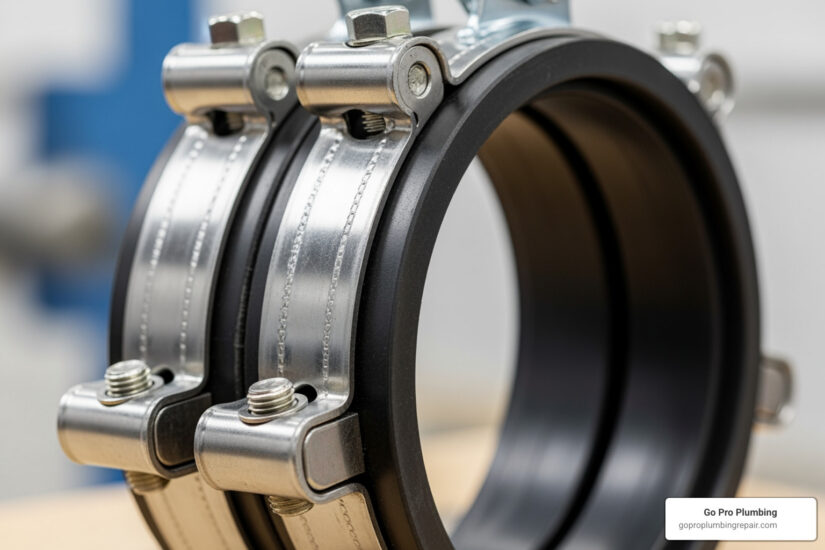
A pipe repair clamp is a metal device that wraps around a damaged pipe to stop leaks by compressing a rubber gasket against the pipe surface. Here’s what you need to know:
Quick Answer: Are Pipe Repair Clamps Effective?
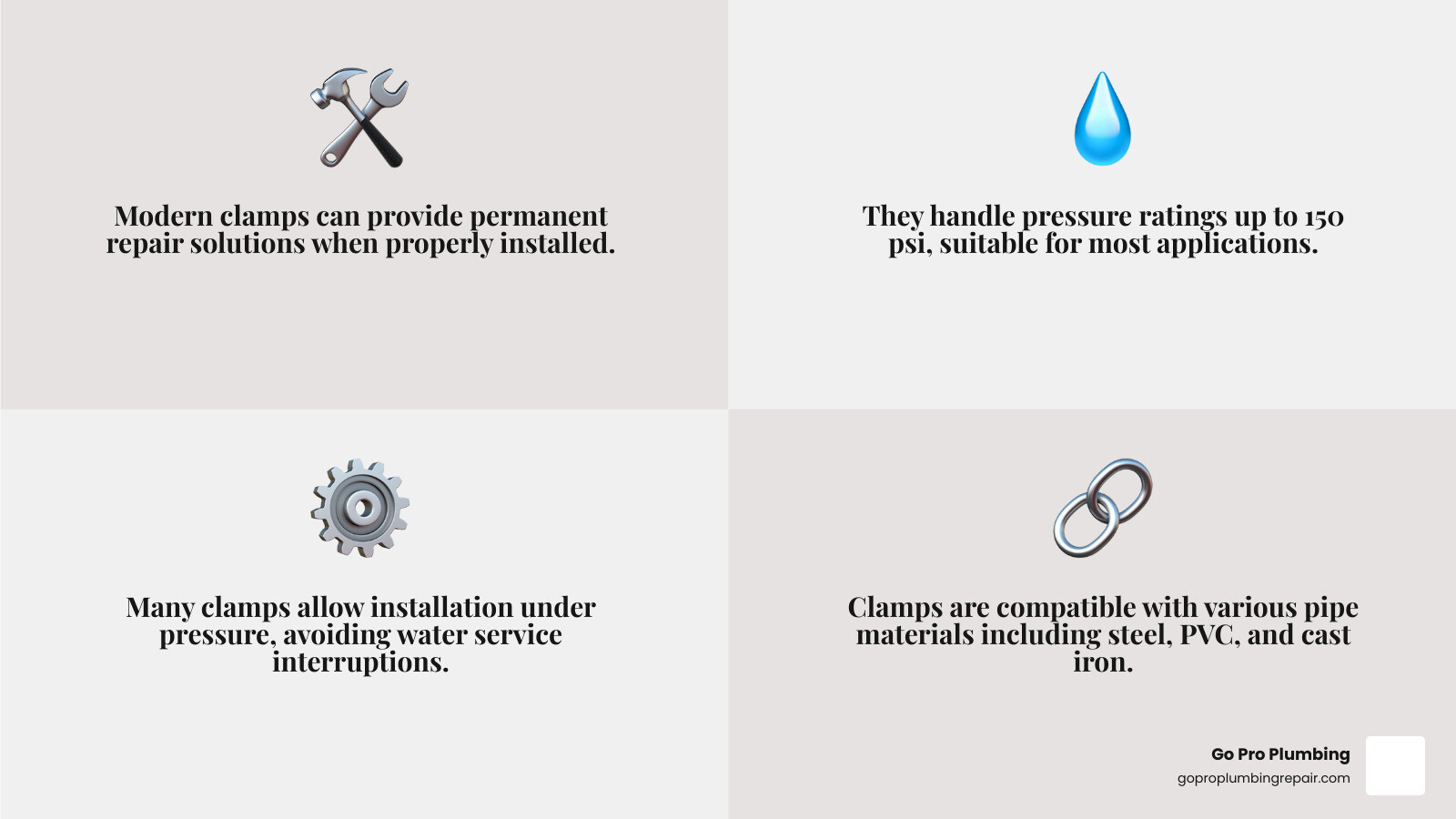
- Modern clamps can be permanent solutions – Not just temporary fixes when properly installed
- Pressure ratings up to 150 psi – Handle most residential and commercial applications
- Can be installed under pressure – No need to shut off water service in many cases
- Work on multiple pipe materials – Steel, cast iron, copper, PVC, and ductile iron
- Lifespan varies widely – From weeks (temporary) to decades (permanent) depending on quality and conditions
When you find water spraying from a corroded section of pipe or notice a growing puddle under your water line, time matters. Pipe repair clamps offer a fast, effective way to stop leaks without the expense and disruption of full pipe replacement.
These devices work by creating a mechanical seal around the damaged area. A metal band wraps around the pipe, and when you tighten the bolts, it compresses a rubber gasket against the leak. The result? Water stops flowing where it shouldn’t.
But not all clamps are created equal. The repair clamp market offers everything from simple $7 economy models to heavy-duty $1,000+ industrial units designed for large-diameter pipelines. Some are meant for quick temporary fixes, while others–made from ductile iron with specialized gaskets–can actually outlast the pipes they’re protecting.
The key question homeowners and facility managers face: Which type of clamp will actually solve my specific problem?
This guide breaks down everything you need to know about pipe repair clamps–from understanding how they work to choosing the right one for your situation.
Pipe repair clamp glossary:
Understanding the Mechanics of a Pipe Repair Clamp
At its core, a pipe repair clamp is an ingenious device designed to swiftly and effectively seal a breach in a pipe. Imagine a leaking garden hose–you might wrap tape around it, but for a more robust solution, you’d use a clamp. A pipe repair clamp works on a similar principle but on a much larger and more durable scale, creating a mechanical seal that can withstand significant pressure.
The fundamental operation involves encircling the damaged section of pipe with a clamp that contains a specialized rubber gasket. As we tighten the bolts on the clamp, it applies circumferential pressure, compressing the gasket tightly against the pipe’s surface. This compression forces the soft gasket material into any imperfections, cracks, or holes in the pipe, effectively stopping the leak. This method ensures leak containment without requiring us to cut into the pipe or shut down service in many cases. The ability to apply these clamps under pressure is a significant advantage, saving on costs, time, and labor, and preventing service interruptions. For more insights into water utility standards, you can explore Scientific research on water utility standards.
Key Components of a Pipe Repair Clamp
To truly appreciate how a pipe repair clamp functions, it helps to understand its individual components. Each part plays a crucial role in ensuring a secure and lasting repair:
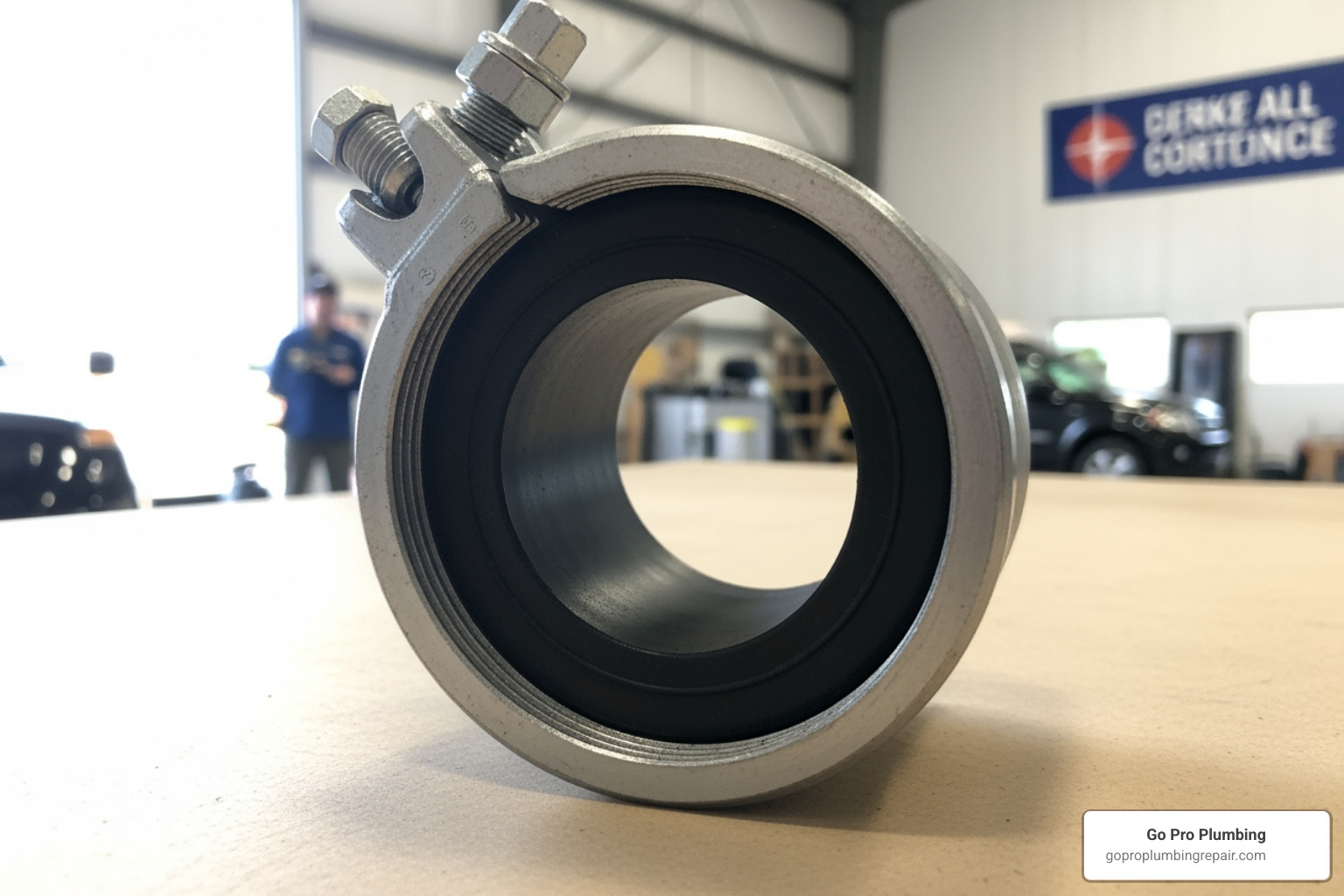
- Metal Band (or Shell): This is the main body of the clamp that wraps around the pipe. It’s typically made from robust materials like ductile iron castings (meeting ASTM A395 and A536 standards) or various grades of stainless steel (like Type 301). The choice of metal depends on the required strength, corrosion resistance, and specific application. Stainless steel, for instance, offers excellent corrosion resistance, especially important for underground pipes in our Northern California climate.
- Lugs: These are the connecting points, often cast into the metal band, where the bolts are inserted. They provide the leverage needed to tighten the clamp evenly around the pipe. Some clamps use cast iron lugs, while others might feature stainless steel side bars.
- Bolts and Nuts: These are the fasteners that draw the two ends or sections of the clamp together, applying the necessary compression to the gasket. They are usually made from high-strength materials like SAE Grade 5 or C-1541 grade steel, ensuring durability and resistance to stripping during installation. SAE flat washers, meeting ASTM F844, are also used to distribute the load evenly under the nut.
- Gasket: This is arguably the most critical component. The gasket is a rubber seal that sits between the metal band and the pipe surface. When compressed, it conforms to the pipe’s irregularities, creating a watertight seal. Common gasket materials include:
- Buna N (NBR): A versatile rubber suitable for temperatures ranging from -40 degrees F to 250 degrees F, commonly used for water, oil, and gas applications.
- Neoprene: Known for its good resistance to weathering, oils, and chemicals, often providing a positive seal that won’t deteriorate.
- Viton: Used for higher temperature applications where Buna-N might not be suitable, extending the operational temperature range.
- SBR (Styrene Butadiene Rubber): Often used in full circle gaskets, with ratings similar to Buna N.
- Coating: For added protection against corrosion, especially for underground applications, the metal components often receive a protective coating. An example is JDM F11T3 coating, which helps the clamp endure harsh environmental conditions.
Together, these components create a formidable barrier against leaks, allowing us to restore the integrity of your plumbing system efficiently.
Specialized Types and Applications
The world of pipe repair clamps is surprisingly diverse, with each type designed to address specific pipe materials, leak types, and pressure requirements. Understanding these variations is key to selecting the right solution for your unique plumbing challenge.
Here’s a breakdown of common types:
- Full Circumferential Repair Clamps: These clamps wrap completely around the pipe, providing a 360-degree seal. They come in:
- Single-section: Ideal for smaller pipes (e.g., 1/2″ to 12″ nominal sizes) and straightforward repairs like pit holes or small cracks.
- Two-section: Used for larger pipes (e.g., 4″ to 30″ nominal sizes) where a single section would be too cumbersome to install, often featuring removable bolts for easier fitting.
- Three-section: For very large pipes (10″ and larger) requiring multiple segments to encircle the diameter. These are excellent for repairing full circumferential holes, breaks, or cracks in steel, asbestos, copper, aluminum, cast iron, and other piping materials. Many can handle up to 150 psi working pressure.
- Redi Clamps: These are often single-section stainless steel clamps featuring a finely gridded gasket for superior sealing on pitted or rough areas. They are designed for swift repair of pipe splits, punctures, or pinholes, often incorporating a drop-in bolt feature for faster installation.
- Bell Joint Leak Clamps: Specifically engineered to address leaks at the bell (flared) joints of cast iron, ductile iron, or C900 PVC pipes. These clamps are crucial for repairing or preventing leaks in caulked or rubber gasketed joints, common in older infrastructure. They come in various sizes, often for nominal sizes 4″ to 48″, and typically handle up to 150 psi.
- Collar Leak Clamps: These stainless steel clamps are used to repair leaking solvent welds, particularly on plastic pipes (e.g., 2″ to 4″ nominal sizes).
- Emergency Pipe Clamps (e.g., Skinner pipeline clamps): These are heavy-duty clamps, sometimes double in length compared to standard emergency clamps, specifically designed for long splits, extensive corrosion, or significant damage. A key feature is their ability to be applied under pressure without interrupting service, making them invaluable for critical pipelines carrying gas, water, oil, or ammonia.
- Sewer Pipe Repair Clamps: Specialized clamps, often fabricated lug stainless steel, designed for gravity flow, low-pressure sewer applications. Some can even feature conductive buttons for electrical thawing.
Choosing the Right Pipe Repair Clamp for the Job
Selecting the appropriate pipe repair clamp is critical for a successful, long-lasting repair. It’s not a one-size-fits-all situation, and making the right choice involves considering several factors:
- Pipe Diameter and Nominal Size: This is the most fundamental consideration. You need a clamp that precisely matches the outside diameter of your pipe. Pipe sizing can be tricky, especially with PVC where “nominal” size refers to the approximate inside diameter. Always measure the pipe’s outside diameter to ensure a snug fit. Our expert plumbers in Northern California always double-check these measurements.
- Pressure Rating: Understand the operating pressure of your pipe. Most standard repair clamps can handle working pressures up to 150 psi, which is sufficient for many residential and commercial water lines. However, industrial applications or high-pressure gas lines may require specialized clamps with higher ratings.
- Fluid Type and Temperature Range: What is flowing through the pipe? Water, gas, oil, or ammonia? This dictates the appropriate gasket material. For instance, Buna-N gaskets are excellent for -40 degrees F to 250 degrees F, but higher temperatures might require Viton. Similarly, certain fluids might degrade specific gasket materials.
- Extent and Type of Damage:
- Pinhole or small crack: A single-section full circumferential clamp or Redi clamp might suffice.
- Long split or extensive corrosion: A longer, emergency-style clamp (like a Skinner pipeline clamp) or a multi-section full circumferential clamp would be more effective.
- Leak at a bell joint: You absolutely need a bell joint leak clamp.
- Leaking solvent weld on plastic pipe: A collar leak clamp is the specific tool for the job.
- Pitted pipe: As we’ll discuss, clamps might not be ideal for heavily pitted pipes.
- Pipe Material Compatibility: Clamps are designed for specific pipe materials. Stainless steel clamps are versatile, working on steel, cast iron, asbestos cement, plastic, ductile iron, copper, concrete, PVC, and HDPE. However, some clamps are specialized, like those for steel and copper pipes, or those for ductile iron and cast iron. Ensure the clamp’s gasket material and clamping mechanism are compatible with your pipe to avoid further damage or an ineffective seal.
- Environmental Conditions: Consider where the pipe is located. Is it underground, exposed to harsh weather, or in a corrosive environment? This influences the choice of metal (e.g., stainless steel for corrosion resistance) and protective coatings.
For complex situations or critical infrastructure in our service areas like Sacramento or Rancho Cordova, consulting with experienced professionals, like us at Go Pro Plumbing, is always recommended. We stay informed about best practices and standards, including those from organizations like the Scientific research on rural water infrastructure.
Materials, Durability, and Lifespan
The effectiveness and longevity of a pipe repair clamp are heavily influenced by the materials used in its construction and the conditions it endures. When we talk about durability, we’re looking at how well a clamp can resist corrosion, maintain its seal, and withstand the pressures of its environment over time.
What Materials are Pipe Repair Clamps Made From?
As we’ve touched upon, the primary materials for pipe repair clamps include:
- Metal Components (Band, Lugs, Bolts, Nuts):
- Ductile Iron Castings: Often used for clamp bodies, adhering to ASTM A395 and A536 standards. Ductile iron offers excellent strength and impact resistance.
- Stainless Steel: Type 301 stainless steel is a common choice for bands due to its superior corrosion resistance, especially vital for underground or exposed pipes. This helps prevent rust and ensures the clamp maintains its structural integrity.
- Carbon Steel: Used for bolts and nuts, often zinc-plated (C-1541 grade steel, SAE Grade 5) and sometimes with a dichromate finish for added corrosion protection.
- Gaskets:
- Buna N (NBR): A synthetic rubber known for its resistance to oils, fuels, and water, with a wide temperature range (-40 degrees F to 250 degrees F). This makes it a workhorse for many plumbing applications.
- Neoprene: Offers good weathering and chemical resistance, providing a reliable, long-lasting seal.
- Viton: Chosen for applications with higher temperatures or more aggressive chemicals where Buna N might not perform adequately.
Expected Lifespan and Influencing Factors
The question of whether a pipe repair clamp is a permanent or temporary solution often comes down to its materials and the quality of installation. While some economy clamps might only be suitable for short-term fixes, modern, high-quality clamps are designed to provide a permanent repair. In fact, some manufacturers proudly state that their clamps are designed to outlast the pipe itself.
The lifespan can range dramatically: from several weeks to months if intended as a temporary solution, to several years or even decades if they represent a feasible long-term fix. Several factors play a critical role in this longevity:
- Material Quality: High-grade stainless steel for bands, ductile iron for bodies, and specific rubber compounds for gaskets all contribute to a longer lifespan. Cheap materials will inevitably fail sooner.
- Environmental Conditions: Pipes buried in highly corrosive soil, exposed to extreme temperatures, or subject to aggressive chemicals will challenge even the best clamps. Proper coatings (like JDM F11T3 coating) and appropriate material selection are key here.
- Pipe Material: The type of pipe being repaired (galvanized steel, copper, PVC, cast iron, etc.) affects the clamp’s interaction and potential for galvanic corrosion if dissimilar metals are in contact.
- Installation Quality: A properly installed clamp, tightened to the correct specifications, will create a much more secure and lasting seal than one that is poorly fitted or over/under-tightened. Professional installation is paramount.
- Maintenance Quality and Consistency: While clamps generally require little maintenance once installed, ensuring the surrounding area is free from conditions that could accelerate corrosion or damage can contribute to their longevity.
Pipe Repair Clamp vs. Pipe Coupling
While both pipe repair clamps and pipe couplings are used to address issues with pipes, they serve distinct purposes. Understanding the difference is crucial for choosing the right solution.
A pipe repair clamp, as we’ve explored, is primarily designed to stop leaks or repair localized damage on an existing pipe section. It wraps around the damaged area, sealing it without necessarily cutting out the compromised section. Its main function is leak containment and structural support for the compromised area.
A pipe coupling, on the other hand, is used to join two sections of pipe together. This is typically done when a section of pipe is too extensively damaged (e.g., a burst pipe, a large collapse) to be repaired by a clamp, requiring a complete replacement of a segment. The damaged section is cut out, and a new piece of pipe is inserted, connected at both ends by couplings.
Here’s a breakdown of their differences:
| Feature | Pipe Repair Clamp | Pipe Coupling |
|---|---|---|
| Primary Use | Repair localized leaks, cracks, or minor damage on an existing pipe. | Join two pipe sections, replace damaged segments, or connect new pipes. |
| Pipe Integrity | Seals damage on the pipe. | Connects ends of pipes. |
| Structural Role | Provides support to the damaged area. | Creates a continuous, structurally sound connection between two pipes. |
| Installation | Wraps around the pipe, compresses gasket. Can often be installed under pressure. | Requires cutting the pipe, inserting a new section, and joining with the coupling. |
| Flexibility | Limited ability to handle pipe movement or misalignment. | Can accommodate ground movements, absorb vibration, and allow for deflection. |
| Damage Extent | Best for minor to moderate damage (pinholes, splits, corrosion spots). | Essential for extensive damage (burst pipes, large collapses) requiring segment replacement. |
While a pipe repair clamp is an excellent tool for quick and effective leak mitigation, a coupling is a more comprehensive solution when a pipe section needs to be entirely replaced to maintain system continuity. For extensive damage in your Northern California home or business, we often recommend replacing the pipe section with couplings for a truly robust fix.
Frequently Asked Questions
When it comes to pipe repair clamps, many questions arise about their effectiveness, application, and limitations. Here, we address some of the most common inquiries we hear from our customers in Rancho Cordova and Sacramento.
Are pipe repair clamps a permanent or temporary solution?
This is one of the most frequently asked questions, and the answer is: it depends on the type of clamp and the quality of installation. Historically, pipe repair clamps were often seen as temporary “quick-fixes.” However, with advancements in materials and design, many modern pipe repair clamps are indeed engineered for permanent repair.
Models like full-circle, wrap-around, and stand-off clamps, especially those made from high-grade stainless steel and featuring durable gaskets (like Buna-N or Viton), are designed for long-term durability and integrity. When properly selected and installed by a professional, these clamps can provide a feasible long-term solution, second only to a full pipe replacement. Their lifespan can range from several years to decades.
That being said, some simpler, economy clamps available on the market are still best considered temporary solutions, lasting anywhere from several weeks to several months. It’s crucial to identify the purpose of the specific clamp you’re considering. For any critical water lines in your home or business, we always recommend a professional assessment to determine if a clamp is a suitable permanent solution or if other repairs are needed.
Can I use a repair clamp on a pitted or heavily corroded pipe?
While pipe repair clamps are excellent for stopping leaks caused by corrosion, their effectiveness can be compromised if the pipe is heavily pitted or has widespread corrosion. The gasket inside the clamp needs a relatively smooth surface to compress against to create a watertight seal. If the pipe’s surface is too irregular due to deep pitting, the gasket may not be able to conform completely, potentially leaving channels for water to continue leaking.
In such cases, we might suggest alternative solutions. For instance, water-activated fiberglass repair tape can sometimes be effective on pitted pipes by creating a solid, conforming patch. However, if the corrosion is extensive or has significantly weakened the pipe’s structural integrity, a full pipe replacement of the damaged section is often the safest and most reliable long-term solution. A professional inspection can determine the extent of the damage and recommend the best course of action.
What is the maximum pressure a standard repair clamp can handle?
Most standard pipe repair clamps are designed to handle working pressures of up to 150 psi (pounds per square inch). This pressure rating is typically sufficient for a wide range of residential and commercial plumbing applications, including most water supply lines.
However, it’s important to note that specific clamp models will have their own rated working pressures, and this can vary based on their construction, materials, and size. For example, some specialized industrial clamps for large pipelines or specific applications might be rated for higher pressures. Conversely, very small or economy clamps might have lower pressure tolerances.
Always check the manufacturer’s specifications for the particular pipe repair clamp you are considering. Exceeding the rated pressure can lead to clamp failure, resulting in continued leaks or even a pipe burst, which can cause significant damage. If you’re unsure about the pressure in your plumbing system or the appropriate clamp for a high-pressure application, it’s always best to consult with a licensed plumber.
Conclusion
Navigating the complexities of pipe leaks can be daunting, but with a thorough understanding of pipe repair clamps, you’re well-equipped to make informed decisions. These versatile devices offer a rapid, often permanent, solution to various pipe damages, from pinholes to significant splits. We’ve explored their mechanics, diverse types custom for specific applications, the critical role of materials in their durability, and how they differ from pipe couplings.
The right pipe repair clamp can save you significant time, money, and hassle by allowing for repairs without the need for extensive pipe replacement or service interruptions. However, choosing the correct clamp–considering pipe diameter, pressure, fluid type, and extent of damage–is paramount for a successful outcome. While many clamps offer a robust, long-term fix, professional assessment and installation ensure the highest degree of reliability and safety.
For any pipe leak or plumbing emergency in Northern California, including Rancho Cordova and Sacramento, don’t hesitate to reach out to us at Go Pro Plumbing. Our commitment to outstanding customer service and same-day service means we’re here to provide professional assessment, recommend the best repair strategy, and expertly install the right solution for your home or business. We’ll help you clamp down on those leaks quickly and effectively, ensuring your plumbing system remains in top condition.