
Broken Sink Handle? A Step-by-Step DIY Repair Guide
By Brian on June 30, 2026
A Broken Sink Handle Is More Common Than You Think — Here’s What to Do
A broken sink handle is one of the most frustrating plumbing problems a homeowner can face — but the good news is that most repairs are simple enough to do yourself in under an hour.
Quick answer: How to fix a broken sink handle
- Turn off the water supply valves under the sink
- Remove the decorative cap and unscrew the set screw with an Allen wrench
- Inspect the handle, cartridge, and O-rings for damage or mineral buildup
- Replace any worn or broken parts (handles typically cost $10–$50)
- Reassemble and test for leaks and smooth operation
Over 10 million U.S. households deal with a faucet handle or cartridge issue every year. And if left unaddressed, even a small drip can waste up to 3,000 gallons of water annually — driving up your water bill and putting unnecessary wear on your plumbing.
The repair cost difference is significant too. A DIY fix typically runs $10–$100 in parts. Calling a professional without trying it yourself first? That’s usually $150–$350.
Whether your handle is loose, stuck, snapped clean off, or just hard to turn, this guide walks you through exactly what to do — step by step.
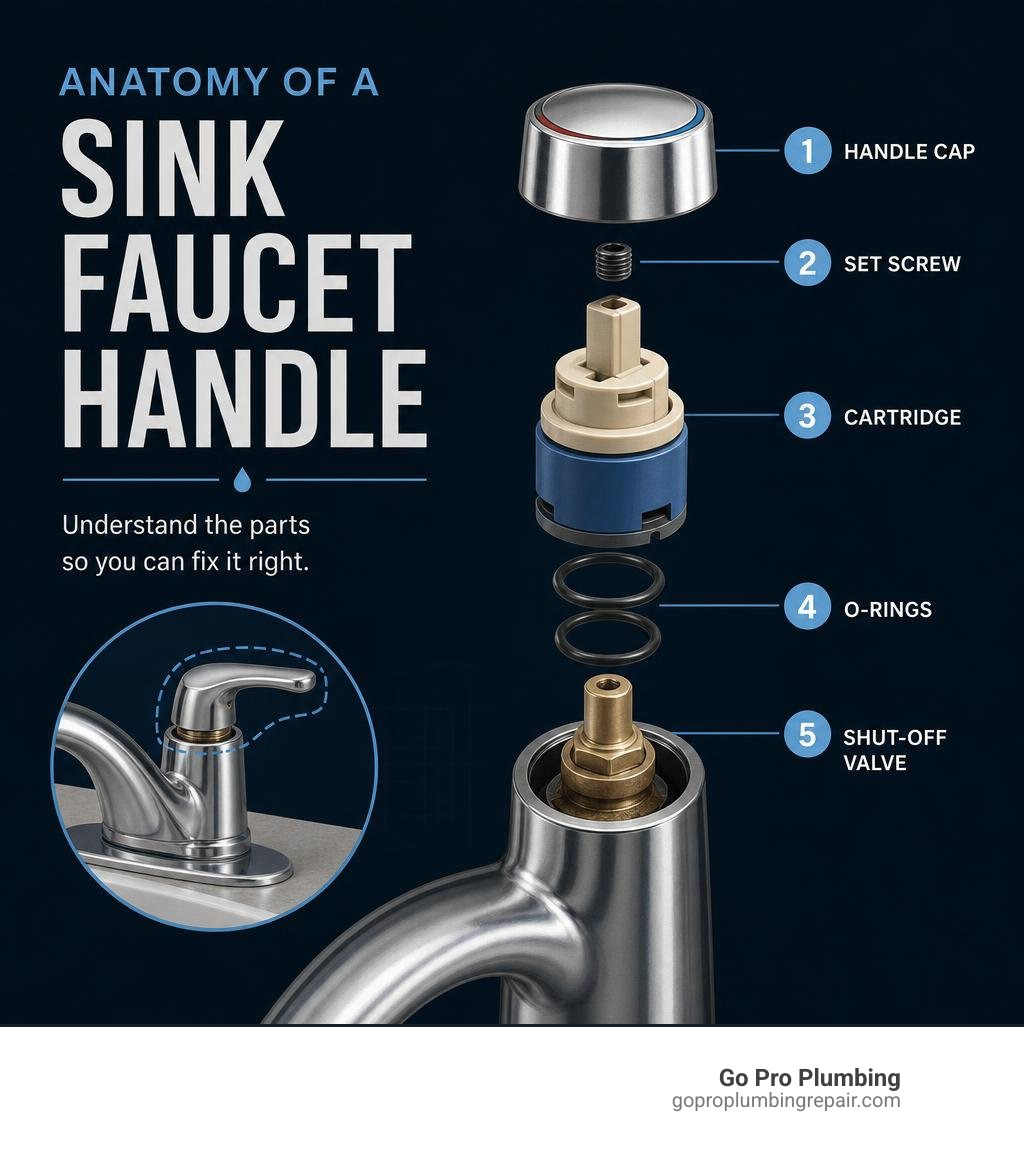
Common broken sink handle vocab:
Common Causes of a Broken Sink Handle
Before you grab your toolbox, it helps to understand why your handle gave up on you in the first place. Faucet handles endure a surprising amount of physical stress. Every time you wash your hands, wash the dishes, or brush your teeth, you apply lateral force to a tiny metal or plastic connection.
Here are the most common culprits behind a malfunctioning or broken sink handle:
- Mineral Buildup and Hard Water: If you live in a hard-water region, mineral buildup is responsible for approximately 60% of stiff or hard-to-turn faucet handles. Over time, calcium and magnesium deposits calcify inside the valve, acting like sand in a gear system.
- Worn or Loose Set Screws: The tiny screw holding your handle to the internal stem can slowly back out due to repeated use. This leads to a loose, wobbly handle that eventually slips off entirely.
- Stripped Threads or Broken Splines: The inside of your faucet handle features small ridges (splines) that interlock with the valve stem. If someone turns the handle too aggressively, these ridges can strip, leaving the handle spinning uselessly.
- Internal Component Failure: Sometimes it’s not the handle itself that’s broken, but the plastic adapter or cartridge underneath. For detailed insights on internal failures, check out our broken sink faucet overview.
- Corrosion: Over years of exposure to moisture, the metal parts inside your handle can corrode and fuse together. When you try to force a corroded handle to turn, the metal can snap. If you are dealing with a heavily corroded handle, the Repairing a defective faucet handle – iFixit Repair Guide offers excellent technical solutions for restoring structural integrity.
How to Diagnose Your Faucet Handle Issue
Is your handle completely detached, or is it just acting stubborn? Correctly diagnosing the issue prevents you from buying replacement parts you don’t actually need.
Let’s break down the three most common symptoms and what they usually mean:
- The Handle is Loose or Wobbly: If you wiggle the handle and it feels like it has too much “play,” the set screw has likely backed out. In most cases, a quick turn of an Allen wrench is all it takes to secure it.
- The Handle is Stiff or Hard to Turn: This points directly to mineral scale or a failing internal cartridge. You will need to disassemble the handle, clean the parts in vinegar, and potentially replace the cartridge.
- The Handle Has Completely Detached: If the handle came off in your hand, look inside the handle collar. If you see broken plastic pieces, you likely need a new handle adapter. If the metal splines are smooth and stripped, you will need a full replacement handle.
To help you visualize your troubleshooting plan, review this quick diagnostic reference table before starting your faucet and sink repair:
| Symptom | Primary Suspect | Common Fix | Difficulty Level |
|---|---|---|---|
| Handle spins without turning on water | Stripped splines or broken plastic adapter | Replace handle or adapter | Easy |
| Handle is loose and wobbly | Backed-out set screw | Tighten set screw | Very Easy |
| Handle is stuck or incredibly stiff | Mineral scale or seized cartridge | Soak in vinegar; replace cartridge | Medium |
| Water leaks from the base of the handle | Damaged O-ring or loose packing nut | Replace O-rings; apply plumber’s grease | Medium |
Tools and Materials Needed for the Repair
You don’t need a professional plumbing truck to fix a broken sink handle, but having the right tools nearby will keep you from running back and forth to the hardware store.

Gather these essentials before you begin:
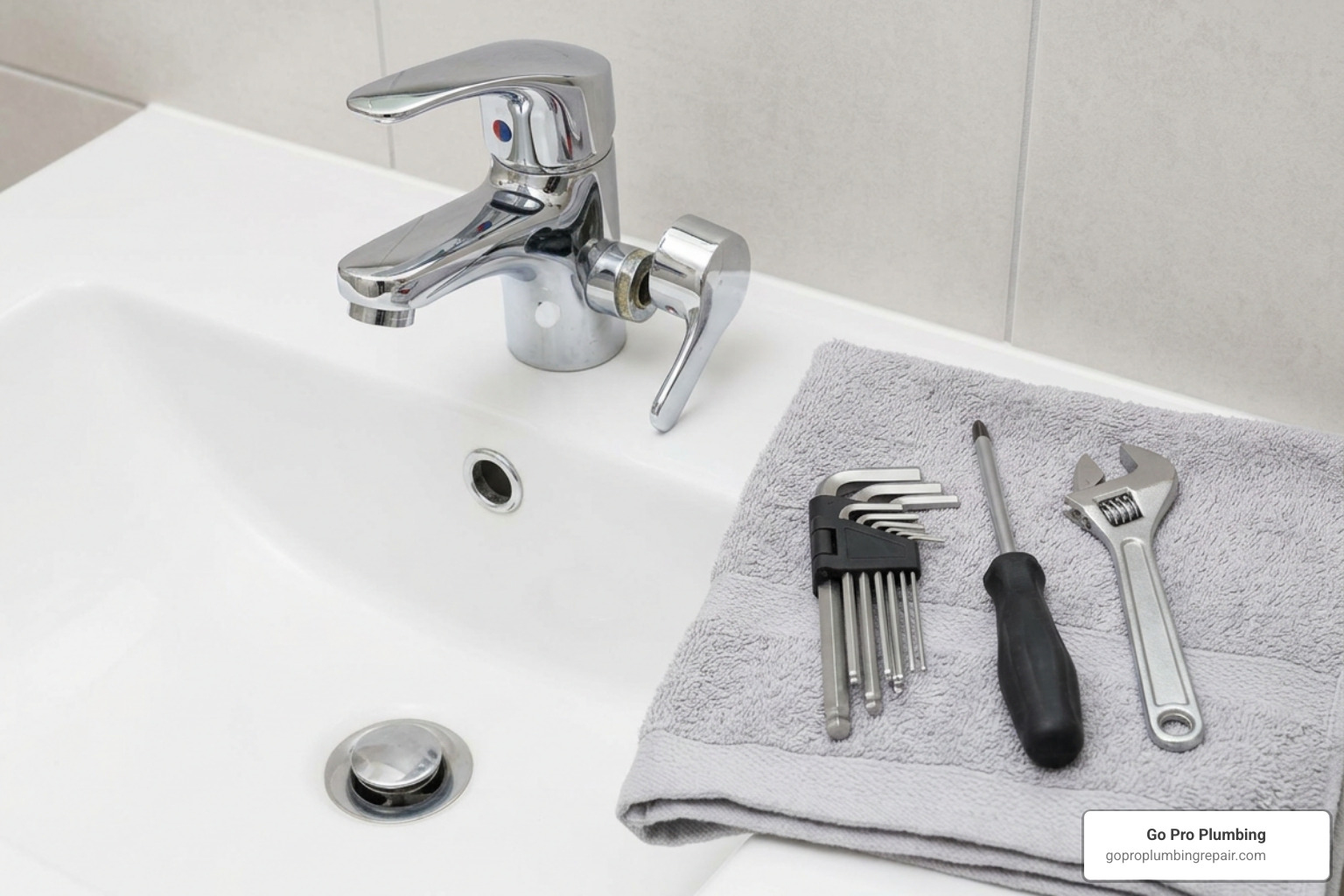
- Allen Wrench Set (Hex Keys): Most modern faucet handles are secured with a set screw. You will typically need a 3/32″, 1/8″, or 5/52″ hex key.
- Screwdrivers: Both a flathead (for prying off decorative caps) and a Phillips-head screwdriver.
- Adjustable Wrench: For removing the retaining nut holding the cartridge in place.
- Penetrating Oil (WD-40): Essential if you are dealing with a rusted or corroded handle that refuses to budge.
- White Vinegar and a Cleaning Brush: To dissolve mineral scale and hard water buildup.
- Plumber’s Grease (Silicone-Based): To lubricate the O-rings and ensure smooth handle rotation.
- Replacement Parts: Depending on your diagnosis, you may need a new handle, a handle adapter, or a replacement cartridge.
If you want to dive deeper into selecting the right tools and replacement parts for your specific setup, check out this excellent guide on How to Fix a Bathroom Faucet Handle That Is Loose or Broken.
Step-by-Step Guide to Fixing a Broken Sink Handle
Ready to roll up your sleeves? Follow these five steps to safely disassemble, clean, and repair your faucet handle.
Step 1: Shut Off the Water and Prep the Area
Before you touch a single tool, you must turn off the water. If you forget this step, removing the handle or cartridge could turn your bathroom or kitchen into an indoor water park!
- Look underneath your sink for the hot and cold shut-off valves. Turn them clockwise until they are fully closed.
- Turn the faucet handle to the “on” position to drain any remaining water and relieve pressure in the lines.
- Crucial Step: Place a clean rag or towel over the sink drain. This prevents tiny set screws, decorative caps, or tools from falling down the drain pipe. Trust us, trying to fish a 3/32″ screw out of a P-trap is no fun!
- Keep a small bucket or bowl nearby to catch any water that drips out when you pull the handle off.
Step 2: Remove the Broken Sink Handle
Now that the workspace is safe, it’s time to take the handle off.
- Locate the Screw: Most handles have a hidden screw. Look for a small plastic decorative cap (often red/blue for hot/cold or matching the metal finish).
- Pry Off the Cap: Gently insert a thin flathead screwdriver or your fingernail under the edge of the cap to pop it off. If your handle has come off entirely, consult the How do I fix the handle of a single-handle faucet that came off? – FAQ Portal for specific reattachment steps.
- Loosen the Set Screw: Insert the correct size Allen wrench into the exposed hole. Turn it counterclockwise to loosen the screw. You usually don’t need to remove the screw completely — just loosen it enough to slide the handle off.
- Pull the Handle Free: Gently pull the handle straight up and off the valve stem. If the handle is stuck due to corrosion, do not force it or pry against the delicate faucet body. Instead, spray some penetrating oil around the stem, let it sit for 10 minutes, and then use a dedicated faucet handle puller tool to lift it safely. For more handle removal techniques, refer to How To Fix Sink Handle | Storables.
Step 3: Inspect and Clean Internal Components
With the handle removed, you can see the inner workings of your faucet.
- Check for Damage: Look closely at the valve stem (the top of the cartridge) and the inside of the handle. Are the metal splines stripped? Is the plastic adapter cracked?
- Dissolve Mineral Deposits: If you see white, crusty scale, soak a rag in white vinegar and wrap it around the valve stem. Let it sit for 15 to 30 minutes to dissolve the buildup. Scrub the area gently with an old toothbrush.
- Inspect the O-Rings: Look for any cracked or worn rubber O-rings. If they look flattened or damaged, pry them off and replace them. Apply a thin layer of silicone-based plumber’s grease to the new O-rings to prevent future leaks and keep the handle turning smoothly.
Step 4: Install the Replacement Broken Sink Handle or Parts
If your inspection revealed broken parts, now is the time to replace them.
- Brand-Specific Parts: Faucet manufacturers like Moen, Delta, and Pfister design their handles and cartridges differently. For example, if you have a classic Moen Monticello faucet, you might need a specific handle adapter kit. Check out the Bathroom Faucet: Broken Monticello Handle – Moen Solutions guide for model-specific repair steps.
- Replacing the Cartridge: If your handle was stiff or leaking, you likely need a new cartridge. Use an adjustable wrench to unscrew the cartridge retaining nut, pull the old cartridge straight out (take a picture first so you know which way it faces!), and slide the new cartridge in.
- Universal Handles: If you cannot find an exact OEM (Original Equipment Manufacturer) replacement handle, you can purchase a universal handle kit. These kits come with various plastic adapters to match different valve stem shapes.
- Installing the Handle: Slide the new adapter or handle onto the valve stem. Make sure it aligns correctly so that “off” is truly off and “on” gives you full range of motion. For a broader look at replacing your entire fixture if the damage is extensive, see our sink faucet replacement guide.
For kitchen-specific fixtures, which often feature pull-down sprayers and unique single-lever designs, the How To Fix A Broken Kitchen Faucet Handle? – Easy DIY Fix provides tailored advice.
Step 5: Reassemble and Test the Faucet
You’re on the home stretch! Let’s put everything back together.
- Slide the handle back onto the stem or cartridge adapter.
- Tighten the set screw clockwise using your Allen wrench. Be careful not to overtighten, as you could crack a plastic adapter or strip the screw head.
- Pop the decorative cap back into place.
- Remove the towel from the drain.
- Slowly turn the water shut-off valves under the sink counterclockwise to restore water flow.
- Turn the sink handle on and off several times. Check for smooth operation, verify that the hot and cold water are coming from the correct sides, and inspect the base of the handle carefully for any signs of leaks.
When to DIY vs. Calling a Professional Plumber
While fixing a broken sink handle is highly achievable for most DIYers, some situations warrant calling in the experts.
Go ahead and DIY if:
- The handle is just loose and needs a quick screw tightening.
- The handle is wobbly, and you can easily find a matching replacement part at the local hardware store.
- You need to swap out a standard cartridge on a modern, accessible sink.
Call a professional plumber if:
- The Valve Stem is Snapped or Stripped: If the metal stem coming out of the faucet body is broken, you cannot simply attach a new handle. You will likely need to replace the entire faucet fixture.
- The Shut-Off Valves are Stuck or Leaking: If you go under your sink and the shut-off valves won’t budge, or if they start dripping when you touch them, do not force them.
- You Have a Complex or High-End Setup: Working on complex kitchen configurations or unique pedestal sinks can be incredibly tight and frustrating. If you need help, we have specialized guides for changing out bathroom sink faucet, changing a faucet on a pedestal sink, pedestal sink faucet replacement guide, and the ultimate pedestal faucet guide.
- You Need a Brand New Kitchen Installation: If you decide to upgrade the entire system, check out our guides on installing faucet in kitchen sink and our complete kitchen sink faucet guide.
Frequently Asked Questions about Faucet Handles
Can I use my sink if the replacement handle is on back-order?
Yes! If your handle is broken but the cartridge stem is intact, you can temporarily turn the water on and off by gently gripping the flat sides of the exposed cartridge stem with a pair of pliers. Just be very gentle so you don’t damage the metal splines. Alternatively, you can leave the faucet handle in the “on” position and use the shut-off valves under the sink to control the water flow until your replacement part arrives.
How do I find the exact model of my faucet for replacement parts?
Look for a manufacturer logo printed on the faucet body (often on the base plate or the back of the spout). If you can’t find a model number, take a clear photo of your faucet and use a reverse image search online, or bring the photo (and the broken parts) to a plumbing supply store. Many top brands like Moen and Delta also offer lifetime warranties, so contacting their customer support with a photo can often get you a replacement part sent directly to your home for free!
How can I prevent my sink handle from breaking or loosening in the future?
- Clean Regularly: Wipe down the base of your faucet handles weekly with mild soap and water to prevent mineral scale buildup.
- Don’t Overtighten: When turning off the water, stop as soon as you feel resistance. Overtightening puts immense stress on the internal plastic parts and leads to stripped threads.
- Lubricate: Apply a small amount of silicone-based plumber’s grease to the O-rings and cartridge stem whenever you perform repairs.
Conclusion
Fixing a broken sink handle is an excellent, budget-friendly DIY project that can save you hundreds of dollars while protecting your home from water waste. However, if you run into stubborn corrosion, a seized valve, or simply don’t have the time to tackle the repair yourself, we are here to help.
At Go Pro Plumbing, we proudly serve homeowners and businesses throughout Northern California, including Rancho Cordova, CA, Sacramento, CA, and the surrounding areas. We specialize in both residential and commercial plumbing, offering everything from minor faucet repairs to complete drain cleaning and water heater installations.
Our unique selling proposition is simple: we are committed to outstanding customer service and offer reliable same-day service to get your home running smoothly as quickly as possible.
If you’d rather leave it to the pros, contact us today for professional faucet and sink repair services!