
Warm Up Your Home: Adding a Gas Line to Your Fireplace
By Brian on June 24, 2026
Is Adding a Gas Line to Your Fireplace Worth It?
Adding a gas line to your fireplace is a home upgrade that requires a licensed plumber or certified gas technician, a permit from your local building department, and a pressure test before final inspection. Here’s a quick overview of what the process involves:
- Plan the route from your existing gas supply to the fireplace
- Pull a permit from your local building department
- Hire a licensed professional to run and connect the gas line
- Pressure test the new line to confirm there are no leaks
- Schedule a final inspection with your local inspector before use
Typical cost: $200–$1,500 for the gas line alone, depending on distance and complexity.
Your wood-burning fireplace might look great — but it’s probably not doing much for your comfort or your heating bill. Traditional fireplaces can actually lose heat for your home, pulling warm indoor air up the chimney while cold outside air seeps in to replace it.
Gas is different. Once a gas line is connected, your fireplace becomes a reliable, easy-to-control heat source. No wood to chop. No ash to clean. Just warmth on demand.
The catch? This isn’t a weekend DIY project. Working with natural gas carries real risks — leaks, fire, and carbon monoxide exposure — and nearly every jurisdiction in Northern California requires a licensed professional and a permit to do this work legally.
The good news: when done right, it’s a straightforward job that most licensed plumbers can complete in a day or two.
Adding gas line to fireplace word list:
Benefits of Adding a Gas Line to Your Fireplace
When we talk to homeowners in Sacramento and Rancho Cordova, the number one reason they want to switch to gas is convenience. Let’s be honest: as much as we love the idea of a wood fire, the reality involves hauling heavy logs, struggling with kindling, and dealing with that lingering smoky smell in the curtains.
By adding gas line to fireplace setups, you gain instant gratification. With the flick of a switch or a remote, you have a consistent heat source. But the benefits go deeper than just being lazy (though we fully support effortless relaxation!).
- Improved Air Quality: Traditional wood fires release combustion products and pollutants like particulate matter and carbon monoxide into your living space. Gas burns significantly cleaner, protecting your family’s lungs.
- Energy Efficiency: Many modern gas inserts act like zone heaters. Instead of cranking up the furnace for the whole house, you can heat the room you’re actually in.
- Property Value: A functional, easy-to-use fireplace is a major selling point. It transforms a dusty “decorative” feature into a working appliance.
- Environmental Impact: Natural gas produces fewer emissions than burning wood, making it a more eco-friendly choice for our Northern California air.
If you are curious about how this fits into your overall home system, you can find more info about gas plumbing services that we provide to keep your home running smoothly.
Planning and Preparation: Permits, Costs, and BTU Loads
Before we start drilling holes in your floorboards, we need a solid plan. Gas isn’t something you “eyeball.” We have to look at your home’s entire “gas budget.”
Determining Costs for Adding a Gas Line to Your Fireplace
The cost of adding gas line to fireplace units varies based on how far we have to run the pipe. If your gas meter is right outside the fireplace wall, it’s a quick job. If we have to snake a line from the opposite side of the house through a finished basement, the price goes up.
| Feature | Vented Gas Fireplace | Ventless Gas Fireplace |
|---|---|---|
| Unit Cost | $1,700 – $12,500 | $800 – $2,600 |
| Gas Line Install | $200 – $1,500 | $200 – $1,500 |
| Installation Time | 1 – 3 Days | 3 – 6 Hours |
| Efficiency | Moderate | Very High |
Labor rates for a licensed plumber in the Sacramento area typically range from $45 to $200 per hour. When you factor in permit fees (which are mandatory) and materials, most homeowners find themselves spending between $500 and $1,500 for the gas line portion of the project. For a deeper dive, check out our residential gas line installation guide.
Assessing Your Home’s Gas Capacity
Every gas appliance in your home has a BTU (British Thermal Unit) rating. Your water heater, furnace, and stove all “eat” from the same gas supply. If we add a high-output fireplace without checking the capacity, we might “starve” your furnace, causing it to shut down on the coldest night of the year.
We use a gas flow chart to determine if your existing pipes are wide enough to handle the extra load. Sometimes, a gas line regulator installation is necessary to ensure the pressure remains steady at the fireplace. If the total demand exceeds what your meter can provide, we may even need to coordinate an upgrade with the utility company.
Professional vs. DIY: Why Safety Comes First
We love a good DIY project as much as anyone, but gas lines are where we draw the line. In Northern California, specifically in regions like Rancho Cordova and Sacramento, building codes are very strict about who can touch gas infrastructure.
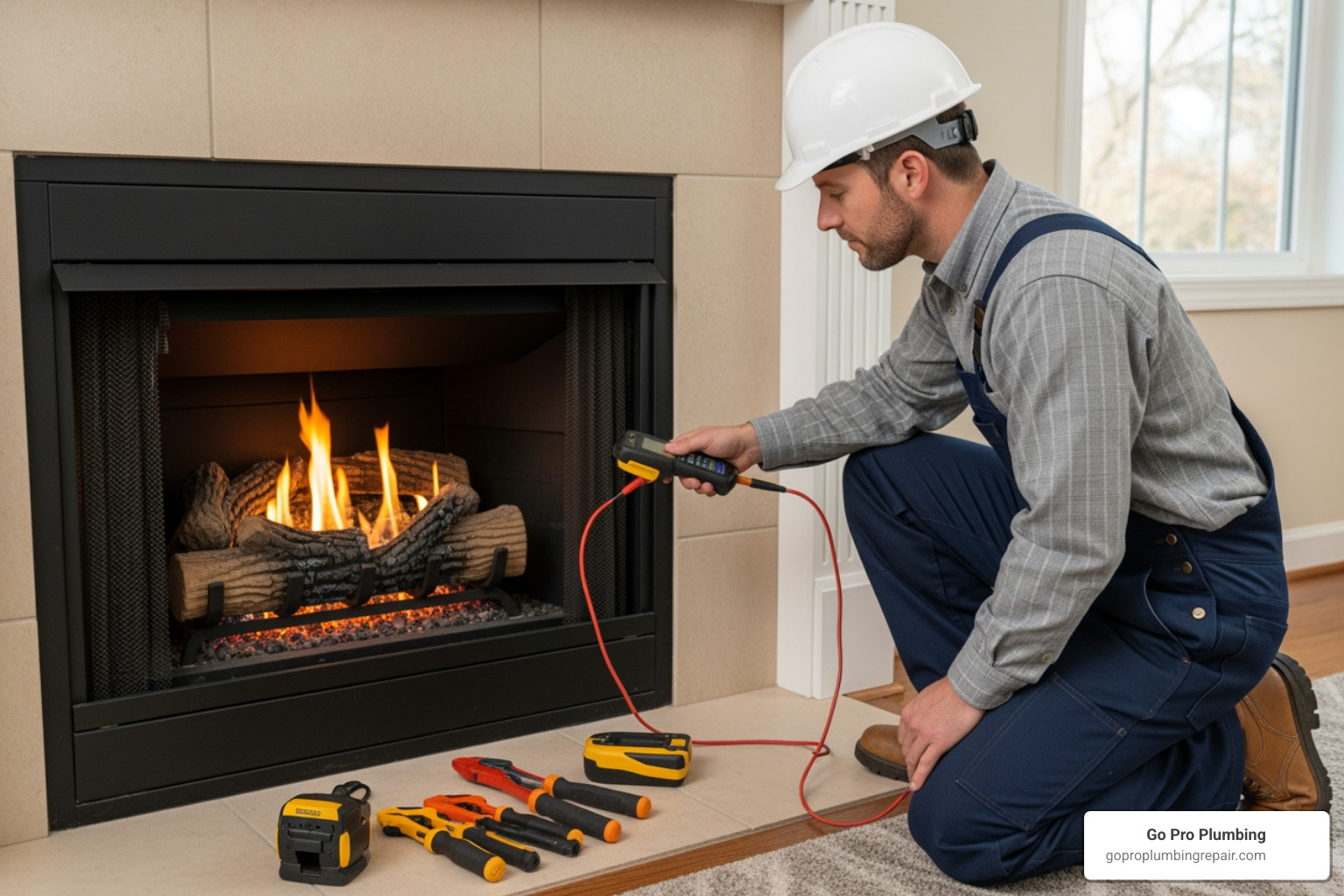
The risks are simply too high for an amateur:
- Gas Leak: Natural gas is explosive. A tiny mistake in threading a pipe can lead to a build-up of gas in your walls.
- Carbon Monoxide: If the fireplace isn’t vented or connected correctly, it can release odorless, deadly CO gas into your home.
- Liability: If you do the work yourself without a permit and a fire occurs, your insurance company may deny your claim.
When you hire us, you are getting a licensed gas fitter who understands the local codes and carries the necessary insurance to protect your home.
The Step-by-Step Process of Adding a Gas Line to a Fireplace
Once the permits are in hand, the actual work begins. It’s a surgical process designed to minimize the mess in your home.
Selecting Materials for Adding a Gas Line to Your Fireplace
Not all pipes are created equal. For most indoor runs, we use Black Iron Pipe. It’s the industry standard because it’s incredibly durable and handles high pressure well. In tighter spots or long runs, we might use CSST (Corrugated Stainless Steel Tubing), which is flexible and requires fewer joints.
When we are connecting flexible gas line to black pipe, we use specialized fittings to ensure a permanent, airtight seal. If we have to run a line underground (for an outdoor fire pit, for example), we use PE (Polyethylene) pipe and always include a tracer wire so the line can be located by utility workers in the future. You can learn more about our black iron pipe installation techniques here.
Installation Day: What to Expect
On the day of the install, we start by shutting off the main gas service. We then “tee” into your existing system, usually starting from the basement or crawlspace.
- Routing: We find the path of least resistance to the fireplace, often following the floor joists.
- Wall Penetration: We drill a small hole into the firebox (usually through the side or floor) to bring the pipe inside.
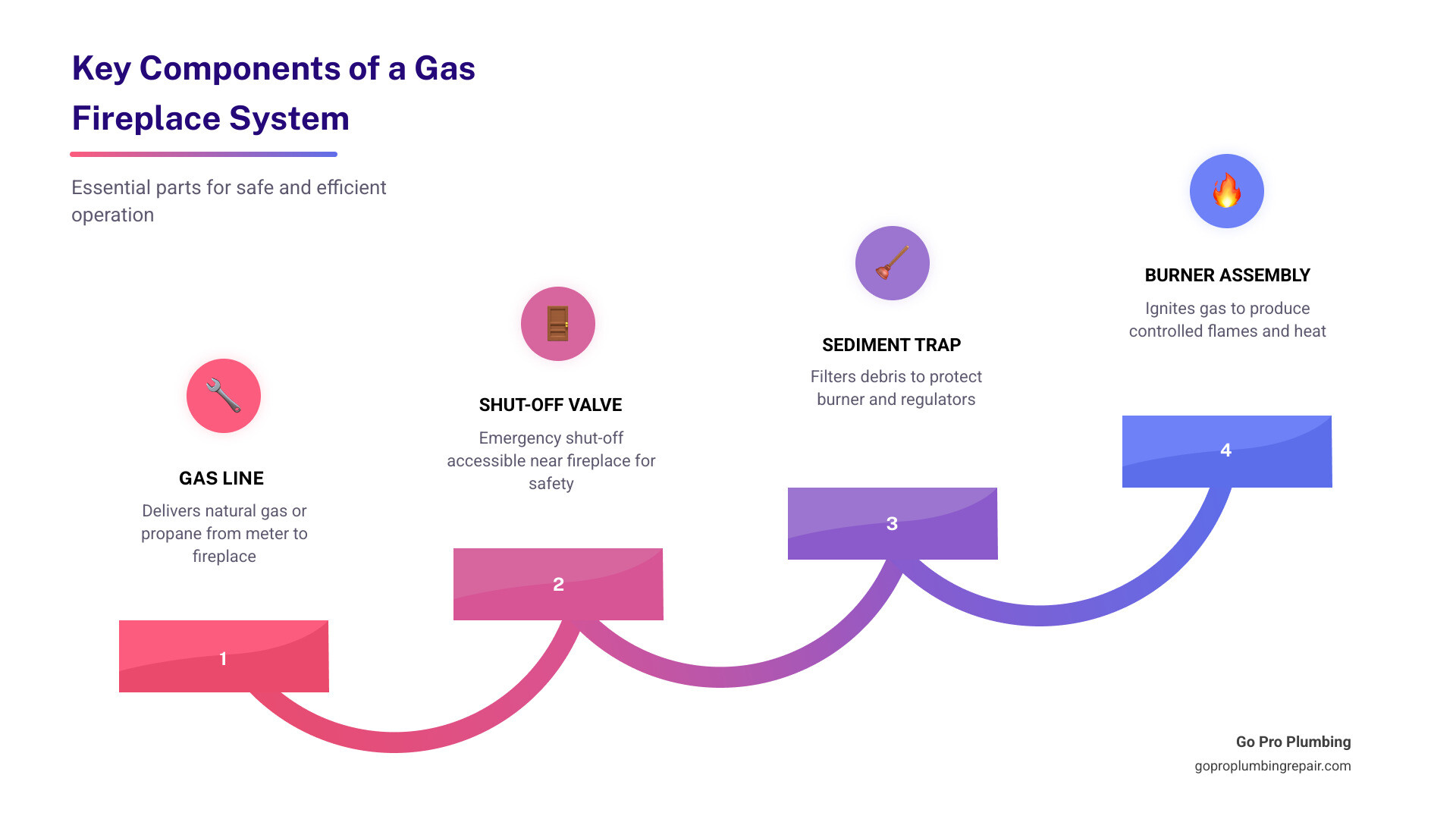
- Safety Features: We install a shut-off valve within reach of the fireplace and a sediment trap (also called a drip leg). This little piece of pipe catches moisture and debris before it can clog your fireplace’s sensitive valves.
- The Pressure Test: This is the most important part. We cap the line and pump it up with air to 10–15 psi. We leave a gauge on it for at least 15 to 30 minutes (sometimes longer depending on local Rancho Cordova codes). If the needle doesn’t move, the system is airtight.
After the line is verified, we might perform a gas riser installation to transition the pipe into the appliance. Finally, we provide gas line installation services to connect the actual logs or insert.
Choosing Your Setup: Vented vs. Vent-Free Systems
Now that the gas is there, what kind of “fire” do you want? This choice changes how the gas line is finalized.
Vented Systems: These look the most like a real wood fire. They have big, yellow flames that wrap around the logs. However, they require an open chimney or a direct-vent flue. They aren’t as efficient at heating the room because some heat escapes out the vent, but they are great for ambiance.
Vent-Free (Ventless) Systems: These are incredibly efficient—nearly 100% of the heat stays in the room. They don’t need a chimney, which makes them great for interior walls. However, they can deplete oxygen in small rooms and add moisture to the air. According to the Angi fireplace comparison, ventless units are often cheaper to install but have stricter regulations regarding room size.
Whichever you choose, we ensure the proper gas line valve replacement is used to match the manufacturer’s specifications for your specific unit.
Safety and Maintenance for Long-Term Performance
Once your fireplace is roaring, our job isn’t quite over. Gas appliances need a little “TLC” to stay safe. We recommend an annual inspection to check for:
- Soot buildup: Even gas can produce carbon if the air-to-fuel ratio is off.
- Pilot light health: A weak pilot can lead to ignition delays.
- Valve integrity: Over time, seals can wear out.
We suggest every homeowner keep a gas line maintenance schedule. If you ever smell “rotten eggs” (the odorant added to natural gas), leave the house immediately and call for help. Our gas line leak detection guide can help you understand the warning signs and what to do in an emergency.
Frequently Asked Questions about Adding a Gas Line to a Fireplace
Can I install a gas line myself to save money?
Honestly? We wouldn’t recommend it. Beyond the legal requirement for a permit and a licensed professional in Northern California, the safety risks are just too high. A small mistake can lead to a house fire or carbon monoxide poisoning. Saving a few hundred dollars isn’t worth risking your family’s safety.
How long does the installation process typically take?
The actual hands-on work of running the pipe usually takes 4 to 8 hours. However, the “process”—including getting the permit, scheduling the plumber, and waiting for the city inspector to sign off—can take anywhere from a week to a month.
Will adding a fireplace require a larger gas meter?
In most cases, no. A standard residential gas meter can usually handle a fireplace alongside a furnace and water heater. However, if you have a massive “chef’s kitchen” stove, a heated pool, and multiple furnaces, we will need to do a BTU calculation to see if an upgrade is required.
Conclusion
Adding gas line to fireplace setups is one of the best ways to make your home more comfortable, efficient, and valuable. Whether you’re in Rancho Cordova, Sacramento, or anywhere else in Northern California, it’s a project that pays off every time you sit down on a chilly evening and click that remote.
At Go Pro Plumbing, we pride ourselves on outstanding customer service and same-day availability. We handle the hard stuff—the permits, the pressure tests, and the heavy lifting—so you can just enjoy the glow.
Don’t spend another winter hauling logs. Schedule your gas line service today and let us bring the warmth to you!