
How Much Does a Solar Water Heating System Really Cost? A Comprehensive Breakdown
By Brian on November 19, 2025
Why Understanding Solar Water Heater Costs Matters for Northern California Homeowners
The cost of a solar water heating system installation ranges from $3,000 to $9,000 for most homes. After applying the 30% federal tax credit and other rebates, the out-of-pocket cost typically drops to $1,500 to $6,600. While this is more than a conventional water heater ($1,200 to $3,500), the long-term savings are significant.
Quick Cost & Savings Overview:
- Average System Cost (Installed): $3,700 – $6,000
- 50-gallon system: ~$2,000
- 80-gallon system: ~$3,000
- 120-gallon system: ~$4,000
- Federal Tax Credit: 30% off total cost
- Average Monthly Savings: 50-80% on water heating bills
- Typical Payback Period: 3-6 years
High energy bills are a common complaint for Northern California homeowners. While the upfront investment for a solar water heater can seem high, the math changes once it’s running. Most homeowners save 50% to 80% on their water heating costs. In our sunny climate, these systems can pay for themselves in just 3 to 6 years through lower utility bills.
The real question isn’t just the initial price, but how much you will save over the system’s 20+ year lifespan. This guide breaks down every cost factor—equipment, installation, maintenance, and incentives—so you can make an informed decision.
Understanding the Total Cost of a Solar Water Heating System
When considering a solar water heating system for your Sacramento or Rancho Cordova home, the total cost of solar water heating system is the sum of its parts. Understanding each component helps clarify the overall investment.
Main Components and Their Costs
Here’s a breakdown of the main components and their typical costs:
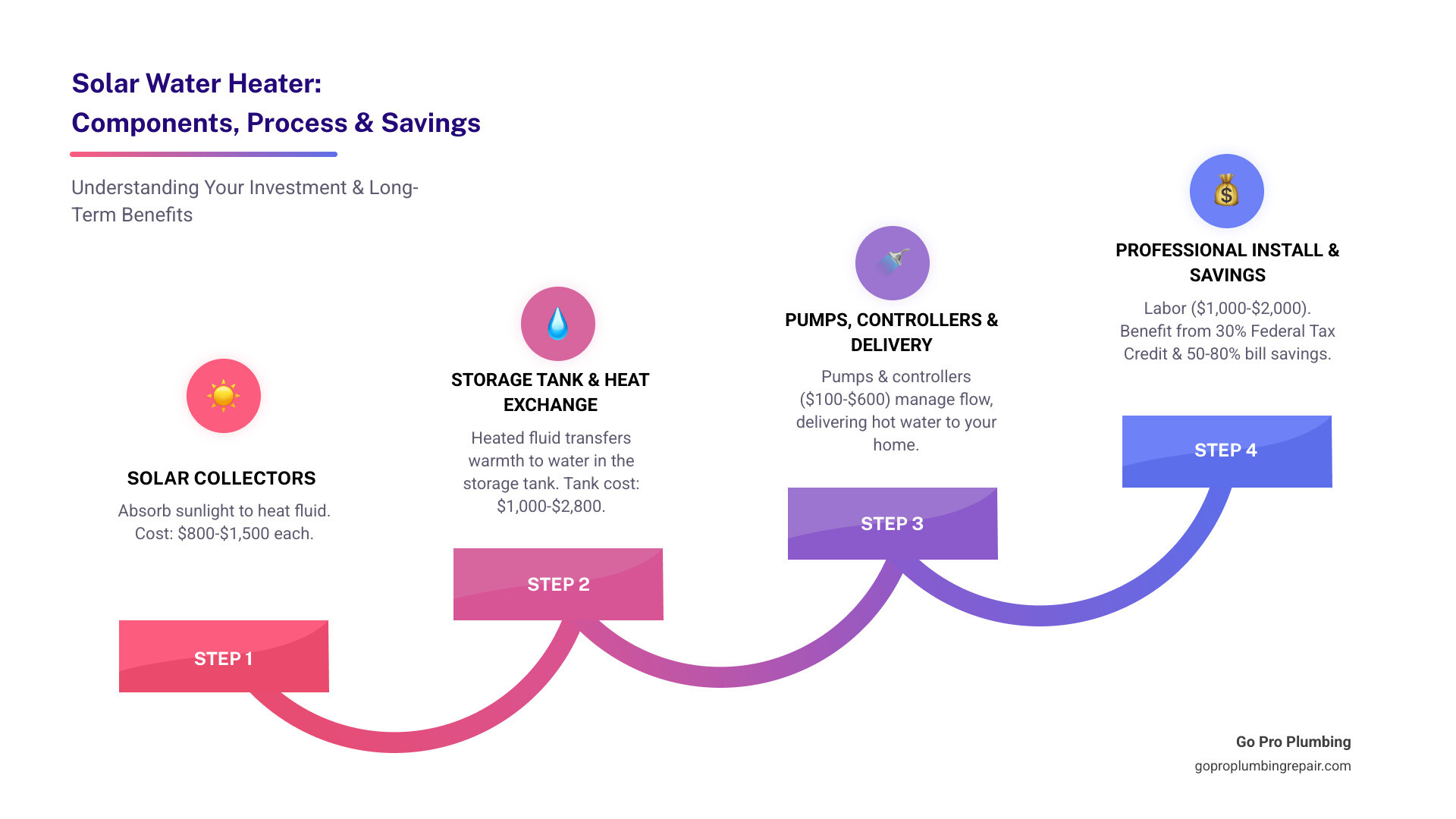
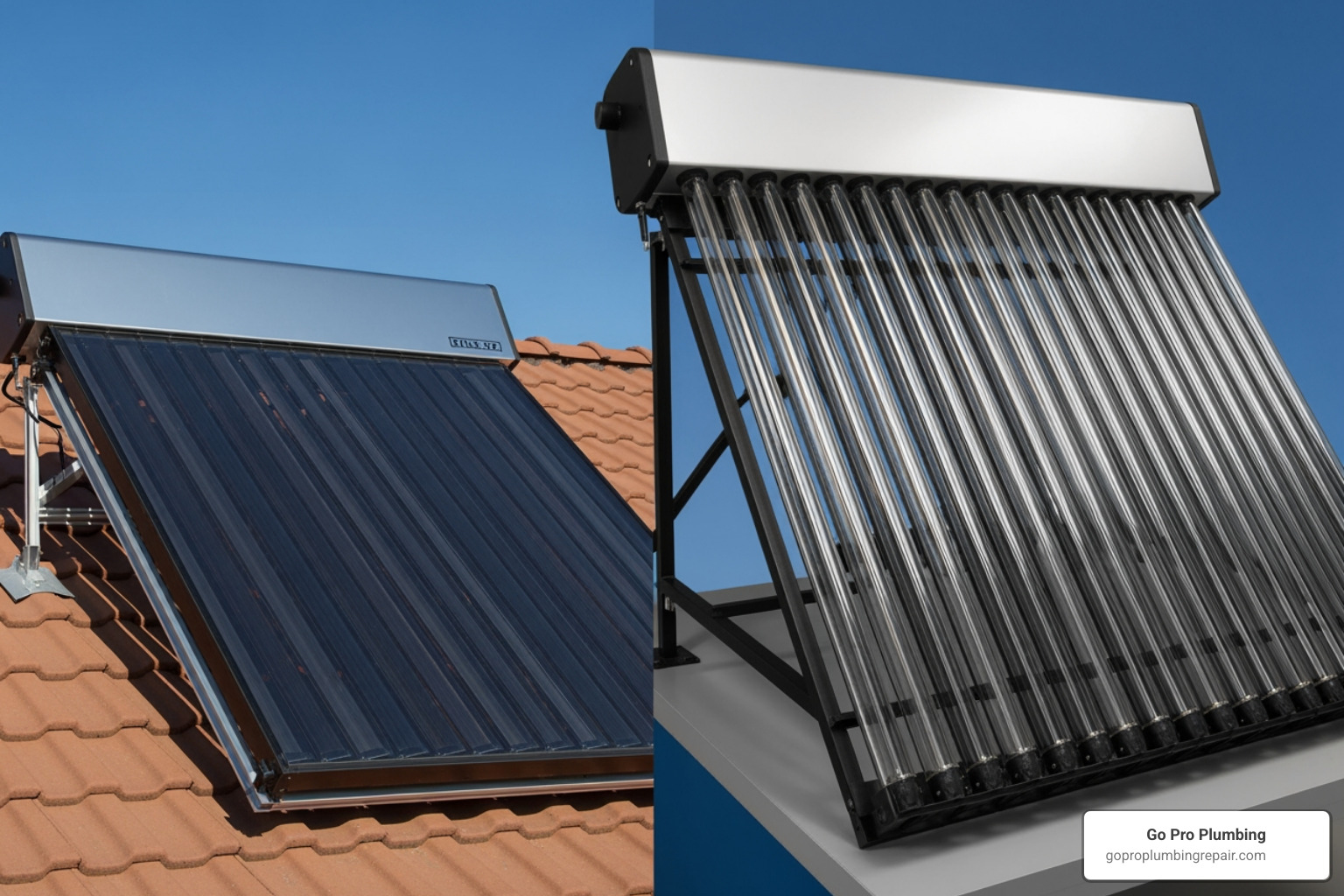
- Solar Collectors: These roof-mounted panels capture sunlight. Flat-plate collectors ($800-$1,500 each) are common in sunny climates. Evacuated-tube collectors ($1,200-$4,500 each) are more efficient in cloudy weather. Most homes need one to three collectors.
- Storage Tank: A specially insulated tank holds the heated water. Costs vary by size: 30-60 gallons ($1,000-$2,000), 60-80 gallons ($1,400-$2,800), or 80-100+ gallons ($1,700-$5,000).
- Pumps and Controllers: In active systems, pumps ($100-$600) circulate fluid, and controllers ($100-$500) manage the system.
- Piping and Hardware: Specialized plumbing and mounting hardware connect the system, adding $50 to $350. Some systems include a pump station ($500-$900).
Basic equipment typically costs $1,000 to $4,000, with another $1,000 to $2,500 for additional plumbing, backup heaters, or electrical work. For more details on how these components work together, check out our page on Solar Hot Water Heaters.
Average Cost of a Solar Water Heating System by Size
The system size you need depends on your household’s water usage. The cost of a solar water heating system varies significantly by tank capacity:
- 50-gallon system: Ideal for 1-2 people, costing around $2,000 installed.
- 80-gallon system: The most common size for families of 3-4, costing around $3,000 installed. Our Sacramento and Rancho Cordova plumbers install many of these.
- 120-gallon system: Best for larger families of 5-6, costing around $4,000 installed to ensure enough hot water for everyone.
Our team at Go Pro Plumbing can assess your water usage and family size to recommend the right fit for your home.
Cost Difference: Active vs. Passive Systems
Solar water heaters are either active or passive, which affects cost, performance, and maintenance.
Active systems ($2,000 – $4,000 before labor) use pumps and controllers for higher efficiency and reliability, making them ideal for most climates.
- Direct circulation (open-loop) systems pump drinking water through the collectors and are great for climates where freezing is not a concern.
- Indirect circulation (closed-loop) systems use a non-freezing fluid, making them perfect for handling Northern California’s colder winter nights.
Passive systems ($1,000 – $4,000 before labor) are simpler and rely on natural convection, making them less expensive but also less efficient.
- Integral collector-storage (ICS) systems are simple tanks that absorb sun directly but lose heat overnight.
- Thermosyphon systems use natural water flow but require a heavy, roof-mounted tank.
| Feature | Active Solar Water Heaters | Passive Solar Water Heaters |
|---|---|---|
| Cost (System only, before labor) | $2,000 – $4,000 | $1,000 – $4,000 |
| Efficiency | Generally higher, especially in colder climates | Lower, more susceptible to heat loss |
| Climate Suitability | Excellent for all climates, including cold | Best for warm, sunny climates with infrequent freezing |
| Maintenance | More components (pumps, controllers), slightly more upkeep | Fewer moving parts, simpler, but can be harder to maintain |
For homeowners in Sacramento and Rancho Cordova, we typically recommend active systems for their reliable, long-term performance. They handle our occasional cold snaps better and provide more consistent hot water. Want to understand more? Take a look at our guide on How Do Solar Water Heaters Work.
Additional Costs and Long-Term Considerations
To understand the true cost of solar water heating system ownership, you need to factor in installation, maintenance, and other long-term expenses.
Installation and Labor Costs
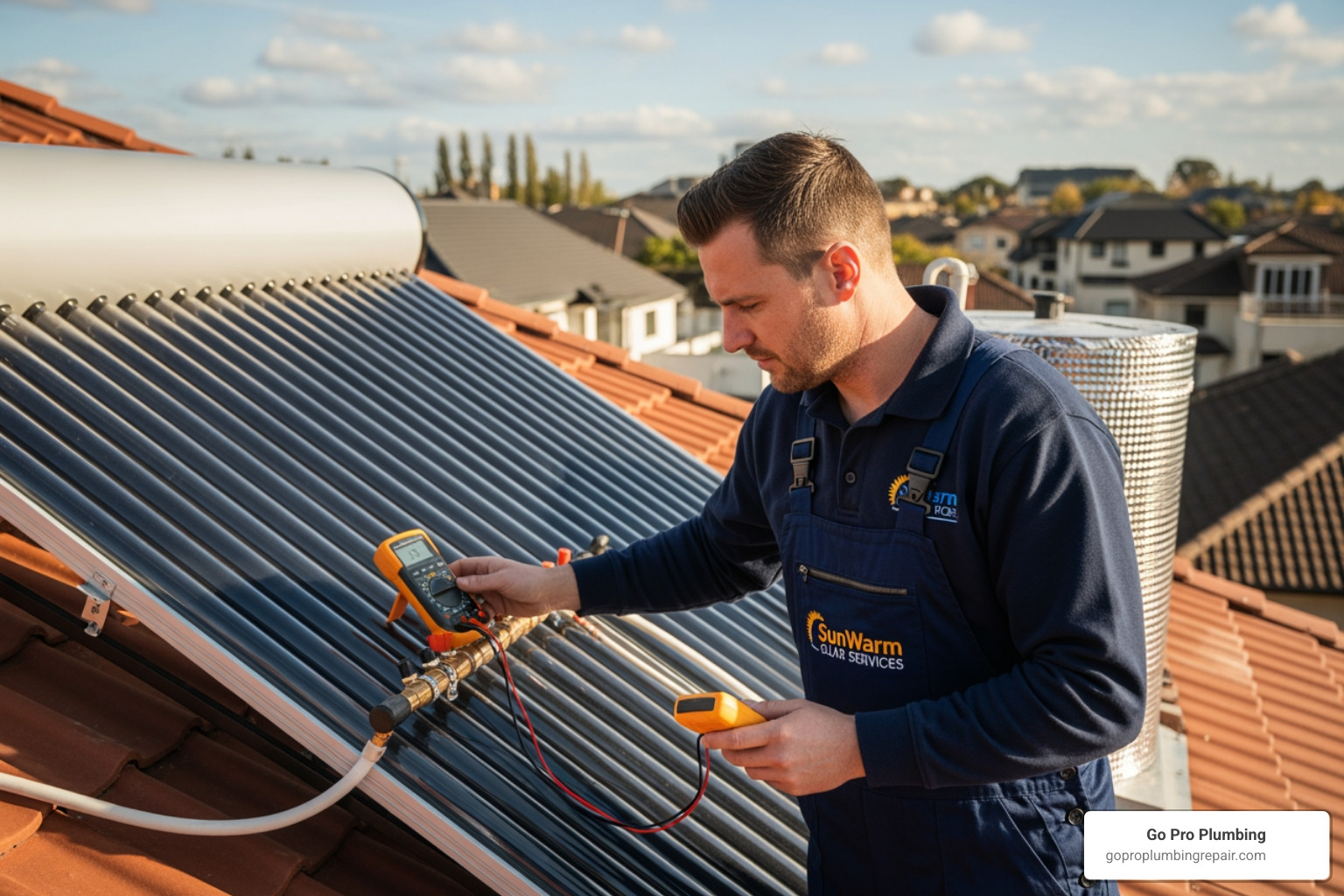
Solar water heater installation is a complex job best left to professionals. It involves plumbing, electrical work, and roofing, and improper installation can void warranties and create safety hazards.
- Labor Costs: Professional installation typically costs $1,000 to $2,000. Licensed plumbers in Sacramento and Rancho Cordova charge between $45 and $200 per hour, with an average of $70 for this type of work.
- Permit Costs: Expect to pay $50 to $500 for plumbing permits, with solar installation permits averaging around $450. These ensure your system meets local safety codes.
- Old Unit Removal: If you’re replacing an old water heater, removal and disposal will add $100 to $500 to the total cost.
For a detailed walkthrough of what installation involves, check out our Details on our Solar Water Heater Installation Guide.
Maintenance, Lifespan, and Backup Systems
Solar water heaters are durable and require minimal upkeep, but some long-term factors affect the total cost of ownership.
- Lifespan: A well-maintained system can last 20 years or more, far outlasting conventional water heaters (8-15 years).
- Maintenance: Routine maintenance is simple. We recommend semi-annual check-ups for leaks or shading. For indirect systems, the anti-freeze solution needs replacement every 3-5 years. Annual maintenance costs are low, around 0.5% of the initial system cost. The Maintenance tips from the U.S. Department of Energy offer helpful guidance.
- Backup Systems: Most systems include a gas or electric backup heater to ensure you have hot water during cloudy periods or times of high usage. This adds to the upfront cost but provides crucial peace of mind.
- Operating Costs: Active systems use a pump that costs about $50 per year in electricity to run.
Additional Factors Influencing the Cost of a Solar Water Heating System
Beyond the main components, several other factors can influence the final cost of a solar water heating system:
- Geographic Location & Climate: While Northern California is ideal for solar, local sun exposure and climate affect system requirements. Colder or foggier areas may need more capable systems. Labor rates also vary between communities like Sacramento and Rancho Cordova.
- Sun Exposure: The amount of direct, unobstructed sunlight your roof receives is critical. A south-facing roof with minimal shading is ideal and may require a smaller, less expensive system.
- Roof Suitability: Your roof must have adequate space and structural integrity to support the collectors. If repairs or reinforcements are needed, this will add to the overall cost. We assess your roof’s condition during our consultation to avoid surprises.
Calculating Your Savings and Return on Investment
While the upfront cost of solar water heating system installation is higher, the long-term savings and return on investment are where these systems truly shine.
Potential Long-Term Savings and Payback Period
According to Energy.gov, you can save 50% to 80% on water heating costs, which can be over $280 per year for a typical Northern California family.
With current incentives, the payback period is typically 3 to 6 years. For example, a $4,750 system costs $3,325 after the 30% federal tax credit. With annual savings of around $200 (after operating costs), the system pays for itself quickly. After that, you get free hot water for the remaining 14+ years of the system’s lifespan, potentially saving $4,000 or more in total.
Another key benefit is protection from rising energy prices. Once your system is paid off, you are insulated from unpredictable utility rate hikes. For more insights, Explore Solar Water Heater Advantages.
Rebates, Tax Credits, and Incentives
Incentives significantly reduce the net cost of a solar water heating system.
- Federal Solar Tax Credit: This is the most significant incentive, offering a tax credit for 30% of your total installation costs. For a $5,000 system, this means $1,500 directly off your tax bill. This credit is available for systems installed before 2033.
- State and Local Rebates: California and local utilities in the Sacramento and Rancho Cordova areas often provide additional rebates, which can range from $1,000 to $5,000. These programs change, so it’s important to check for current offers.
The Database of State Incentives for Renewables & Efficiency is an excellent resource for finding available incentives. Stacking these credits and rebates can make a solar water heater surprisingly affordable, dramatically shortening the payback period.
Is a Solar Water Heater a Worthwhile Investment?
After looking at the numbers, is a solar water heater worth the cost of solar water heating system installation for your Northern California home? For many, the answer is a clear yes.
Comparing Solar to Traditional Water Heaters
While a solar water heater costs more upfront ($3,000-$9,000 before incentives) than a traditional tank ($1,200-$3,500) or tankless unit (around $2,500), it wins on long-term value.
- Operating Costs: A traditional electric water heater can cost $440-$580 annually to run. A solar water heater cuts this to just $90-$175 per year.
- Lifespan: Solar water heaters last 20 years or more, while conventional tanks last 8-15 years and tankless units 10-20 years. This means fewer replacement costs over time.
Many Sacramento and Rancho Cordova homeowners pair a solar water heater with a tankless backup for the best of both worlds: maximum solar savings and endless hot water on demand. For a comprehensive look, check out our Beginners Guide to Understanding Solar Water Heater Benefits.
When It Makes Financial Sense
A solar water heater is a smart financial move for many Northern California homeowners, especially in these situations:
- High Energy Bills: The more you pay for electricity or gas, the faster your solar system pays for itself.
- Sunny Climate: Our region’s abundant sunshine ensures your system operates at peak efficiency year-round.
- High Hot Water Usage: Larger families or households that use a lot of hot water will see the most significant savings.
- New Construction: Integrating a system during the build is cost-effective and the cost can be rolled into a mortgage, often offset by immediate energy savings.
In addition to saving money, you’ll reduce your carbon footprint. A solar water heater can also be integrated to help heat a swimming pool, maximizing your investment. Considering a system for your pool?
Frequently Asked Questions about Solar Water Heater Costs
Investing in a solar water heater is a big decision. Here are answers to common questions we hear from homeowners in Sacramento and Rancho Cordova about the cost of solar water heating system.
Do solar water heaters work on cloudy days or at night?
Yes. Even on cloudy days, collectors absorb some solar radiation. Evacuated tube collectors are especially efficient at capturing this diffuse light. For nighttime use or extended cloudy periods, the system relies on two features:
- A well-insulated storage tank that keeps water heated during sunny periods hot for later use.
- An automatic backup heating element (gas or electric) that kicks in to ensure you never run out of hot water.
What is the typical lifespan of a solar water heater?
A properly installed and maintained solar water heater has a typical lifespan of 20 years or more, significantly longer than conventional water heaters (10-12 years). The components are built for durability to withstand the elements. Regular, simple maintenance is key to maximizing this lifespan. Most systems also come with strong manufacturer warranties for peace of mind.
Can I install a solar water heater myself?
We strongly advise against DIY installation. Installing a solar water heater is a complex project that involves plumbing, electrical, and roofing work that must meet local building codes in Sacramento and Rancho Cordova.
The risks of improper installation include:
- Safety hazards from incorrect electrical or plumbing connections.
- Structural damage to your roof.
- An inefficient system that fails to deliver savings.
- Voiding the manufacturer’s warranty.
The labor cost for professional installation ensures the job is done safely, correctly, and efficiently, protecting your investment for its 20+ year lifespan.
Get a Professional Cost Estimate for Your Home
You now have a clear picture of the cost of a solar water heating system. The upfront investment of $3,000 to $9,000 becomes much more attractive when you factor in the 30% federal tax credit, local rebates, and 50-80% savings on your water heating bills.
In Sacramento and Rancho Cordova, a solar water heater is a smart financial move. Thanks to our sunny climate, these systems can pay for themselves in just three to six years, providing free hot water for the next 15-20 years. However, every home is unique. Your roof, water usage, and existing plumbing all affect the true cost and best system for your needs.
That’s where Go Pro Plumbing comes in. We provide honest, transparent advice based on years of experience in Northern California. We’ll assess your home, explain your options, and provide a detailed, no-pressure estimate that breaks down all costs and potential savings. We handle everything from system selection and installation to navigating local permits and rebates.
Don’t figure this out alone. Whether you’re building, replacing an old water heater, or just want to lower your energy bills, we’re here to help.
Ready to turn California sunshine into real savings? Contact us for your Sacramento water heater installation needs today.