
Don’t Get Cold Feet: The Best Tankless Water Heaters Reviewed
By Brian on February 20, 2026
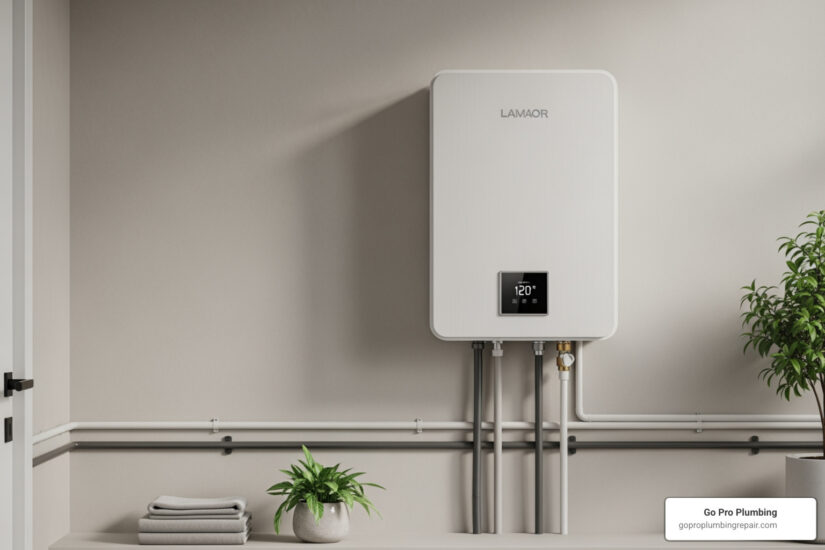
Why Tankless Water Heater Reviews Matter for Your Home
Tankless water heater reviews help you compare the best on-demand water heating systems before making a significant investment in your home. Here’s what you need to know:
Top Tankless Water Heater Categories:
- Best Electric (Whole-Home) – 3.5 to 7.5 GPM, ideal for homes without gas lines
- Best High-Output Gas – 9.0 to 11.0 GPM, perfect for large homes with multiple bathrooms
- Best Point-of-Use – 0.5 to 2.5 GPM, great for single applications like under-sink installation
- Best Portable/RV – 1.5 to 2.6 GPM, designed for campers and off-grid use
Key Benefits:
- 24%-34% more energy efficient than traditional tank heaters
- Save $100+ annually on energy bills
- 20+ year lifespan (vs. 10-15 years for tank models)
- Unlimited hot water on demand
Running out of hot water mid-shower or losing space to a bulky tank is a common frustration. Traditional tank heaters are the standard, but they waste energy by keeping 40-50 gallons of water hot 24/7, even when not in use.
Tankless water heaters solve this by heating water on demand. They are compact, wall-mountable, and provide an endless supply of hot water. With prices from $250 to over $6,000, choosing the right unit is a significant decision.
This guide will help Northern California homeowners choose the right tankless water heater. We’ll cover categories, sizing, fuel types, and user reviews to help you find the best fit for your home and budget.
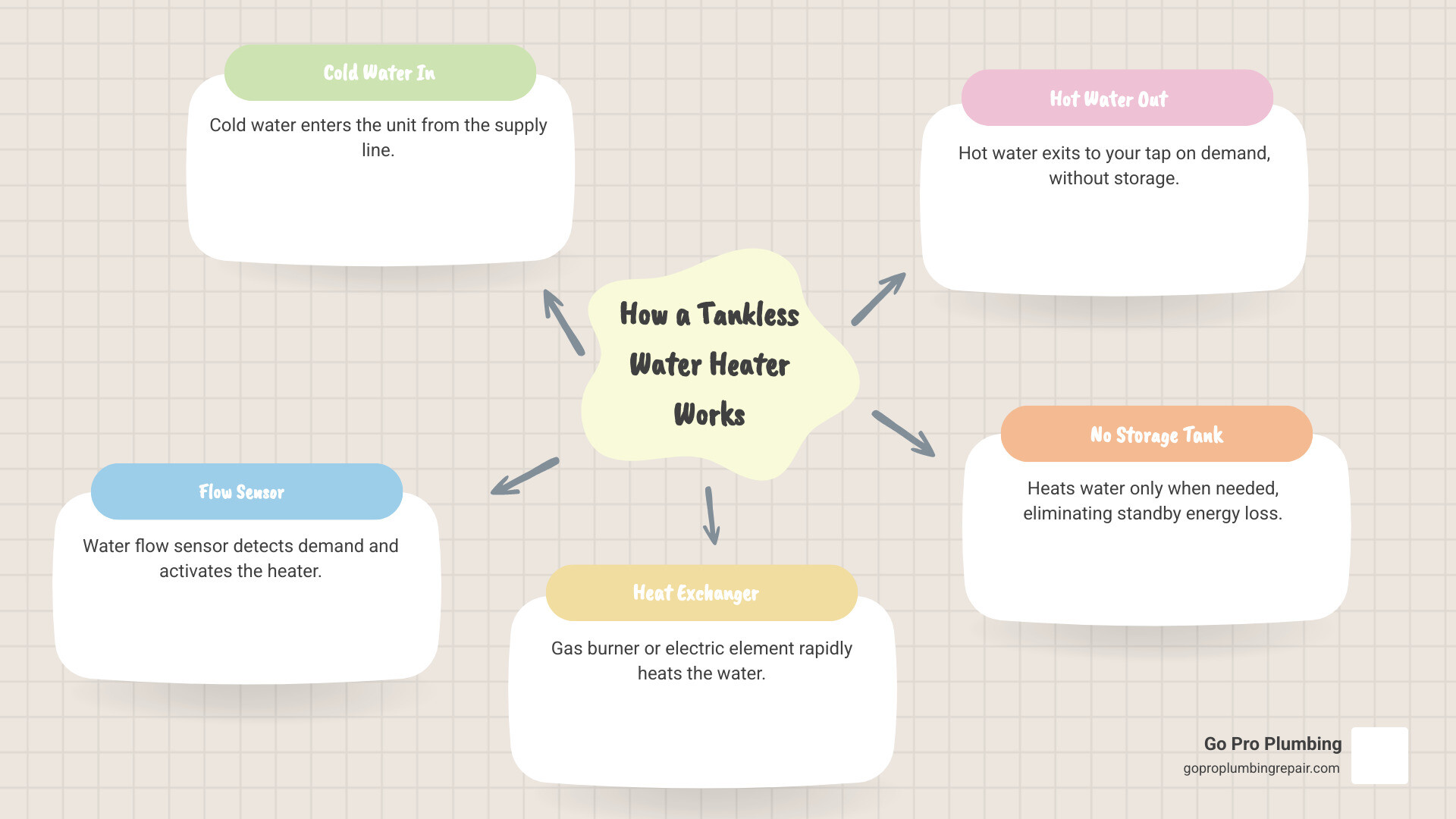
Similar topics to Tankless water heater reviews:
Tankless vs. Traditional Tank: Is an Upgrade Worth It?
Homeowners in Sacramento and Rancho Cordova often ask: tank or tankless? Let’s compare the pros and cons of each.
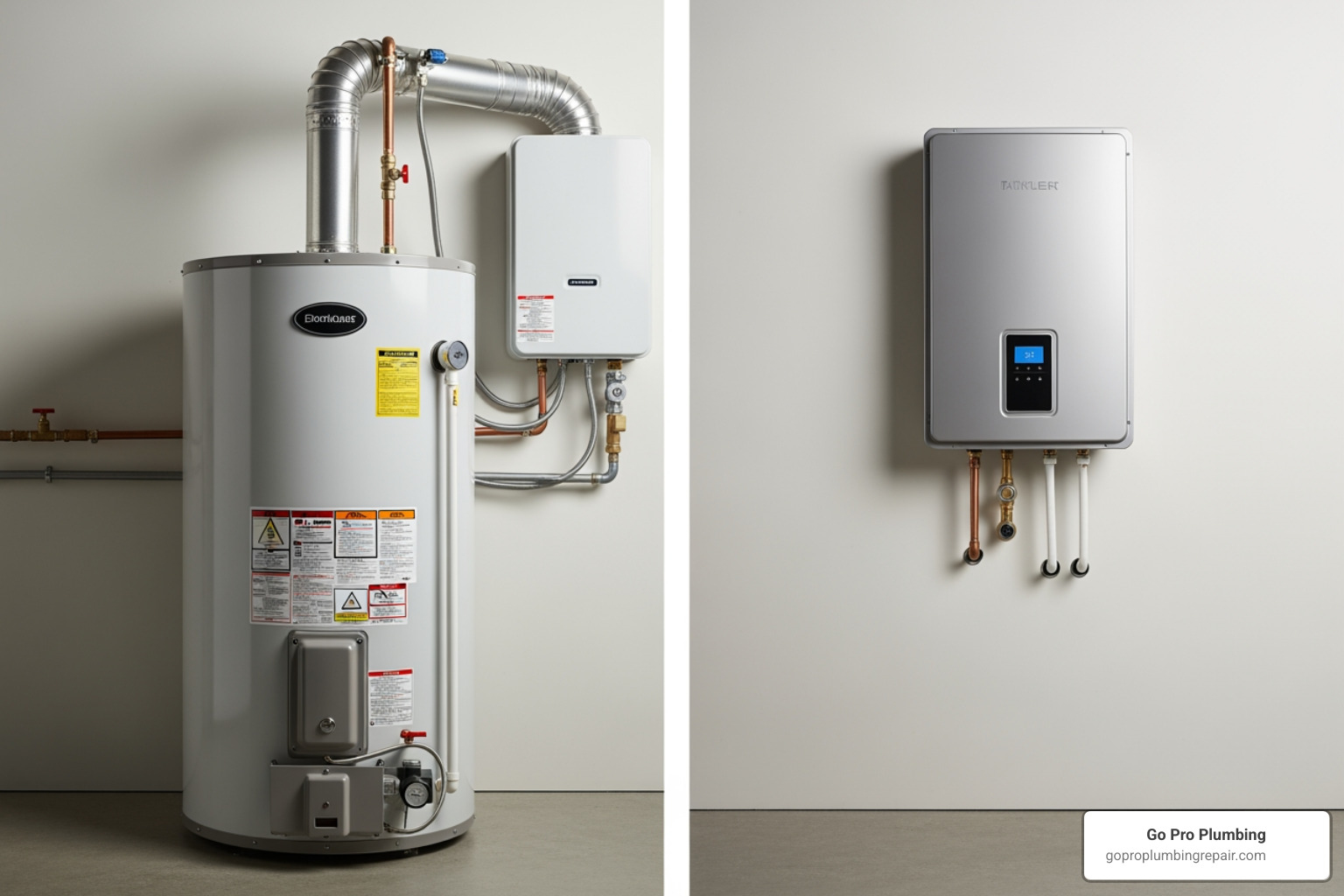
Tankless Water Heater Pros:
- On-Demand, Endless Hot Water: Tankless units heat water as it flows, providing an endless supply of hot water on demand. You’ll never run out, even with simultaneous use.
- No Standby Heat Loss: Traditional tank heaters constantly reheat a large tank of water, creating standby heat loss. Tankless units eliminate this waste by only activating when you turn on a hot water faucet, which translates to direct savings. According to Energy.gov, tankless water heaters are 8 to 34 percent more energy efficient and can save consumers at least $100 annually. For more on this, check out our article, Are Tankless Water Heaters More Efficient?.
- Longer Lifespan: A well-maintained tankless unit can last 20+ years, double the 10-15 year lifespan of a traditional tank heater. This offers better long-term value.
- Space Saving: These compact, wall-mounted units free up valuable floor space, a huge benefit in smaller homes.
Tankless Water Heater Cons:
- Higher Upfront Cost: The main drawback is the higher upfront cost for the unit and installation compared to traditional tanks, though they save money over time.
- Installation Complexity: Installation is more complex, often requiring professional upgrades to plumbing, electrical, or gas lines and venting. It’s not a typical DIY job.
- Potential Output Overload: If a unit is undersized for your home’s peak demand, it may not provide enough hot water for simultaneous uses. Proper sizing is critical.
Traditional Tank Water Heater Pros & Cons:
- Lower Initial Cost: Tank water heaters are less expensive to purchase and install upfront.
- Simpler Technology: They are a mature technology and often easier for general plumbers to repair.
- Limited Hot Water: The biggest drawback is the limited supply of hot water, which needs time to reheat once depleted.
- Shorter Lifespan: They typically last only 10-15 years.
- Large Footprint: They take up a lot of floor space.
Energy Efficiency Stats:
Tankless water heaters are the clear winner for energy efficiency, being 24%-34% more efficient than tank models. According to Energy.gov, this translates to at least $100 in annual savings on utility bills. You can learn more about how these savings add up on the Energy.gov data on efficiency page.
How to Choose the Perfect Tankless Water Heater
Choosing the right tankless water heater depends on your household’s hot water needs, home setup, and budget. Let’s break down the key factors.
Sizing Your Unit
Sizing is the most crucial step. Unlike tank heaters (sized by gallons), tankless units are sized by their on-demand delivery capacity, measured in Gallons Per Minute (GPM) and the required temperature rise.
- Gallons Per Minute (GPM): This measures how much hot water the unit can produce at a given time. A shower typically uses about 2 GPM, a dishwasher around 1-2 GPM, and a faucet 0.5-1 GPM.
- Temperature Rise: This is the difference between incoming cold water and your desired hot water temperature. Colder inlet water, common in Northern California winters, reduces a unit’s GPM output because the heater must work harder. For example, a unit providing 7 GPM with 50 degrees F inlet water might only provide 4 GPM with 35 degrees F inlet water.
- Peak Demand Calculation: To find your ideal GPM, add up the flow rates of all fixtures you might use at the same time during peak demand.
- Shower: 2-2.5 GPM
- Dishwasher: 1-2 GPM
- Washing Machine: 1.5-3 GPM
- Faucet: 0.5-1 GPM
For example, two showers (5 GPM total) and a dishwasher (1.5 GPM) running simultaneously require a unit that can provide at least 6.5 GPM. Many manufacturers, like Rheem, offer an interactive tankless sizing tool to help. You can also consult the comprehensive sizing a new water heater guide from Energy.gov.
Fuel Type Comparison
Your choice of natural gas, propane, or electric will depend on what’s available in your Sacramento or Rancho Cordova home.
- Natural Gas: Most powerful, with high GPM for larger homes. Cost-effective if you have a gas line, but installation is more complex due to venting.
- Propane: Similar performance to natural gas, ideal for homes without access to it. Propane fuel is typically more expensive.
- Electric: Compact, vent-free, and simpler to install if your electrical panel can support them. They have lower GPM than gas models and can be more expensive to operate. High-capacity units often require significant electrical upgrades (e.g., dedicated 240V lines, high-amperage breakers).
For a deeper dive, our article More on comparing options is a great resource.
Key Features
- Energy Factor (UEF): Measures efficiency. A higher UEF means lower operating costs. Look for ENERGY STAR(R) certified models.
- Warranty: Essential for this investment. Look for 5 to 15-year warranties on the heat exchanger (the core component), plus coverage for parts and labor.
- Condensing vs. Non-Condensing (Gas Models): Condensing models are more efficient (UEF up to 0.95) and economical to run but cost more upfront and need a drain. Non-condensing units are simpler and cheaper but less efficient.
- Smart Features: Wi-Fi connectivity allows for remote monitoring, temperature adjustments, and leak detection via a smartphone.
- Recirculation Pumps: Provide faster hot water by circulating it through your pipes. Some units have them built-in. Check out our insights on an electric tankless with recirculating pump.
Understanding Costs
Total cost includes the unit, installation, and long-term operating expenses.
- Unit Price: Varies from $250 for portable models to over $8,000 for high-end whole-home systems. Quality units typically cost $400 to $2,500.
- Installation Costs: Can range from $1,500 to over $6,000 in Northern California, depending on the complexity of the job (e.g., converting from a tank, upgrading utilities).
- Long-Term Savings: Energy efficiency (24%-34% higher) saves at least $100 annually, adding up significantly over the unit’s 20+ year lifespan.
- Rebates: Check for federal, state, and local rebates for energy-efficient models to help offset the initial cost. Our Easy Water Heater Financing Guide can help.
Reading Tankless Water Heater Reviews: What to Look For
When reading reviews, focus on what matters:
- GPM and Temperature Rise for Your Climate: Look for reviews from users in climates similar to Northern California. A unit’s performance can vary greatly with colder inlet water temperatures.
- User Feedback on Longevity: Check reviews for long-term reliability. User experiences can be more telling than a warranty.
- Warranty Details: Understand what the warranty covers (heat exchanger, parts, labor) and for how long. A long warranty indicates manufacturer confidence.
- Certified Performance Metrics (UEF): Look for verified Uniform Energy Factor (UEF) ratings and ENERGY STAR(R) certification for a reliable efficiency comparison.
Key Takeaways from Professional Tankless Water Heater Reviews
- Gas models offer higher flow rates, making them ideal for homes with high hot water demand.
- Electric models are easier to install in some homes, as they don’t require venting, but your electrical panel must be able to handle the load.
- Professional installation is recommended for safety and performance. Proper sizing, venting, wiring, and plumbing are critical for safety, efficiency, and warranty validation.
Tankless Water Heater Reviews: Top Picks by Category
Disclaimer: This section reviews categories to help you identify features. The “best” unit is the one that matches your specific needs.
Best Overall Electric: For Whole-Home Use
Electric tankless heaters are great for homes without gas lines or for those who want a compact, vent-free solution.
- Ideal for: Homes without gas, moderate climates like Northern California, and households with moderate hot water needs.
- Key features to look for: Self-modulating technology, digital temperature control, and a compact design.
- Typical GPM: These units usually range from 3.5 to 7.5 GPM, depending on the model and your incoming water temperature.
- Example model features: The highly-rated Stiebel Eltron Tempra 36 Plus features advanced flow control, a 7.03 GPM output, and can save 15-20% on energy bills. EcoSmart models are also strong contenders. You can learn more in our More on Eco Smart heaters guide.
Best High-Output Gas: For Large Homes
For families with high hot water demand, a high-output gas tankless heater is the best choice.
- Ideal for: Large homes with multiple bathrooms, high demand households, and colder climates.
- Key features to look for: Condensing technology for efficiency, durable stainless steel heat exchangers, and low NOx emissions.
- Typical GPM: These powerhouses typically deliver 9.0 to 11.0 GPM, easily handling multiple simultaneous uses.
- Example brand features: Rinnai and Navien lead this category in efficiency and reliability. Rinnai’s SENSEI RX models offer unlimited hot water and quick setup. Navien units ($900-$1,500) are praised for their advanced features. Rheem and AO Smith also offer robust gas models. If you’re considering a Rinnai, our page Learn about Rinnai in Sacramento has more local information.
Best Point-of-Use: For Single Applications
Point-of-use (POU) units provide instant hot water for a single fixture, eliminating the wait for water from a central heater.
- Ideal for: Under-sink installation, distant bathrooms, workshops, or garages.
- Key features to look for: Ultra-compact size, lower power needs (often 120V), and instant hot water.
- Typical GPM: These smaller units typically offer 0.5 to 2.5 GPM, perfect for a single faucet.
- Example model features: The popular Rheem RTEX-18 is a versatile mid-size electric model. It can serve small homes in warm climates or larger POU applications, delivering up to 4.4 GPM for a shower or two sinks. It is priced around $422.61.
Here’s a comparison of some 18kW electric models, like the Rheem RTEX-18:
| Model | Max Flow Rate (GPM) | Dimensions (inches) | Price |
|---|---|---|---|
| Rheem RTEX-18 | 4.4 | 13.9 x 17 x 3.6 | $422.61 |
| EcoSmart ECO 18 | 3.51 | 17 x 14 x 3.75 | $359.97 |
| Ranein 18kW | 4.3 | 13.8 x 3.1 x 18.7 | $299.00 |
| Optimal 18kW | 3.7 | 11.5 x 11.5 | $569.00 |
Best Portable/RV Unit: For Life on the Go
Portable or RV tankless heaters provide hot water for campers, cabins, and tiny homes.
- Ideal for: RVs, campers, outdoor showers, off-grid cabins, and tiny homes.
- Key features to look for: Propane-fueled, lightweight, and battery-powered ignition for portability.
- Typical GPM: These units generally provide 1.5 to 2.6 GPM. Eccotemp models, priced between $250 and $600, are popular in this category.
- Common issues: These units require continuous flow to activate, which can be a challenge for water conservation or with low-pressure pump systems in RVs.
- For more specific information, check out our Camper Tankless Water Heater info.
Installation, Maintenance, and Common Issues
Once you’ve chosen a unit, proper installation and maintenance are critical for performance and longevity.
Installation Requirements
Installing a tankless unit is more complex than a traditional tank swap, especially when converting from a tank or changing fuel types.
- Upgraded Electrical Service: High-capacity electric models often need dedicated 240V lines and high-amperage breakers (e.g., the Rheem RTEX-18 requires a 150A panel). An electrical service upgrade may be necessary.
- New Gas Lines & Venting: Gas units need proper venting for exhaust and a sufficient gas line for their higher BTU input. This may require new or modified pipes.
- Plumbing Modifications: Water lines may need to be upgraded to a larger diameter. A pressure relief valve and a service valve kit for flushing are also typically installed.
Due to these complexities, professional installation is highly recommended to ensure safety, efficiency, and code compliance in Sacramento and Rancho Cordova. Our Ultimate Guide to Tankless Water Heater Installation provides a detailed overview.
Expected Lifespan & Maintenance
A major advantage of tankless units is their long lifespan.
- 20+ Year Lifespan: With proper care, a tankless unit can last over 20 years, far longer than traditional tanks.
- Annual Descaling/Flushing: This is the most important maintenance task. Mineral buildup (limescale) from hard water can reduce efficiency and damage the unit. Annual flushing is crucial, especially in hard water areas like parts of Northern California.
- Checking Filters: Periodically check and clean inlet filters to prevent debris from entering the unit.
Common User Complaints
Most user complaints stem from improper sizing or installation.
- “Cold Water Sandwich”: A brief burst of cold water when you restart the hot water flow. This happens because the unit stopped heating and water in the pipes cooled. It’s a common issue, though some models have features to reduce it.
- Flow Rate Limitations: An undersized unit or very cold inlet water can result in an inadequate flow of hot water, especially when multiple fixtures are in use.
- Mitigating Issues: Most issues can be prevented with proper planning. Accurate sizing for your peak GPM and climate, along with professional installation, is the key to avoiding these problems.
When to Call a Pro
For expert installation or repair in Northern California, including Sacramento and Rancho Cordova, call the professionals. If your unit needs service, our team is ready to help with Tankless Water Heater Repair Sacramento.
Frequently Asked Questions about Tankless Water Heaters
Here are answers to some frequently asked questions about tankless water heaters:
How much does a tankless water heater cost to install?
The total installation cost typically ranges from $1,500 to over $6,000, depending on several factors:
- Unit Cost: The price of the unit itself can range from a few hundred to several thousand dollars.
- Fuel Type: Installation for gas units can be more complex (venting, gas lines) than for electric units, which may require electrical panel upgrades.
- Home Modifications: The biggest cost variable is the need to upgrade your home’s plumbing, gas, or electrical systems.
- Labor: The cost of professional installation.
If you’re concerned about the initial investment, remember to check for financing options that might be available.
Are tankless water heaters good for large families?
Yes, tankless water heaters are an excellent choice for large families if sized correctly. Their ability to provide endless hot water is ideal for high-demand households.
- High-GPM Gas Models: A high-GPM gas model is usually best for large families, as it can handle multiple simultaneous uses (e.g., 3-4 showers) without issue.
- Multiple Units: For very large homes, installing multiple units in a “cascading” system can meet even the highest demand.
We’ve put together a specific guide for large homes to help you with sizing.
Do tankless water heaters work in cold climates?
Yes, they work in cold climates, but their performance is affected by the incoming water temperature, an important factor for Northern California winters.
- Temperature Rise Impact: Colder inlet water requires the heater to work harder, which reduces its maximum GPM output. For example, a unit rated for 7 GPM with 50 degrees F water might only produce 4 GPM with 35 degrees F water.
- Gas vs. Electric in Cold: Gas models are generally better for cold climates. Their higher BTU input allows them to maintain a higher flow rate with frigid water. Electric units are limited by electrical capacity and their GPM can drop significantly in the cold.
When sizing a unit, always use the coldest expected inlet water temperature for your area to ensure adequate performance year-round.
Conclusion: Is a Tankless Water Heater Right for You?
After reviewing the features, costs, and benefits, you should have a clearer idea if a tankless water heater is right for your home.
To recap, the key benefits are:
- Endless Hot Water: Say goodbye to cold showers.
- Energy Efficiency: Save money on your utility bills by only heating water when you need it.
- Long-Term Value: With a lifespan of 20+ years, a tankless unit is a durable investment.
- Space-Saving Design: Reclaim valuable floor space.
While the initial investment is higher, the long-term savings and convenience make it a worthwhile upgrade for many Northern California homeowners. The most important takeaway is that proper sizing and professional installation are essential. An improperly sized or installed unit will lead to frustration and poor performance.
Ready to make the switch? If you’re in the Sacramento or Rancho Cordova area, Go Pro Plumbing offers expert advice, precise sizing, and professional installation to ensure your new tankless water heater performs flawlessly.