
Don’t Let Your Toilet Cry: Easy Fixes for Any Leaking Pipe
By Brian on December 31, 2025

Why You Need to Fix a Leaking Toilet Pipe Right Now
Fix a leaking toilet pipe quickly to avoid water damage, high bills, and headaches. Here’s what you need to do:
- Turn off the water – Locate the shut-off valve behind your toilet and turn it clockwise
- Drain the toilet – Flush and hold the handle down to empty the tank
- Disconnect the old supply line – Use an adjustable wrench to remove connections at both ends
- Install a new supply line – Connect the new line to the fill valve and shut-off valve
- Test for leaks – Turn water back on slowly and check all connections
If you’ve noticed mysterious puddles around your toilet base or water spots on your basement ceiling, you’re not alone. A leaky toilet that drips at just one drip per second wastes more than 3,000 gallons per year. That’s enough water for over 180 showers going straight down the drain.
The consequences go beyond your water bill. Constant moisture around your toilet can damage flooring, rot cabinets, and create the perfect environment for mold and bacteria. Small leaks trapped beneath the toilet can silently destroy floor surfaces over time, leading to costly repairs that far exceed what you’d spend on a simple fix today.
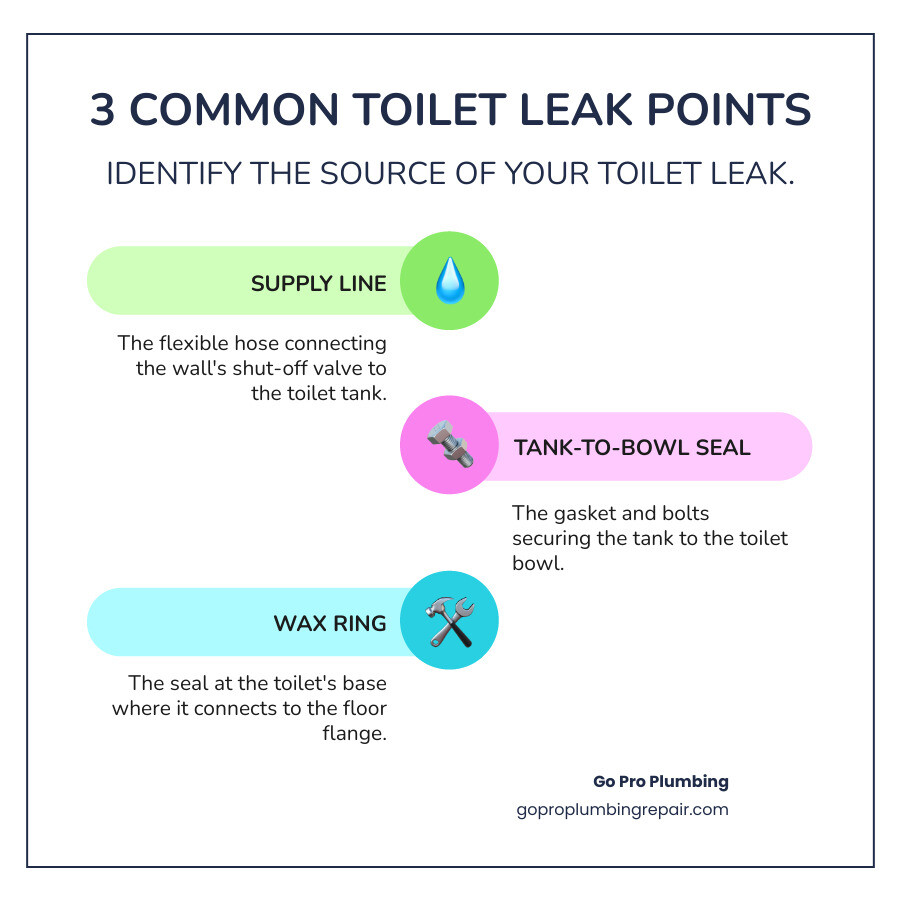
Most toilet pipe leaks happen in three spots: the supply line connecting your shut-off valve to the tank, the seal between your tank and bowl, or the wax ring at the base. The good news? You can fix most supply line leaks yourself in under an hour with basic tools and a new supply line that costs less than $20.
Whether you’re a seasoned DIYer or have never touched a wrench, this guide will walk you through exactly how to identify and repair a leaking toilet pipe before it becomes a major problem.
First, Pinpoint the Leak: Is It Really the Pipe?
Before we grab our wrenches, the first step in solving any plumbing mystery is becoming a detective. Is the leak truly coming from the toilet supply pipe, or is it another culprit? Water has a sneaky way of traveling, and a puddle on the floor might originate from somewhere unexpected.
Here’s how to identify the source of your toilet leak:
- Supply Line Leak Signs: If your toilet supply line is leaking, you’ll often see visible drips directly from the line itself or around its connection points. Puddles might form on the floor directly beneath the line, and you might even notice rust or discoloration on the line or valve. Sometimes, you might hear a faint hissing sound if the leak is small but under pressure. An unexplained spike in your water bill could also be a clue.
- Tank-to-Bowl Leak Signs: If water appears on the floor only after flushing, the leak might be coming from between the tank and the bowl. This could be due to a worn tank-to-bowl gasket or loose tank bolts. You might see water seeping from under the tank or around the bolt heads.
- Wax Ring Leak Signs: Mysterious puddles at the base of your toilet, especially after flushing, or even water stains on the ceiling of the room below (if you have an upstairs bathroom), often point to a failing wax ring. A subtle sewer smell can also be a giveaway. If the leak only occurs when the toilet is flushed, it’s a strong indicator that the seal at the base, the wax ring, is compromised.
- Condensation vs. a Real Leak: Don’t let condensation fool you! Sometimes, especially in humid Northern California weather, cold water in the toilet tank can cause condensation to form on the outside of the tank, dripping down and creating puddles. To check, thoroughly wipe the outside of the tank and the floor dry. If water reappears without the toilet being flushed or used, it’s likely condensation. If it only appears after flushing, or if you can trace it directly to a connection, it’s a true leak.
- The Dye Test Method: This is our favorite trick for internal tank leaks. Add a few drops of food coloring or a special leak detector tablet (you can often get a free one with a purchase from plumbing supply stores) into the toilet tank. Do NOT flush. Wait 10-15 minutes. If colored water appears in the toilet bowl without flushing, or if you see it leaking from the tank onto the floor, you’ve found an internal leak. This method is excellent for identifying issues with the flapper or the tank-to-bowl seal. For more comprehensive troubleshooting, check out Korky’s Toilet Troubleshooting Guide.
Common Causes of a Leaking Toilet Supply Line
Toilet supply lines, though small, are critical components and unfortunately, they’re prone to leaks. Understanding why they fail can help us prevent future issues. The most common culprits we see include:
- Worn-out lines: Like all plumbing components, supply lines don’t last forever. Over time, the materials can degrade, especially if they’re older plastic or rubber lines. Wear and tear from constant water pressure and minor movements can lead to micro-cracks or weakened spots.
- Corrosion: Minerals in our water, particularly in areas with hard water, can cause corrosion. This weakens the supply line material and its fittings, eventually leading to leaks. You might see green or white buildup around the connection points.
- Loose fittings: This is a surprisingly common cause! Over time, vibrations or slight shifts in the toilet or plumbing can cause the nuts connecting the supply line to the fill valve or shut-off valve to loosen. A simple tightening can often resolve this.
- High water pressure: If your home has consistently high water pressure, it puts extra stress on all your plumbing components, including the relatively delicate toilet supply line. This constant strain can lead to cracks or blowouts in the line.
- Improper installation: Sometimes, a leak is simply the result of an initial installation error. This could be anything from cross-threading a connection to not tightening a fitting enough (or overtightening it, causing damage) during the original setup.
Signs Your Toilet Supply Line is Leaking
Beyond the general leak detection methods, specific signs point directly to your toilet supply line as the source of trouble:
- Visible drips: The most obvious sign! You’ll literally see water dripping from the supply line itself or from where it connects to the toilet or the wall valve.
- Puddles on the floor: Water pooling directly beneath the supply line or the shut-off valve is a strong indicator.
- Rust or discoloration on the line: If you see rust (especially on older metal lines) or a greenish-blue discoloration (common with copper or brass components), it suggests water has been leaking there for some time.
- Hissing sounds: A very small, high-pressure leak might not be immediately visible but can produce a faint hissing sound as water escapes. Listen closely!
- Increased water bill: Even a small, slow drip can waste thousands of gallons annually, leading to a noticeable jump in your water bill. If you haven’t changed your water usage but your bill is higher, a hidden leak, potentially from the supply line, could be the cause.
How to Fix a Leaking Toilet Pipe: A Step-by-Step Guide
The good news is that for many homeowners, a leaking toilet supply line is a manageable DIY project. We’ve seen countless homeowners in Rancho Cordova and Sacramento successfully tackle this repair themselves. It can often be completed in under an hour, saving you the cost of a service call. Let’s get started!
What Tools and Materials Do I Need to Fix a Leaking Toilet Pipe?
Before you begin, gather your supplies. Being prepared makes the job much smoother.
- New toilet supply line: This is the star of the show. Make sure it’s the correct length and type for your toilet. We recommend flexible braided stainless steel lines for their durability and ease of installation.
- Adjustable wrench or channel-lock pliers: These will be your best friends for loosening and tightening nuts.
- Bucket: Essential for catching any residual water when you disconnect the old line.
- Old towels or rags: For mopping up spills and keeping your workspace dry.
- Sponge: To help get the last bits of water out of the tank or bowl.
Here’s a quick comparison of common replacement supply line types:
| Type | Pros | Cons |
|---|---|---|
| Braided Stainless Steel | Highly durable, flexible, resistant to kinks, long lifespan | Slightly more expensive than plastic, can still corrode over many years if water quality is poor |
| Plastic (PVC) | Inexpensive, easy to install | Less durable, prone to kinking, can become brittle and crack over time, susceptible to rodent damage |
We strongly recommend opting for a braided stainless steel line. They offer increased resistance to wear and tear and are much less likely to develop leaks over time compared to older plastic lines.
Step 1: Shut Off the Water Supply and Drain the Toilet
This is the most crucial first step for any toilet repair. Don’t skip it!
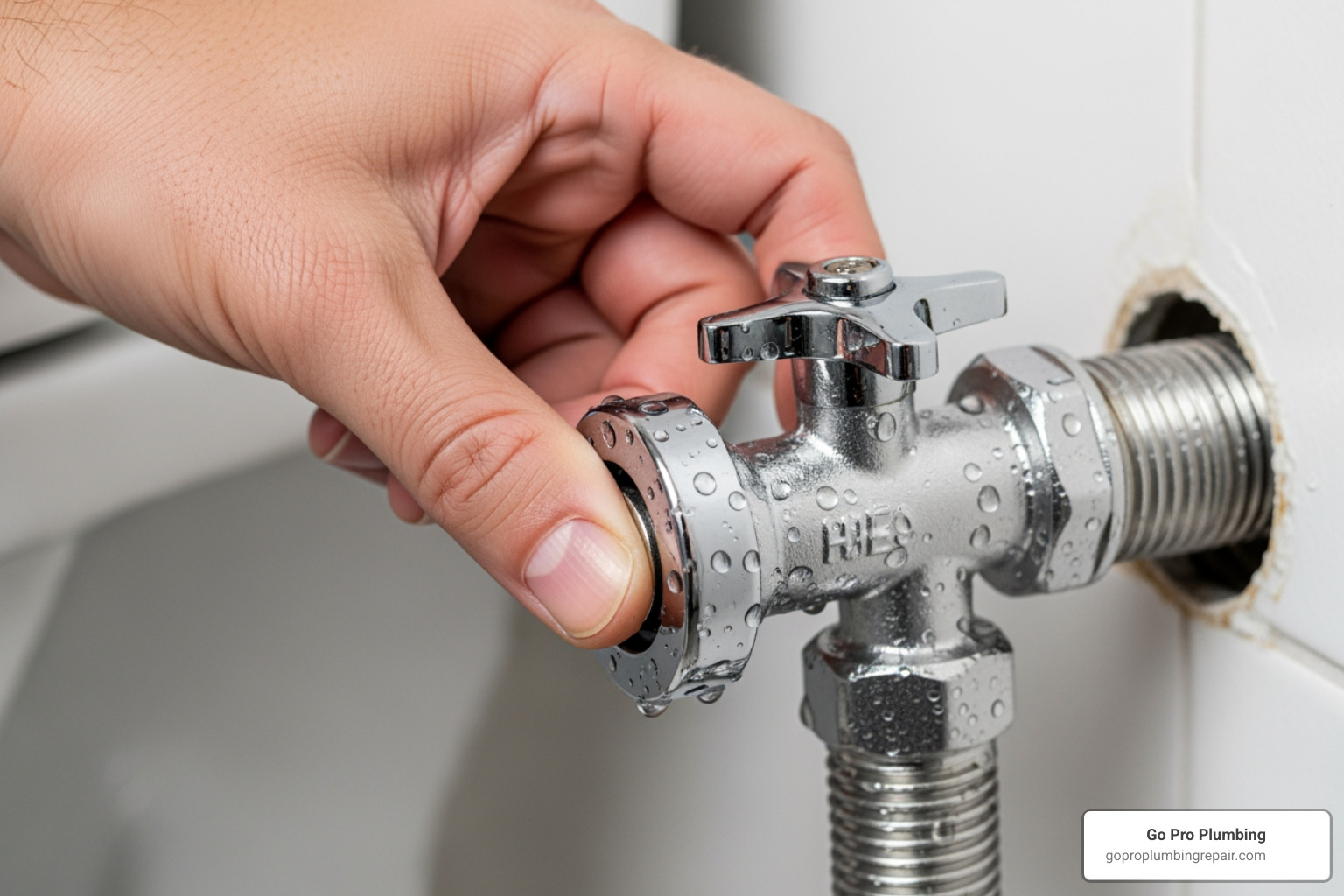
- Locating the shut-off valve: Look behind your toilet, usually near the floor or on the wall. You’ll see a small valve with a handle or knob.
- Turning clockwise to close: Turn the handle clockwise as far as it will go. This will stop the water flow to the toilet. If the valve is old or stiff, you might need a bit of force, but be gentle to avoid breaking it. If it doesn’t turn or starts leaking, you’ll need to turn off your home’s main water supply. If your shut-off valve is stuck or leaking, it’s a sign to call a professional plumber.
- Flushing the toilet to empty the tank: Flush your toilet and hold the handle down until all the water has drained from the tank and as much as possible from the bowl. This ensures there’s minimal water left to spill.
- Using a sponge to remove leftover water: For good measure, use a sponge to soak up any remaining water in the tank and bowl. This will make the next steps much cleaner!
Step 2: Disconnect the Old Supply Line
With the water off and the toilet drained, it’s time to remove the old, leaky line.
- Disconnecting the top nut from the toilet fill valve: Place your bucket directly under the connection where the supply line meets the bottom of the toilet tank (the fill valve). Use your adjustable wrench or channel-lock pliers to carefully loosen the nut. Turn it counter-clockwise.
- Disconnecting the bottom nut from the shut-off valve: Move your bucket under the shut-off valve. Loosen the nut connecting the supply line to the valve, again turning counter-clockwise.
- Using a bucket to catch residual water: Expect a small amount of water to drip out when you disconnect both ends. That’s why the bucket is there!
- Inspecting the old line for cracks or damage: Once removed, take a moment to look at the old supply line. Can you see the crack, corrosion, or wear that caused the leak? This helps confirm your diagnosis and gives you peace of mind that you’re addressing the right problem.
Step 3: Install the New Toilet Supply Line
Now for the fun part: putting everything back together with your shiny new, leak-free supply line!
- Connecting to the fill valve first: Start by attaching one end of your new supply line to the fill valve connection at the bottom of the toilet tank.
- Hand-tightening the nut: Crucially, hand-tighten the nut first. This ensures you don’t cross-thread it, which can cause damage and future leaks. Hand-tighten until it’s snug.
- Connecting to the shut-off valve: Next, connect the other end of the supply line to the shut-off valve on the wall. Again, hand-tighten this connection until it’s snug.
- Using a wrench for a final quarter-turn: Once both ends are hand-tight, use your adjustable wrench or pliers to give each nut a final, gentle quarter-turn. You want it snug, but not overtightened.
- Avoiding over-tightening: This is critical, especially if your fill valve or shut-off valve connections are plastic. Overtightening can strip the threads or crack the plastic, leading to an even bigger leak and a bigger headache. Hand-tightening until snug, then a quarter-turn with a wrench, is usually sufficient.
Step 4: Reconnect Water and Test for Leaks
The moment of truth!
- Slowly turning the shut-off valve counter-clockwise: Go back to your shut-off valve and slowly turn the handle counter-clockwise. You’ll hear the water begin to fill the toilet tank.
- Listening for running water: Let the tank fill completely. Once it stops, listen for any unusual sounds like dripping, hissing, or constant running water.
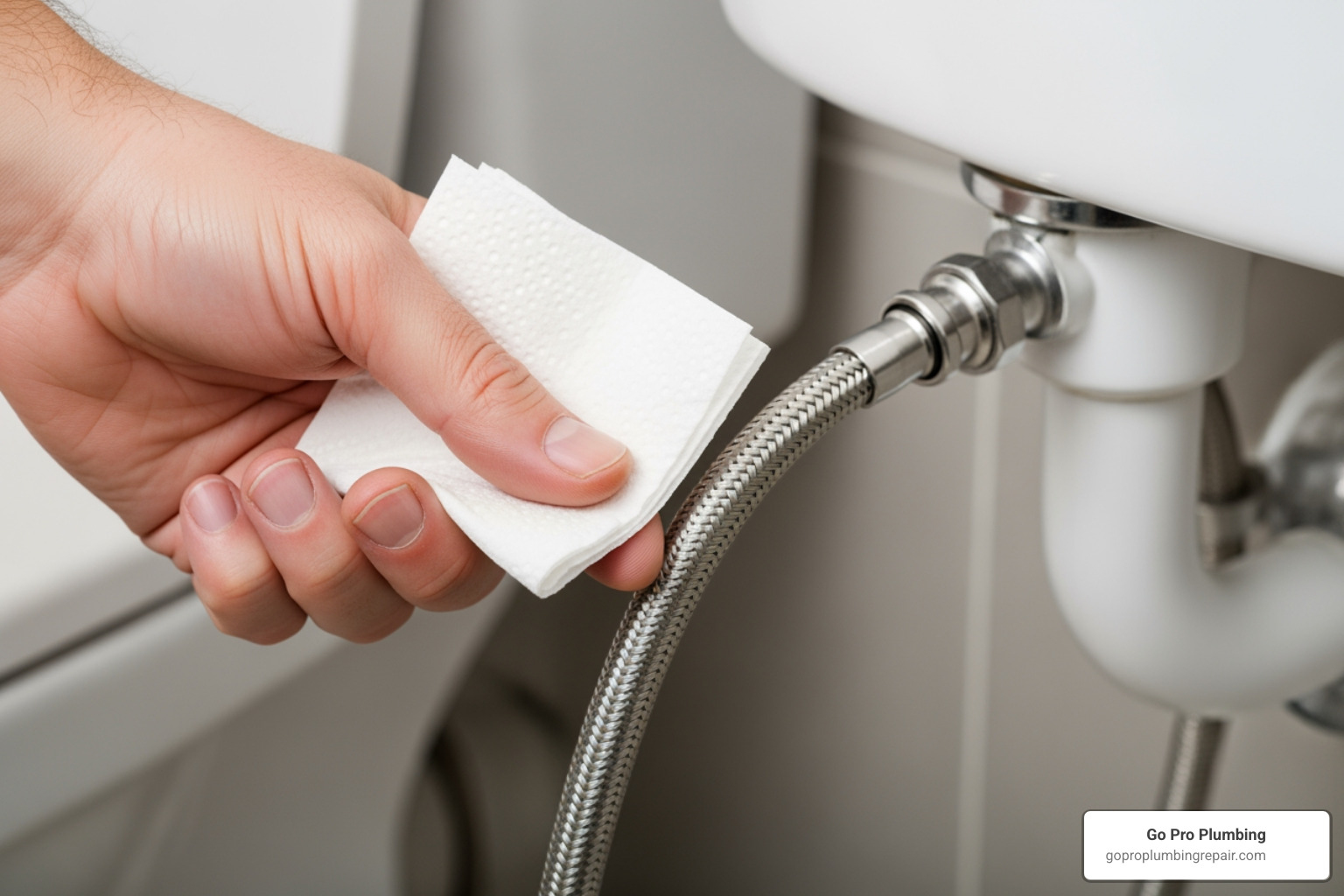
- Checking both connection points for drips with a dry paper towel: Carefully inspect both the fill valve connection and the shut-off valve connection. Use a dry paper towel or even a piece of toilet paper to gently dab around each connection. If it comes away wet, you still have a leak. Try giving the nut another slight turn with your wrench. If the leak persists, you might need to disconnect, check for proper alignment, and re-tighten.
- Flushing the toilet to test the seal under pressure: Once you’re confident there are no visible drips, flush the toilet a few times. This puts the system under normal operating pressure. Watch closely during and after each flush to ensure no new leaks appear.
Congratulations, you’ve just learned how to fix a leaking toilet pipe!
Prevention and Professional Help
A successful repair is great, but preventing future issues is even better. Even the handiest DIYer knows their limits and when to call for backup.
Preventative Measures to Avoid Future Leaks
Taking a few proactive steps can save you from future plumbing woes:
- Regularly inspect all plumbing connections: Make it a habit to periodically check your toilet supply lines, shut-off valves, and other visible plumbing connections. Look for any signs of corrosion, discoloration, or moisture. Catching a small issue early can prevent a major leak.
- Consider replacing old supply lines: While there’s no hard and fast rule for replacement, older plastic or rubber supply lines are more prone to failure. If your lines are more than a few years old, especially if they’re not braided stainless steel, consider proactively replacing them.
- Consider a water pressure regulator for your home: If you suspect your home has high water pressure (some signs include noisy pipes or powerful, splashing faucets), a pressure regulator can protect all your plumbing fixtures, including your toilet supply lines, from undue stress. This is a job best left to a professional plumber.
When Should I Call a Pro to Fix a Leaking Toilet Pipe?
While we empower homeowners to tackle many common plumbing issues, there are definitely times when it’s best to call in the experts. If you’re in Northern California, including Rancho Cordova or Sacramento, we’re always here to help.
- The shut-off valve is frozen or leaking: If the shut-off valve itself is stuck, won’t turn, or starts leaking when you try to operate it, you’ve got a bigger problem than just the supply line. Forcing it can cause a burst pipe or flood. This requires professional attention.
- The leak persists after replacing the line: You followed all the steps, replaced the supply line, and the leak is still there. This could indicate a problem with the fill valve, the shut-off valve, or even a hairline crack in the toilet’s porcelain. A professional can accurately diagnose the underlying issue.
- You find rotten flooring or subfloor: If your leak has been ongoing and you find soft or rotten flooring around the toilet, this goes beyond a simple plumbing fix. Repairing subfloor and structural damage requires carpentry skills and should be handled by experienced professionals to prevent further issues.
- The toilet’s porcelain is cracked: If the leak is coming from a crack in the toilet tank or bowl itself, replacement is usually the only solution. Porcelain cannot be reliably repaired to hold water pressure.
- You’re not comfortable completing the repair yourself: There’s no shame in knowing your limits! If you feel overwhelmed, unsure, or simply don’t have the time, calling a professional plumber is always the safest and often the most efficient option. We’re here to ensure the job is done right.
Frequently Asked Questions about Toilet Leaks
Why is my new toilet supply line leaking?
Even with a brand-new supply line, leaks can occur. The most common reasons we encounter are:
- Under-tightened connections: The nuts weren’t tightened enough, allowing water to seep out.
- Over-tightened connections: Especially with plastic components, overtightening can strip threads or crack the fitting, leading to a leak.
- Damaged threads: The threads on your toilet’s fill valve or the wall’s shut-off valve might be damaged or corroded, preventing a tight seal with the new line.
- Faulty new line: While rare, a new supply line could have a manufacturing defect.
If your new supply line is leaking, try re-tightening carefully, ensuring you don’t overtighten. If the leak persists, inspect the valve threads for damage.
How much does it cost to fix a leaking toilet pipe?
A DIY repair to fix a leaking toilet pipe is incredibly affordable! A new braided stainless steel supply line typically costs under $20. If you already own basic tools like an adjustable wrench, your total cost could be as low as $10-$15.
A professional repair will, of course, cost more due to labor and expertise. However, a professional plumber guarantees the job is done correctly, can quickly identify and address any related issues, and provides peace of mind that the leak is truly resolved.
Can a slow leak from a toilet pipe cause major damage?
Absolutely, yes! We cannot stress this enough. Even a tiny, slow drip from a toilet pipe can lead to thousands of dollars in damage over time. Consider this: a leaky toilet dripping at the rate of one drip per second can waste more than 3,000 gallons per year.
This constant, often hidden moisture can cause:
- Wood rot: Subflooring, floor joists, and even wall studs can slowly rot away, compromising the structural integrity of your home.
- Mold growth: Mold thrives in damp environments. A persistent leak creates perfect conditions for mold and mildew to flourish, leading to poor air quality and potential health issues.
- Ruined flooring: Hardwood, laminate, tile grout, and even vinyl flooring can be damaged, stained, or lift due to prolonged water exposure.
- Damage to ceilings below: If the leak is upstairs, water can seep through the floorboards and stain or damage the ceiling of the room below.
Ignoring a slow leak is like ignoring a ticking time bomb for your home.
Stop the Drip and Reclaim Your Peace of Mind
We hope this guide has given you the confidence and knowledge to fix a leaking toilet pipe in your home. It’s a common household issue, but with a few simple steps and the right tools, you can prevent significant water waste and costly damage. Tackling these small repairs yourself not only saves money but also gives you a great sense of accomplishment!
However, if you’re facing persistent leaks, issues with your shut-off valve, or simply prefer to leave plumbing to the pros, we’re here to help. Go Pro Plumbing is proud to serve homeowners and businesses across Northern California, including Rancho Cordova and Sacramento. Our commitment to outstanding customer service and same-day service means we can resolve your plumbing problems quickly and efficiently. Don’t let a leaky toilet steal your peace of mind – reach out to us!