
From Underground to Appliance: The Journey of a Natural Gas Riser
By Brian on February 10, 2026
Understanding the Backbone of Your Home’s Gas System
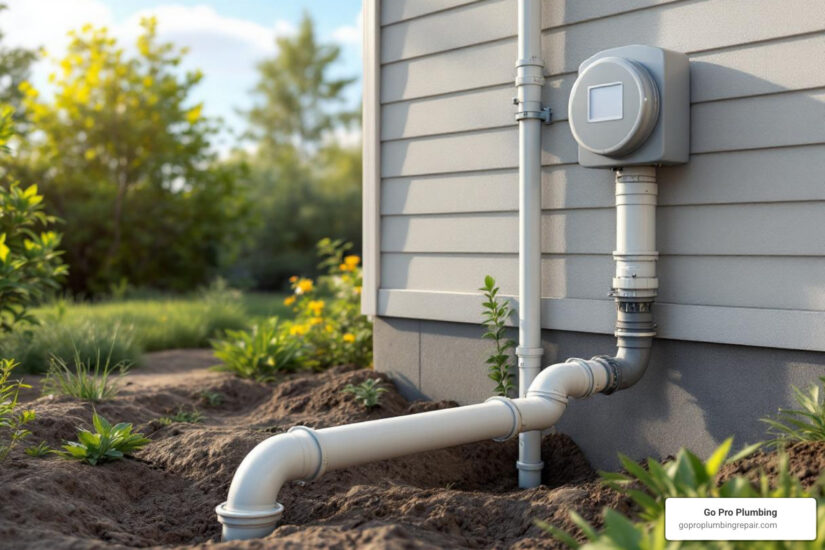
A natural gas riser is the vertical pipe assembly that connects your underground natural gas service line to your gas meter, bridging the transition from below ground to above ground while safely managing the change from plastic to steel piping.
Quick Facts About Natural Gas Risers:
- Primary Function: Connects the underground polyethylene (PE) gas line to the above-ground steel meter assembly
- Key Component: Includes transition fittings that join dissimilar materials (plastic to metal)
- Critical Safety Role: Prevents corrosion and leaks at the most vulnerable point in your gas supply system
- Common Types: Rigid risers (fixed installations) and flexible risers (accommodates ground movement)
- Materials: Typically steel with protective coatings, often combined with medium-density polyethylene (MDPE)
- Professional Installation Required: Must meet ASME B31.8 standards and local codes
Every time you turn on your stove, fire up your water heater, or enjoy your outdoor fire pit, you’re relying on a component most homeowners never think about. The natural gas riser is the unsung hero of your home’s energy system—a specialized pipe assembly that safely delivers natural gas from the underground main line to your meter and appliances.
This critical transition point handles the challenging job of connecting two different pipe materials while protecting against corrosion, ground movement, and environmental stress. Since Honeywell Perfection developed the industry’s first plastic-steel anodeless service-line riser in 1972, these components have become essential for safe, efficient gas delivery.
For Northern California homeowners, understanding your gas riser means understanding a key safety feature of your home. Whether you’re installing a new gas appliance, upgrading your meter, or simply want to know more about your home’s infrastructure, this guide breaks down everything you need to know.
What is a Natural Gas Riser and Why is it Essential?
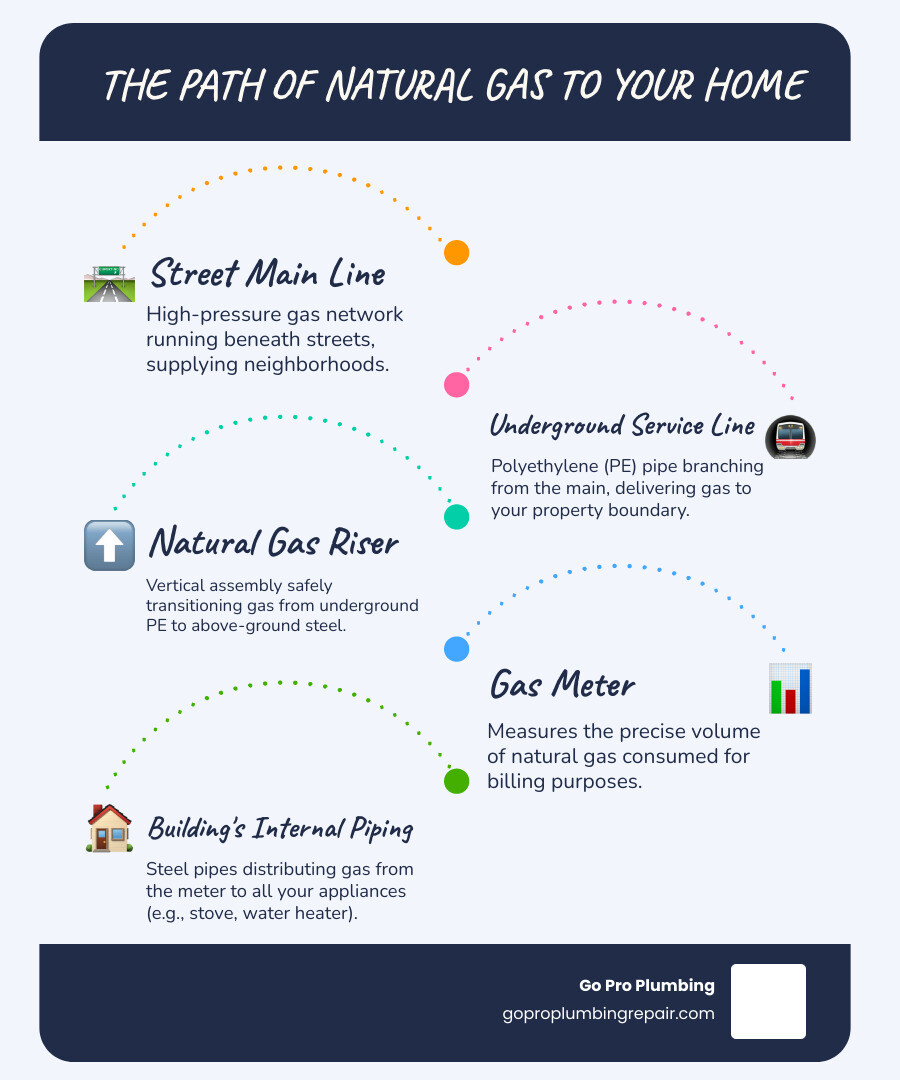
At Go Pro Plumbing, we describe a natural gas riser as the handshake between your underground gas supply and your home’s internal system. It’s a small but mighty component ensuring the safe, efficient flow of natural gas to your property.
The Primary Function: Bridging the Gap Safely
Its primary function is to safely transition the gas line from below-ground to above-ground. This involves connecting the flexible, corrosion-resistant underground polyethylene (PE) gas line to the rigid steel piping leading to your gas meter. This transition point is vulnerable to ground movement, corrosion, and physical damage. The riser is engineered to manage these stresses, providing a stable connection that protects the entire gas system and prevents dangerous leaks.
As A.Y. McDonald notes, risers are “the safe and efficient way in which natural gas or propane is fed to outdoor appliances.” This highlights their role in enabling convenient gas use for many applications around your Northern California home or business.
Differentiating from Industrial Risers
While the term “riser” is also used for massive pipes in offshore oil drilling, it’s important to differentiate them from residential and commercial risers. Industrial risers, as defined by IADCLexicon.org, are “vertical pipes intended to move fluid to either a higher or a lower elevation, such as from the ocean floor to a platform.” You can learn more about these complex systems at the IADC Lexicon and on Wikipedia’s Drilling riser page.
Our focus at Go Pro Plumbing is on the smaller, yet equally vital, risers that bring natural gas safely into your Northern California home. These are specifically designed for the lower pressures and environmental conditions of local gas distribution systems.
The Role of Transition Fittings
Central to a natural gas riser’s safety are transition fittings. These specialized connectors make the “handshake” between different pipe materials possible. As a Honeywell source highlights, they are “ideal for gas applications requiring a steel-to polyethylene transition.”
Underground gas lines are often polyethylene (PE) for flexibility and corrosion resistance, while above-ground piping is steel for strength. Since you can’t weld or thread plastic to metal, transition fittings provide a durable, leak-proof connection between these dissimilar materials.
These fittings create a hermetic seal, preventing gas leakage at this critical juncture. They can be integrated into the riser assembly or be separate components, but their integrity is paramount for the long-term safety of your gas system.
Types and Materials of Gas Risers
Just like there are different tools for different jobs, there are various types of natural gas risers and materials used in their construction, each suited for specific applications and environmental conditions. Understanding these differences helps us ensure we’re always installing the safest and most effective solution for your property.
Common Materials Used in Construction
The choice of materials for a natural gas riser is driven by the need for durability, corrosion resistance, and structural integrity. The most common materials we encounter in Northern California include:
- Steel: This is the primary material for the above-ground portion of the riser and the connection to the gas meter. Steel offers excellent strength and rigidity, making it resistant to physical damage. According to product information, steel is a “durable material for gas pipe fittings.”
- Medium-Density Polyethylene (MDPE): The underground portion of many risers, particularly anodeless risers, is made from MDPE. This yellow plastic material is flexible, non-corrosive in soil, and resistant to many chemicals. HDPE Supply notes that “anodeless risers are often made of YELLOW MDPE.”
- Protective Coatings: To improve the lifespan and safety of steel components, especially where they interact with the soil or are exposed to the elements, protective coatings are applied. These can include:
- Zinc: Often used as a galvanized coating to prevent rust.
- Epoxy: A durable, corrosion-resistant coating that provides an additional layer of protection against moisture and chemicals.
- Other coatings like Yellow Zinc Dichromate and Grey E-Coat are mentioned in product catalogs, indicating a variety of protective options to ensure longevity and safety.
These materials, combined with proper engineering, ensure that your gas riser can withstand the test of time and environmental factors, safely delivering gas year after year.
Rigid vs. Flexible Risers
When it comes to the design of natural gas risers, two main categories stand out: rigid and flexible. Each has its unique advantages and is chosen based on specific installation needs and environmental considerations.
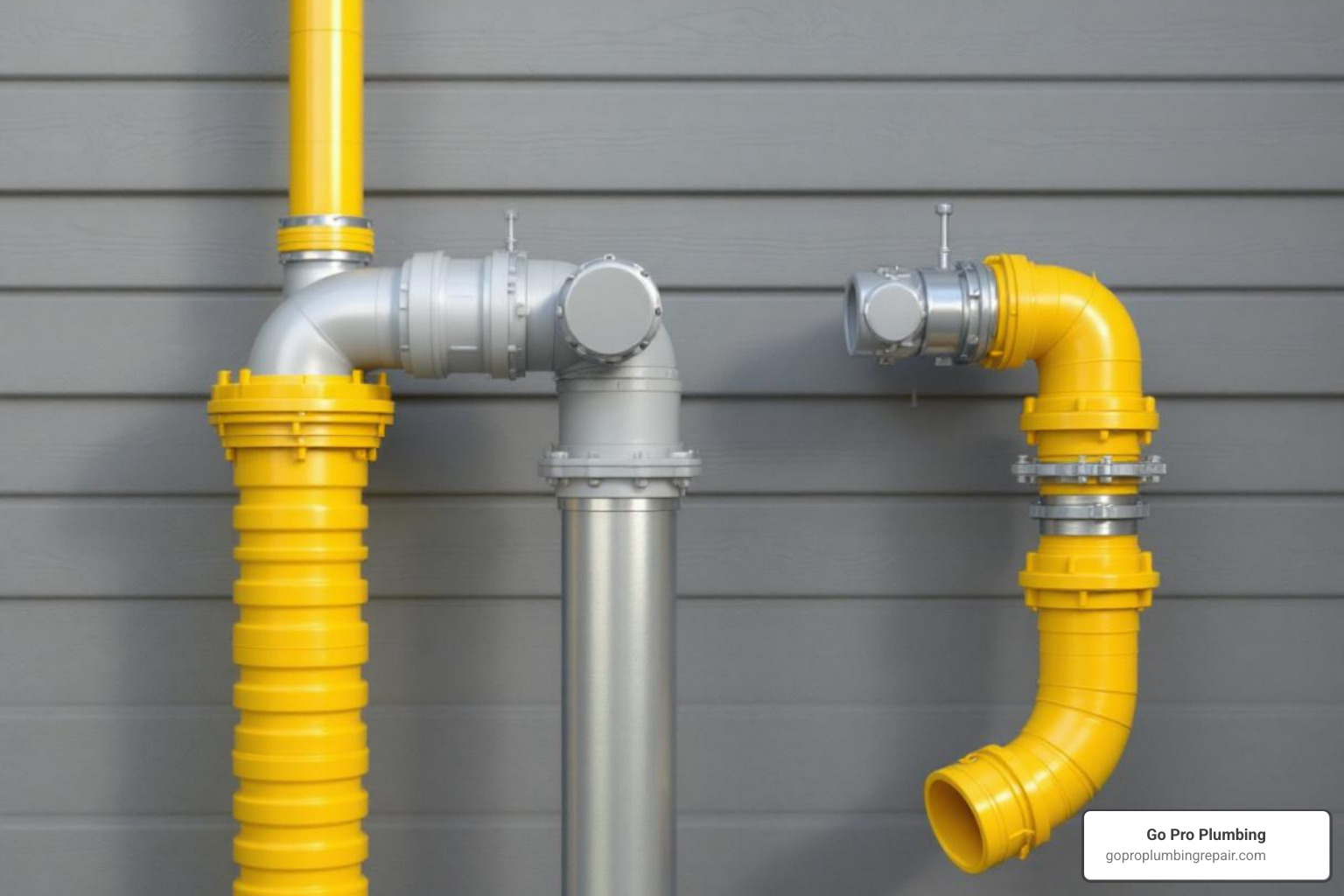
- Rigid Risers: These are typically straight, sturdy pipe assemblies designed for installations where minimal ground movement is expected. They provide a fixed, robust connection. The A.Y. McDonald catalog lists various “Rigid Riser” options, indicating their widespread use.
- Flexible Risers: Also known as “flexible compression risers” or “Con-Flex” risers, these are designed with a degree of pliability. This flexibility allows them to accommodate minor ground shifts, expansion, and contraction without stressing the pipe connections. HDPE Supply mentions “Flexible Compression Risers (Con-Flex),” highlighting their role.
Here’s a quick comparison:
| Feature | Rigid Risers | Flexible Risers |
|---|---|---|
| Installation | Straightforward in stable environments | May require specific fittings, allows for slight offsets |
| Best Use Cases | Fixed installations, minimal ground movement | Areas with potential ground settlement or seismic activity |
| Durability | High structural integrity | Excellent resistance to stress from movement |
For properties in Northern California, where seismic activity is a consideration, flexible risers can offer an added layer of protection by absorbing some ground movement, thus reducing stress on the gas line.
Understanding the Anodeless Natural Gas Riser
The term “anodeless” might sound technical, but it refers to a crucial innovation in natural gas riser design that significantly improves safety and longevity. An anodeless riser is specifically designed to prevent galvanic corrosion, a type of corrosion that occurs when two dissimilar metals are in electrical contact within an electrolyte (like moist soil).
Historically, gas risers might have included an anode (a sacrificial metal) to protect the steel from corrosion. However, the anodeless design eliminates the need for an external anode. This is achieved by constructing the riser in a way that electrically isolates the underground polyethylene pipe from the above-ground steel component. A key part of this design often involves a factory-assembled transition fitting that securely joins the PE and steel, acting as an electrical insulator.
The invention of the anodeless riser was a game-changer. As a unique insight from our research notes, “Honeywell Perfection developed the industry’s first plastic/steel anodeless service-line riser in 1972.” This innovation revolutionized pipeline protection by preventing electrical current from passing through the riser, safeguarding the underground pipeline from corrosion. HDPE Supply further emphasizes that “Anodeless risers are designed to prevent corrosion,” directly contributing to the long-term integrity of your gas service line. For homeowners in Northern California, an anodeless natural gas riser means greater peace of mind, knowing your gas system is protected against a common cause of pipeline failure.
Installation and Safety Standards for a Natural Gas Riser
At Go Pro Plumbing, we know that installing a natural gas riser isn’t just about connecting pipes; it’s about safeguarding your home and community. This is why strict adherence to installation best practices and safety standards is non-negotiable.
Key Considerations for Selection
Choosing the right natural gas riser for a specific application involves several critical factors. We don’t just pick one off the shelf; we carefully assess the unique demands of each project in Northern California:
- Gas Pressure and Temperature Ratings: Risers are manufactured to withstand specific operating pressures and temperatures. It’s vital to select a riser that matches or exceeds the requirements of the local gas utility system.
- Environmental Conditions: The local environment plays a significant role. Factors like soil type (e.g., highly corrosive soils), moisture levels, and potential for ground movement (especially in seismically active Northern California) influence the choice of materials and riser type. For instance, flexible risers might be preferred in areas prone to ground shifts.
- Local Utility Requirements: Every gas utility has its own specifications and approved products. We always ensure that the risers we install comply with the specific standards set by the gas provider in your area.
- Application Type: The intended use dictates the riser’s design. A riser connecting to a residential gas meter will have different specifications than one supplying a large commercial appliance or an outdoor gas fire pit. Product catalogs show a range of sizes and connection types, from 1/2″ to 6″ and various NPT or flanged connections, catering to diverse needs.
Installation Best Practices
Proper installation of a natural gas riser is paramount for safety and efficiency. This is not a DIY project; it requires specialized knowledge, tools, and adherence to stringent guidelines.
Here at Go Pro Plumbing, our licensed professionals follow these best practices:
- Proper Burial Depth: The underground portion of the gas line and the riser’s transition point must be buried at a specific depth, as mandated by local codes, to protect against accidental damage from digging or surface loads.
- Correct Backfilling Material: The trench surrounding the underground pipe and riser must be backfilled with appropriate material, often sand or fine soil, free of rocks or debris that could damage the pipe or its protective coating.
- Support and Stability: The above-ground portion of the riser must be adequately supported and secured to prevent movement and stress on the connections, especially at the meter. This ensures the riser remains stable against external forces.
- Leak Testing Procedures: After installation, rigorous leak testing is performed to confirm the integrity of all connections. This is a critical step to ensure no gas escapes the system.
- Emphasizing Professional Installation: We cannot stress this enough – working with natural gas is inherently dangerous. Any error in installation can lead to serious hazards, including gas leaks, fires, or explosions. That’s why professional installation by certified and experienced plumbers, like our team at Go Pro Plumbing, is not just a recommendation but a necessity. The HOME-FLEX product page notes installation is “fast and easy when used with specific fittings,” but this ease is for trained professionals, not homeowners.
Navigating Codes and Regulations
The natural gas infrastructure, from the vast pipeline network to the riser connecting to your home, is heavily regulated to ensure public safety. For natural gas risers, several key standards and regulations apply:
- ASME B31.8: This is a nationally recognized standard for gas transmission and distribution piping systems. It provides comprehensive guidelines for the design, fabrication, installation, inspection, and testing of gas piping, including risers. Adhering to ASME B31.8 means the riser meets rigorous engineering requirements for safe operation.
- Department of Transportation (DOT) Regulations: The Pipeline and Hazardous Materials Safety Administration (PHMSA) within the DOT sets federal safety standards for pipeline transportation of natural gas. These regulations cover everything from material specifications to operational procedures, ensuring the integrity of the entire natural gas pipeline network, which you can learn more about on the EIA’s Natural Gas Pipeline Network overview. While this EIA source broadly covers the pipeline network, it underscores the importance of compliant components to prevent “operational problems, pipeline deterioration, or rupture.”
- Importance of Local Plumbing Codes: Beyond federal and national standards, local jurisdictions in Northern California, such as Sacramento and Rancho Cordova, have their own specific plumbing codes. These local codes often incorporate or expand upon national standards, sometimes adding unique requirements based on regional conditions (e.g., seismic activity). As a local plumbing company, Go Pro Plumbing is intimately familiar with and strictly adheres to all local codes, ensuring every natural gas riser installation is not only safe but also fully compliant.
Common Applications and Use Cases
The versatility of the natural gas riser means you’ll find them in a variety of settings, quietly doing their job to bring clean, efficient energy to homes and businesses across Northern California.
Residential Settings
For most homeowners, the most familiar sight of a natural gas riser is at the side of their house, connecting the buried service line to the gas meter. This is its primary and most critical residential application. Once the gas passes through the meter, it enters your home’s internal piping system to fuel essential appliances like your furnace, water heater, and stove.
But the convenience of natural gas isn’t limited to indoors! Risers also play a crucial role in extending gas service to outdoor living spaces, allowing us to enjoy amenities like:
- Supplying outdoor appliances: Think about the joy of a built-in outdoor grill or a natural gas fire pit that never runs out of fuel. The riser makes this possible by safely bringing the gas above ground to these features.
- Pool heaters: For those chilly Northern California evenings, a natural gas pool heater can extend your swimming season, and it relies on a dedicated riser to deliver its fuel.
- Outdoor kitchens: The dream of an elaborate outdoor kitchen, complete with gas cooktops and ovens, becomes a reality thanks to the safe and reliable connection provided by a natural gas riser.
As A.Y. McDonald points out, risers are indeed “the safe and efficient way in which natural gas or propane is fed to outdoor appliances.” We’re always happy to help Northern California residents safely connect their outdoor fun to the gas supply.
Commercial Settings
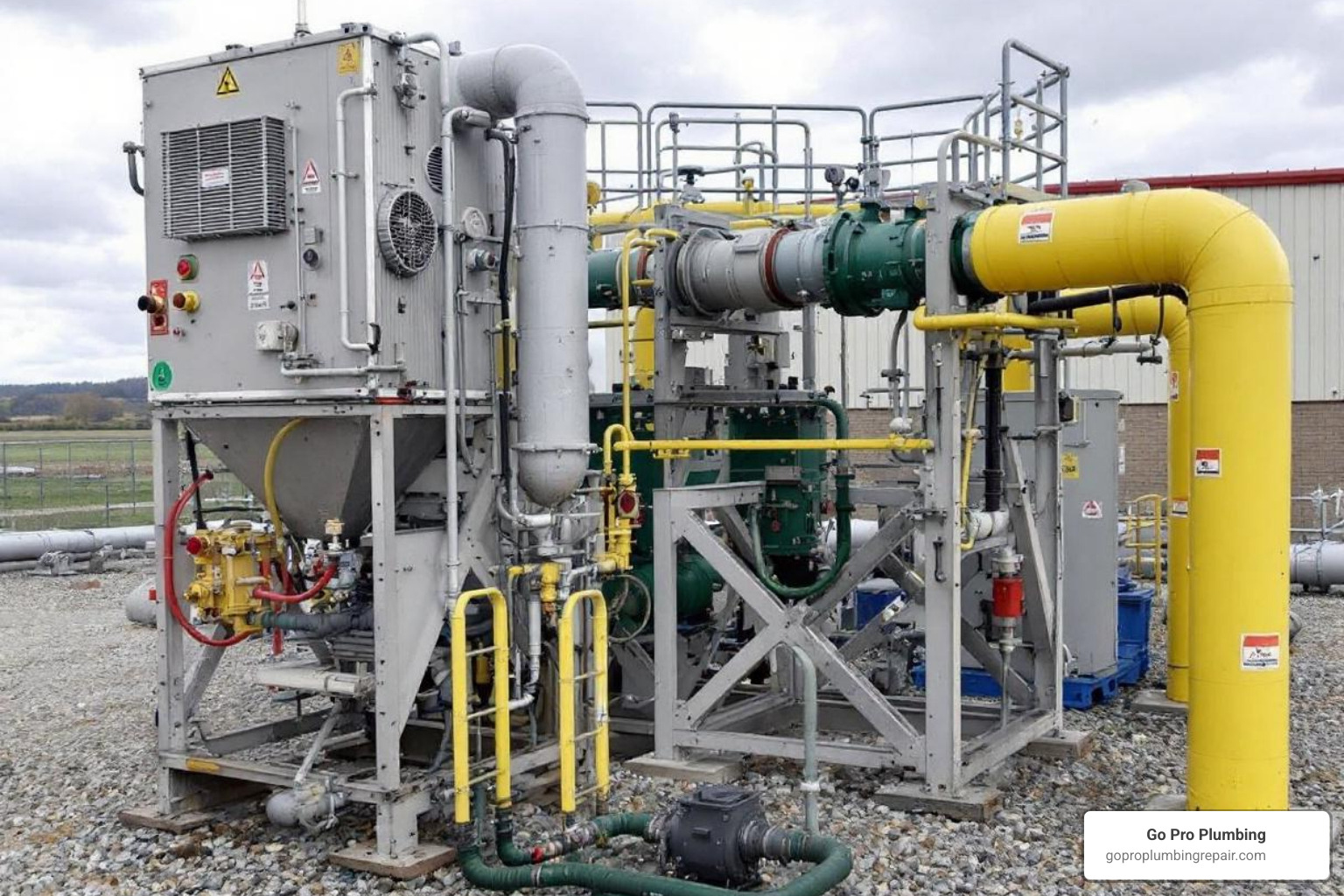
In commercial and industrial environments, natural gas risers perform the same fundamental function—connecting underground supply to above-ground systems—but often on a larger scale and with more complex requirements.
- Larger Diameter Risers: Commercial buildings, restaurants, and industrial facilities typically have much higher gas demands than a single home. This necessitates larger diameter risers to accommodate higher gas flow rates.
- Higher Gas Flow Requirements: From large-scale HVAC systems in office buildings to powerful kitchen equipment in restaurants or specialized machinery in industrial plants, the risers must be capable of safely delivering substantial volumes of natural gas.
- Connecting to Commercial Buildings: Just like residential properties, commercial establishments rely on risers to transition their gas supply from the utility main to their internal distribution network.
- Industrial Equipment: In industrial settings, risers might connect to boilers, ovens, or other heavy machinery that use natural gas as a fuel source.
- Flanged Connections: While residential risers often use threaded connections, commercial and industrial applications with larger pipes and higher pressures frequently use more robust flanged connections for improved security and ease of maintenance. The A.Y. McDonald product catalog, for instance, lists risers with various connection types, including flanged, to meet diverse commercial and industrial needs.
Whether it’s a small business or a large manufacturing plant in Northern California, the integrity of the natural gas riser is just as critical for maintaining operations and ensuring safety.
Frequently Asked Questions about Natural Gas Risers
We often get questions about natural gas risers from our customers in Northern California. Here are some of the most common inquiries and our expert answers.
Can I install a natural gas riser myself?
Absolutely not. Installing a natural gas riser is a highly specialized task with significant risks. Natural gas is flammable and explosive, and an improper installation can lead to dangerous leaks, fires, serious injury, or even death.
Here’s why you need a licensed professional:
- Risks of DIY installation: Without proper training and tools, you could damage the gas line, create faulty connections, or fail to detect leaks.
- Need for licensed professionals: Certified plumbers, like our team at Go Pro Plumbing, have the training, licenses, and experience to handle gas lines safely. We understand gas flow, material properties, and critical safety protocols.
- Specialized tools and knowledge: Gas line installation requires specific tools and an in-depth knowledge of gas codes and pressure testing procedures.
- Code compliance: All gas installations must comply with strict local and national codes (like ASME B31.8 and DOT regulations). Non-compliant work is unsafe and can lead to fines or utility shut-offs.
For your safety, always entrust gas riser installation to qualified and licensed professionals.
How long does a natural gas riser last?
A properly installed natural gas riser is designed for longevity, but its lifespan varies based on several factors:
- Materials: Modern risers, especially anodeless designs with coated steel and MDPE plastic, are built to last for decades by preventing corrosion.
- Installation quality: Professional installation is key. A correctly buried, supported, and connected riser will significantly outlast one installed improperly.
- Environmental conditions: Corrosive soils, ground movement, or harsh weather can accelerate wear, though modern risers are engineered to mitigate these factors.
- Signs of wear and corrosion: Be aware of visible damage, such as rust, physical impacts, or ground settlement around the riser. If you notice anything unusual, have a professional inspect it.
Under ideal conditions, a high-quality natural gas riser can last 50 years or more. Regular utility inspections help ensure its continued integrity.
What is the difference between a gas riser and a regular gas pipe?
This is an excellent question. While a riser is a type of gas pipe, it’s a unique, specialized component.
Think of it this way:
- Regular gas pipe: This is the general piping (underground PE or above-ground steel) that simply transports gas from one point to another.
- A riser as a specialized assembly: A natural gas riser is a specific vertical assembly designed to connect the underground service line to the above-ground meter. It’s an engineered unit with built-in features.
- Transition function: Its defining characteristic is transitioning the pipe from the underground to the above-ground environment and often from one material (PE) to another (steel).
- Built-in corrosion protection: Anodeless risers have inherent features to prevent corrosion at the critical plastic-to-metal transition point.
- Above-ground to below-ground purpose: Its vertical design is engineered to withstand the stresses of emerging from the ground, including movement and environmental exposure.
In short, while all risers contain gas pipe, not all gas pipe is a riser. The natural gas riser is a purpose-built, safety-critical assembly for a vulnerable point in your gas system.
Conclusion: Ensuring a Safe and Reliable Gas Supply
The natural gas riser may be out of sight and out of mind for many, but as we’ve explored, it’s a truly indispensable component in your home or business’s energy infrastructure. This unsung hero performs the vital task of bridging the gap between your underground gas supply and your property’s gas meter, doing so safely and efficiently. From its robust materials like steel and MDPE, to its innovative anodeless designs that combat corrosion, every aspect of a riser is engineered for reliability.
The importance of professional installation and strict adherence to safety standards, such as ASME B31.8 and local codes, cannot be overstated. A correctly installed riser ensures not only the uninterrupted flow of natural gas for your heating, cooking, and outdoor amenities but, most importantly, protects against dangerous leaks and potential hazards.
For residents and businesses in Northern California, Go Pro Plumbing is committed to ensuring all gas system components, including your natural gas riser, are installed correctly and maintained for ultimate safety and reliability. We understand the nuances of local regulations and the specific environmental considerations of our region. When it comes to something as critical as your gas line, trust the experts.
Learn more about our professional gas riser installation services here!