
Making Waves: The Path to Becoming a Water Conservation Expert
By Brian on February 19, 2026

The Guardians of Our Most Precious Resource
A water conservation specialist is a professional dedicated to protecting and managing water resources through program development, public education, water audits, and policy implementation. These experts work for government agencies, utilities, consulting firms, and non-profits to reduce water waste and ensure sustainable water use for future generations.
Quick Overview: What Does a Water Conservation Specialist Do?
- Primary Role: Protect existing and future water supplies by preventing mismanagement and overexploitation
- Core Duties: Conduct water audits, develop conservation programs, analyze usage data, educate the public
- Work Settings: Federal/state/local government (75% of jobs), consulting firms, non-profits, water districts
- Education Required: Bachelor’s degree minimum (environmental science, hydrology, natural resource management)
- Median Salary: $48,980 to $73,230 depending on sector (federal government highest at $103,180)
- Job Growth: 6-8% projected growth 2020-2030, adding approximately 1,500 jobs
Water is life. Yet in places like Northern California, where droughts can devastate communities and ecosystems, managing this precious resource has never been more critical.
Water conservation specialists stand on the front lines of this challenge. They’re not just scientists or bureaucrats—they’re problem-solvers who bridge the gap between environmental science and real-world action. One day they might be conducting a water efficiency audit at a commercial property. The next, they’re presenting to a city council about new conservation policies.
The role has evolved dramatically. What once focused mainly on measuring rainfall and groundwater now involves cutting-edge technology like GIS mapping, smart irrigation systems, and data modeling. These specialists work with everyone from homeowners to agricultural operations, helping them reduce waste while maintaining their quality of life.
The demand is real. With high-profile droughts and flooding increasing public awareness, communities are investing more in water security. The federal government alone employs 34% of all conservation workers, followed by state governments at 24%.
For those drawn to meaningful work with tangible impact, this career offers both purpose and stability. You’ll protect ecosystems, ensure communities have clean water, and help prepare for climate challenges ahead.
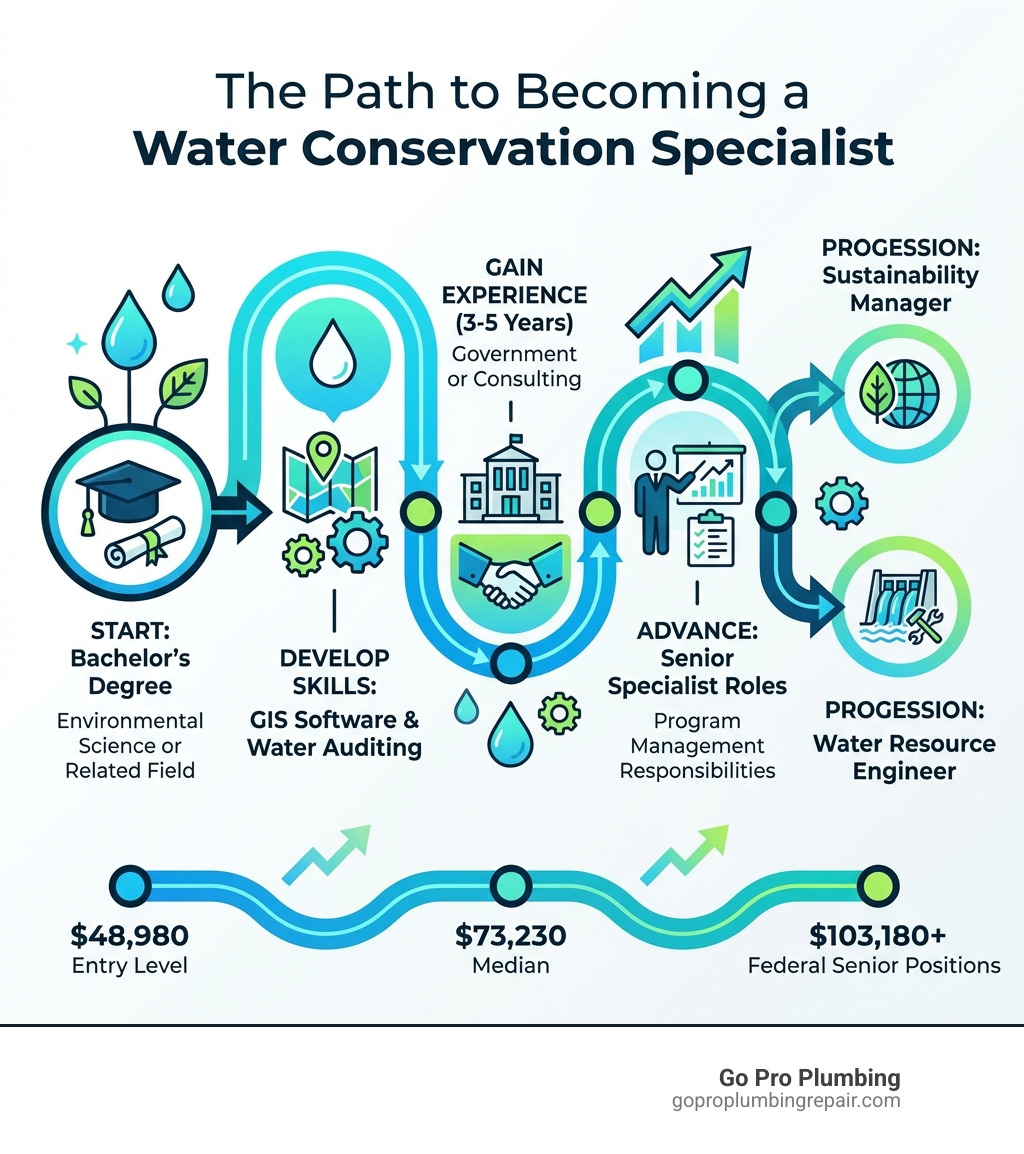
Water conservation specialist terms explained:
The Core Responsibilities of a Water Conservation Specialist
At its heart, the primary role of a water conservation specialist is to safeguard our water resources. This means ensuring that water is used efficiently, responsibly, and sustainably, preventing mismanagement and over-exploitation. They are the architects of a future where water scarcity is addressed through innovation, education, and proactive management. This commitment is particularly vital in regions like Northern California, where water resources are constantly under pressure.
Their work involves a dynamic blend of scientific investigation, community engagement, and strategic planning. They don’t just identify problems; they craft solutions and see them through to implementation. This could range from designing new water-saving programs for a municipality in Rancho Cordova to advising local businesses in Sacramento on how to reduce their water footprint.
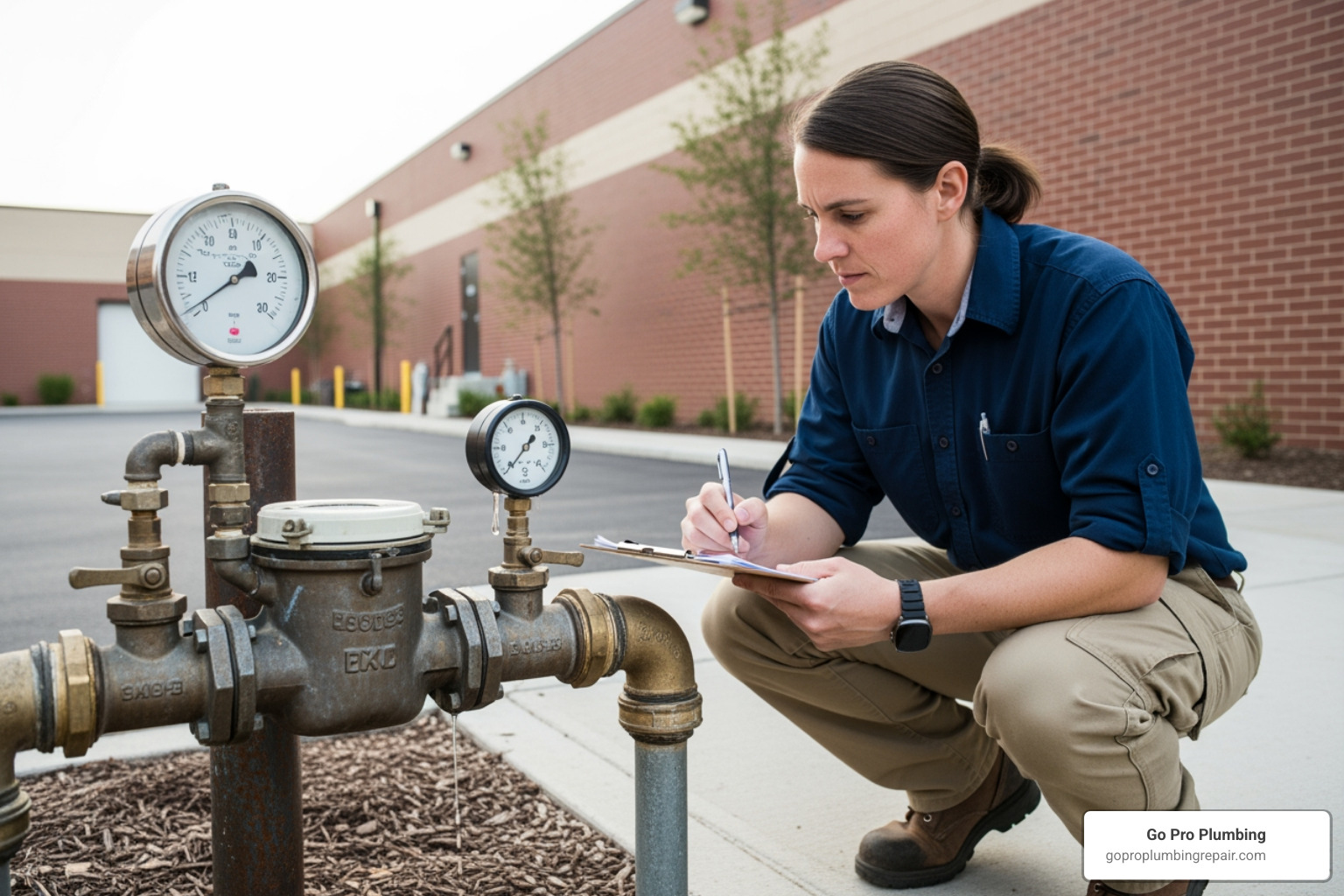
A Day in the Life: Key Duties
What does a water conservation specialist actually do on a day-to-day basis? It’s a varied role, often combining office work with significant fieldwork. Their duties are designed to promote efficient water usage and reduce waste across various sectors.
Here’s a glimpse into the typical responsibilities:
- Conducting Residential and Commercial Water Efficiency Audits: This is a cornerstone of the job. Specialists visit homes, businesses, and industrial sites to assess water usage, identify leaks, inefficient fixtures, and wasteful practices. They then provide custom recommendations for improvements, often including specific technologies or behavioral changes. Think of us as water detectives, sniffing out inefficiencies!
- Developing Educational Materials: A huge part of conservation is public awareness. Specialists create brochures, presentations, and online content to inform the community about the importance of water conservation, practical tips, and available rebates or programs. They might hold workshops in local schools in Rancho Cordova or community centers in Sacramento.
- Analyzing Water Usage Data: Using advanced tools and software, they collect and interpret data on water consumption patterns. This data helps them understand where water is being used most, identify trends, and measure the effectiveness of conservation programs. It’s like being a data scientist for water.
- Recommending Water-Saving Technologies: From low-flow toilets and showerheads to smart irrigation systems and leak detection devices, specialists stay up-to-date on the latest technologies that can help save water. They advise property owners and businesses on the best options for their specific needs.
- Implementing Water Saving Landscape Design: Especially in drought-prone areas, landscape irrigation is a significant water consumer. Specialists help design or recommend drought-tolerant landscaping (xeriscaping) and efficient irrigation systems for residential, commercial, and public spaces, ensuring beauty doesn’t come at the cost of excessive water use.
- Responding to Public Inquiries: They serve as a primary point of contact for residents and businesses with questions about water conservation, billing anomalies, or potential leaks. Providing technical assistance and friendly advice is key to fostering a conservation-minded community.
- Developing and Implementing Water Conservation Programs: This involves researching local needs, designing incentive programs (like turf replacement rebates), setting program goals, and overseeing their execution.
- Collaborating with Stakeholders: They frequently work with local and state agencies, non-profit organizations, businesses, and community groups to coordinate efforts and maximize impact.
- Policy Implementation: Specialists often help draft, review, and implement local ordinances and regulations related to water use, ensuring compliance and promoting sustainable practices.
Impact on Environmental Sustainability
The work of a water conservation specialist has far-reaching positive impacts on environmental sustainability and resource management. Their efforts aren’t just about saving a few gallons here and there; they contribute to a healthier planet and more resilient communities, especially critical for the long-term health of Northern California.
- Reducing Water Waste: By identifying and rectifying inefficiencies, they directly reduce the amount of water lost or unnecessarily consumed, preserving finite freshwater resources.
- Protecting Ecosystems: Less demand for potable water means less strain on natural water sources like rivers, lakes, and groundwater aquifers. This helps maintain healthy aquatic ecosystems, supports biodiversity, and protects habitats for fish and wildlife.
- Mitigating Drought Effects: In regions susceptible to drought, like ours in Northern California, specialists are crucial for building resilience. Their programs help communities stretch their water supplies further, reducing the severity of drought impacts on agriculture, industries, and daily life.
- Ensuring Future Water Supply: Through proactive management and long-term planning, they help secure adequate water supplies for future generations, preventing crises and promoting sustainable growth.
- Promoting Water Conservation Environmental Benefits: Beyond direct water savings, their work often leads to reduced energy consumption (less pumping and heating water), decreased chemical use for treatment, and lower wastewater volumes, all of which have significant environmental upsides.
- Managing Water Quality: Conservation efforts often go hand-in-hand with protecting water quality. By reducing runoff and promoting responsible land use, they help prevent pollutants from entering our precious water sources.
Building Your Expertise: The Educational and Skill-Based Blueprint
Becoming a water conservation specialist requires a solid foundation of knowledge and a diverse skill set. It’s a career that blends scientific understanding with practical application and strong communication. For those looking to make a difference in Northern California’s water future, understanding this blueprint is your first step.
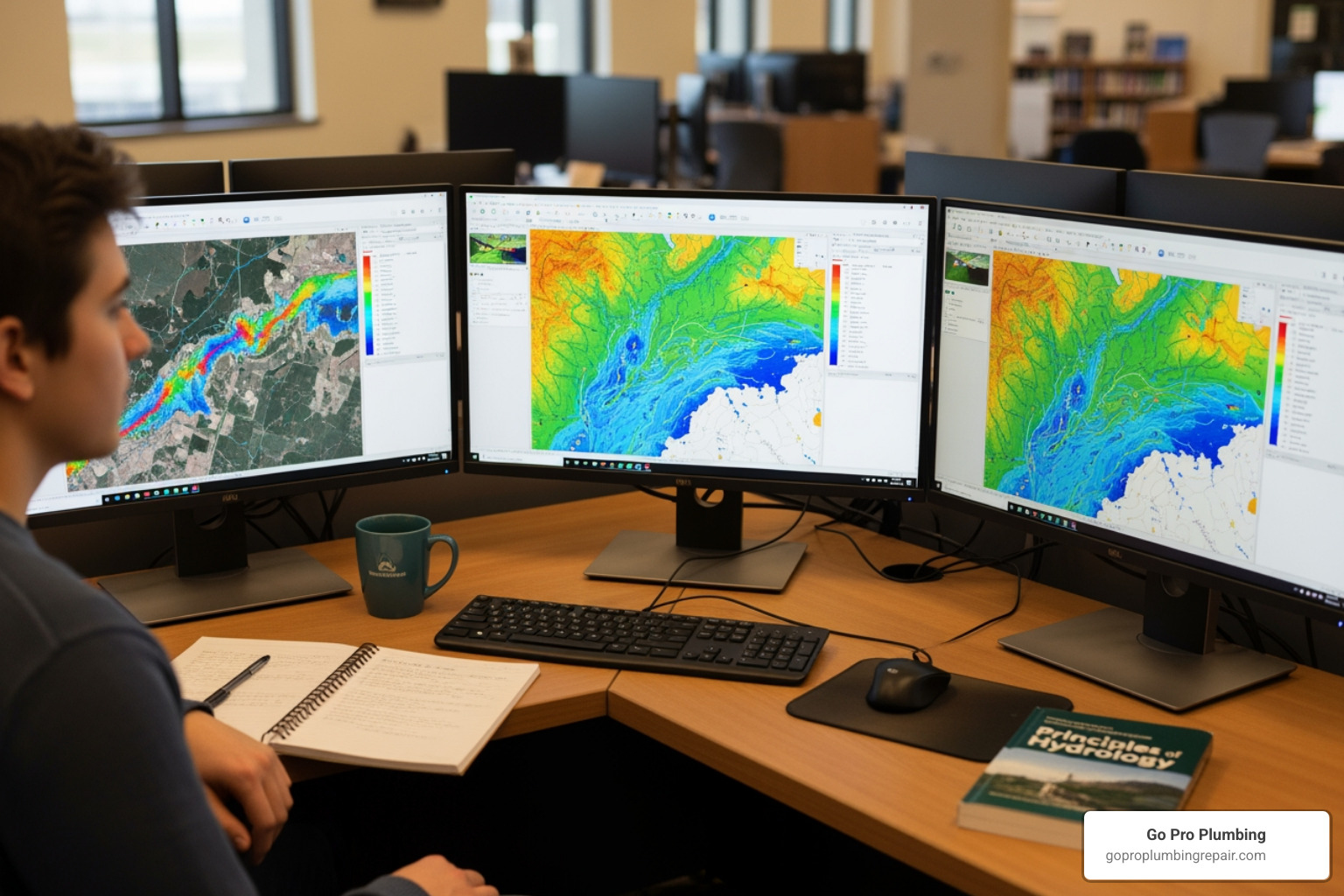
Essential Qualifications for a Water Conservation Specialist
While paths can vary, a formal education is typically the starting point for this vital role.
- Bachelor’s Degree: This is generally the minimum educational requirement. High school students interested in this field should focus on core sciences like biology, math, geography, and environmental science. Relevant degrees include:
- Environmental Science: Provides a broad understanding of ecological principles, environmental issues, and sustainable practices.
- Natural Resource Management: Focuses on the sustainable use and protection of natural resources, including water.
- Hydrology: A more specialized degree that digs into the science of water, its movement, distribution, and properties.
- Public Administration: Useful for those interested in policy development, program management, and working within government agencies.
- Other applied earth sciences, forestry, or agriculture science degrees can also be beneficial.
- Data Analysis Skills: The ability to collect, interpret, and present complex data is paramount. This includes understanding statistics and being proficient with data analysis software.
- GIS Software Proficiency: Geographic Information Systems (GIS) are indispensable tools for mapping water resources, analyzing land use, and visualizing conservation efforts. Knowledge of GIS is often a key requirement.
- Strong Communication: Whether writing reports, giving presentations, or educating the public, clear and persuasive communication is crucial. Specialists need to translate complex scientific information into understandable terms for diverse audiences.
For those aiming for research, advisory, or leadership roles, a Master’s degree in a related field is often advisable. A Doctorate might be pursued for teaching or university-level research positions.
Developing the Right Skill Set
A water conservation specialist needs a unique blend of technical expertise and interpersonal abilities. It’s not enough to know the science; you also need to be able to apply it and communicate its importance effectively.
Here’s a comparison of the key technical and soft skills:
| Technical Skills | Soft Skills |
|---|---|
| Water auditing and leak detection | Public speaking and presentation |
| Irrigation system knowledge and design | Project management and organization |
| Data modeling and statistical analysis | Interpersonal communication and collaboration |
| GIS mapping and spatial analysis | Problem-solving and critical thinking |
| Regulatory knowledge (local, state, federal) | Adaptability and continuous learning |
| Water quality testing and interpretation | Education and outreach |
| Knowledge of water-efficient technologies | Negotiation and conflict resolution |
Technical skills like understanding Open Channel Hydraulics & Hydrology and Water Resources Systems Planning & Management are listed as essential in some roles, especially for those working on larger-scale projects. Knowing how to use water quantity and quality models in watershed planning is also highly valued.
On the soft skills side, being able to engage with the public, from homeowners to businesses, and clearly explain the “why” and “how” of water conservation is vital. We often find ourselves in roles that require assertive, yet non-confrontational, interaction to encourage adoption of best practices.
Navigating the Career Landscape: Opportunities and Outlook
The field of water conservation is growing, driven by increasing environmental awareness, climate change impacts, and the pressing need to manage our most vital resource. For aspiring water conservation specialists, this means a landscape rich with opportunities, particularly in water-conscious regions like Northern California.
Typical Work Environments for a Water Conservation Specialist
Water conservation specialists find their professional homes in a variety of settings, each offering unique challenges and rewards. The largest employers are often government agencies, but private and non-profit sectors also offer substantial opportunities.
- Government Agencies (Federal, State, Local): This is where a significant portion of conservationists work.
- Federal Government: Agencies like the EPA, NOAA, and the Bureau of Reclamation employ specialists for large-scale water management projects, regulatory oversight, and research. Nationally, the federal government is the highest payer for these roles, with a median salary of $103,180 (as of May 2020) for environmental scientists and specialists.
- State Government: In California, the Department of Water Resources and state environmental agencies hire specialists to manage statewide water resources, implement conservation policies, and respond to regional water challenges.
- Local Government: Municipal water districts, city planning departments (like in Sacramento or Rancho Cordova), and county environmental services are major employers. They focus on local water supply, public outreach, and implementing specific conservation programs. Our own work at Go Pro Plumbing often aligns with these local efforts, complementing the broader Water Conservation Strategies Guide that these agencies promote.
- Private Consulting Firms: These firms offer specialized expertise to businesses, agricultural operations, and municipalities. They might conduct water audits, design efficient irrigation systems, or help clients steer environmental regulations.
- Non-profit Organizations: Groups like Conservation International (which has a dedicated water program) and the Soil and Water Conservation Society (a global body engaged in practical conservation, education, and research) employ specialists to advocate for water protection, conduct research, and implement community-based conservation projects.
- Utility Districts: Water utilities are directly responsible for supplying water to communities. They employ specialists to manage demand, develop conservation programs for their customers, and ensure the long-term sustainability of their water sources. The American Water Works Association aids water suppliers in improving processes to reduce water wastage.
Job Outlook and Salary Insights
The future looks promising for those entering the water conservation field. The increasing awareness of water security issues, especially in areas like Northern California, means a steady demand for skilled professionals.
- Job Growth Projections: The U.S. Bureau of Labor Statistics projects that job demand for conservation workers in general is expected to grow around 8% between 2020 and 2030, which is about average. More specifically, the entire discipline of conservation science was projected to grow 6% from 2020-2030, adding approximately 1,500 jobs over the decade. This growth is driven by the need to manage natural resources and address environmental concerns.
- Median Salary: Salary figures can vary based on experience, location, employer, and the specific duties involved.
- The median salary for water conservationists was $48,980 as of 2021.
- However, the median salary for the broader category of environmental scientists and specialists (which often includes water conservationists) was $73,230 as of May 2020.
- As noted earlier, the federal government was the highest payer, with a median salary of $103,180 for these roles.
- These are national averages, and conditions in our area of Northern California may vary. You can find more national data on environmental scientists and specialists salaries at the US Bureau of Labor Statistics.
- High-Demand Regions: Areas with scarce water resources, like much of California, have a particular need for water management and conservation expertise. This means strong opportunities for water conservation specialists in places like Sacramento and Rancho Cordova.
Professional Growth and Related Careers
A career as a water conservation specialist can be a stepping stone to various other impactful roles, or it can be a deeply fulfilling long-term specialization. The skills gained are highly transferable and valuable across the environmental and resource management sectors.
- Career Paths:
- Sustainability Manager: Oversees environmental and social sustainability initiatives for organizations.
- Water Resource Engineer: Designs and manages infrastructure for water supply, treatment, and distribution.
- Environmental Consultant: Provides expert advice to clients on environmental issues, compliance, and sustainability.
- Hydrologist: Conducts scientific research on water, its properties, distribution, and effects on the environment.
- Program Manager, Water Conservation: Leads and manages large-scale conservation programs for utilities or government agencies.
- Joining Professional Organizations: Networking and continuous learning are vital for professional growth. Organizations provide opportunities for professional development, certifications, and staying current with industry best practices. Key organizations include:
- Conservation International: Although a general conservation body, they have a dedicated water program involving professionals and private donors to help conserve the world’s water supply.
- Soil and Water Conservation Society: This global body, with over 3,000 members, is engaged in both practical conservation and education/research into water matters.
- American Water Works Association: Aids water suppliers in improving their processes and technology to reduce water wastage and other losses.
Frequently Asked Questions about Water Conservation Careers
We often get asked about the nuances of this career path. Here are some common questions we encounter:
What’s the difference between a water conservation specialist and a hydrologist?
While both professions deal with water, their primary focus and responsibilities differ significantly.
- A water conservation specialist focuses on the use and management of water. Their work is largely practical, centered on improving efficiency, reducing waste, and implementing policies and programs to ensure sustainable water use. They’re involved in public education, water audits, and developing strategies to optimize water consumption. Think of them as the strategists and implementers of water-saving actions.
- A hydrologist, on the other hand, focuses on the scientific study of water. They research the movement, distribution, and physical and chemical properties of water on Earth. This involves studying rainfall, runoff, groundwater, and surface water, often using complex models and fieldwork to understand natural water cycles and systems. They are the scientists providing the foundational data and understanding upon which conservation strategies are built.
A hydrologist tells us how water behaves, and a water conservation specialist tells us how we should behave with water.
Do I need a master’s degree to succeed in this field?
Not necessarily, but it can certainly help!
- A bachelor’s degree is typically the minimum requirement to enter the field and secure many entry-level positions. With a solid undergraduate background in environmental science, natural resource management, or a related field, you can build a successful career.
- However, a master’s degree can provide a significant advantage, especially if you aspire to advanced research, policy-making, or leadership roles. It often offers more specialized knowledge, deeper analytical skills, and can open doors to higher-paying positions or more complex project management. For instance, if you want to lead a major water conservation program for a large utility in Northern California, a master’s might be highly beneficial.
A combination of education and practical experience is key. Many professionals gain experience with a bachelor’s degree and then pursue a master’s later in their career to advance.
What are the biggest challenges facing this profession today?
Being a water conservation specialist is incredibly rewarding, but it’s not without its problems. The challenges are as dynamic as the environment itself:
- Climate Change: This is perhaps the overarching challenge. Changing weather patterns lead to more extreme droughts and floods, making water resource management increasingly unpredictable and complex. In Northern California, we’ve seen how prolonged droughts impact water availability.
- Aging Infrastructure: Much of our existing water infrastructure, from pipes to treatment plants, is old and inefficient, leading to significant water losses through leaks and outdated systems. Upgrading this infrastructure requires massive investment and careful planning.
- Public Apathy and Misconceptions: Despite growing awareness, some segments of the public still don’t fully grasp the urgency of water conservation or believe their individual actions won’t make a difference. Overcoming this requires continuous, engaging education and outreach.
- Evolving Regulations: Water policies and regulations are constantly changing, often in response to environmental shifts or new scientific understanding. Specialists must stay informed and adapt programs accordingly.
- Funding for Conservation Programs: Securing adequate funding for research, infrastructure upgrades, and public outreach programs can be a persistent challenge, especially in competitive budgetary environments.
- Balancing Competing Demands: Water is needed for agriculture, industry, residential use, and ecosystem health. Specialists often face the complex task of balancing these competing demands, ensuring fairness and sustainability for all users.
Conclusion: Start Your Journey in Water Conservation
Becoming a water conservation specialist is more than just a job; it’s a calling. It offers the profound satisfaction of knowing you’re making a tangible difference in protecting one of our planet’s most vital resources. As we’ve explored, this career path offers both purpose and stability, with growing demand in an era where water scarcity and climate change are increasingly pressing concerns, particularly in our home turf of Northern California.
We’ve covered the core responsibilities, the essential educational background, and the diverse skill set required to excel. We’ve also highlighted the various environments where these professionals thrive, from local government agencies in Sacramento and Rancho Cordova to global non-profits. The job outlook is positive, and the opportunities for professional growth are abundant.
For those with a passion for environmental sustainability and a desire to contribute to a healthier, more resilient future, this is a career that truly makes waves. By understanding the path to becoming a specialist, you can contribute to vital Water Conservation Services that protect our communities and environment.
At Go Pro Plumbing, we understand the critical role water conservation plays in our community. While we focus on ensuring your home and business plumbing systems are running efficiently and without leaks, we deeply appreciate the broader efforts of water conservation specialists who work tirelessly to secure our water future. If you’re ready to dive into a career that truly matters, water conservation awaits!