
Don’t Get Capped Out: Everything About Plumbing Cleanout Caps
By Brian on January 6, 2026
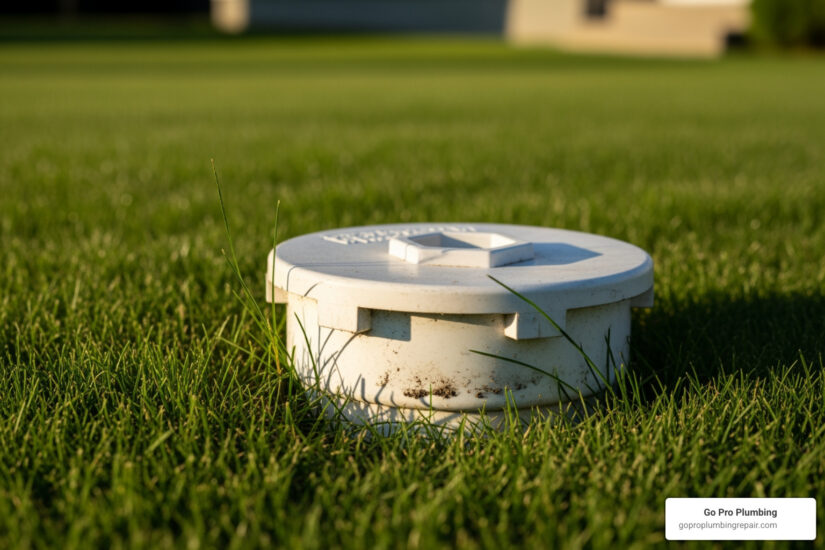
Understanding Your Plumbing Cleanout Cap: The Access Point That Saves Your Drains
A plumbing clean out cap is a removable cover on your home’s sewer line that provides direct access for clearing clogs and performing maintenance. Here’s what you need to know:
What it does:
- Seals your drain system to prevent sewer gas from escaping
- Blocks debris, pests, and rodents from entering your pipes
- Provides plumbers easy access to clear blockages without tearing up your yard
Where to find it:
- Indoor: Basements, utility rooms, or garages (called the “main house trap”)
- Outdoor: Near your foundation or close to the property line
- Usually a white or black pipe, 3-6 inches in diameter, with a removable cap
Common types:
- Threaded caps (screw on/off)
- Expansion plugs (mechanical seal)
- Flush plugs (sit level with ground)
- Raised head plugs (stick up above ground)
Most homes have at least one cleanout, though some older properties might not. If you’re on a municipal sewer system, you might have two—one by your house and another near the city sewer line. While many older homes have cast iron or brass plugs, modern homes typically use more corrosion-resistant and affordable ABS plastic or PVC caps.
Think of your cleanout cap as the emergency exit for your plumbing system. When drains back up or tree roots invade your sewer line, this small access point can save you thousands of dollars in excavation costs, but only if it’s accessible and in good working condition.
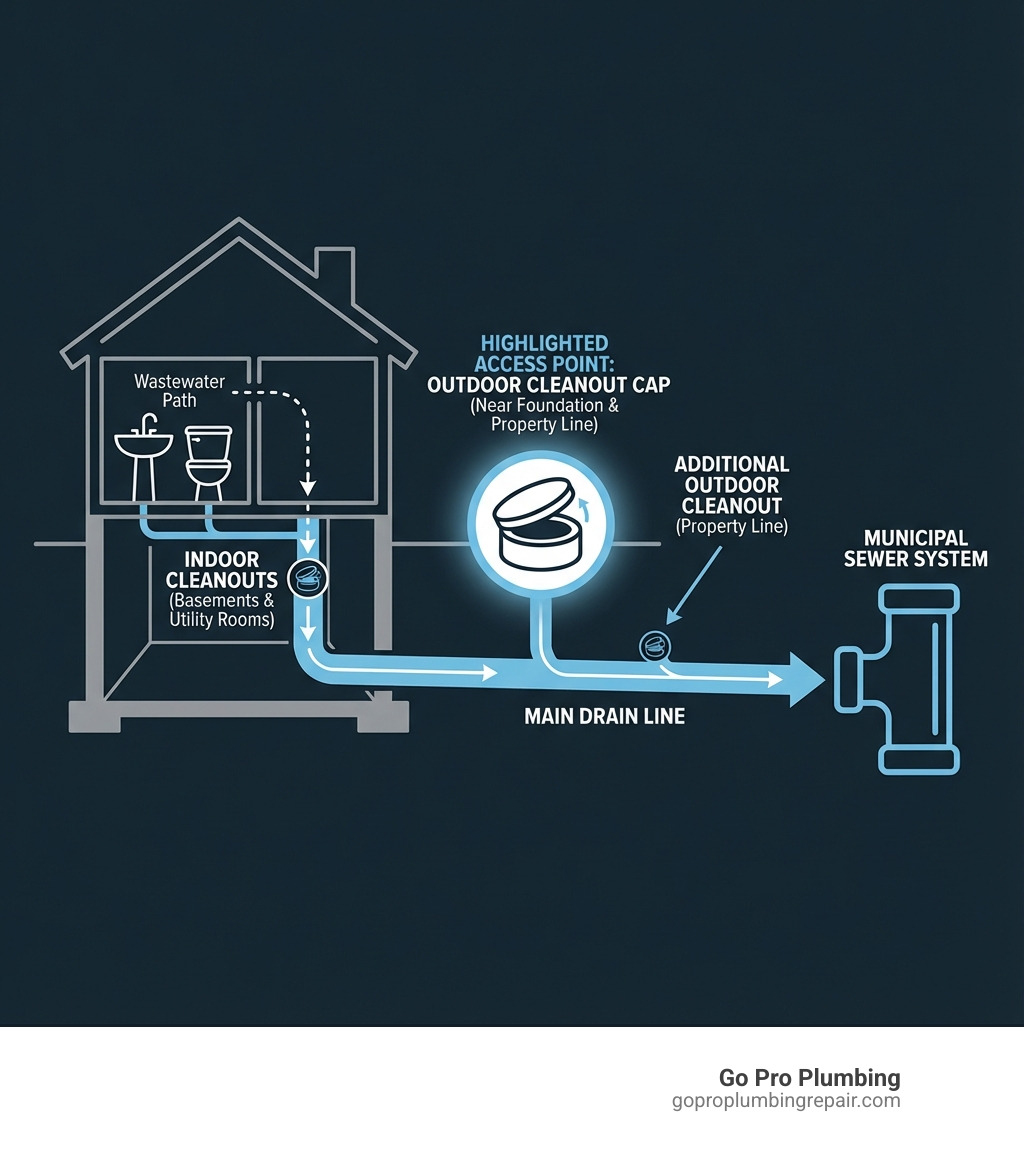
What is a Plumbing Cleanout Cap and Why is it Important?
A plumbing clean out cap is a removable cover that seals the end of a sewer cleanout pipe, which is typically 3 to 6 inches in diameter. This pipe provides direct access to your main sewer line, allowing plumbers to efficiently clear clogs and perform maintenance without disruptive digging.
Its primary purposes are:
- Drain Access: It’s the main entry point for tools like drain snakes and hydro-jetters to clear stubborn blockages deep within your sewer lines.
- Sewer Gas Barrier: The cap creates an airtight seal, preventing harmful and unpleasant sewer gases from entering your home or yard.
- Debris and Pest Prevention: A secure cap stops leaves, dirt, and rodents from getting into your sewer system and causing blockages.
- Main House Trap: An indoor cleanout is often called the main house trap, providing the closest access to your home’s primary drain line.
The Difference Between a Cleanout Cap and a Plug
While often used interchangeably, “cap” and “plug” can have different meanings:
- Cleanout Cap: Typically fits over the end of a pipe, often secured with a clamp or solvent weld.
- Cleanout Plug: Screws into a threaded fitting. This is the most common type for residential cleanouts.
The key difference is how they attach. A plug has threads (male) that screw into the pipe’s threads (female), while a cap fits over the pipe’s end. For a secure, gas-tight seal, a threaded plug is generally preferred. You can explore a wide range of options and see the differences in design at plumbing supply sites, such as this selection of cleanout plugs.
Where to Find Your Cleanout
Knowing your cleanout’s location is crucial in a plumbing emergency.
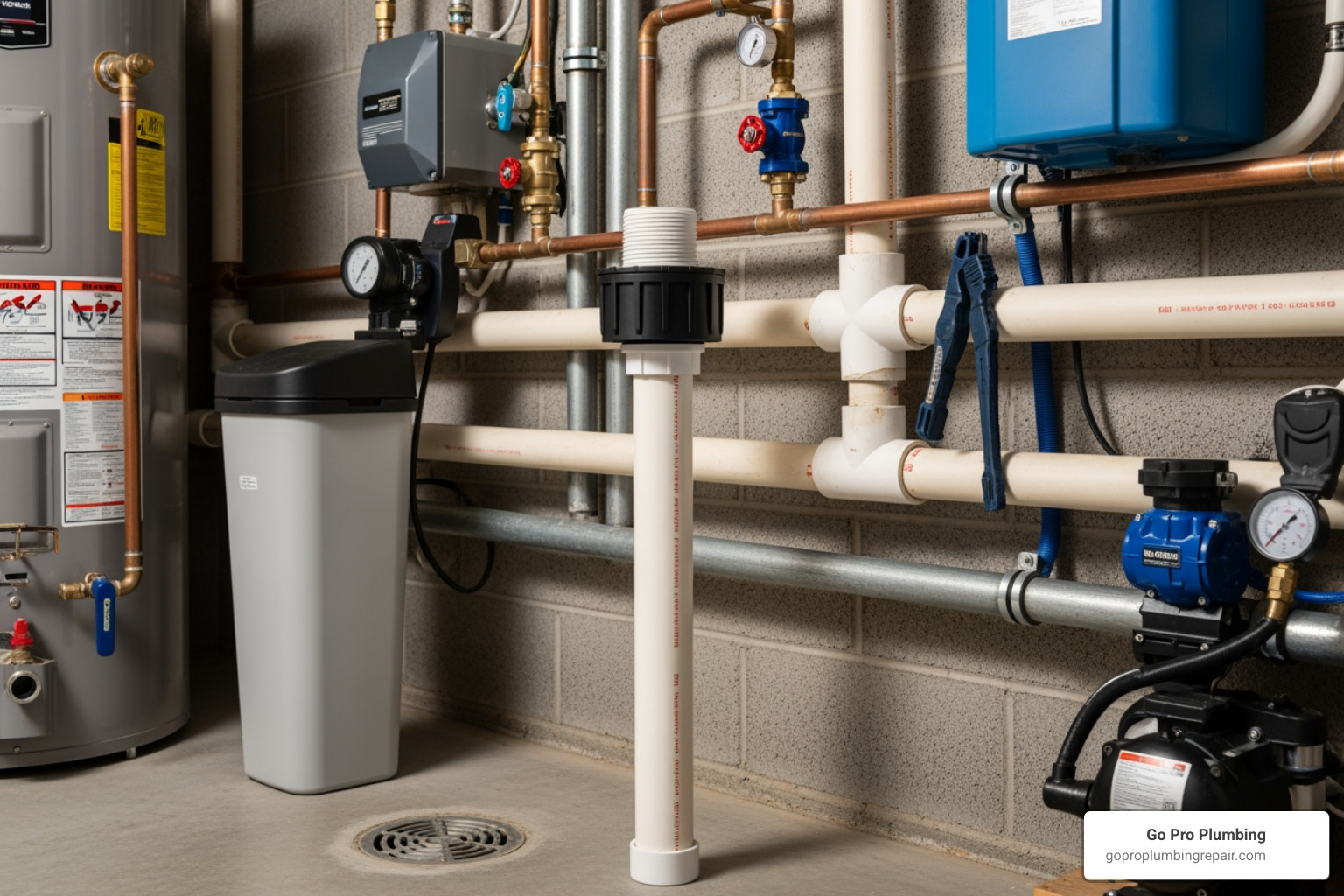
Indoor Locations:
- Basements: Near the main sewer stack or where the drain line exits the house.
- Utility Rooms: Near water heaters or washing machines.
- Garages: On a wall or floor near other plumbing lines.
Outdoor Locations:
- Near the House Foundation: Usually within a few feet of the house, on the side facing the street.
- Near the Property Line: Homes on a municipal sewer system may have a second cleanout near the street, sometimes marked “S.C.O.”
- Septic Systems: The cleanout is typically located on the pipe running from the house to the septic tank.
Buried Cleanouts:
Sometimes, cleanouts are buried under soil or landscaping. You can often find them by gently probing the ground with a screwdriver in likely areas. Once found, mark the location for future access.
Types, Materials, and Sizing Your Cleanout Cap
Choosing the right plumbing clean out cap is about ensuring a proper seal, durability, and easy access. There’s a surprising variety available, each designed for specific applications and pipe types.
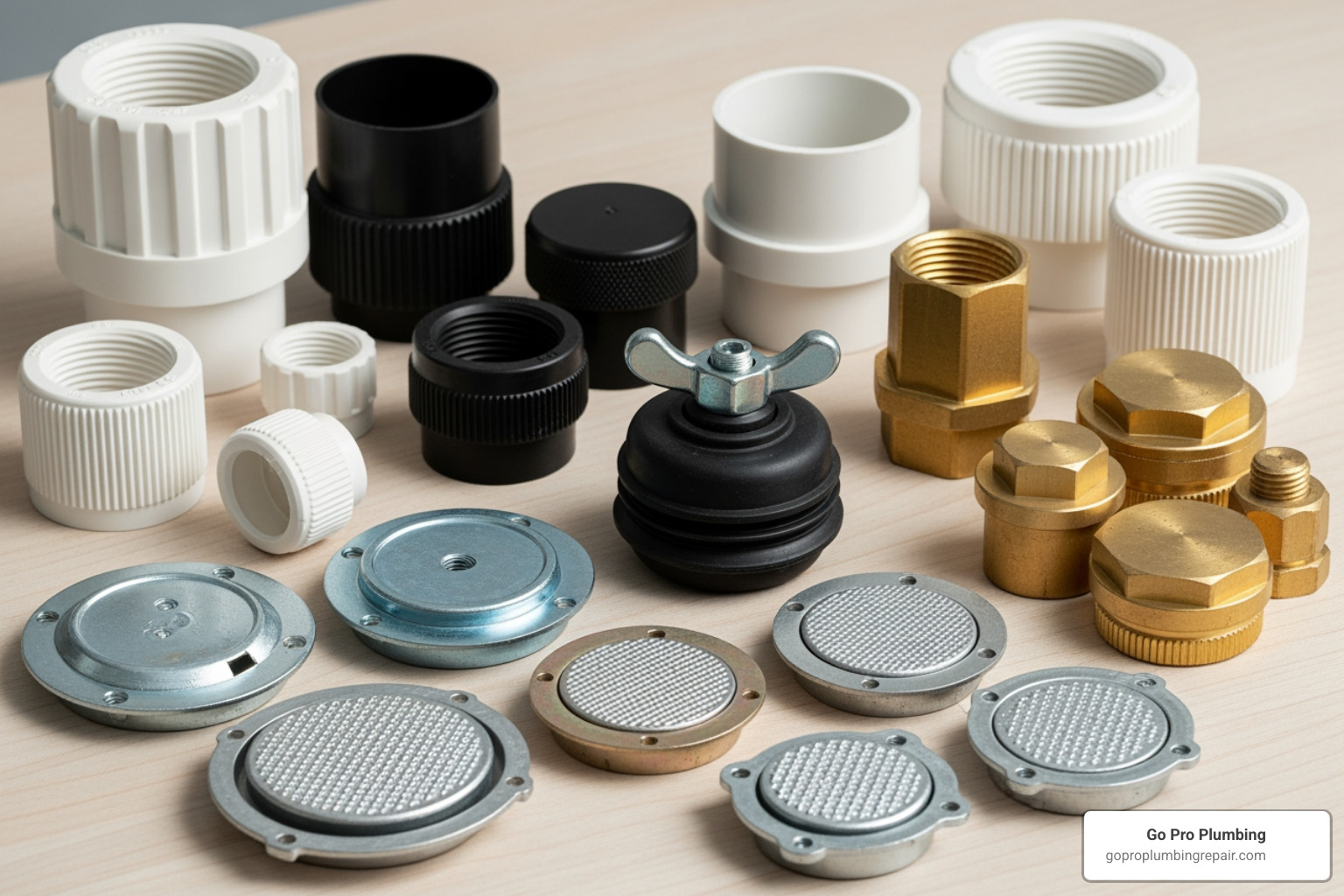
Common Types of Sewer Cleanout Caps
- Threaded Caps/Plugs: The most common type, these screw directly into a threaded fitting for a secure seal. They come in various materials like PVC, ABS, and brass.
- Expansion Plugs (Mechanical Plugs): These create a seal by expanding within the pipe when a bolt is tightened. They are ideal for pipes with damaged threads.
- Flush Plugs: Designed to sit level with the ground or floor, making them ideal for high-traffic areas.
- Raised Head Plugs: These have a prominent square or hexagonal head, making them easier to grip and turn with a wrench.
- Test Caps: Temporary caps used during construction or repairs to pressure test the drainage system.
- Flexible Caps: Made from flexible PVC, these fit over the end of a pipe and are secured with a metal clamp.
For more specialized or commercial-grade options, you can explore a range of adjustable cleanouts with different finishes.
Materials: Pros and Cons
The material of your plumbing clean out cap affects its durability and resistance to corrosion.
| Material | Pros | Cons – | PVC | Affordable, resistant to corrosion and chemicals, easy to install. | Can become brittle with age or exposure to harsh conditions. |
| ABS | Similar to PVC, often used in DWV systems, easy to install. | Can also become brittle; specific solvent cement is required. |
| Brass | Extremely durable, corrosion-resistant, provides a long-lasting seal. | More expensive than plastic; can seize in cast iron pipes over time. |
| Cast Iron | Very strong, used in older plumbing systems. | Heavy, prone to rust and corrosion, difficult to remove if seized. |
When selecting a plumbing clean out cap, try to match the material to your existing pipe. For PVC or ABS pipes, a plastic cap is best. For older cast iron systems, a brass or expansion plug is a good choice.
How to Identify the Correct Size and Type of plumbing clean out cap
Getting the right fit is crucial for preventing leaks and sewer gas.
- Measure the Pipe Diameter: Cleanout pipes are typically 3, 4, or 6 inches in diameter. Measure the inside diameter of the pipe opening to find the correct size.
- Identify Thread Type: If the pipe has threads, you need a matching cap.
- Female Threads (FPT): The threads are on the inside of the pipe. You need a male-threaded plug. This is the most common setup.
- Male Threads (MPT): The threads are on the outside of the pipe. You need a female-threaded cap.
- Match Material to Pipe: Match the cap material to the pipe material (e.g., PVC cap for PVC pipe) to ensure compatibility and prevent corrosion.
- Check for Damage: Inspect the pipe opening for stripped threads or cracks. If damaged, an expansion plug may be a better solution than a standard threaded cap.
How to Replace a Plumbing Cleanout Cap: A Step-by-Step Guide
Replacing a plumbing clean out cap is a manageable DIY task if you take the proper precautions. You’re working with a sewer line, so always wear gloves and safety goggles. If you suspect a clog, be prepared for pressure buildup behind the cap. Have a bucket ready and loosen the cap slowly. If water starts to escape, tighten it immediately and call a professional.
Tools and Materials
- Pipe wrench or large channel-lock pliers
- Wire brush
- Clean rag
- New cleanout cap (correct size and type)
- Thread sealant (Teflon tape or pipe dope)
- Bucket and old towels
Removing the Old Cap
- Locate and Clear: Find the cleanout and clear any dirt or debris from around it.
- Loosen the Cap: Use a pipe wrench to turn the cap counter-clockwise. If it’s stuck, apply a penetrating oil and let it sit before trying again. A gentle tap with a hammer can also help break a rusted seal.
- Watch for Pressure: As you loosen the cap, listen for hissing or look for water seepage. If you see signs of pressure, stop and call a plumber.
- Remove: Once you’re sure there’s no pressure, unscrew the cap completely.
Installing the New Cap
- Clean the Threads: Use a wire brush to remove any old sealant, rust, or dirt from the pipe’s threads.
- Apply Sealant: For threaded caps, wrap the new cap’s threads with Teflon tape (in a clockwise direction) or apply pipe dope. This ensures a tight seal and makes future removal easier.
- Screw it On: Hand-tighten the new cap first to avoid cross-threading.
- Final Tightening: Use your wrench to give it a final snug turn. Be careful not to overtighten, especially with plastic caps, as this can cause them to crack.
Common Problems and When to Call a Pro
Even a simple plumbing clean out cap can have issues. Knowing when to tackle it yourself and when to call Go Pro Plumbing can save you from a major headache.
Troubleshooting Your plumbing clean out cap
- Stuck or Rusted Cap: Older metal caps can corrode and seize. Try applying a penetrating oil and letting it sit before attempting to turn it with a wrench.
- Stripped Threads: If the threads on the cap or pipe are damaged, the cap won’t seal. An expansion plug is a good temporary fix, but a professional repair may be needed.
- Cracked or Broken Cap: A damaged cap must be replaced immediately to prevent sewer gas leaks and debris from entering the pipe.
- Leaking Cap: A leak, often accompanied by a foul odor, means the cap isn’t sealed correctly. This could be due to a bad seal or a partial blockage in the line.
- Missing Cap: An open cleanout is an invitation for pests, debris, and dangerous sewer gases. Replace it as soon as possible.
Red Flags: When to Call a Professional Plumber
While replacing a cap can be a DIY job, some situations require an expert. We offer comprehensive drain and sewer services for homeowners and businesses in Rancho Cordova, Sacramento, and throughout Northern California. Call us if you see these red flags:
- Water Backing Up When Cap is Loosened: This is a critical sign of a major blockage. Do NOT remove the cap. Tighten it and call a professional immediately to avoid a sewage spill.
- Persistent Sewer Odors: A constant smell of sewer gas indicates a leak that needs professional attention, as it could be a health hazard.
- Can’t Locate the Cleanout: If you can’t find your cleanout, our plumbers have specialized tools to locate it for you.
- Damaged Cleanout Pipe: A cracked or broken pipe requires professional repair that goes beyond a simple cap replacement.
- Frequent Clogs: If you’re constantly dealing with clogs, it points to a larger issue in your sewer line, like tree roots or a damaged pipe. We can perform a camera inspection to find the root cause.
Frequently Asked Questions about Cleanout Caps
We get a lot of questions about plumbing clean out caps from homeowners across Northern California. Here are some of the most common ones we hear:
How often should I check my cleanout cap?
We recommend checking your cleanout cap at least annually, as part of your general home maintenance routine. If your cleanout is outdoors and exposed to the elements, or if you have an older home, you might want to check it more frequently, perhaps every six months.
During your check, look for:
- Cracks or physical damage to the cap.
- Rust or corrosion on metal caps or threads.
- Whether it’s buried under dirt, leaves, or landscaping. Keep it clear!
- The tightness of the seal: Give it a gentle turn to ensure it’s snug, but don’t overtighten.
- Ease of removal: If you can’t easily loosen it with a wrench, note that it might be stuck when you actually need it.
Proactive checks can help you address minor issues before they escalate into major plumbing emergencies.
Can I use a different material for my cap than my pipe?
Generally, it’s best practice to match the material of your plumbing clean out cap to the material of your cleanout pipe. This is particularly important for threaded connections where a secure, long-lasting seal is paramount.
- Plastic on Plastic (PVC on PVC, ABS on ABS): This is ideal as the materials are compatible, and solvent welding (for caps, not plugs) creates a strong bond.
- Metal on Metal (Brass on Cast Iron): Common in older systems, but be aware that brass can sometimes seize in cast iron threads over many years due to corrosion.
- Plastic on Metal: While possible, it’s often not the preferred long-term solution for threaded connections. Different materials expand and contract at different rates with temperature changes, which can eventually compromise the seal. If you have a metal pipe with damaged threads, an expansion plug (which seals with a rubber gasket rather than threads) made of plastic or metal can be a good solution. Using a flexible PVC cap secured with a clamp can also work for some applications.
If you’re unsure about material compatibility or have an unusual setup, it’s always wise to consult with one of our professional plumbers.
What happens if I leave the cleanout cap off?
Leaving your plumbing clean out cap off, even for a short period, can lead to several unpleasant and potentially dangerous problems:
- Sewer Gas Exposure: The most immediate concern is the release of sewer gas. This gas contains methane and hydrogen sulfide, which are not only foul-smelling but can also be flammable and toxic in high concentrations. Prolonged exposure can cause health issues.
- Pest and Rodent Entry: An open cleanout is an easy entry point for rats, mice, snakes, insects, and other unwanted critters into your sewer system and potentially into your home.
- Debris Causing Clogs: Leaves, dirt, small toys, and other debris can easily fall into an uncapped cleanout, leading to new blockages in your main sewer line.
- Potential for Spills: If there’s a blockage downstream in your sewer line, an uncapped cleanout becomes the easiest escape route for raw sewage. This can lead to a hazardous and unsanitary spill in your yard or home.
Always ensure your cleanout cap is securely in place. It’s a small detail with big consequences if overlooked!
Conclusion: Keep Your System Flowing Smoothly
The plumbing clean out cap is a small but mighty component of your home’s drainage system. Far from being just a simple cover, it’s your primary access point for maintenance, a critical barrier against sewer gases and pests, and a safeguard against costly plumbing emergencies. Understanding its purpose, knowing where to find it, and being aware of its different types and materials empowers you as a homeowner.
While we encourage proactive maintenance and basic troubleshooting, some plumbing issues are best left to the professionals. If you encounter a pressurized cleanout, persistent sewer odors, or simply can’t seem to get that stubborn cap off, don’t hesitate to call us.
At Go Pro Plumbing, we’re committed to keeping your plumbing system flowing smoothly and efficiently. We offer reliable, same-day drain and sewer services across Rancho Cordova, Sacramento, and throughout Northern California.
Contact us for professional drain and sewer help to ensure your home’s plumbing remains in top condition.