
Digging Deep: Everything You Need to Know About Your Sewage Line
By Brian on November 18, 2025
Why Your Sewage Line Deserves Your Attention
A sewage line is the underground pipe that carries all wastewater from your home—everything from toilets, sinks, showers, and appliances—to the municipal sewer system or your septic tank. It’s one of the most critical components of your plumbing system, yet it often goes unnoticed until something goes wrong.
Quick Facts About Sewage Lines:
- What it does: Transports wastewater from your home to the city sewer main or septic system
- Your responsibility: You own and maintain the line from your house to the property line
- Typical lifespan: 50-100 years depending on material (clay, cast iron, or PVC)
- Average diameter: 4-6 inches wide
- Warning signs: Multiple slow drains, foul odors, sewage backups, or unusually lush grass patches
- Repair costs: Range from $650 for minor fixes to $25,000+ for full replacement
In Northern California, where many homes were built decades ago, understanding your sewage line is especially important. Older pipes made of clay or cast iron are more prone to cracking, corrosion, and tree root intrusion.
Here’s the reality: when your sewage line fails, it’s not just inconvenient—it’s a health hazard. Sewage backups can contaminate your home, damage your foundation, and pose risks to your family’s health. The good news is that most major problems can be prevented with basic knowledge and regular maintenance.
This guide will help you understand how your sewage line works, recognize warning signs, explore repair options (including modern trenchless methods), and learn preventative measures to avoid costly emergencies.
Understanding Your Sewer System: The Basics
Think of your home’s plumbing as a two-way street: fresh water comes in, and wastewater goes out. That exit highway is your sewage line. However, not all underground pipes are the same, and knowing the difference can save you from a messy and expensive surprise.
Sanitary vs. Storm Sewers
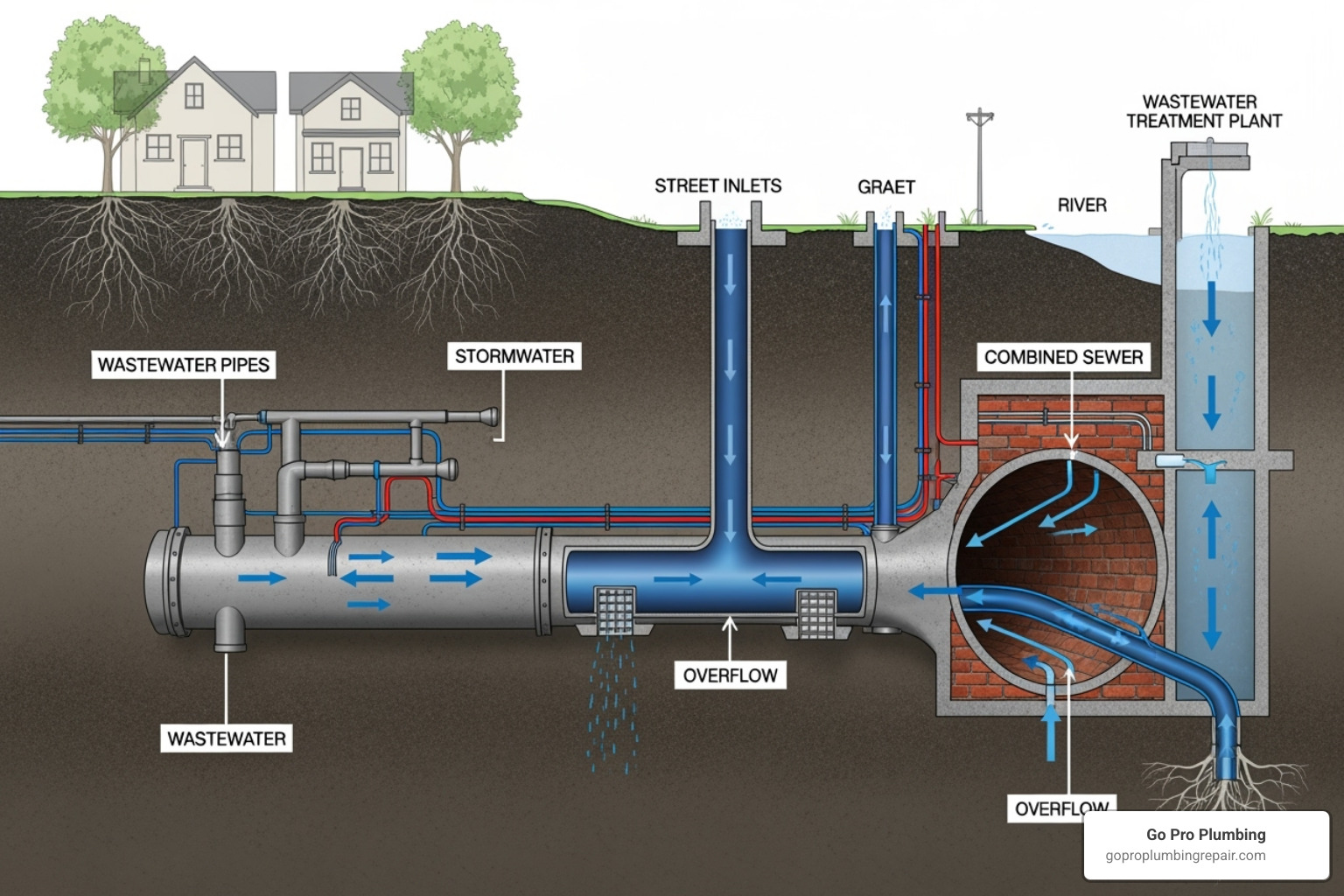
Your home’s wastewater travels through a sanitary sewer. These pipes are designed to carry contaminated water from toilets, sinks, and showers to a wastewater treatment plant for purification. In contrast, storm sewers manage rainwater runoff from roofs and streets. This water typically flows untreated directly into nearby rivers or lakes to prevent flooding.
Some older cities use combined sewers that handle both wastewater and stormwater in a single pipe. During heavy rain, these systems can overflow, releasing untreated sewage into local waterways. This risk is why modern cities separate these systems. Understanding your local sewer system can clarify which type serves your neighborhood.
Property Owner vs. Municipal Responsibility
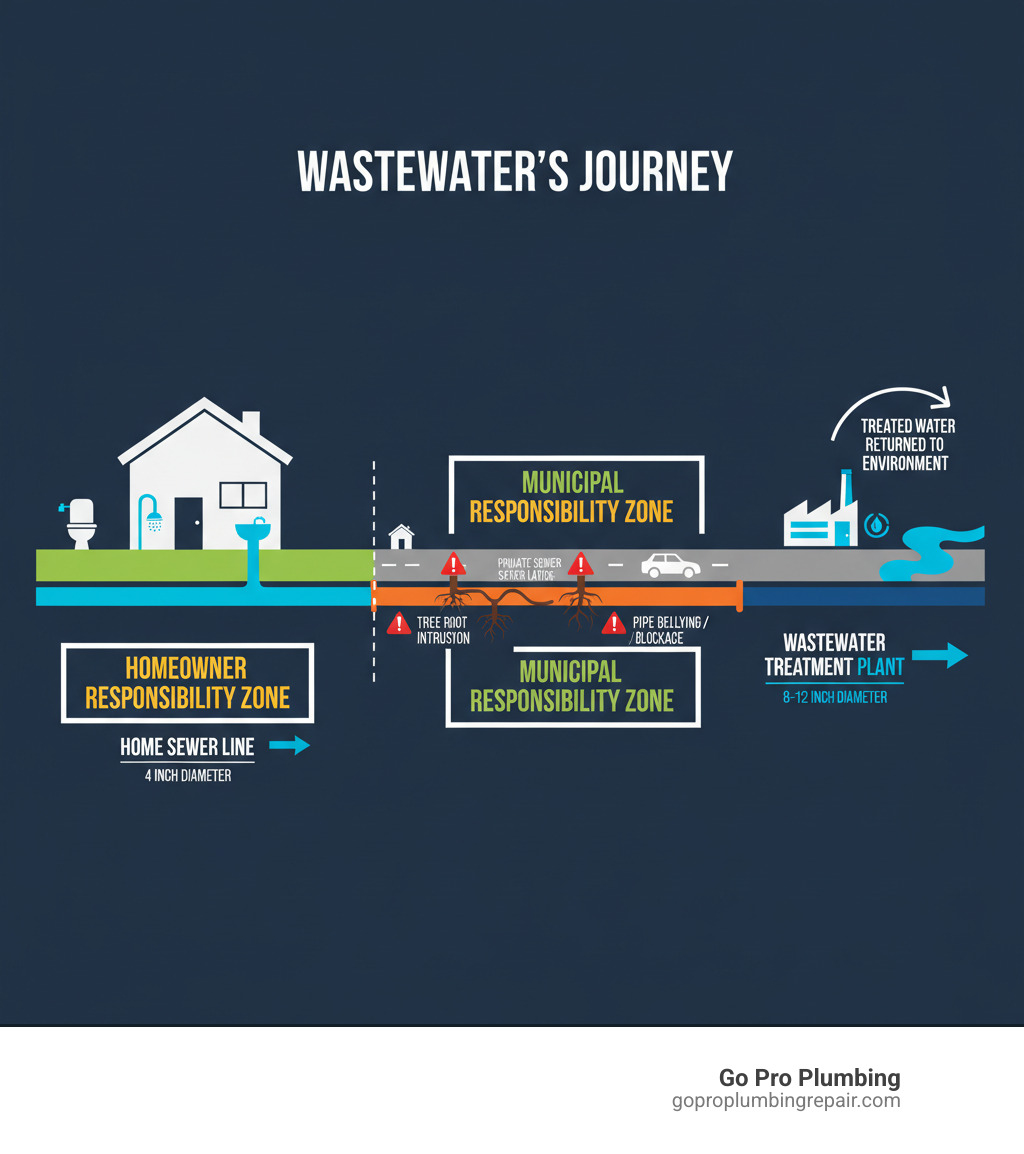
So, who owns your sewage line? The answer is both you and your city, but you each own different sections.
-
Your Responsibility: The pipe running from your home’s foundation to your property line is called the private sewer lateral. You are responsible for all maintenance and repairs on this section. Any clogs, cracks, or root invasions here are on you to fix.
-
City’s Responsibility: Once the pipe crosses your property line and connects to the larger city sewer main under the street, it becomes the municipality’s responsibility. These main lines collect wastewater from the entire neighborhood.
The dividing line can sometimes be tricky to pinpoint. If you have a backup, a licensed plumber can determine if the problem is on your side or the city’s. If the issue is on the city side, you’ll report it to your local public works department. We’ve helped countless Northern California homeowners steer these situations. For expert help with your sewer service line, check out our sewer line services in Sacramento, CA, and we’ll get your system flowing smoothly again.
Recognizing Trouble: Signs of a Failing Sewage Line
Your plumbing system often sends signals when trouble is brewing. Recognizing these early warnings can mean the difference between a simple repair and a costly plumbing emergency.
Common Causes of Sewage Line Damage
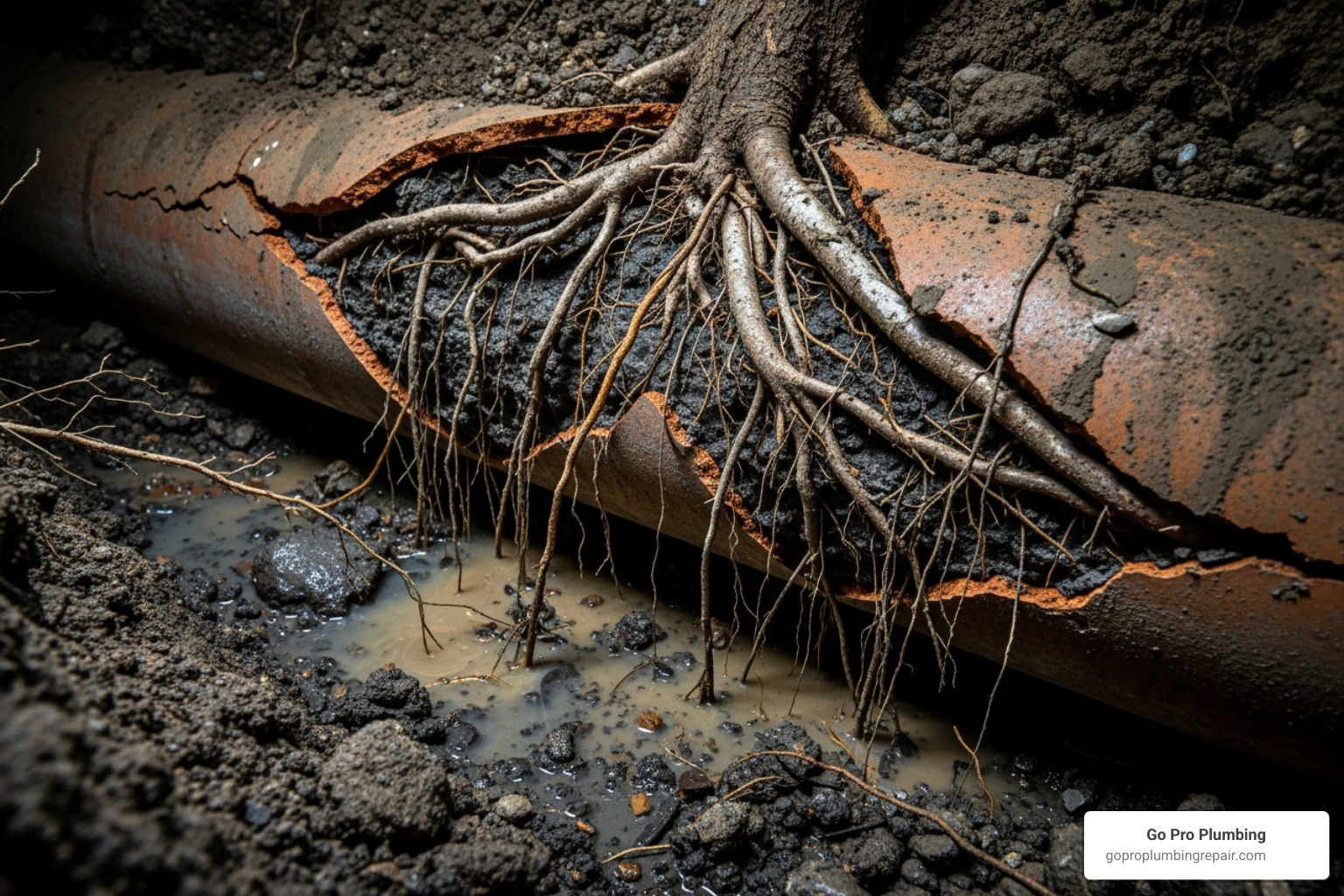
Several factors can cause your sewage line to fail over time. Tree roots are a primary culprit, seeking moisture and nutrients inside pipes and causing blockages or cracks. Grease and oil poured down drains can solidify and build up, narrowing the pipe until it’s completely blocked. The age and material of your pipes also matter; older clay pipes (lifespan 50-60 years) are brittle, while cast iron pipes (75-100 years) can corrode and rust. Modern PVC pipes last 100+ years and are more resistant to these issues. Other causes include ground shifting from soil erosion or seismic activity, and flushing foreign objects like “flushable” wipes, which don’t break down and create massive clogs. For a deeper dive, visit our guide on sewer line blockages.
Key Warning Signs Your Sewage Line Needs Attention
Don’t ignore these signs that your main sewage line may have a problem:
- Multiple Slow Drains: If your toilet, shower, and sink all drain slowly at the same time, the blockage is likely in the main line, not an individual drain.
- Toilet Backups: Water backing up into a shower or tub when you flush a toilet is a classic sign of a main line clog.
- Persistent Sewage Smell: A foul odor from drains or in your yard indicates that wastewater isn’t flowing away properly.
- Gurgling Sounds: Strange noises from drains or toilets often mean air is trapped in the pipes due to a blockage.
- Lush Patches in the Yard: Unusually green or soggy spots in your lawn can be caused by a leaking sewage line fertilizing the grass from below.
- Raw Sewage: If you see raw sewage surfacing in your yard, you have a serious problem that requires immediate professional help.
Catching these symptoms early can prevent extensive property damage and health hazards. If you’re experiencing any of them, our team can diagnose the issue. Learn more about dealing with a main line clog and the available solutions.
The Repair & Replacement Process: Methods and Costs
When your sewage line breaks, the cost can vary significantly based on factors like pipe accessibility, the length of pipe needing repair, and the chosen method. Minor repairs might start around $650, but a full replacement can range from $5,000 to $25,000 or more. Most average projects fall in the $4,000 to $10,000 range. The good news is that modern options can save you money and protect your yard. We’re here to help you steer these decisions with our comprehensive sewer line repair services.
Trenchless vs. Traditional Sewer Repair Methods
Fixing a sewage line no longer automatically means destroying your yard. Trenchless technology has revolutionized sewer repairs, though traditional methods still have their place.
| Method | Cost (per linear foot) | Time | Disruption | Effectiveness |
|---|---|---|---|---|
| Trenchless: Pipe Lining | $150 – $250 | 1-2 days | Minimal (1-2 small access points) | Creates new pipe within old; durable, seamless |
| Trenchless: Pipe Bursting | $150 – $250 | 1-2 days | Minimal (2 small access points) | Replaces old pipe with new; strong, full diameter |
| Traditional: Excavation | $55 – $250 | 3-5+ days | High (large trench, landscape damage) | Direct access, full replacement; good for collapsed pipes |
Trenchless methods are often preferred for their minimal disruption. Pipe lining creates a new, seamless pipe inside the old one by inserting a resin-coated liner and curing it in place. It’s ideal for fixing cracks and root intrusion. When a pipe is too damaged for lining, pipe bursting pulls a brand-new pipe through the old one, fracturing the old pipe outward while simultaneously installing the replacement. Both methods are fast and save your landscaping.
Traditional excavation involves digging a trench to physically remove and replace the damaged pipe section. While highly disruptive and requiring landscape restoration, it’s sometimes the only option for completely collapsed pipes. We’re proud to offer advanced trenchless sewer replacement options that minimize disruption while delivering lasting results.
Factors That Influence Repair and Replacement Costs
Beyond the method, other costs can arise. Clearing stubborn clogs with hydro-jetting (high-pressure water) can cost $300 to $1,100, while professional tree root removal runs a similar price. The pipe material for a replacement also affects the price, with PVC being more affordable than cast iron. Finally, don’t forget to budget for permit fees required by your city and potential landscape restoration costs if excavation is necessary. The best approach is to get a professional quote to understand the most cost-effective solution for your specific sewage line needs.
Homeowner’s Guide to Sewer Line Management
Taking care of your sewage line is like maintaining your car—a little attention now prevents big headaches later. Here’s how to keep everything flowing smoothly.
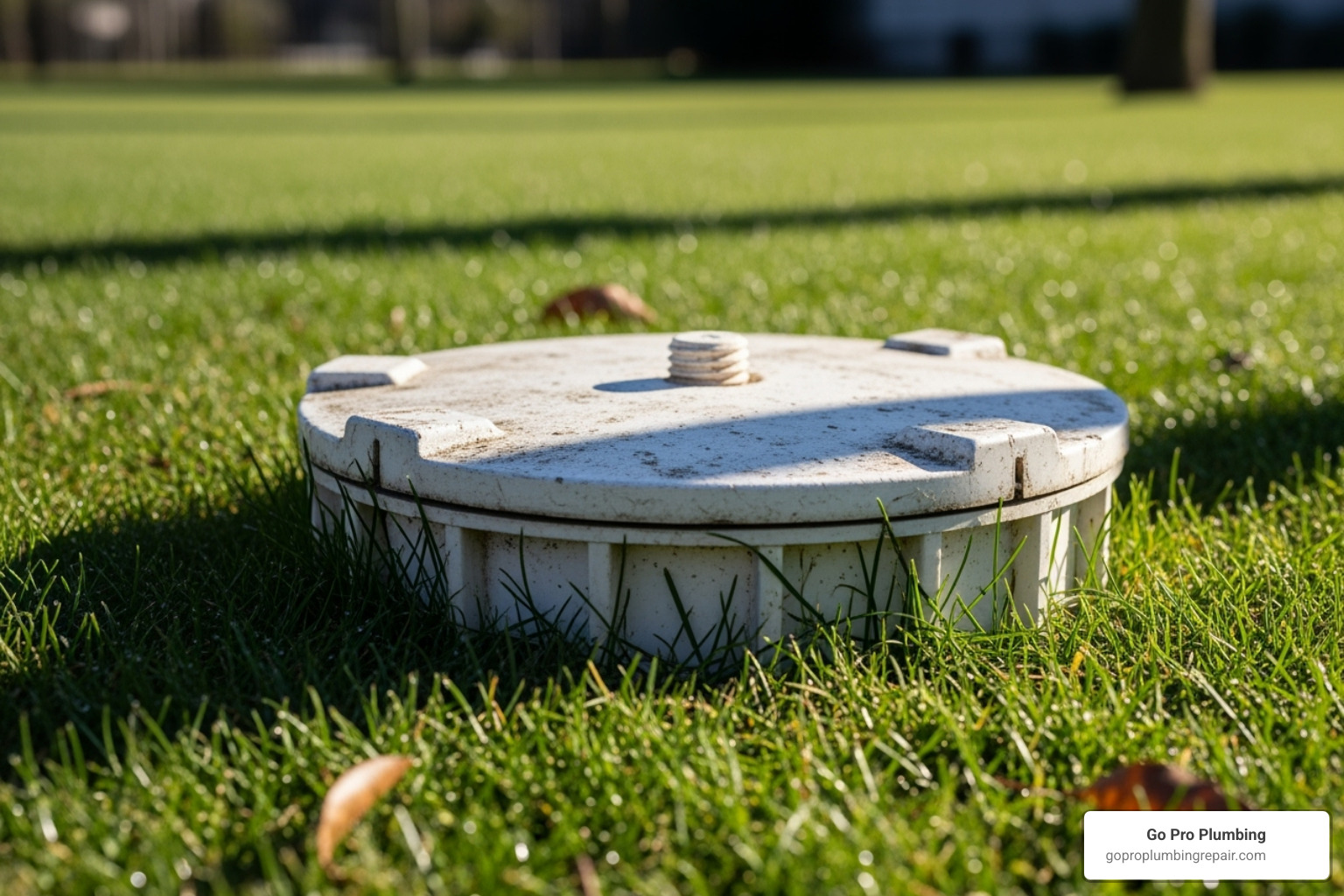
Locating Your Sewer Cleanout
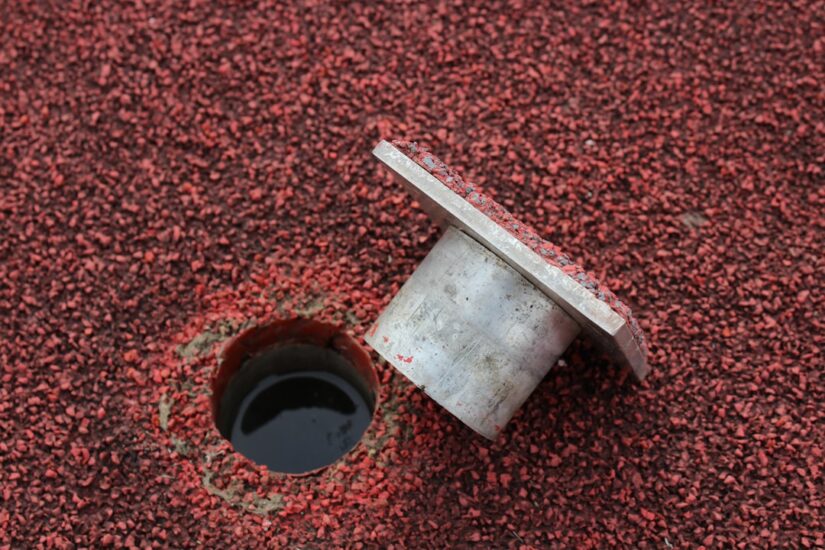
Your sewer cleanout is a capped pipe providing direct access to your sewage line for inspections and cleaning. Knowing its location saves time and money during a plumbing issue. Look for a 4-inch capped pipe in your basement, crawl space, or utility room. In milder climates like Northern California, it’s more likely found outside near your home’s foundation, often close to the main bathroom. If you can’t find it, your city’s public works department may have records of its location. This access point is what plumbers use for camera inspections and cleaning equipment. For help, our professional sewer cleaning team is ready to assist.
Preventative Maintenance for a Healthy Sewer Line
A few simple habits can save you thousands in repairs. The golden rule is to only flush human waste and toilet paper. Everything else goes in the trash.
- Be Mindful of Drains: Never pour grease and oil down the sink, as they solidify and cause clogs. So-called “flushable” wipes, along with feminine hygiene products and dental floss, do not break down and are a leading cause of major sewer backups.
- Schedule Regular Inspections: If you have an older home or large trees, a professional camera inspection every few years can spot cracks, root intrusion, or corrosion before they become emergencies. Our professional sewer line cleaning services include video inspections to catch problems early.
- Landscape Carefully: Tree roots are drawn to the moisture in your sewage line. Plant new trees a safe distance away and always know where your line runs before doing any major digging in your yard.
Health and Environmental Impacts
A failed sewage line is more than a plumbing problem; it’s a health hazard. Raw sewage contains harmful bacteria and pathogens like E. coli and salmonella. A leak can lead to contaminated soil, pollute groundwater, and cause water pollution in local streams. Furthermore, persistent moisture can damage your home’s foundation and promote the growth of mold, which can trigger allergies and respiratory issues. Proper management is crucial for protecting your family, property, and community. For more on wastewater systems, see this Wastewater Engineering overview.
Frequently Asked Questions about Sewer Lines
Here are answers to some of the most common questions we hear from homeowners about their sewage lines.
How long do sewer lines last?
The lifespan of your sewage line depends almost entirely on the pipe material. Clay pipes, common in homes built before the 1970s, last about 50-60 years but are prone to root intrusion. Cast iron pipes can last 75-100 years but are vulnerable to internal corrosion and rust. Modern PVC pipes are the most durable, with a lifespan of over 100 years, as they resist corrosion and roots effectively. Regular maintenance can extend the life of any pipe material.
Who is responsible for the sewer line, me or the city?
It depends on where the problem is. The homeowner is responsible for the private sewer lateral, which is the pipe running from the house to the property line or main city connection. The municipality is responsible for the sewer main, the larger pipe usually located under the street. Rules can vary by city, so it’s always a good idea to check with your local public works department. A plumber can perform a camera inspection to determine the exact location of a blockage or break.
Can I repair a cracked sewer pipe without digging up my yard?
Yes! In many cases, trenchless repair methods can fix a sewage line with minimal digging. Instead of a large trench, these techniques use one or two small access points. Pipe lining creates a new, durable pipe inside the old one, sealing cracks and holes. Pipe bursting pulls a brand-new pipe through the old one, breaking the damaged pipe apart as the new one takes its place. These methods are faster, less disruptive, and just as effective as traditional excavation for many types of damage. To see if this is an option for you, check out our trenchless sewer replacement options.
Conclusion
Your sewage line may be out of sight, but your home’s health and function. Understanding how it works, recognizing the warning signs of trouble, and knowing your repair options empowers you to be a proactive homeowner.
The most important takeaway is this: catching problems early saves you money, time, and stress. A slow drain or gurgling toilet is a warning sign. Acting on it can prevent a catastrophic backup that damages your property and endangers your family’s health. Simple preventative habits, like being careful about what you flush and scheduling occasional inspections, are the smartest investments you can make in your plumbing system.
Your home deserves reliable plumbing, and you deserve peace of mind. For expert diagnosis and service in Northern California, trust Go Pro Plumbing. We bring same-day service and outstanding customer care to every sewage line issue, from routine maintenance to emergency repairs.
Contact us for all your sewer line service needs and let us help you keep everything flowing smoothly.