
Don’t Get Flushed: A Guide to Fixing Leaking Copper Toilet Pipes
By Brian on February 4, 2026
Why a Toilet Copper Pipe Leak Demands Your Immediate Attention
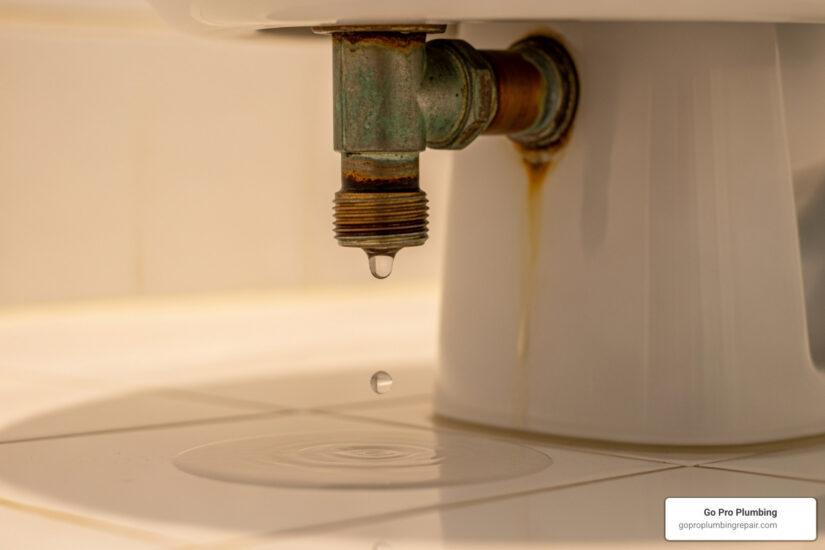
A toilet copper pipe leak might start as a small drip, but it can quickly become a costly nightmare. Whether it’s a pinhole leak, a corroded supply line, or water pooling at your toilet’s base, knowing how to fix it can save you thousands in water damage repairs.
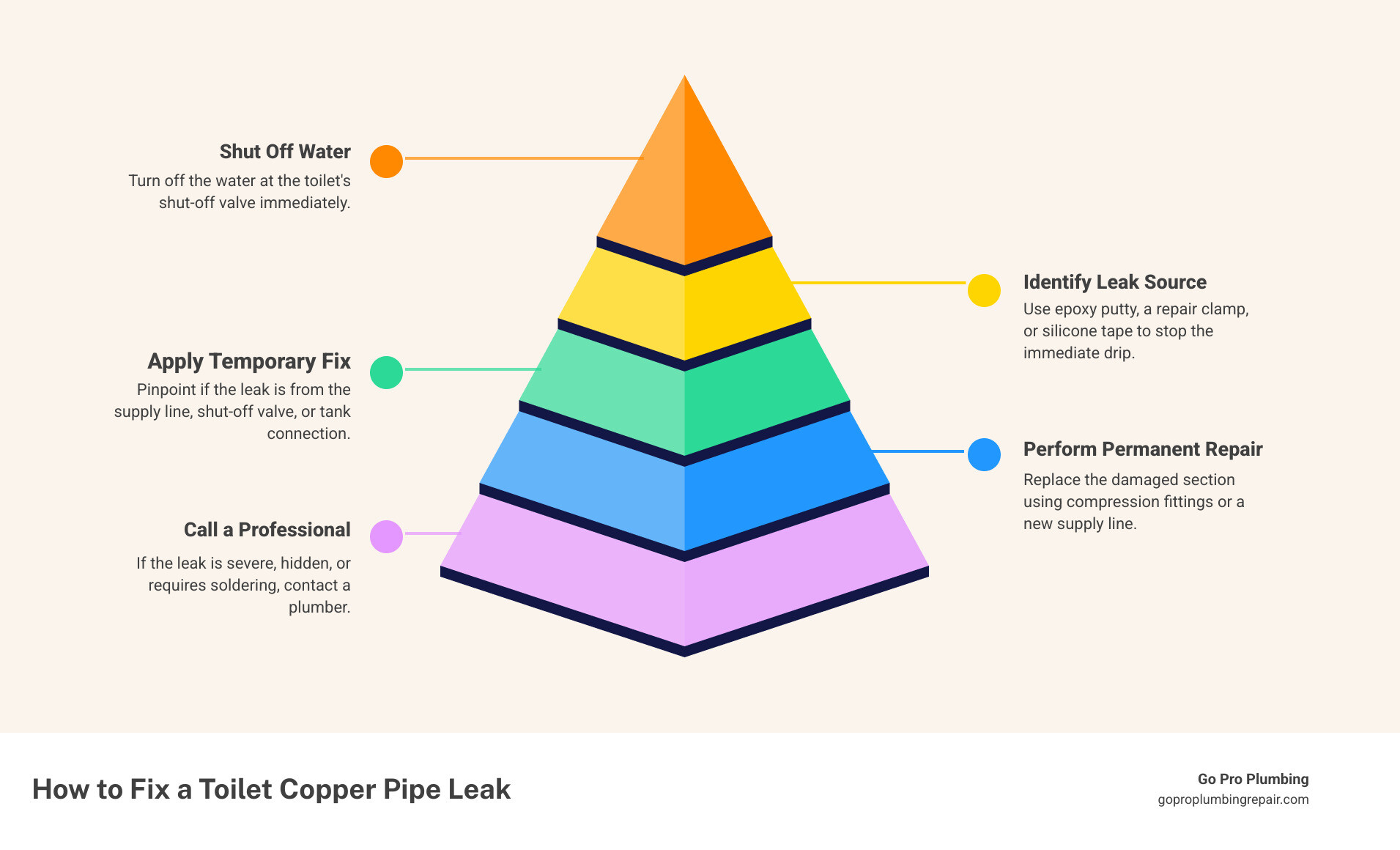
Quick Answer: How to Fix a Toilet Copper Pipe Leak
- Turn off the water at the toilet’s shut-off valve
- Identify the leak source (supply line, shut-off valve, or tank connection)
- Apply a temporary fix (epoxy putty, repair clamp, or silicone tape)
- Replace the damaged section using compression fittings or a new supply line
- Call a professional if the leak is severe, hidden, or requires soldering
According to the EPA, household leaks can waste nearly 1 trillion gallons of water annually nationwide. A single toilet leak can waste up to 6,000 gallons per day, costing as much as $101 daily. Even a small drip can waste 30 gallons per day, adding about $0.51 to your daily water bill.
Copper pipes, a staple in residential plumbing, can last up to 70 years. However, factors like hard water, high water pressure, and corrosion can cause pinhole leaks that worsen over time. If ignored, these leaks lead to water damage, mold, and structural rot in your bathroom.
This guide will walk you through identifying the leak source, applying temporary fixes, and making permanent repairs—whether you’re a confident DIYer or need to know when to call Go Pro Plumbing for professional help.
First Things First: Identifying the Source of the Leak
When you suspect a toilet copper pipe leak, the first step is always to confirm the leak and pinpoint its exact location. Ignoring the signs can lead to significant headaches and expenses down the line. We’ve seen in Sacramento and Rancho Cordova how quickly a small drip can become a major issue.
Signs that indicate a toilet’s copper pipe is leaking often include:
- Puddles: The most obvious sign is water pooling around the base of your toilet or underneath the tank.
- Musty smells: A persistent damp or musty odor in your bathroom can indicate hidden moisture and potential mold growth, a common consequence of overlooked leaks.
- Increased water bill: An unexplained spike in your water bill is a strong indicator of a leak somewhere in your home’s plumbing system. A medium toilet leak, for instance, can waste 250 gallons of water per day, costing approximately $4.22 daily.
- Sound of running water: If you hear your toilet running or refilling when it hasn’t been flushed, it’s a classic sign of a leak within the tank or its connections.
- Water stains: Discoloration on walls, ceilings (if the toilet is on an upper floor), or the bathroom floor can betray a hidden leak.
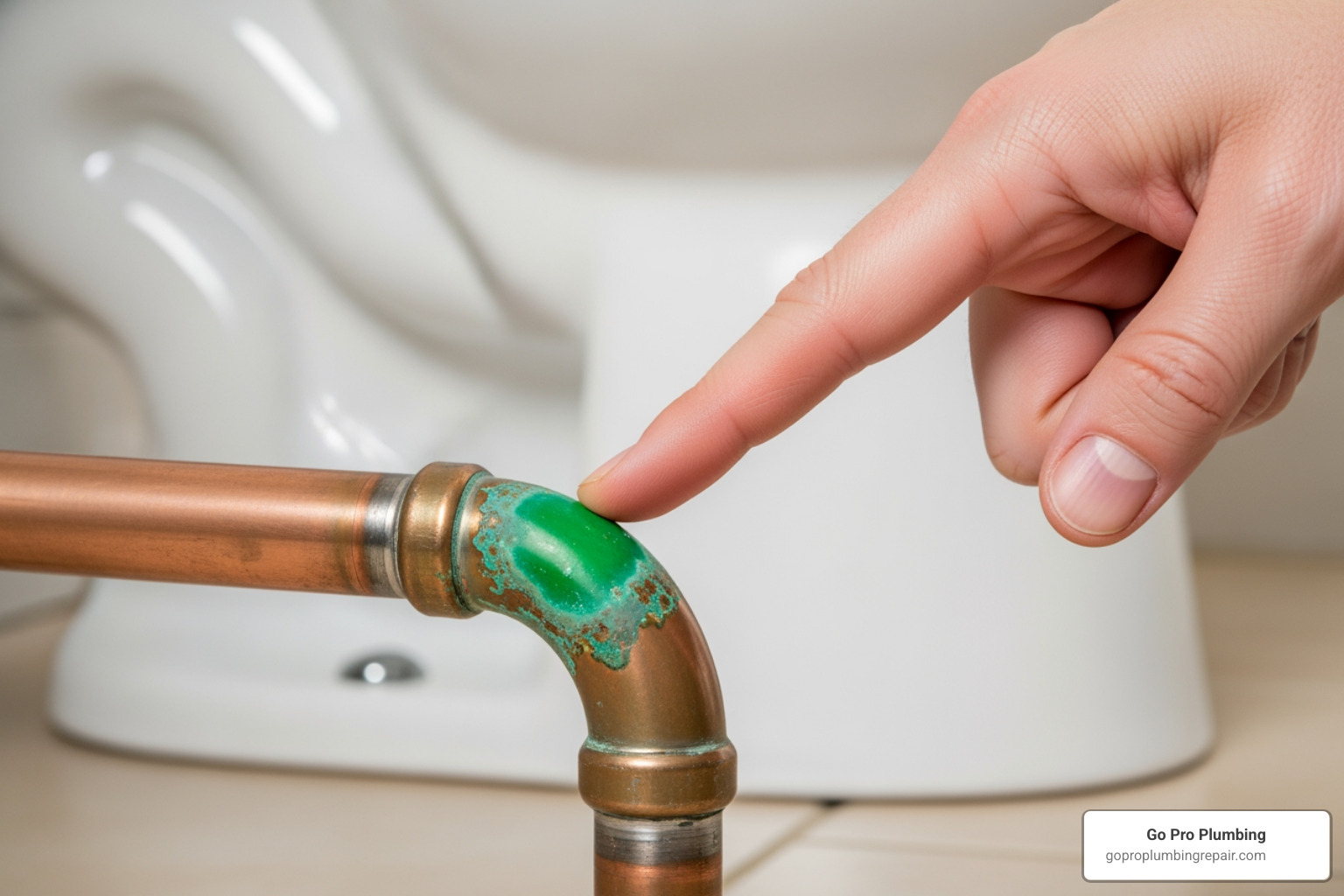
- Corrosion or discoloration on pipes: Green or blue discoloration on copper pipes, especially near joints or connections, can signal active corrosion and potential leaks.
Differentiating between these leaks is crucial for effective repair. For comprehensive information on addressing issues within the toilet tank itself, explore our guide on Toilet Tank Repair.
Common Causes of a Toilet Copper Pipe Leak
Copper pipes are durable but not invincible. Several factors can lead to a toilet copper pipe leak:
- Corrosion and Pinhole Leaks: Mineral deposits or water pH imbalances can corrode the inside of copper pipes over time, creating tiny pinhole leaks. This is common in older homes.
- High Water Pressure and Water Hammer: Excessive water pressure stresses pipes. A “water hammer” effect—a banging noise when water flow stops abruptly—can weaken joints and cause leaks.
- Hard Water Minerals: High mineral content in water can build up inside pipes, increasing pressure and wear, which makes leaks more likely.
- Old Pipes: Copper pipes can last up to 70 years, but older pipes are naturally more prone to degradation and failure.
- Damaged Fittings and Poor Installation: Loose fittings, worn threads, or improper installation can create weak points that eventually leak.
Is It the Supply Line or the Toilet Tank?
It’s essential to distinguish between a leak originating from the copper supply line and one from within the toilet tank itself. Each requires a different approach.
- Supply Line Leaks: These typically occur at the connection points—either where the supply line connects to the shut-off valve on the wall, or where it connects to the fill valve assembly at the bottom of the toilet tank. Leaks can also happen along the copper pipe itself due to corrosion or damage.
- Shut-off Valve Leaks: The football-shaped shut-off valve near the bottom of the toilet, closest to the wall, is a common leak point. These leaks might stem from worn packing nuts or a faulty valve body.
- Fill Valve Connection Leaks: If water is dripping from the nut that secures the fill valve to the underside of the tank, or from the fill valve’s refill tube, the issue is likely with the fill valve connection or assembly.
- Tank-to-Bowl Gasket Leaks: If you see water leaking on the floor from between the tank and the bowl, especially after flushing, it’s often due to a faulty tank-to-bowl seal or loose mounting bolts.
- Cracked Porcelain: Less common, but a crack in the toilet tank itself can lead to leaks. This usually requires replacing the tank or the entire toilet.
The easiest way to diagnose internal tank leaks is with the dye test method:
- Flush the toilet and wait about 5 minutes for the tank to completely refill.
- Add a few drops of food coloring (or a leak detector tablet) to the water in the tank.
- Wait for at least 15-20 minutes without flushing the toilet.
- If any colored water appears in the toilet bowl, you have a leak from the tank into the bowl, likely from a faulty flapper or flush valve.
For more detailed instructions on this simple yet effective diagnostic, refer to our guide on How to perform the dye test.
The Risks of Ignoring a Leaky Pipe
Ignoring a toilet copper pipe leak will only make the problem worse and more expensive. The risks are substantial:
- Water Damage: A continuous drip can cause significant damage to your floor, subfloor, and the ceiling below. Particle board is especially vulnerable to water saturation and rot.
- Mold Growth: Persistent moisture creates an ideal environment for mold and mildew, which can cause musty odors and pose health risks.
- Structural Rot: Prolonged water exposure can weaken wooden structures, leading to costly structural repairs and compromising your home’s integrity.
- High Water Bills and Wasted Water: Toilet leaks are notorious water wasters. According to the U.S. Environmental Protection Agency (EPA), household leaks can waste nearly 1 trillion gallons of water annually nationwide. A single large toilet leak can waste thousands of gallons and add hundreds of dollars to your utility bills, wasting a precious resource in Northern California.
If you suspect a hidden leak or are overwhelmed by the issue, it’s always best to consult with experts. Learn more about professional assistance for these problems on our Plumber for Leaking Toilet page.
Stop the Drip: Temporary Fixes for a Leaking Copper Pipe
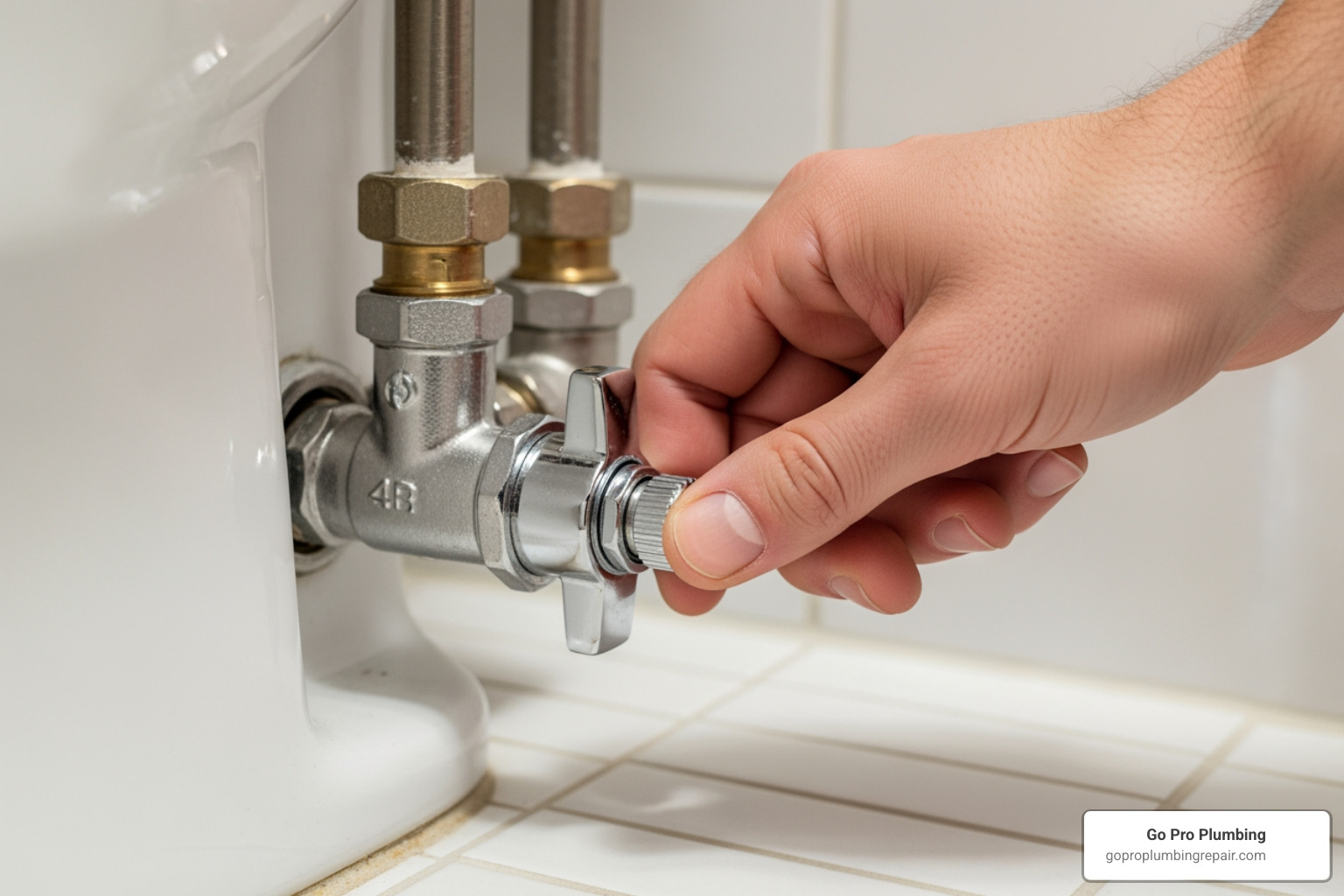
When you find a toilet copper pipe leak, your first priority is to stop the immediate flow of water to prevent further damage. Safety first! Always turn off the water supply to the toilet before attempting any repairs. Locate the football-shaped shut-off valve near the bottom of the toilet, closest to the wall, and turn it clockwise until it stops. After shutting off the water, flush the toilet to drain any remaining water from the tank and supply line. Then, grab a bucket and some towels!
Here’s a quick comparison of common temporary fixes:
| Method | Ease of Use | Pressure Rating (approx.) | Typical Lifespan | Best For |
|---|---|---|---|---|
| Epoxy Putty | Medium | High (up to 100 PSI) | Weeks to Months | Pinhole leaks, small cracks |
| Pipe Repair Clamp | Easy to Medium | High (up to 100 PSI) | Months to Years | Small cracks, holes, damaged joints |
| Silicone Tape (Self-Fusing) | Easy | Low to Medium | Days to Weeks | Low-pressure lines, hairline cracks |
Using Epoxy Putty for Pinhole Leaks
Epoxy putty is a great temporary solution for small pinhole leaks or hairline cracks in a copper pipe. It’s a two-part compound that, once mixed, hardens to create a watertight seal.
- Clean the Pipe: Turn off the water and drain the line. Thoroughly clean and dry the area around the leak. The putty needs a clean, dry surface to adhere properly. Use sandpaper or a wire brush to remove any corrosion or debris.
- Kneading the Putty: Wear gloves, as epoxy putty can heat up during the mixing process. Cut off a piece of the putty and knead it until it’s a uniform color and pliable.
- Applying Over the Leak: Immediately apply the kneaded putty directly over the pinhole or crack, pressing firmly to ensure good contact. Build up a layer about 1/2-inch thick, tapering the edges.
- Curing Time: Allow the putty to cure according to the manufacturer’s instructions, typically 5 to 10 minutes, before turning the water back on. This allows it to harden and form a strong seal.
While effective for stopping the immediate leak, remember this is a temporary fix. You’ll still need a permanent repair. You can find various materials for this and other toilet repairs by checking our Plumbing Materials for Toilet guide.
Applying a Pipe Repair Clamp
A pipe repair clamp is another excellent temporary solution, particularly for small cracks or holes that might be a bit larger than what epoxy putty can handle alone. These clamps consist of a rubber gasket and a metal casing that bolts around the pipe.
- Positioning the Rubber Gasket: With the water off and the pipe drained, clean the pipe surface. Position the rubber gasket directly over the leak, ensuring it fully covers the damaged area.
- Tightening the Clamp: Place the metal casing around the pipe, aligning it so the rubber gasket is centered. Tighten the bolts on the clamp evenly with a wrench until the leak stops. Don’t overtighten, as this could damage the pipe.
Pipe repair clamps are robust and can withstand more than 100 PSI of water pressure, making them a reliable temporary fix. For more general DIY plumbing solutions, our article on DIY Plumbing Repairs for Common Issues offers valuable insights.
Wrapping with Self-Fusing Silicone Tape
Self-fusing silicone tape is a quick and easy option for low-pressure lines or hairline cracks. It’s a non-adhesive tape that bonds to itself, creating a waterproof barrier.
- Stretching the Tape: Turn off the water and dry the pipe. Start by wrapping the tape a few inches before the leak, stretching it tightly as you go.
- Overlapping Layers: Continue wrapping, overlapping each layer by at least 50%, until the leak is completely covered. Build up several layers over the damaged area.
- Low-Pressure Lines: This method is best suited for low-pressure applications and not typically recommended for pinhole leaks under high pressure, as it may not hold as effectively as epoxy or a clamp. It’s a good “get by” solution until a more robust repair can be made.
The Permanent Solution: How to Properly Repair Your Toilet’s Copper Pipe
While temporary fixes buy you time, a permanent repair for a toilet copper pipe leak is essential for your plumbing’s long-term integrity. Deciding between DIY and professional repair depends on your comfort level and the leak’s complexity. Simple supply line replacements are manageable, but for leaks involving soldering, calling Go Pro Plumbing is the best choice.
For permanent repairs, you’ll generally need a few key tools:
- Pipe cutter: Essential for making clean, straight cuts on copper pipes.
- Deburring tool: Used to smooth the inside and outside edges of a cut pipe, crucial for proper fitting.
- Wrenches: Adjustable wrenches for tightening compression fittings.
If you’re looking for broader toilet repair solutions, our Toilet Water Line Repair guide provides more context.
Long-Term Solutions for a Toilet Copper Pipe Leak
The most effective long-term solution is to replace the damaged pipe section entirely. This removes the compromised material and establishes a fresh, leak-free connection. For DIYers, solderless connections like compression or push-to-connect fittings (e.g., SharkBite) offer a straightforward way to do this without needing soldering equipment. You can find these and other components in a Toilet Repair Kit.
Using Compression Fittings for a Solder-Free Repair
Compression fittings are a popular solder-free method for repairing a toilet copper pipe leak. They create a watertight seal by compressing a ferrule (a small metal ring) around the pipe.
- Cutting Out the Damaged Pipe: After turning off the water and draining the line, carefully cut out the leaking section of the copper pipe using a pipe cutter. Aim for clean, straight cuts.
- Deburring Edges: Use a deburring tool to smooth both the inside and outside edges of the newly cut pipe. This prevents damage to the ferrule and ensures a proper seal.
- Assembling the Fitting: Slide the compression nut, followed by the ferrule, onto each end of the existing pipe. Then, insert the new piece of copper pipe (or a compression coupling) into the fitting body.
- Tightening Nuts: Hand-tighten the compression nuts onto the fitting body, then use two wrenches (one to hold the fitting body, one to turn the nut) to tighten them about a quarter to half turn more. Do not overtighten, as this can damage the fitting or the pipe.
- Checking for Leaks: Slowly turn the water supply back on and carefully inspect the new connection for any signs of leaks.
Replacing the Entire Toilet Supply Line
Sometimes, replacing the entire toilet supply line is the most reliable solution, especially if it’s old or corroded. Flexible braided stainless steel lines are a popular, easier-to-install alternative.
- Braided Steel Lines: These are highly recommended for their flexibility, ease of installation, and resistance to corrosion.
- Measuring for Replacement: Measure the distance between your shut-off valve and the toilet tank’s fill valve connection to determine the correct length for your new supply line.
- Attaching to Shut-Off Valve: Ensure the water is off. Disconnect the old supply line. Attach one end of the new braided steel line to the shut-off valve, hand-tightening it first, then giving it an additional quarter turn with a wrench.
- Connecting to Fill Valve: Attach the other end of the supply line to the fill valve connection at the bottom of the toilet tank. Again, hand-tighten, then a quarter turn with a wrench. Avoid overtightening plastic connections.
- Check for Leaks: Slowly turn the water back on and observe both connections for any drips.
Prevention, Costs, and When to Call a Professional
Preventing a toilet copper pipe leak is always better than reacting to one. Regular maintenance can save you from costly repairs and water damage.
How to Prevent Future Copper Pipe Leaks
Proactive steps can significantly extend the life of your copper pipes:
- Pipe Insulation: Insulate pipes in unheated areas like crawl spaces to prevent freezing and bursting.
- Check for Corrosion: Regularly inspect visible pipes for green or blue discoloration and address it early.
- Avoid Harsh Chemicals: Use enzymatic cleaners instead of corrosive chemical drain cleaners.
- Monitor Water Pressure: High pressure (above 80 PSI) causes wear. Consider a pressure regulator to prevent stress and water hammer.
- Soften Hard Water: A water softener reduces mineral buildup, slowing corrosion.
- Get an Annual Inspection: A yearly professional inspection can catch issues before they escalate. For all your toilet needs, explore our Services: Toilets page.
What Is the Average Cost to Fix a Leaking Pipe?
The cost to fix a toilet copper pipe leak varies based on severity, location, and repair method.
- DIY Material Costs: Expect to spend $10-$50 for temporary fixes or $20-$100 for permanent parts like a new supply line.
- Professional Repair Cost: In Northern California, a professional repair typically ranges from $150 to $850, with an average around $500.
- Factors Affecting Cost: The price increases with the severity of the leak, if it’s in a hard-to-reach location (like inside a wall), or if emergency service is needed. Significant water damage can raise the total cost into the thousands.
For specific pricing on components, refer to our Cost to Replace a Toilet Shut-Off Valve guide.
When You Should Call a Professional Plumber
While some fixes are DIY-friendly, it’s smart to call a professional plumber for a toilet copper pipe leak in certain situations. Go Pro Plumbing is ready to help residents in Sacramento and Rancho Cordova.
Call a professional if:
- The leak is large, burst, or you have multiple leaks.
- You’re uncomfortable or lack the tools for a DIY repair.
- The repair requires soldering.
- The leak is on a main water line.
- You suspect a hidden leak in a wall or floor.
- Your toilet lacks a functional shut-off valve.
- You have recurring leaks, which may signal a larger system-wide problem.
For professional assistance with any plumbing issue, you can always Find Local Pros or contact us directly.
Frequently Asked Questions about Toilet Pipe Leaks
Can you patch a leaking copper pipe as a permanent fix?
No, patching a leaking copper pipe with materials like epoxy putty, repair clamps, or silicone tape is considered a temporary solution. While these methods can effectively stop a leak in the short term, they are not designed for long-term reliability. The damaged section of the pipe should eventually be cut out and replaced with new piping and fittings for a durable, permanent repair.
How do you fix a leaking copper pipe without soldering?
Fixing a leaking copper pipe without soldering is entirely possible thanks to modern plumbing technologies. The most common methods involve:
- Compression Fittings: These fittings use a nut and a ferrule that compress onto the pipe when tightened, creating a watertight seal. They are ideal for replacing small sections of damaged pipe.
- Push-to-Connect Fittings (e.g., SharkBite): These fittings simply push onto the pipe, creating an instant, secure, and watertight connection. They are very user-friendly and require no special tools beyond a pipe cutter and deburring tool.
Both options allow for a permanent repair without the need for a torch or soldering expertise.
How long do copper pipes last?
Copper pipes are known for their longevity and can last a significant amount of time, typically 50 to 70 years under optimal conditions. However, their actual lifespan can be affected by several factors, including:
- Water Quality: Hard water, high acidity (low pH), or high alkalinity (high pH) can accelerate corrosion.
- Water Pressure: Consistently high water pressure and water hammer can stress pipes and joints.
- Installation Quality: Poorly installed pipes or incompatible fittings can create weak points.
- Environmental Factors: Exposure to certain chemicals or abrasive materials can also degrade copper over time.
Regular inspections and addressing issues like corrosion or high water pressure can help maximize the lifespan of your copper plumbing system.
Don’t Let a Small Leak Become a Big Problem
A toilet copper pipe leak might seem minor at first, but as we’ve discussed, its potential for water damage, mold growth, and skyrocketing water bills is anything but small. We’ve walked through the crucial steps: identifying the source, applying temporary fixes to prevent immediate disaster, and implementing permanent solutions for lasting peace of mind.
Prompt action is key. Whether you tackle a temporary fix yourself or opt for a permanent repair, addressing the leak quickly protects your home and conserves water, a vital resource in Northern California. If you’re ever in doubt, or if the leak is beyond your comfort level, our team at Go Pro Plumbing is here to help. We pride ourselves on outstanding customer service and same-day service for our neighbors in Sacramento and Rancho Cordova.
Don’t let a small drip turn into a flood. Contact us for professional water line repair services and let us ensure your plumbing system is sound and efficient.