
Toilet Trouble? Replace That Float Valve FAST & EASY!
By Brian on June 10, 2026

Introduction: What is a Toilet Float Valve?
Changing a toilet float valve is a straightforward DIY repair that can stop a running toilet, fix weak flushes, and save you hundreds of dollars a year on your water bill. Here’s the quick answer:
Quick Steps to Change a Toilet Float Valve:
- Turn off the water at the shut-off valve behind the toilet
- Flush and empty the tank completely
- Disconnect the water supply line from the old fill valve
- Remove the mounting nut under the tank and lift out the old valve
- Install the new fill valve by inserting it into the tank opening
- Tighten the mounting nut from underneath
- Reconnect the water supply line and attach the refill tube
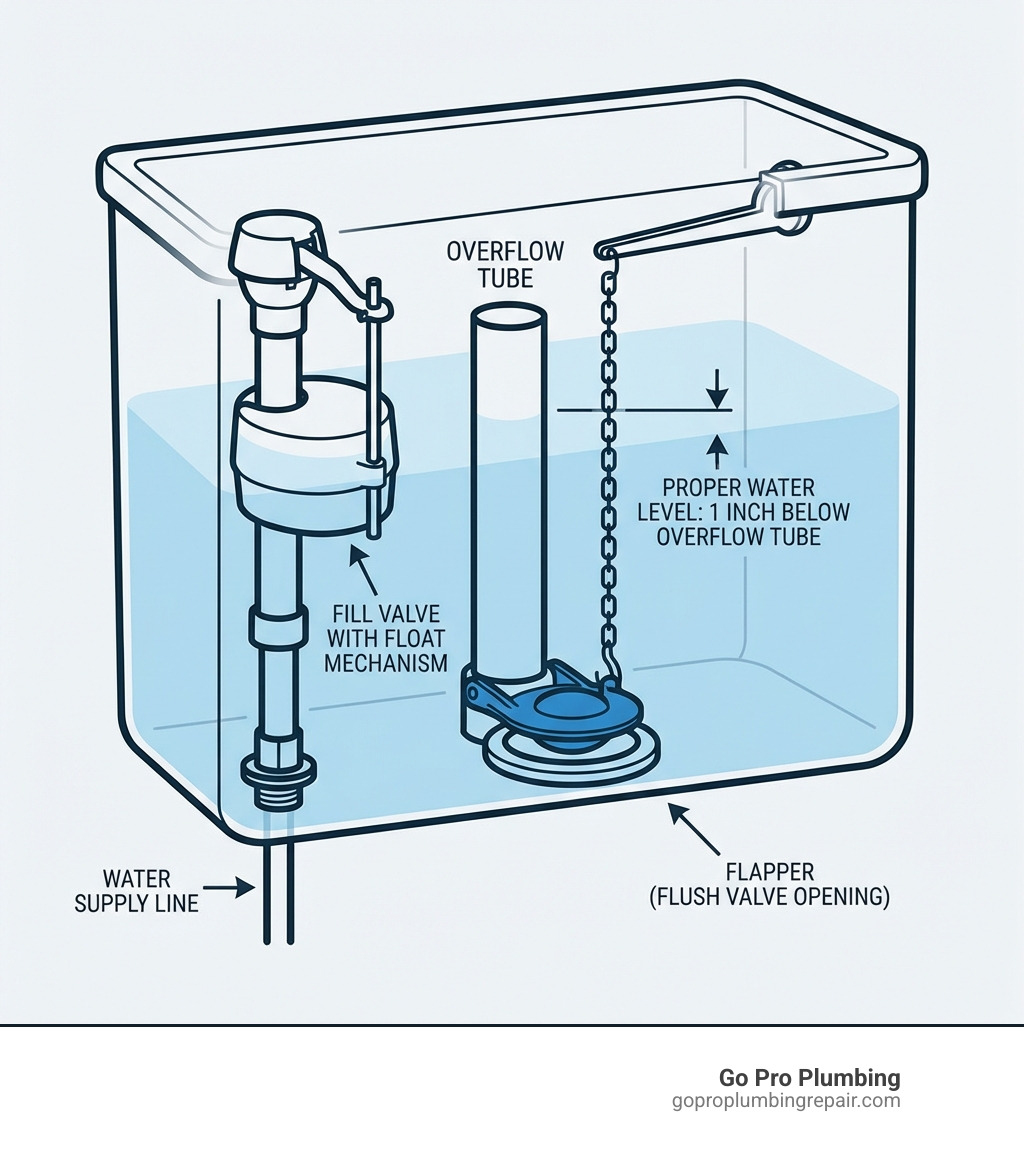
- Turn water back on and adjust the float to set water level 1 inch below the overflow tube
A toilet float valve (also called a fill valve or ballcock) is the mechanism inside your toilet tank that controls how much water flows in after each flush. It’s connected to a float that rises with the water level and signals the valve to shut off when the tank is full.
When this part fails, you’ll notice problems fast. A constantly running toilet can waste up to 200 gallons of water per day—that’s 73,000 gallons a year. With approximately 33% of homeowners reporting issues with their fill valves, this is one of the most common toilet repairs you’ll face.
The good news? A brand new toilet fill valve and float costs only about $20, and most homeowners can replace it in 15-30 minutes with basic tools. Fill valves typically last 5-7 years before needing replacement, so if your toilet is older or acting up, it’s probably time for a swap.
Simple changing a toilet float valve glossary:
- change toilet flusher
- replacing toilet flush valve without removing tank
- toilet flush valve replacement
Is It Time for a Replacement? Signs of a Faulty Float Valve
Is your toilet constantly making a spooky running sound, like a phantom flush that never quite ends? Or perhaps you hear a faint hissing noise, a subtle whisper of water escaping when it shouldn’t be? These are often the first clues that your toilet float valve is acting up. A faulty float valve can lead to a host of annoying and costly problems, from weak or incomplete flushes that leave you wondering if you’ll need to flush twice, to those mysterious “phantom flushes” where the toilet refills itself for no apparent reason. If your tank is also taking an eternity to refill after a flush, it’s a strong indicator that the fill valve is struggling.
Patience is a virtue, but a constantly running toilet is just wasting your precious water. According to industry insights, fill valves typically have a lifespan of 5-7 years. So, if your toilet is approaching its golden years or you’ve noticed these tell-tale signs, it might be time to consider How to Fix a Running Toilet by addressing the float valve.
When is Changing a Toilet Float Valve Necessary?
Sometimes, a simple adjustment is all that’s needed to get your toilet back in tip-top shape. But there are crucial times when changing a toilet float valve is the only real solution. How do you know the difference?
First, give your valve a good visual inspection. Do you see any visible cracks, chips, or damage to the plastic or rubber components? If so, replacement is likely on the cards. For older ballcock-style floats, if you shake the float ball and hear water sloshing inside, it means the ball has a leak and is no longer buoyant, making it ineffective. This definitely calls for a replacement.
Then, consider the age of the valve. As we mentioned, these parts generally last about 5-7 years. If your toilet’s fill valve is older than that, even if it seems to be working, it’s probably living on borrowed time. Replacing it proactively can save you from a bigger headache down the road.
Finally, mineral buildup can be a silent killer of fill valves, especially in areas with hard water. Over time, these deposits can accumulate internally, hindering the valve’s ability to open and close properly. While some minor cleaning might help, extensive mineral damage often means the valve needs to be swapped out for a new one. If adjustments don’t solve the problem, or the valve is visibly compromised, it’s time for a full replacement.
Identifying Your Toilet’s Float Valve Type
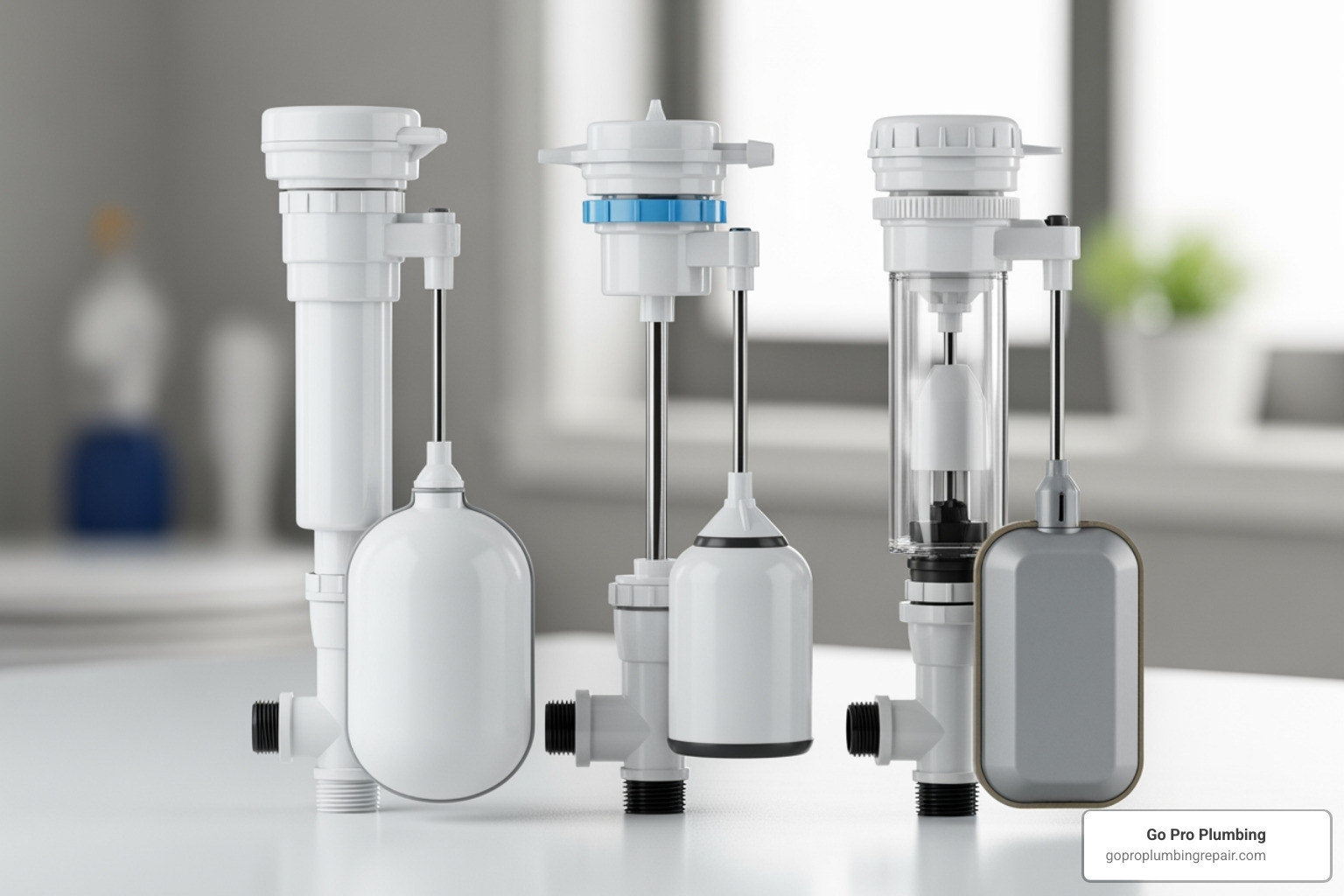
Before you dive into a repair, it’s helpful to know what type of float valve you’re dealing with. Knowing your valve type will guide your adjustment or replacement process. There are three main types you’ll commonly encounter:
| Type of Float Valve | Description | Common Characteristics |
|---|---|---|
| Ballcock Style | This is the oldest type, often found in older homes in Sacramento and Northern California. It features a large float ball (or sometimes a plastic cup) attached to a long metal or plastic arm. As the water level rises, the arm lifts the float, which then pushes a plunger to shut off the water. | Distinctive float ball, metal or plastic arm, often noisier during refill. |
| Float Cup Style | This is a more modern and common type in many contemporary toilets. Instead of a large ball, it uses a cylindrical “float cup” that slides up and down a shaft around the fill valve. As the water level rises, the cup moves up the shaft, triggering the shut-off mechanism within the valve body. | Compact, cylindrical float, quieter operation, often has an adjustment screw or clip on the shaft. |
| Internal Float Style | The newest design, where the float mechanism is completely integrated within the main body of the fill valve itself. You won’t see an external float ball or cup. These valves often have a rotating cap or an adjustment dial on top to set the water level. | No visible external float, very compact, often the quietest, adjustment usually involves twisting or sliding a part of the valve body. |
Most of the time, the float cup style is the current standard design found in new toilets. If you have an older home, especially those charming ones around Rancho Cordova, you might still find the classic ballcock style. Don’t worry, we’ll cover how to handle all of them!
Step-by-Step Guide to Changing a Toilet Float Valve
Ready to tackle this DIY plumbing adventure? We promise, it’s less daunting than it sounds! Changing a toilet float valve is a rewarding project that can save you a service call and give you a real sense of accomplishment. Just remember, safety first, always!
Tools and Materials Needed
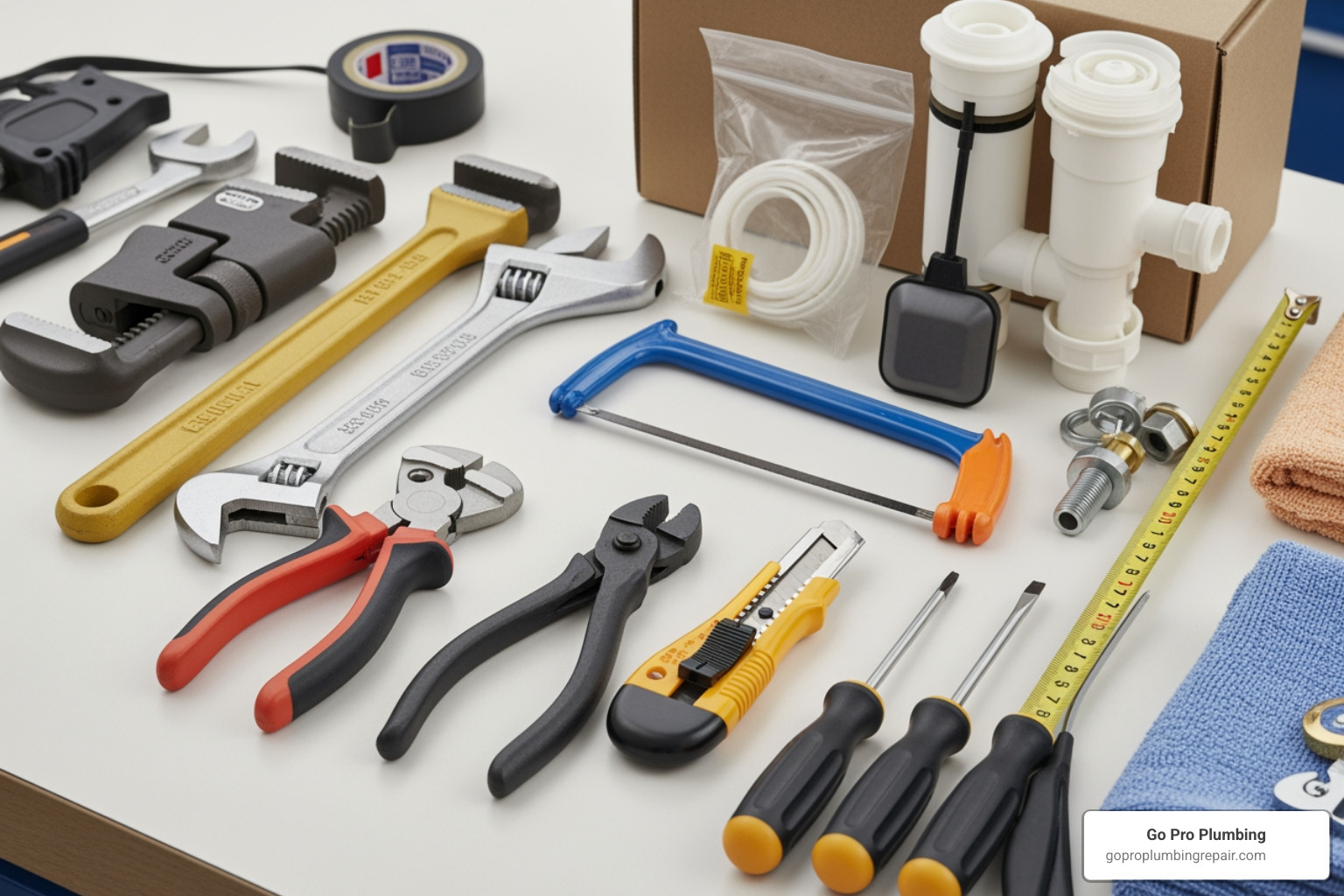
Before we get started, let’s gather our trusty sidekicks for this mission. You’ll need just a few basic tools, most of which you probably already have lying around your home:
- New Fill Valve Kit: This is your main hero. Make sure to get a universal one, as they fit most toilets. A brand new toilet fill valve and float typically costs about $20. Check out our Cost Replacing Toilet Fill Valve Guide for more details. We also have a great selection of parts if you’re looking for a full Toilet Repair Kit.
- Bucket: To catch any residual water when you disconnect the supply line.
- Sponge: For mopping up any remaining water in the tank.
- Adjustable Wrench or Channel-Lock Pliers: For loosening and tightening nuts.
- Old Towel: To wipe up spills and keep your workspace dry.
- Safety Glasses (Optional but Recommended): Just in case!
Preparation: Getting Ready for the Swap
A little preparation goes a long way in making this job smooth and mess-free.
Shut Off the Water Supply: This is perhaps the most crucial step! Locate the shut-off valve on the wall or floor beneath your toilet tank. Turn the handle clockwise until it stops. This cuts off the water supply to your toilet.
Flush the Toilet: Once the water is off, flush the toilet to empty the tank as much as possible. Hold the handle down to ensure all the water drains out.
- Empty the Tank Completely: Remove the toilet tank lid and set it aside carefully. Use your sponge to soak up any remaining water at the bottom of the tank. You want a clear, dry workspace.
Removing the Old Toilet Fill Valve
Now for the extraction!
- Disconnect the Water Supply Tube: Underneath the toilet tank, you’ll see the flexible water supply line connected to the bottom of the fill valve. Use your adjustable wrench or channel-lock pliers to loosen the coupling nut, turning it counter-clockwise. Be prepared for a small amount of water to drip out, which is why your bucket and towel are standing by! Once loose, disconnect the supply line.
- Unscrew the Mounting Nut: Look directly under the toilet tank, beneath where the fill valve enters. You’ll find a large plastic or metal mounting nut holding the fill valve in place. Use your wrench or pliers to loosen this nut. Sometimes, it helps to hold the fill valve inside the tank to prevent it from spinning while you loosen the nut from below.
- Lift Out the Old Valve Assembly: Once the mounting nut is completely removed, you can simply lift the old fill valve assembly straight out of the toilet tank. Say goodbye to your old, leaky friend! For more detailed guidance, check out our article on Removing Toilet Fill Valve.
Installing the New Fill Valve
Out with the old, in with the new!
- Adjust New Valve Height: Most new fill valves are adjustable in height to fit different tank sizes. Before inserting it, adjust the new valve so that its top is about 1 inch taller than the overflow tube (the tall, open tube in the center of the tank). This ensures the float has enough room to operate correctly.
- Insert into Tank Opening: Place the new fill valve into the hole at the bottom of the toilet tank. Make sure the rubber washer is properly seated on the shank of the valve from the inside of the tank for a watertight seal. Position the valve so that the water outlet nipple (where the refill tube connects) faces the overflow tube.
- Hand-Tighten Mounting Nut: From underneath the tank, slide the new mounting nut onto the fill valve’s shank and hand-tighten it firmly. Then, give it an extra quarter to half-turn with your wrench or pliers. Be careful not to overtighten, as this can crack the tank!
- Reconnect Water Supply Line: Reattach the flexible water supply line to the bottom of the new fill valve. Hand-tighten the coupling nut first, then use your wrench for a final snug turn. Again, avoid overtightening.
- Attach Refill Tube to Overflow Pipe: Take the small rubber refill tube that comes with your new fill valve. Connect one end to the nipple on the top of the new fill valve. Attach the other end to the top of the overflow tube using the provided clip. Ensure the tube has a smooth bend and isn’t kinked. This tube is crucial for refilling the toilet bowl after each flush. For specific instructions on various valve types, especially bottom-entry ones, our Replace Bottom Entry Fill Valve guide can be helpful.
Fine-Tuning Your New Valve: Adjusting the Water Level
You’re almost there! Now it’s time to set the correct water level, which is critical for efficient flushing and preventing water waste.
The general rule of thumb is that the water level should be about 1 inch below the top of the overflow tube. This ensures there’s enough water for a powerful flush without any spilling into the overflow, which would lead to a running toilet. Proper water level directly impacts flush efficiency, making sure your toilet performs its best every time.
How to Adjust Different Float Types
Once your new fill valve is installed, you’ll need to fine-tune the water level. The adjustment method depends on the type of float mechanism your new valve has (or if you’re just adjusting an existing one).
- Ballcock Float Adjustment:
- With an Adjustment Screw: Many ballcock valves have a small adjustment screw located on top of the fill valve where the float arm connects. Turn this screw clockwise to lower the water level or counterclockwise to raise it.
- Bending the Arm: For older models without a screw, you might gently bend the metal float arm. Bend it slightly downwards to lower the water level, or slightly upwards to raise it. Be gentle, as excessive force can damage the arm.
- Float-Cup Valve Adjustment: These are typically found on modern fill valves.
- With an Adjustment Screw: Look for a long plastic adjustment screw on the body of the float cup. Turning this screw clockwise will lower the water level, and counterclockwise will raise it.
- With a Release Clip: Some float cups have a release clip on the shaft of the fill valve. Squeeze or pinch this clip and slide the float cup up or down the shaft to adjust the water level.
- Internal Float Valve Adjustment: These newer valves often have the adjustment mechanism integrated into the top of the valve body.
- Rotating Cap/Dial: You might need to unclip the refill tube, then rotate the top cap or a specific dial on the valve 1/8th of a turn counterclockwise to open up it. Then, you can slide the entire top mechanism up or down to set the desired water level. Once set, rotate it 1/8th of a turn clockwise to lock it back in place, and re-clip the refill tube.
For a more visual guide on these adjustments, especially if you’re just trying to tweak your existing setup, check out this resource: How to Adjust a Toilet Float and Fill Valve Fast! – Toilet Haven .
Final Adjustments After Changing a Toilet Float Valve
With your new valve in place and the water level initially set, it’s time for the grand finale!
- Turn Water Supply On: Slowly turn the shut-off valve back counter-clockwise to restore water flow to the toilet. The tank should begin to fill.
- Check for Leaks: As the tank fills, carefully inspect all connections you tightened (the water supply line, the mounting nut, and the refill tube connection) for any drips or leaks. If you spot any, turn the water off immediately and gently tighten the connection further.
- Test the Flush: Once the tank is full and you’ve confirmed there are no leaks, give it a good flush! Observe the water level in the bowl and how efficiently the toilet flushes.
- Re-adjust Water Level if Needed: If the flush seems weak, or the water level in the bowl is too low, you might need to slightly raise the tank’s water level. If the toilet is still running after the tank fills, the water level is likely too high, and you’ll need to lower it. Make small adjustments and re-test until you achieve that perfect, powerful flush.
A well-adjusted fill valve is key to a happy toilet and a happy home. If you run into any snags during this final adjustment phase, our comprehensive guide to Toilet Tank Repair can offer additional troubleshooting tips.
Troubleshooting Common Issues
Even after changing a toilet float valve, you might encounter a few hiccups. Don’t worry, we’re here to help you troubleshoot!
- Running Toilet: If your toilet is still running after you’ve adjusted the float, the water level might still be too high, causing water to constantly drain into the overflow tube. Re-adjust the float to lower the water level slightly. Alternatively, the issue might not be the float valve at all but a leaky flapper (the rubber stopper at the bottom of the tank) or a worn fill valve seal.
- Weak Flush: A weak flush usually means there isn’t enough water in the tank to create the necessary force. Ensure your water level is set to about 1 inch below the overflow tube. If it’s still weak, you might have clogged rim jets (small holes under the rim of the toilet bowl) that need cleaning.
- Leaks at the Base: If you notice water leaking from the base of your toilet after installation, it could be a few things. First, check the water supply line connection to the fill valve – ensure it’s snug but not overtightened. Next, inspect the mounting nut underneath the tank; it might need a slight tightening. If the leak persists, it could indicate a problem with the tank-to-bowl gasket or even a crack in the toilet tank itself.
- Noisy Refill: A noisy refill, especially a loud banging or vibrating sound, is often a sign of water hammer, which means the water pressure is too high or there’s an issue with the pipes. Sometimes, a new fill valve can be a bit noisy initially, but if it’s excessive, check that all connections are secure.
For more in-depth solutions to these common problems, our guide on Toilet Flush Valve Problems can provide extra assistance.
Frequently Asked Questions about Toilet Float Valves
We know you might have more questions, so we’ve compiled some of the most common ones we hear from homeowners in Sacramento and Northern California.
How do I know if my toilet float is bad?
Your toilet float is likely bad if you experience any of these symptoms:
- Constant Running: The toilet keeps running even when the tank is full, or it frequently “tops off” without being flushed.
- Weak Flushes: There isn’t enough water in the tank to create a powerful flush, leading to waste not clearing properly.
- Hissing Sounds: You hear a subtle hiss of water escaping into the overflow tube, indicating the valve isn’t sealing completely.
- Visible Cracks or Damage: The float itself, or the arm connecting it, shows signs of wear, cracks, or deterioration.
- Water Sloshing Inside a Ball-Style Float: If you have an older ballcock-style float and shake the float ball, hearing water inside means it’s compromised and won’t float correctly.
How do I increase the flushing power of my toilet?
To boost your toilet’s flushing power, you generally need more water in the tank to create a stronger siphoning action. Here’s how:
- Raise the Water Level: The simplest solution is to adjust the float upwards to allow more water to fill the tank. The goal is to set the water level about 1 inch below the top of the overflow tube. This ensures maximum water volume without causing overflow.
- Clean Clogged Rim Jets: Over time, mineral deposits can clog the small holes (rim jets) under the rim of your toilet bowl. These jets help push water into the bowl during a flush. Use a small wire, an Allen wrench, or even a toothbrush to clear these openings.
Why does my toilet keep running after I adjusted the float?
It’s frustrating when you’ve just made an adjustment, and the toilet still runs! Here are the most common reasons:
- Water Level is Still Too High: Even after adjustment, the water level might still be slightly above the overflow tube, causing water to continuously drain. Make small, incremental adjustments to lower the float until the water stops.
- Leaky Flapper: The flapper (the rubber stopper at the bottom of the tank that seals the flush valve opening) is a common culprit. If it’s worn, stiff, or has mineral buildup, it won’t create a tight seal. To check, add a few drops of food coloring to the tank water. Wait 15-20 minutes without flushing. If the color appears in the toilet bowl, your flapper is leaking and needs to be replaced.
- Refill Tube is Too Far Down the Overflow Pipe: The small refill tube connected to your fill valve should gently deposit water into the overflow tube. If it’s inserted too far down, it can create a siphoning effect, continuously drawing water from the tank. Ensure it’s clipped just above the overflow tube opening.
- Worn Fill Valve Seal: The internal seals within the fill valve itself can wear out, preventing it from completely shutting off the water flow, even if the float is set correctly. In this case, the fill valve will need to be replaced.
Save Money and Know When to Call a Pro
Successfully changing a toilet float valve is a fantastic way to save money. Not only do you avoid the cost of a plumbing service call, but you also conserve water, which translates directly to lower utility bills. A leaky toilet can waste an incredible amount of water, costing you money every single day. By fixing it yourself, you’re not just a DIY hero, you’re a money-saving champion!
However, there are times when even the most enthusiastic DIYer should call in the professionals.
- Cracked Porcelain: If you find a crack in your toilet tank or bowl, that’s beyond a DIY repair. A cracked toilet needs to be replaced, as it can lead to significant water damage.
- Persistent Leaks: If, after all your efforts, you still have persistent leaks that you can’t pinpoint or resolve, it’s time to call us. Some leaks can be tricky and require specialized tools or expertise.
- Discomfort with the Repair: Plumbing can be intimidating, and if you’re simply not comfortable tackling the repair yourself, there’s no shame in calling for help! We’re here to ensure your plumbing is in perfect working order.
For complex Toilet Repair Sacramento CA or anywhere in Northern California, trust the experts at Go Pro Plumbing. We offer same-day service for all your plumbing needs because we know that toilet troubles can’t wait! Don’t hesitate to reach out to us for reliable, professional service. Your perfect flush is just a phone call away! Contact us for professional toilet services today!