
The Ultimate Guide to Water Heater Installation Services
By Brian on January 29, 2026
Why Water Heater Installation Matters for Your Home
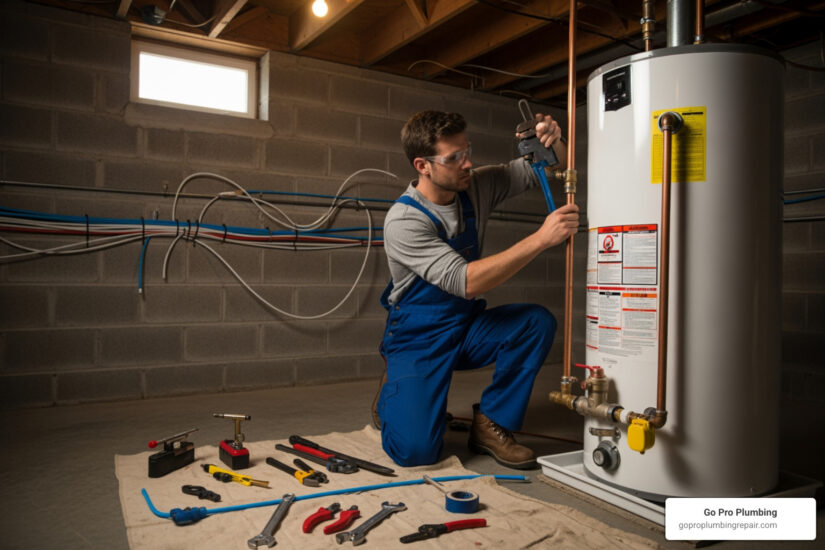
A proper water heater installation is a critical project for any homeowner. Whether you’re replacing a failing unit or upgrading to a more efficient model, getting it right ensures reliable hot water and prevents costly damage to your home.
Quick Answer: What You Need to Know About Water Heater Installation
- Average Lifespan: Water heaters last 7-15 years
- Professional Cost: $45-$65/hour for labor, plus $200-$450 for installation
- DIY Savings: $500-$750 if you do it yourself
- Installation Time: 4-6 hours for DIY, 6-8 hours for professionals
- Key Safety Concerns: Gas leaks, electrical hazards, water damage, carbon monoxide exposure
Are you dealing with inconsistent water temperatures, rusty water, or no hot water at all? These are classic signs that your water heater is failing. Improper installation can lead to serious risks like gas leaks, carbon monoxide exposure, electrical fires, or severe water damage. That’s why understanding the process is essential, whether you hire a pro or consider a DIY approach.
With the right knowledge, you can ensure your installation goes smoothly. A properly installed water heater will provide reliable, safe, and efficient hot water for years. In this guide, we’ll cover everything from choosing the right unit to installation, maintenance, and deciding between DIY and professional help.
Choosing the Right Water Heater for Your Home
Before starting your water heater installation, you must pick the right unit for your home. The best choice depends on your family’s hot water usage, energy goals, and budget.
Let’s break down your main options.
-
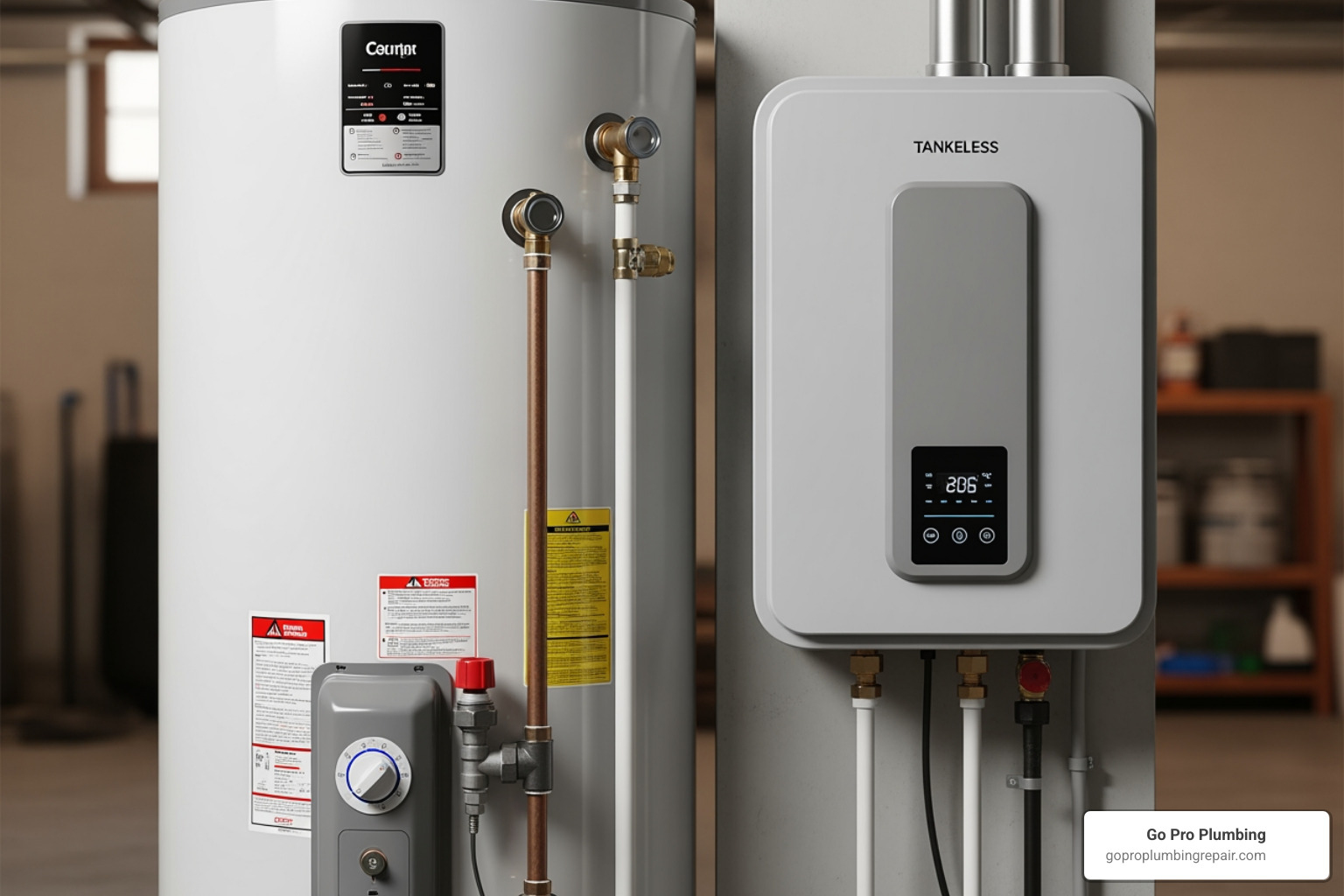
Conventional storage tank water heaters are the most common type. They store and heat water in a large tank (electric, natural gas, or propane models are available), keeping it ready for use. While their upfront cost is lower, they experience standby heat loss, making them less efficient than other types.
-
Tankless (on-demand) water heaters heat water instantly as it flows through the unit, providing an endless supply of hot water. With no tank, they eliminate standby heat loss, making them highly energy-efficient. However, they have a higher upfront cost and a more complex installation.
-
Heat pump (hybrid electric) water heaters are a highly efficient option. They pull heat from the surrounding air to warm the water, working like a refrigerator in reverse. They require at least 450 cubic feet of surrounding air space and perform best in temperatures above 37°F. If you’re exploring these energy efficient water heaters, you can find certified models on the official ENERGY STAR website. Manufacturers like Rheem, A. O. Smith, and Bradford White all offer solid options.
Sizing Your Heater
Proper sizing is key to ensuring you have enough hot water without wasting energy.
For tank-style heaters, look at the First Hour Rating (FHR), which tells you how many gallons of hot water the unit can deliver in an hour. To find the right FHR, consider your household size and peak usage times—when showers, dishwashers, and laundry might run simultaneously.
For tankless water heaters, sizing is based on the required flow rate (gallons per minute, or GPM) and the necessary temperature rise. You’ll need a unit that can handle your home’s maximum simultaneous hot water demand.
Choosing an energy efficient water heater not only saves money on utility bills but also reduces your environmental impact. Heat pump and tankless models significantly cut energy consumption compared to traditional tank units.
DIY vs. Professional Water Heater Installation
Should you handle the water heater installation yourself or call a pro? This decision impacts your budget, time, and, most importantly, your family’s safety.
| Feature | DIY Installation | Professional Installation |
|---|---|---|
| Cost | Unit cost ($150-$400) + materials (approx. $101-$250). Savings of $500-$750. | Unit cost ($150-$400) + labor ($200-$450+). Total often $350-$850+. Plumbers charge $45-$65/hr. |
| Time | About half a day (4-5 hours) for an experienced DIYer. | Typically 6-8 hours, often completed in a single day. |
| Risk | High risk of gas leaks, electrical hazards, CO exposure, water damage. | Low risk due to licensed expertise, adherence to codes, and proper tools. |
| Code Compliance | Requires homeowner to research and ensure compliance with local codes. | Plumber handles all code compliance, permits, and inspections. |
| Warranty | Unit warranty applies; installation warranty typically not covered. | Unit warranty applies; professional installation often comes with a labor warranty. |
The Appeal of DIY
The primary motivation for a DIY installation is cost savings, which can be $500 to $750. For an experienced DIYer, the job might only take 4 to 5 hours. You buy the unit and materials, invest an afternoon, and save on labor costs.
The Risks of DIY
However, a water heater connects to your home’s plumbing, gas, and electrical systems. A single mistake can be catastrophic.
- Gas Leaks: An improper connection can lead to an explosion or life-threatening carbon monoxide poisoning.
- Electrical Hazards: Incorrect wiring can cause shocks, short circuits, or house fires.
- Water Damage: A poorly sealed pipe can lead to thousands of dollars in flood damage.
- Carbon Monoxide Exposure: Improper venting on a gas heater can release this odorless, deadly gas into your home.
These are real dangers that licensed plumbers are trained to prevent.
The Benefits of Hiring a Licensed Plumber
When hiring a hot water heater plumber, you’re paying for expertise and peace of mind. A professional ensures code compliance, handling all local regulations in areas like Sacramento and Rancho Cordova. They also manage the permit process, which is often required for new installations or fuel type changes.
Most importantly, a licensed plumber guarantees a safe installation and provides a labor warranty in addition to the manufacturer’s warranty on the unit. While professional labor adds $200 to $450+ to the total cost, it’s a smart investment in your family’s safety and your home’s protection.
The Installation Process: A Step-by-Step Overview
Whether you’re installing a tank or tankless model, the core principles of a safe water heater installation are the same. Here’s what to expect.
Essential Tools and Materials
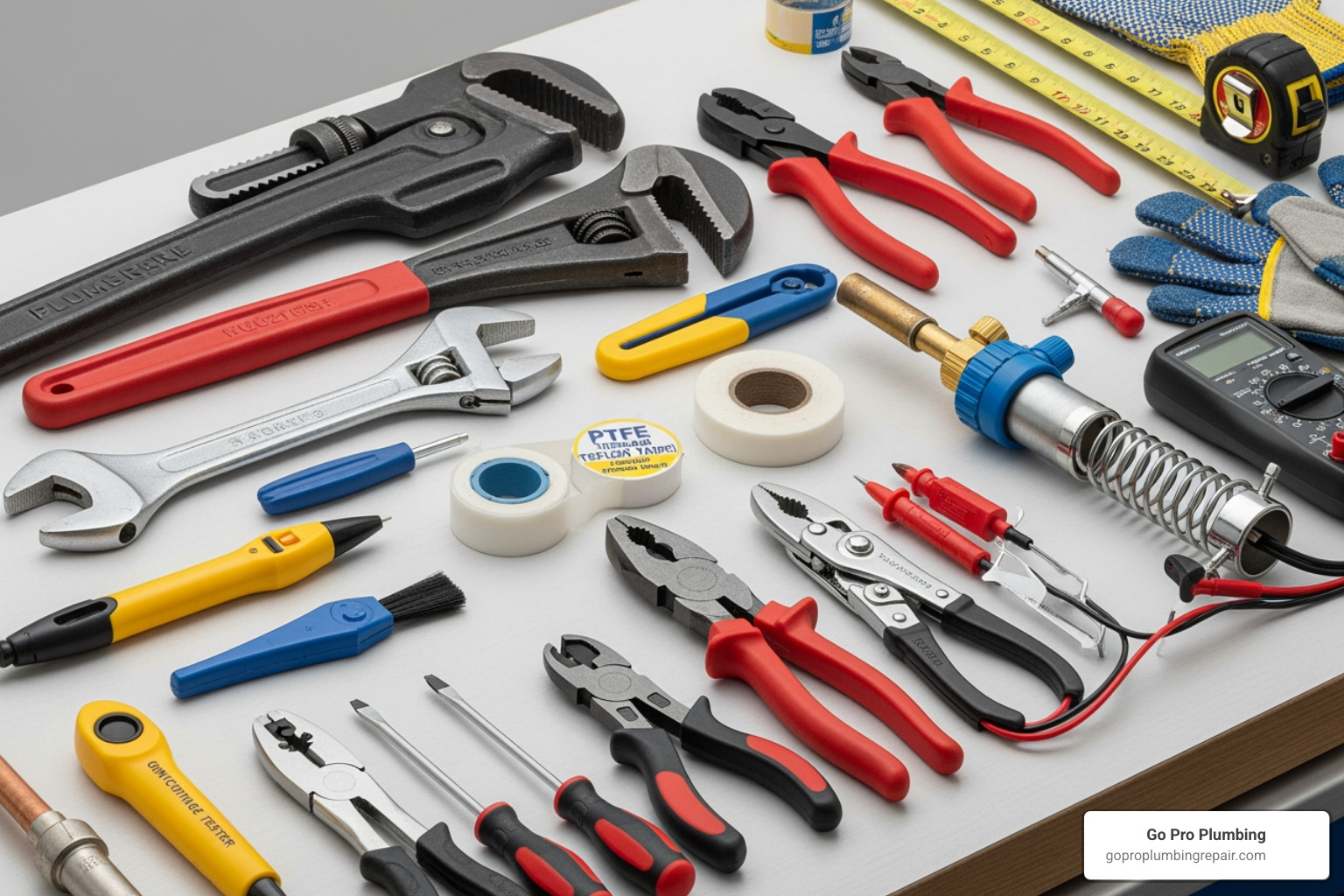
A proper installation requires specific tools and materials. A typical job needs pipe wrenches, an adjustable wrench, a tube cutter, pliers, screwdrivers, and a voltage tester. For materials, you’ll need the new water heater, a drain pan, a new Temperature and Pressure (T&P) relief valve, a discharge pipe, flexible supply lines, Teflon tape, and pipe insulation. Gas units require a sediment trap and gas connector, while electric units need wire nuts. In Northern California, seismic straps are mandatory.
Critical Safety Measures and Installation Steps
Safety is paramount. A professional follows a strict protocol for every installation.
- Shut Down & Drain: Turn off the main water supply, the gas line, and the electrical circuit breaker. Always use a voltage tester to confirm the power is off. Attach a garden hose to the drain valve and empty the old tank.
- Disconnect & Remove: Carefully disconnect the water, gas, and/or electrical lines. Water heaters are heavy, so remove the old unit with a helper to avoid injury.
- Position & Secure New Unit: Place the new heater in a drain pan, ensure it’s level, and secure it to wall studs with seismic straps, as required by Northern California code.
- Connect Water Lines: Install a new manual shutoff valve on the cold water inlet. Use flexible supply lines or dielectric unions for the hot and cold connections, sealing all threads with Teflon tape or pipe joint compound.
- Install T&P Valve: Fit the new T&P relief valve and attach a discharge pipe that runs downward to a safe drainage point. This pipe must remain unobstructed.
- Connect Power or Gas:
- Gas Units: Install a sediment trap and connect the gas line. Check every connection for leaks using a soapy water solution. Proper venting is crucial to prevent deadly carbon monoxide from entering your home.
- Electric Units: Match the wiring to the unit’s specifications. Never turn on the power until the tank is completely full of water, as this will instantly destroy the heating elements.
- Fill & Purge Air: Slowly open the cold water supply to fill the tank. Open a hot water faucet somewhere in the house and let it run for at least three minutes to purge all air from the system.
- Final Checks: Once the tank is full and air is purged, carefully inspect every water and gas connection for leaks. Only after confirming there are no leaks should you turn the power or gas back on.
- Set Temperature: Set the thermostat to 120°F. This provides a safe and efficient balance, reducing the risk of scalding.
If you encounter problems, our guide on Common installation issues can help. However, for safety, it’s always best to call a professional if you’re unsure.
Special Installations and Post-Installation Care
Not all installations are the same, and ongoing care is key to longevity. Modern tankless units have unique requirements, and all water heaters benefit from regular maintenance.
Tankless Water Heater Installation Differences
Switching to a tankless water heater involves a more complex water heater installation process than a simple tank swap.
- Gas Line Upgrades: Tankless gas heaters require a higher BTU input, which often means upgrading to a larger diameter gas line to ensure sufficient fuel flow.
- Specialized Venting: These units, especially condensing models, produce acidic condensate and require Category III Stainless Steel venting, often routed through an exterior wall.
- Electrical Needs: All tankless units need electricity for their controls. Electric models have substantial power demands, often requiring dedicated 240V circuits and potential electrical panel upgrades.
- Water Flow and Pressure: They need a minimum flow rate (around 0.5 GPM) and adequate water pressure to activate and operate correctly.
Given these complexities, professional installation is essential for safety and code compliance. Our Guide to tankless installation provides more detail.
Post-Installation Maintenance
Regular maintenance will keep your new water heater running efficiently for years.
- Tank-Style Heaters: Flush the tank annually to remove sediment buildup, which improves efficiency and extends the unit’s life. Check the sacrificial anode rod every 2-3 years and replace it if it’s heavily corroded. Test the T&P relief valve once a year.
- Heat Pump Heaters: In addition to the above, clean the air filter and clear the condensate lines annually.
- Tankless Heaters: Descale the unit periodically (typically annually in hard water areas) to remove mineral buildup from the heat exchanger.
Our Water heater maintenance guide offers step-by-step instructions for these important tasks.
Frequently Asked Questions about Water Heater Installation
Homeowners often have questions when facing a water heater installation. Here are answers to the most common ones.
How long does a water heater last?
Most residential water heaters last 7 to 15 years. The actual lifespan depends on several factors:
- Type: Tankless units often last 15-20+ years, while traditional tank models typically last 10-15 years.
- Maintenance: Annual flushing to remove sediment can add years to a tank heater’s life.
- Water Quality: Hard water in areas of Northern California can cause mineral buildup and corrosion, shortening the unit’s lifespan.
- Usage: A heater serving a large, busy family will wear out faster than one serving a small household.
Once your heater is over 7 years old, it’s wise to monitor its performance to plan for a replacement on your own terms.
How much does a professional installation cost?
The cost for a professional water heater installation in Northern California depends on the job’s complexity. Here’s a general breakdown:
- Unit Cost: A standard tank heater typically costs $150 to $400. Tankless or heat pump models are more expensive.
- Labor Cost: Licensed plumbers in our area generally charge $45 to $65 per hour. A standard installation takes 6-8 hours, putting labor costs in the $200 to $450+ range.
- Total Cost: Expect a total project cost of $350 to $850 or more. This can increase if the job requires code upgrades, permits, or modifications for a new type of heater.
For a precise estimate, check out our guide on Water heater replacement cost in Sacramento.
What are the signs I need an emergency replacement?
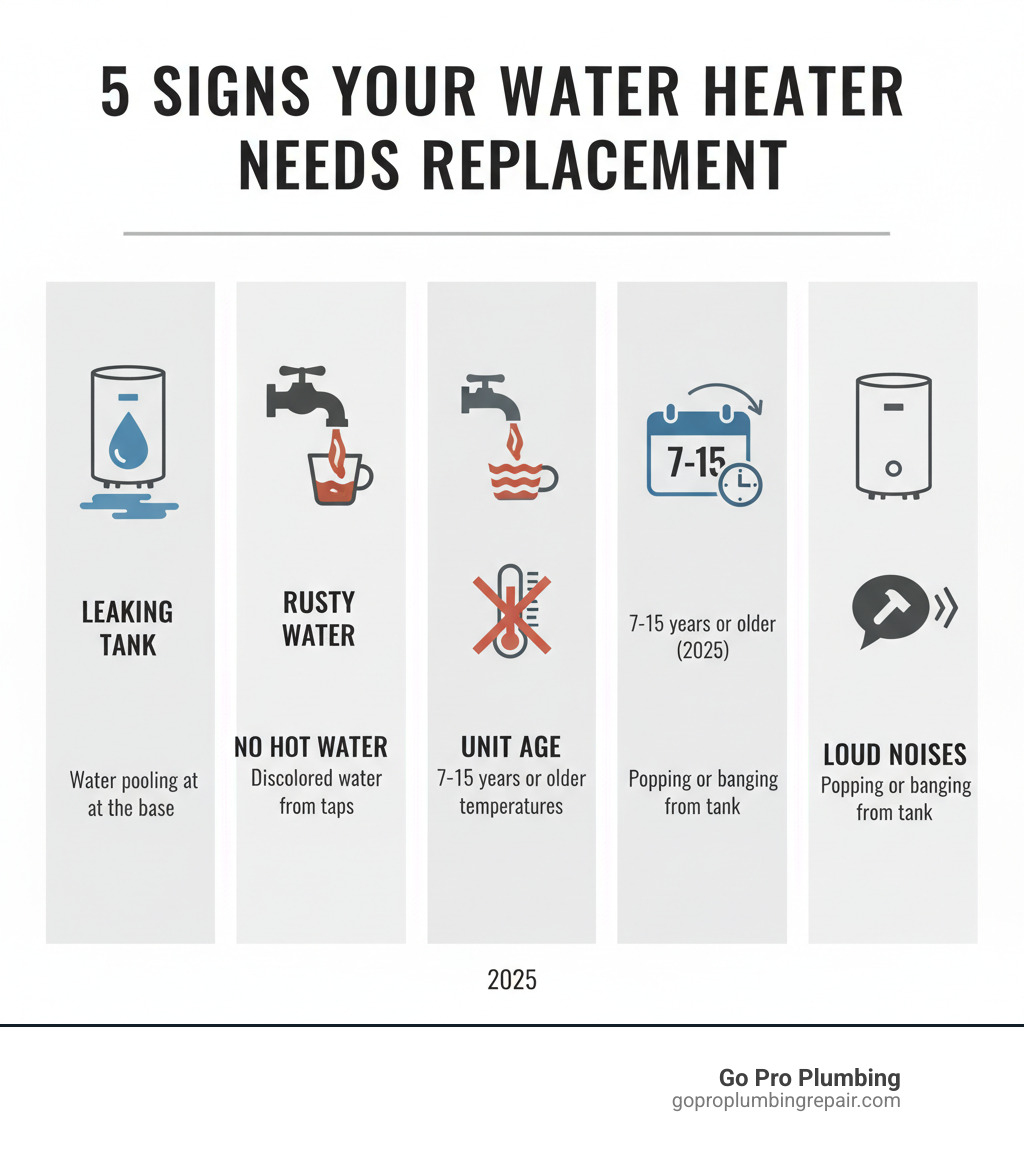
Some problems demand immediate action. You likely need an Emergency hot water heater replacement if you notice any of the following:
- A Leaking Tank: Water pooling around the base of the unit indicates a breach. This will only get worse and can cause significant water damage.
- Complete Loss of Hot Water: If basic troubleshooting (checking the pilot light or circuit breaker) doesn’t work, a major component has likely failed.
- Loud Popping or Banging Noises: This is usually caused by boiling water trapped under a thick layer of sediment, a condition that can lead to tank failure.
- Rusty or Discolored Hot Water: This signals that the inside of your tank is corroding and a leak is imminent.
In these situations, calling for emergency service can prevent thousands of dollars in damage.
Conclusion: Ensure a Safe and Efficient Installation
We’ve covered why a safe water heater installation is crucial. It’s about protecting your home and family from serious hazards like gas leaks, carbon monoxide, electrical fires, and water damage. A properly installed unit provides years of reliable service, lower energy bills, and peace of mind.
While the savings of a DIY project are tempting, the risks of improper installation far outweigh the benefits. Gas connections, electrical work, and local building codes all require expertise. When you hire a licensed professional, you’re investing in safety, code compliance, and a warranty that protects your home.
At Go Pro Plumbing, we serve homeowners throughout Northern California with a commitment to quality and safety. We understand that plumbing problems don’t keep business hours, which is why we offer same-day service when you need it most. Our team handles everything from permits to final testing, ensuring your installation is done right.
Don’t wait for a small issue to become a major emergency. If you’re dealing with an aging or failing water heater, we’re here to help. Our experienced plumbers will assess your needs and provide a professional, precise installation.
Ready for reliable hot water and the confidence of a professional installation? Schedule your Sacramento water heater installation with Go Pro Plumbing today.