
Beyond the Puddle: Detecting Water Main Breaks
By Brian on December 1, 2025
Why Water Main Break Detection Protects Your Home and Wallet
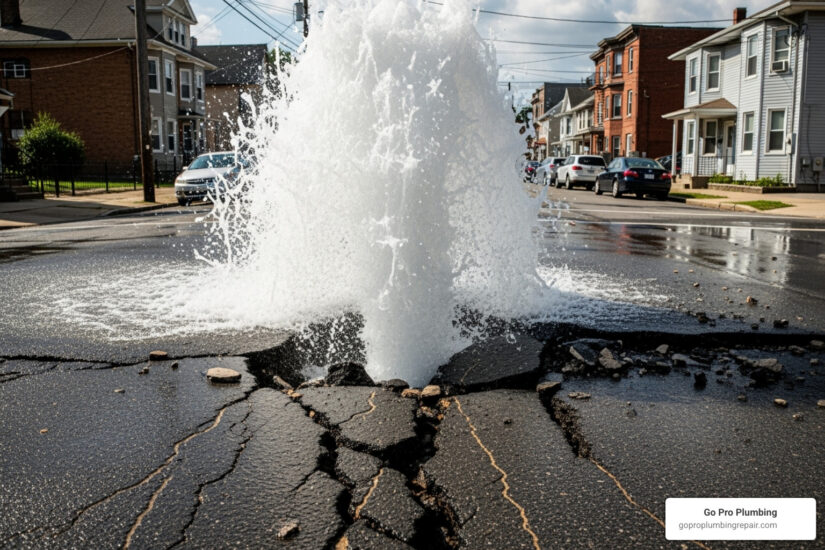
Water main break detection is critical for preventing costly damage to your property. With the average water damage claim costing over $10,000, catching leaks early is essential. Many breaks start small, wasting water and money for months before causing visible damage.
Quick Detection Methods:
- Check your water meter – Turn off all water and watch for movement.
- Look for puddles – Note wet spots in your yard when it hasn’t rained.
- Monitor your bill – Watch for sudden spikes in water usage.
- Listen carefully – Hissing or running water sounds when taps are off.
- Install smart sensors – Get 24/7 automatic leak alerts.
Early detection saves thousands. A leak from a 1/16-inch hole can waste over $2,100 in just four months. A 1/8-inch leak can cost over $8,252 in the same period.
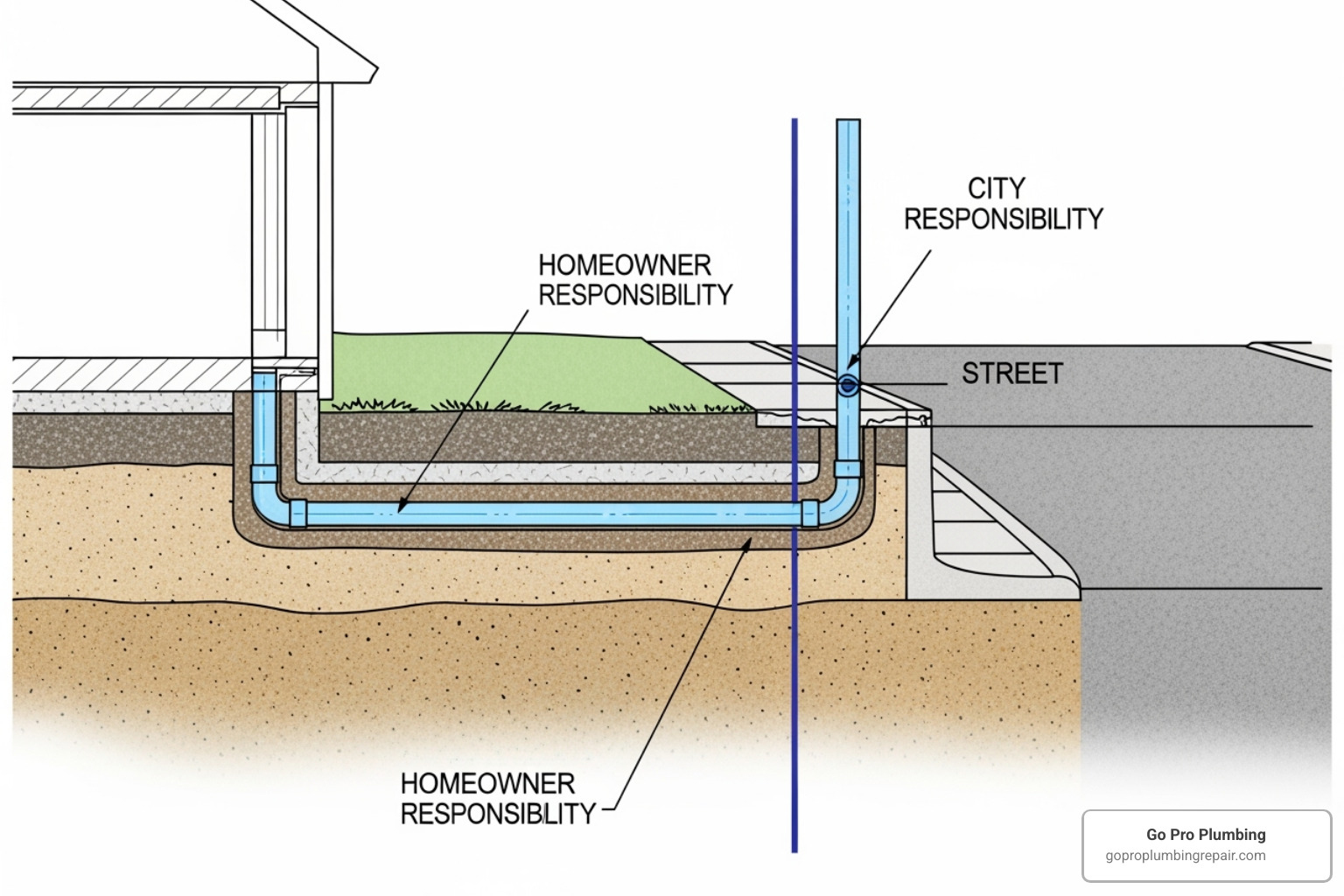
Understanding your responsibility is key: homeowners are responsible for pipes from their house to the property line, while municipalities handle street lines. Modern technology like smart water monitors makes detection easier than ever, with many homeowners finding unknown leaks within a month of installation.
This guide covers the warning signs of water main breaks, DIY detection methods, and the latest smart home technology to protect your property.

Part 1: The 7 Telltale Signs of a Water Main Break
Your water main is the lifeline connecting your home to the city’s water supply. When it breaks, your property sends out distress signals. Catching these early warnings through water main break detection can save you thousands in repairs and prevent serious damage. Here are the seven signs that something is wrong underground.
1. Puddles in the Yard When It Hasn’t Rained
Unexplained puddles or soggy spots in your yard, especially during dry weather, are a primary sign of trouble. Water escaping a broken main surfaces as muddy areas, pooling water, or even small sinkholes. The ground may feel spongy, and you might notice erosion washing away soil. Don’t ignore these wet patches.
2. A Sudden, Mysterious Drop in Water Pressure
If your shower suddenly weakens or faucets begin to sputtering, you may have a drop in water pressure. When water escapes through a break in the main line, less pressure is available for your home. This typically affects multiple fixtures, resulting in weak showers, trickling faucets, and appliances failing to fill properly. This problem usually worsens until the underlying issue is fixed.
3. Water That Looks, Smells, or Tastes Wrong
Your water should be clear, odorless, and clean-tasting. If it suddenly looks cloudy, smells earthy, or has a metallic taste, a break in the water main may have allowed sediment, dirt, and rust into your supply. You might see rust-colored water or particles floating in a glass. While this discolored water is not usually dangerous in small amounts, it’s a clear sign your water line is compromised.
4. The Sound of Running Water with No Taps On
If you hear a faint hissing sound, bubbling noise, or a low roaring from pipes when all faucets and water-using appliances are off, you likely have a leak. You can sometimes hear these sounds from the ground outside, especially at night. Your ears are excellent leak detectors.
5. A Shockingly High Water Bill
A sudden, significant jump in your water bill without a change in your usage habits is a major financial red flag. Comparing monthly bills can help you spot an unusual spike from unexplained usage. Even a small continuous leak can add 20% or more to your bill, while a larger break multiplies costs quickly.
6. New Cracks in Your Foundation or Driveway
Water leaking underground can wash away the soil supporting your home’s foundation or driveway. This water erosion can lead to visible structural damage. Look for new cracks in your foundation or sections of your driveway developing breaks or pavement heaving upward. These are not just cosmetic issues; they signal serious underground problems. For foundation-related leaks, Go Pro Plumbing specializes in Slab Water Leak Repair.
7. Lush, Green Patches on Your Lawn
A suspiciously vibrant patch of grass can be bad news. A continuous underground leak provides constant moisture, creating unnatural vegetation growth. This localized fertilization produces unusually healthy grass that stands out from the rest of your lawn, especially during dry seasons. This green spot often points directly to the problem.
Part 2: Your First Line of Defense – DIY Detection Methods
You don’t need to be a professional plumber to investigate a potential water main break. Some of the most effective water main break detection methods are simple DIY checks you can perform yourself.
8. The Water Meter Test: A Homeowner’s Best Friend
Your water meter is one of the most reliable leak detectors you own. The principle is simple: if all water in your home is off, the meter shouldn’t move. If it does, you have a leak.
Here’s how to perform the test:
- Locate your water meter. It’s usually in a basement, crawl space, or an outdoor box near the street.
- Turn off all water. This includes every faucet, shower, toilet, and appliance like dishwashers, washing machines, and ice makers.
- Check the meter. On a digital meter, the flow rate should read 0.000. Any other number indicates a leak. Many also have a leak indicator icon (often a dripping faucet). On an analog meter, look for a small triangular dial (the leak indicator). If it’s spinning, even slowly, you have a leak.
For confirmation, wait 15-30 minutes and check again. If the meter is still moving, you’ve confirmed a leak. This test tells you that you have a leak, but not where it is.
9. Know Your Zone: Homeowner vs. City Responsibility
Understanding who is responsible for a repair can save time and frustration. As a rule, you’re responsible for the water service line from your house to your property line, including the pipe connecting to your meter. The municipality handles the main water lines under the street and the connection to your property line or curb stop valve.
If your meter test shows a leak and you’ve ruled out indoor issues, the problem is likely in your service line, making it your responsibility. However, if the whole neighborhood has low pressure or discolored water, it’s likely a municipal issue, and you should contact your local water utility.
10. Isolate the Issue: Ruling Out Common Household Leaks
If your meter test confirms a leak, check for common culprits inside your home before assuming it’s the main line.
- Leaky toilets: Add a few drops of food coloring to the tank. If color appears in the bowl within 30 minutes (without flushing), the flapper valve is leaking.
- Dripping faucets: Check every faucet, including outdoor hose bibs, for drips.
- Irrigation system: Look for soggy spots near sprinkler heads or valve boxes. Shut off the irrigation system’s main valve and recheck your water meter.
- Appliance hoses: Check for moisture or puddles around the supply lines for your washing machine, dishwasher, and refrigerator.
- Water heater: Look for pooling water around the base of the unit.
To isolate the leak, shut off water to individual fixtures or areas using their shut-off valves, checking your meter after each one. When the meter stops moving, you’ve found the source. If the meter is still moving after you’ve shut off all internal sources, the leak is almost certainly in your main service line. For hard-to-find leaks, our team at Go Pro Plumbing specializes in Water Leak Under House detection. These DIY methods empower you to find answers and provide valuable information when you call a professional.
Part 3: High-Tech Solutions for Modern Homes
While DIY methods are great for initial water main break detection, modern technology can work behind the scenes, acting as a 24/7 security guard for your home’s plumbing.
11. Smart Water Monitors & Automatic Shut-Off Valves
Installed on your main water line, these systems are the heavy hitters of leak protection. They use flow sensors to track water movement, learning your household’s unique usage patterns over time. This AI capability allows them to detect anomalies like continuous flow, unusually high flow rates from a burst pipe, or even microleaks. Within 30 days of installation, 60% of homeowners find leaks they didn’t know existed.
The most critical feature is the automatic shut-off. When a major leak is detected, the system can automatically close your main water valve, stopping a flood before it causes catastrophic damage. A remote control app provides real-time usage data, instant alerts, and the ability to control the valve from anywhere.
While these systems have an initial investment of $350 to $700 plus installation, they can reduce water damage claims by 96%. Considering the average repair exceeds $10,000, the cost is often justified. For professional installation or Main Water Line Replacement Sacramento CA needs, our team at Go Pro Plumbing can help.
12. Strategic Spot Detectors & Freeze Sensors
For a more budget-friendly or targeted approach, individual spot detectors offer excellent value. These small, battery-powered sensors are placed in high-risk areas: under sinks, behind toilets, near water heaters, and in basements. When water touches the sensor, it sounds a loud alarm and sends an alert to your smartphone. At $12 to $50 per sensor, they make it easy to protect multiple vulnerable spots.
Freeze sensors, often built into spot detectors, are crucial in colder climates. They monitor room temperature and alert you if it drops below a set threshold (usually around 45°F), giving you time to act before pipes freeze and burst. In Northern California, unexpected cold snaps can put pipes in unheated basements or crawl spaces at risk. If you’ve already had damage, our team specializes in Frozen Pipe Burst Repair.
13. Choosing Your System: Key Features to Consider
Navigating the options for leak detection systems can be overwhelming. Here are key features to consider:
- Installation type: Spot detectors are simple DIY. Some whole-home systems are also DIY, clamping onto existing valves, but many require professional installation where the unit is spliced into the main line.
- Connectivity: Most systems use your home’s Wi-Fi to send remote alerts. Others use a central hub or LoRa (long-range) technology for large properties.
- Battery backup: This is essential for whole-home systems to ensure they keep working during a power outage.
- App features: Look for real-time notifications, water usage tracking, temperature monitoring, and remote control of the shut-off valve.
- Additional features: Consider weatherproof designs for outdoor use, extension cables for hard-to-reach spots, and integration with smart home systems like Alexa or Google Assistant.
Here’s how spot detectors compare to whole-home systems:
| Feature | Spot Detectors | Whole-Home Shut-Off Systems |
|---|---|---|
| Cost Range | $12 – $50 per sensor | $350 – $700 (system only) |
| Installation | DIY, just place them | DIY or Professional (often recommended) |
| Coverage | Specific high-risk areas | Entire home water supply |
| Leak Response | Alert only (audible, app) | Alert + Automatic Water Shut-Off |
| Monitoring | Presence of water, sometimes temp/humidity | Water flow, pressure, usage, temp/humidity |
| Benefits | Affordable, easy setup, targeted protection | Comprehensive, preventative, peace of mind |
| Cons | Doesn’t stop water flow, multiple units needed | Higher initial cost, potential professional install |
The right choice depends on your home and budget. Many clients start with spot detectors and upgrade later. Either way, you’re taking a smart step toward protecting your home.
The Future of Large-Scale Water Main Break Detection
While homeowners focus on protecting their property, water utilities are using large-scale innovations for water main break detection across their vast underground networks to prevent massive water loss.
14. How Utilities Perform Water Main Break Detection with Sound and AI
Utilities can “hear” underground leaks without digging. Acoustic sensors, placed on fire hydrants or pipes, listen for the distinct vibrations and sounds of escaping water. When multiple sensors detect a leak, leak correlators analyze the time differences in sound arrival to pinpoint the leak’s exact location, often within a few feet.
Machine learning and AI are game-changers in this process. AI algorithms filter out background city noise to isolate the unique “signature” of a water leak. These systems can also assess a leak’s severity to help prioritize repairs and even predict which pipes are most likely to fail next, enabling predictive maintenance. Scientific research on AI for leak detection continues to advance these capabilities.
15. Eyes in the Sky: Advanced Water Main Break Detection from Above
Detection technology is also advancing from above. Satellite imagery is used to find leaks from orbit. Algorithms analyze images from special sensors to find the spectral signature of chlorinated drinking water that has seeped into the soil, a telltale sign of a main break. Utilities like San Jose Water are already using this technology.
Another cutting-edge method is fiber optic sensing, or Distributed Acoustic Sensing (DAS). Optical communication fibers integrated into water networks act as continuous sensors. The entire length of the fiber can detect minute vibrations from leaks in real-time, offering monitoring capabilities for utilities managing thousands of miles of pipe.
Why Early Detection Matters: The Costs of a Delay
Ignoring the signs of a water main break can lead to devastating financial consequences. These breaks are often caused by aging infrastructure, ground movement, corrosion, tree roots, or freezing temperatures.
Delayed water main break detection has a direct cost. A tiny 1/16-inch hole can waste over $2,100 in just four months. A leaky toilet can waste up to 20,000 liters a day, costing nearly $67 daily. This wastes both money and precious water resources.
The property damage is often the biggest nightmare. Water damage is six times more likely than theft, and 40% of homeowners will experience it. The average insurance claim for water damage exceeds $10,000, with repairs for issues like ceiling damage costing even more. Undetected water ruins floors, damages foundations, and creates the perfect environment for mold, which can begin growing in just 24 hours.
Proactive prevention is valued by insurance companies, and many offer premium discounts for homes with leak detection systems. It’s worth calling your provider to ask about potential savings.
Early detection is the difference between a scheduled repair and an emergency crisis. Catching a leak early allows for planned, cost-effective repairs during business hours. An emergency involves after-hours rates and significant disruption. For urgent situations, our team at Go Pro Plumbing offers Emergency Plumbing Leak Repair to restore normalcy as quickly as possible.
The cost of prevention is always less than the cost of repair. Whether using DIY methods or investing in smart technology, early detection is essential protection for your home and wallet. When you need professional help with your Water Main & Water Line issues, a trusted plumber is invaluable.
Conclusion: Secure Your Home with Proactive Detection & Repair
The signs of a water main issue—from mysterious puddles and low water pressure to a spiking water bill—are your home’s way of asking for help. As this guide has shown, you can take action.
Water main break detection doesn’t have to be complicated. It can start with a simple five-minute check of your water meter or by listening for unusual sounds. For greater security, investing in a smart water monitor provides peace of mind with 24/7 protection, even when you’re away.
From our years of experience serving Northern California homeowners, we know that early detection saves thousands of dollars and prevents devastating property damage from water and mold. The average water damage claim exceeds $10,000, but catching a leak early often means a straightforward repair instead of a disaster.
If you’ve noticed any of the seven telltale signs, if your water meter test revealed a leak, or if you want professional guidance on protecting your home, we’re here to help. The Go Pro Plumbing team can diagnose issues quickly and repair them efficiently.
Don’t wait for a small problem to become a catastrophe. For professional leak detection and Water Main & Water Line services throughout Northern California, contact Go Pro Plumbing today. We are committed to outstanding customer service and often provide same-day service because water problems can’t wait. Protecting your home with proactive detection is one of the smartest decisions you can make.