
The Whole House Repipe Project: A Step-by-Step Breakdown
By Brian on December 10, 2025
Understanding What a Whole House Repipe Really Means
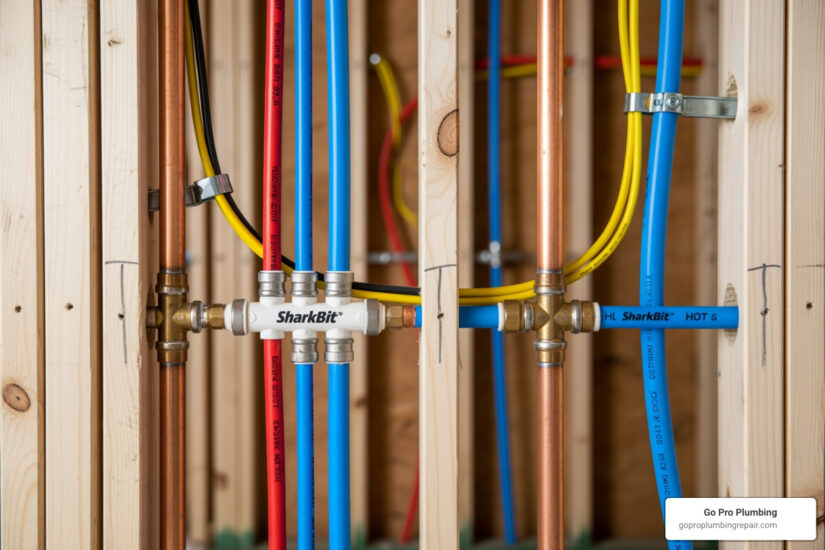
A whole house repipe is the complete replacement of all water supply pipes in your home with new materials like PEX or copper. It’s a comprehensive plumbing upgrade, not a simple repair, that addresses systemic issues in your home’s water distribution system.
Key Facts About Whole House Repiping:
- Cost Range: $4,500 – $35,000 depending on home size and materials
- Timeline: Most projects take 1-5 days to complete
- Materials: PEX, copper, or CPVC pipes replace old galvanized, lead, or polybutylene
- Daily Impact: Water is typically shut off during work hours but restored each evening
- Long-term Value: New pipes last 40-100 years and increase home value
Many Northern California homeowners, especially in homes built before 1970, face this decision. Your plumbing is like your home’s circulatory system; when pipes fail, problems spread throughout the house.
Modern repiping is far less invasive than you might think. Professionals make small, strategic cuts to access pipes and patch them afterward, avoiding wholesale wall demolition.
This guide covers the entire process: recognizing warning signs, understanding costs and timelines, choosing materials, and finding a qualified contractor. Crucially, you’ll see why a complete repipe is often more cost-effective than patching individual leaks. As one expert noted, “Many customers have expressed regret about not repiping sooner, having spent significant money on successive repairs and water damage.”
Is It Time for a Repipe? Key Signs Your Plumbing is Failing
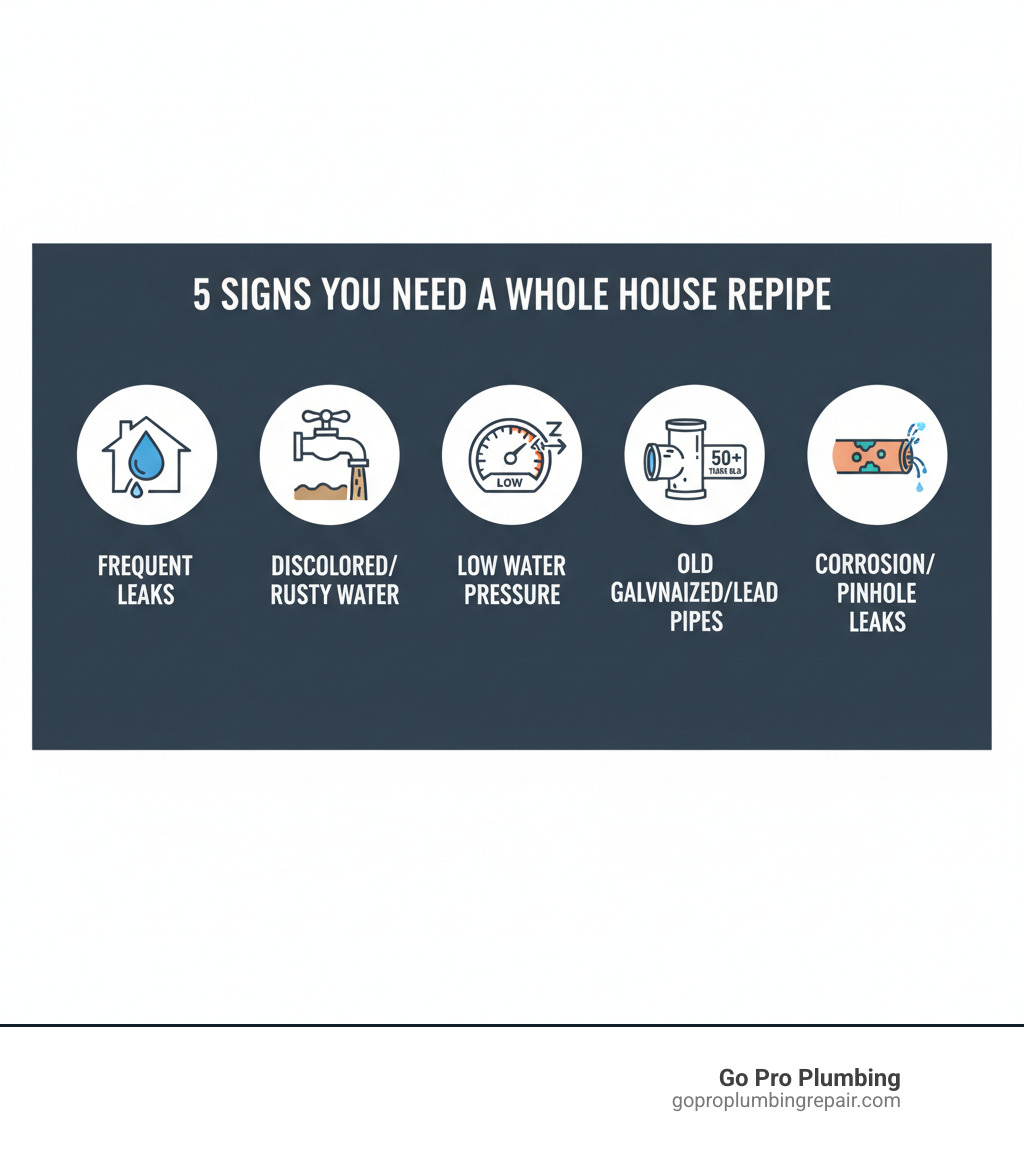
Mysterious brown water, a shower that goes cold, or another leak? These aren’t random inconveniences; they’re signs your plumbing system is failing. For homeowners in Sacramento, Rancho Cordova, and Northern California, learning to read these signals can save thousands.
Low water pressure is a primary sign. Mineral deposits and corrosion build up inside aging pipes, restricting water flow and making your shower feel like a weak mist.
Fluctuating water temperature throughout your home, like a shower going scalding or freezing when a toilet flushes, points to problems in your water distribution system, not necessarily your water heater.
Frequent leaks in different rooms signal a system-wide deterioration. Whether it’s pinhole leaks, drips at connections, or slab leaks, fixing them one by one is a costly and temporary solution.
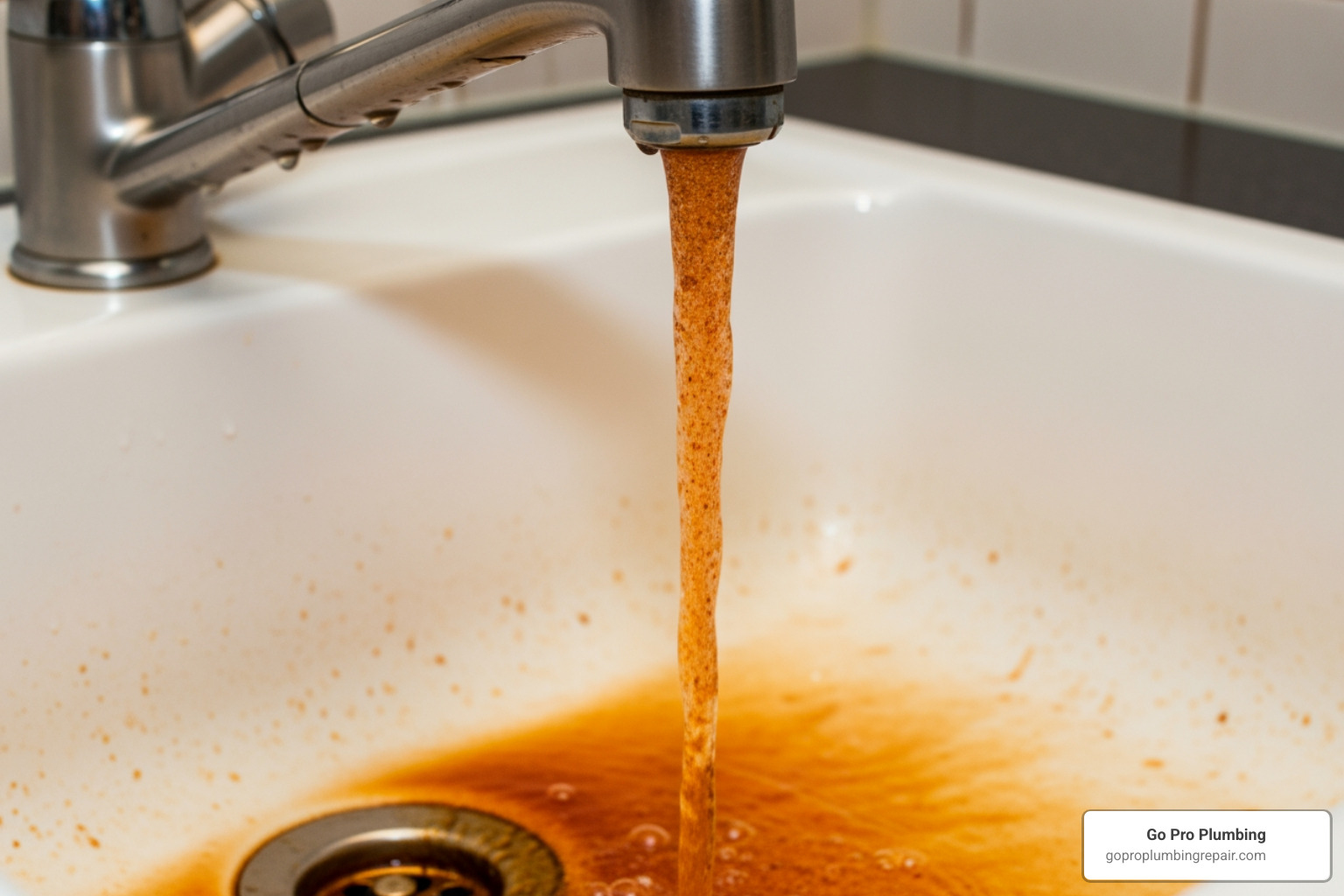
Visible corrosion and discolored water mean your pipes are corroding internally. This is common with old galvanized steel pipes and can stain fixtures, damage appliances, and affect water quality.
Noisy pipes, known as “water hammer,” indicate pressure issues or loose connections that can stress aging pipes and lead to ruptures.
The age and material of your pipes are critical. Galvanized steel pipes, common in pre-1960s homes, have a 40-50 year lifespan and corrode internally. Polybutylene pipes, used from the 70s to 90s, degrade with chlorine exposure and are prone to sudden failure, making replacement urgent. Very old homes may have lead pipes, which pose serious health risks and should be replaced as a safety priority. Even durable copper pipes (50+ year lifespan) can develop pinhole leaks over time. Modern PEX and CPVC pipes last 40-100 years and 40-70 years, respectively.
Repair vs. Repipe: Making the Right Choice
For an isolated problem, a repair is fine. But multiple symptoms point to a systemic issue. Many homeowners spend thousands on repeated repairs and water damage before realizing a whole house repipe was the more cost-effective solution from the start. Band-aid solutions on a deteriorating system only delay the inevitable and increase the risk of catastrophic water damage.
A professional plumbing inspection is the best way to know for sure. At Go Pro Plumbing, we use advanced tools to assess your system’s health. We’ll provide an honest recommendation, whether it’s a targeted repair or a full repipe. For systemic problems, a repipe is the smart long-term investment that stops the cycle of emergency repairs and protects your home.
Our commitment to same-day service means we can often start your inspection the day you call. When your plumbing is failing, every day of delay is another day of risk.
Planning Your Repipe: Materials, Costs, and Choosing a Pro
Once you’ve decided on a whole house repipe, the next step is planning. This involves choosing materials, understanding the investment, and finding the right professional for your Northern California home.
Choosing Your New Pipes: PEX vs. Copper vs. CPVC
Choosing the right pipe material depends on your budget, home, and preferences. The three main options are PEX, copper, and CPVC.
| Material | Pros | Cons | Lifespan Estimate |
|---|---|---|---|
| PEX (Cross-linked Polyethylene) | – Affordable (often half the cost of copper) – Flexible, easy to install – Fewer fittings needed (less leak points) – Corrosion-resistant – Freeze-resistant (expands without cracking) – Quiet operation – Approved for drinking water |
– UV-sensitive (not for outdoor exposure) – Can be susceptible to rodent damage (rare) |
40-100 years |
| Copper | – Durable, long-lasting – Proven track record (over a century) – Resists bacteria/mold – Recyclable – Withstands high heat & fire |
– Most expensive material – Requires soldering (slower installation) – Can develop pinhole leaks over time (water chemistry) – Noisy (can transmit water hammer) |
50+ years |
| CPVC (Chlorinated Polyvinyl Chloride) | – Does not corrode – Resists deposits – High temperature resistance (up to 180ºF at 100 psi) – Inexpensive – Easier installation than copper (solvent glue) |
– Can become brittle and crack over time – Can warp with excessive heat – Not as flexible as PEX |
45-70 years |
PEX piping is the modern standard due to its affordability and flexibility, which allows for faster installation with fewer leak-prone fittings. It’s corrosion-resistant, quiet, and can even expand if frozen. Its main drawback is UV sensitivity, making it unsuitable for outdoor use.
Copper piping is a durable, traditional material with a long track record of reliability and natural bacterial resistance. However, it’s the most expensive option, requires more labor-intensive soldering, and can be susceptible to pinhole leaks depending on water chemistry.
CPVC is an inexpensive, corrosion-resistant plastic pipe that can handle hot water. The Plastic Pipes Institute says CPVC is produced by adding chlorine to PVC, making it suitable for hot water lines. It’s easier to install than copper but can become brittle over time and lacks PEX’s flexibility.
Understanding the Costs of a Whole House Repipe
The investment for a whole house repipe typically ranges from $4,500 to $15,000 or more, with some extensive projects reaching $35,000. Key factors influencing the price include:
- Home size and number of fixtures: Larger homes with more bathrooms and fixtures require more materials and labor.
- Accessibility of pipes: Pipes in concrete slabs or finished basements are more difficult and costly to replace than those in accessible walls or crawlspaces.
- Material choice: PEX is generally the most budget-friendly option due to lower material and labor costs, while copper is the premium choice.
- Labor costs: This is a significant portion of the investment, reflecting the skilled work required.
Budget for additional costs like drywall repair, painting, and permit fees. It’s also a good time to consider upgrading your water heater or addressing your main water line replacement simultaneously to save on future labor.
How to Hire the Right Repiping Contractor
Choosing the right contractor is crucial for this specialized project. For homeowners in Sacramento and Rancho Cordova, here’s what to look for:
- Consider specialists: Repiping specialists’ focused experience often leads to faster, more efficient work and potentially lower costs than general plumbers.
- Verify licensing and insurance: Always verify the contractor is licensed and insured to protect yourself and ensure work meets code.
- Check reviews and references: Look at online reviews and ask for references to gauge the company’s professionalism and quality of work.
- Ask key questions: Inquire about materials, what’s included in the quote (patching, permits, cleanup), warranties, and their process for protecting your home.
- Get a fixed-price quote: Insist on a detailed, fixed-price quote to avoid surprise charges. At Go Pro Plumbing, we provide comprehensive, no-surprises quotes during our free in-home consultations.
The Whole House Repipe Process: A Step-by-Step Guide
A modern whole house repipe is a precise, minimally invasive process. While some disruption is unavoidable, the goal is a swift and clean upgrade. The project typically takes one to five days, and we restore your water each evening so you can use your facilities overnight.
Step 1: Initial Inspection and Planning
The process starts with meticulous planning. Our plumbers assess your current system in your Sacramento or Rancho Cordova home, then map out the new pipe routes to optimize flow and minimize wall openings. We confirm your material choice, handle all necessary permits, and provide a detailed, fixed-price contract so there are no surprises.
Step 2: Home Preparation and Old Pipe Removal
We protect your home by covering floors and furniture. We recommend you move fragile items from work areas. Next, we make small, precise cuts in drywall to access old pipes. After shutting off the main water supply, we drain the system and remove the old pipes, ensuring proper and safe disposal.
Step 3: What to Expect During the Whole House Repipe Installation
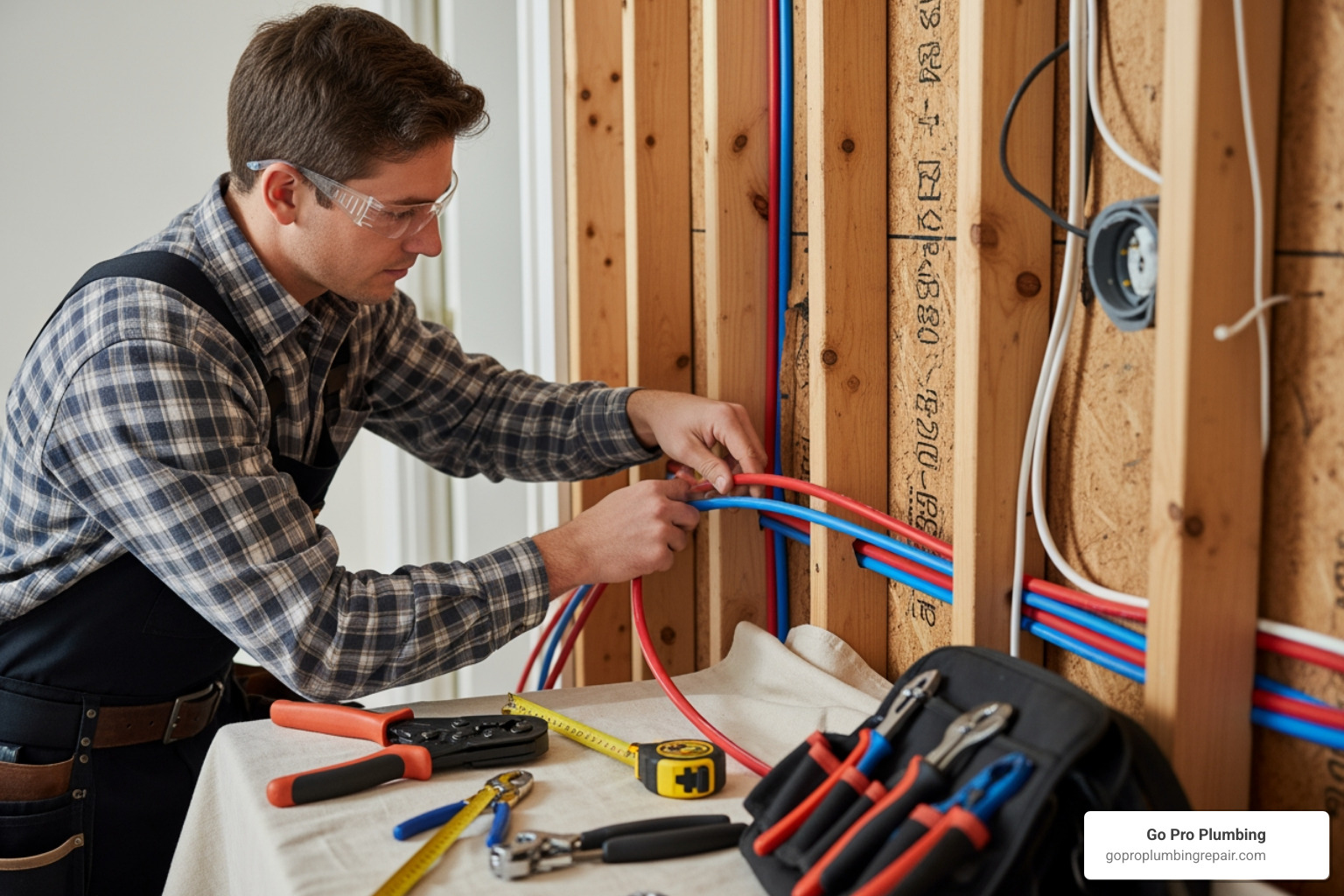
This is when your new plumbing system is installed. Our technicians run the new lines, whether flexible PEX or rigid copper, ensuring all connections to your fixtures (sinks, toilets, showers, etc.) are secure. We secure all pipes to prevent noise and rattling and replace old shut-off valves under sinks and toilets with new, reliable ones.
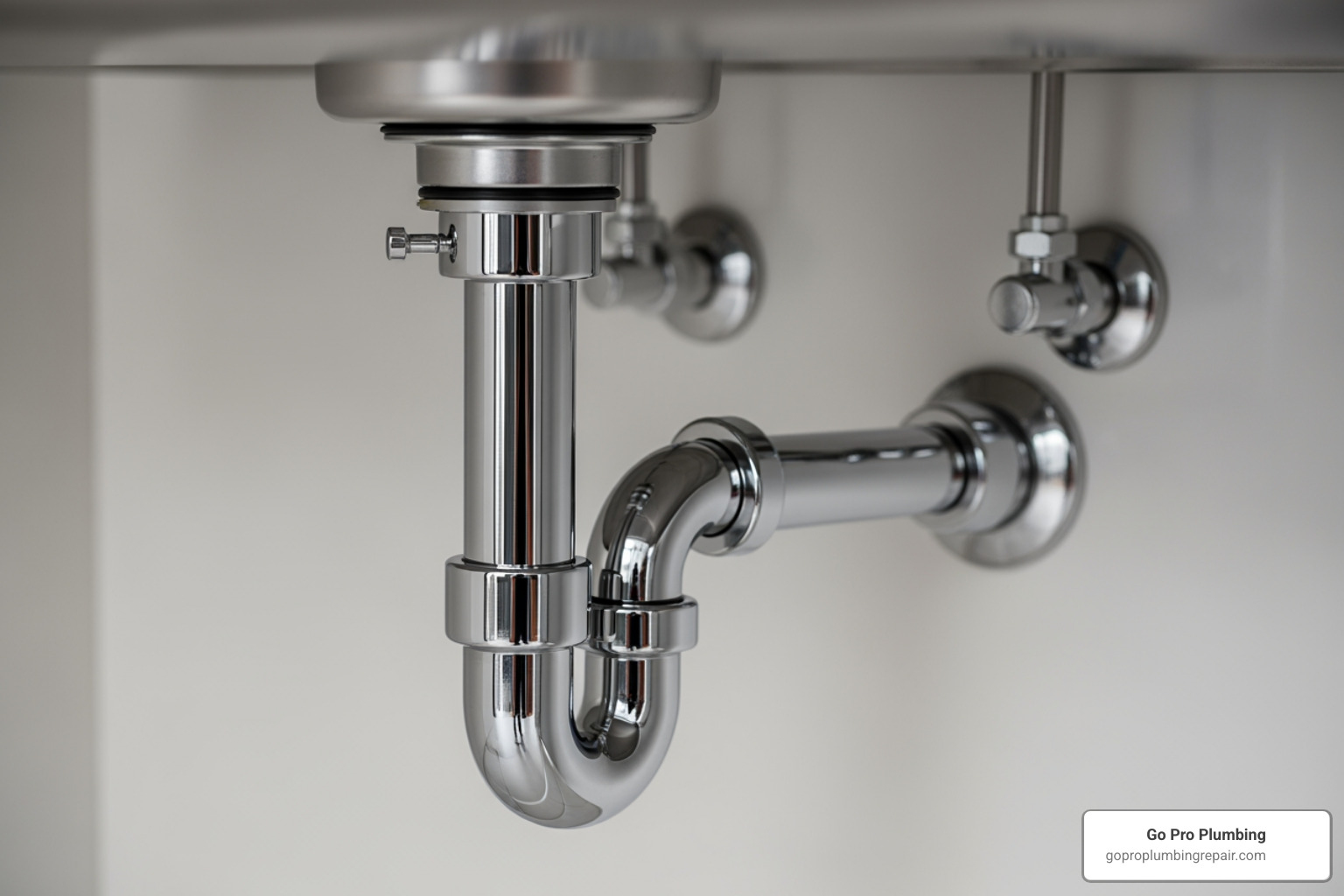
Your water will be off during work hours (e.g., 8 AM to 5 PM) but restored each evening. The timeline is typically 1-2 days for smaller homes and up to a week for larger, more complex projects.
Step 4: Pressure Testing and Municipal Inspection
Once installed, we conduct a thorough pressure test on the new system to ensure there are absolutely no leaks. We also check pressure and flow at each fixture to confirm optimal performance. We then coordinate the required municipal inspection to ensure all work is up to code before closing the walls.
After inspection, we patch the drywall access holes. Final texturing and painting are left for you to match your decor. We finish with a thorough cleanup, leaving your home tidy and ready for you to enjoy your new plumbing.
Frequently Asked Questions about Whole House Repiping
A whole house repipe is a big decision, and it’s normal to have questions. Here are answers to some common concerns from homeowners in Sacramento, Rancho Cordova, and Northern California.
Can I stay in my home during the repiping process?
Yes, most families can stay home during a repipe. Our crews work during standard business hours (typically 8 AM to 5 PM), during which your water will be shut off. However, we restore your water service every evening, so you’ll have access to your kitchen and bathrooms overnight.
Expect some noise and dust during work hours, but our crews take precautions to protect your home and minimize disruption. We use protective coverings and clean up our work areas daily.
Will my homeowner’s insurance cover the cost of a repipe?
Generally, no. Homeowner’s insurance covers sudden, accidental damage (like a burst pipe), not the gradual wear and tear of aging pipes, which is considered a maintenance issue. A repipe to prevent future problems is typically not covered.
However, completing a whole house repipe can often lower your homeowners insurance premiums by dramatically reducing the risk of future water damage claims. We recommend calling your insurance provider to review your policy and ask about potential discounts for updated plumbing.
What financing options are available for a repipe project?
A repipe is a significant investment, but several financing options can make it manageable. Home equity loans or lines of credit (HELOCs) often provide low interest rates. Personal loans for home improvement are another option that doesn’t use your home as collateral.
Many plumbing contractors, including us at Go Pro Plumbing, work with financing partners to offer flexible payment plans. These can include competitive interest rates or deferred payment options. During your free consultation, we can walk you through the financing solutions we offer to find a plan that fits your budget.
Securing Your Home’s Plumbing Future
A whole house repipe is more than a repair; it’s an investment in your home’s future and your daily quality of life. It’s about securing decades of reliability and peace of mind.
The immediate benefits are transformative. You’ll enjoy strong, consistent water pressure, crystal-clear water free from rust, and an end to the constant worry of the next leak. A new plumbing system also significantly increases your home value, making it a major selling point for buyers in the Sacramento and Rancho Cordova markets.
Perhaps the greatest benefit is peace of mind. Your new pipes provide long-term reliability for 40 to 100 years, depending on the material, ending the costly cycle of emergency repairs and protecting your home from water damage.
At Go Pro Plumbing, we are committed to making your repipe project smooth and stress-free with outstanding customer service and expertise. We’ve seen how this upgrade transforms homes for Northern California families. And because we know plumbing issues can be urgent, we offer same-day service for many of your needs.
If you’re dealing with failing pipes, contact us today for a free consultation. Let’s secure your home’s plumbing future together.
If you’re also concerned about the pipes leading to your home, learn more about main water line replacement services to ensure your entire water system is in top condition.