
From Radon to Leaks: Understanding Capped Pipes in Your Basement
By Brian on February 12, 2026
What That Mystery Pipe in Your Basement Really Means
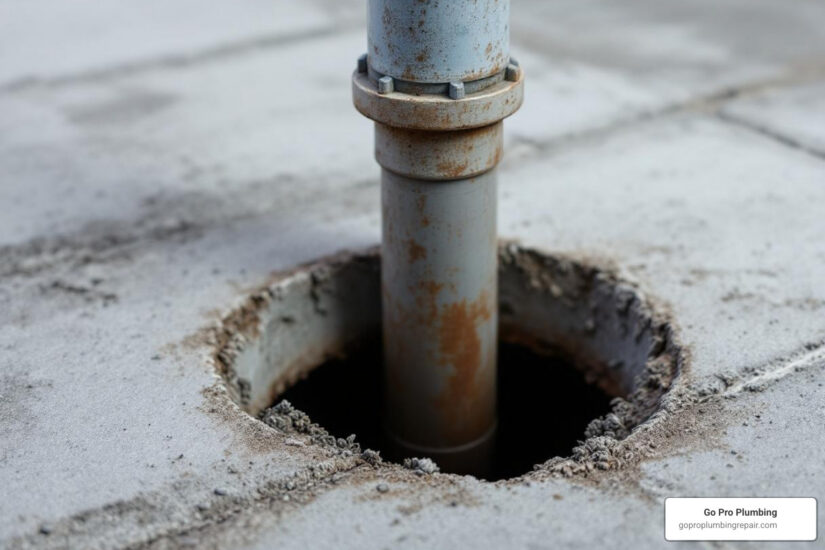
A capped pipe in basement floor can be confusing. If you’ve found pipes sticking up from your concrete basement floor, they are typically one of the following:
Most Common Types:
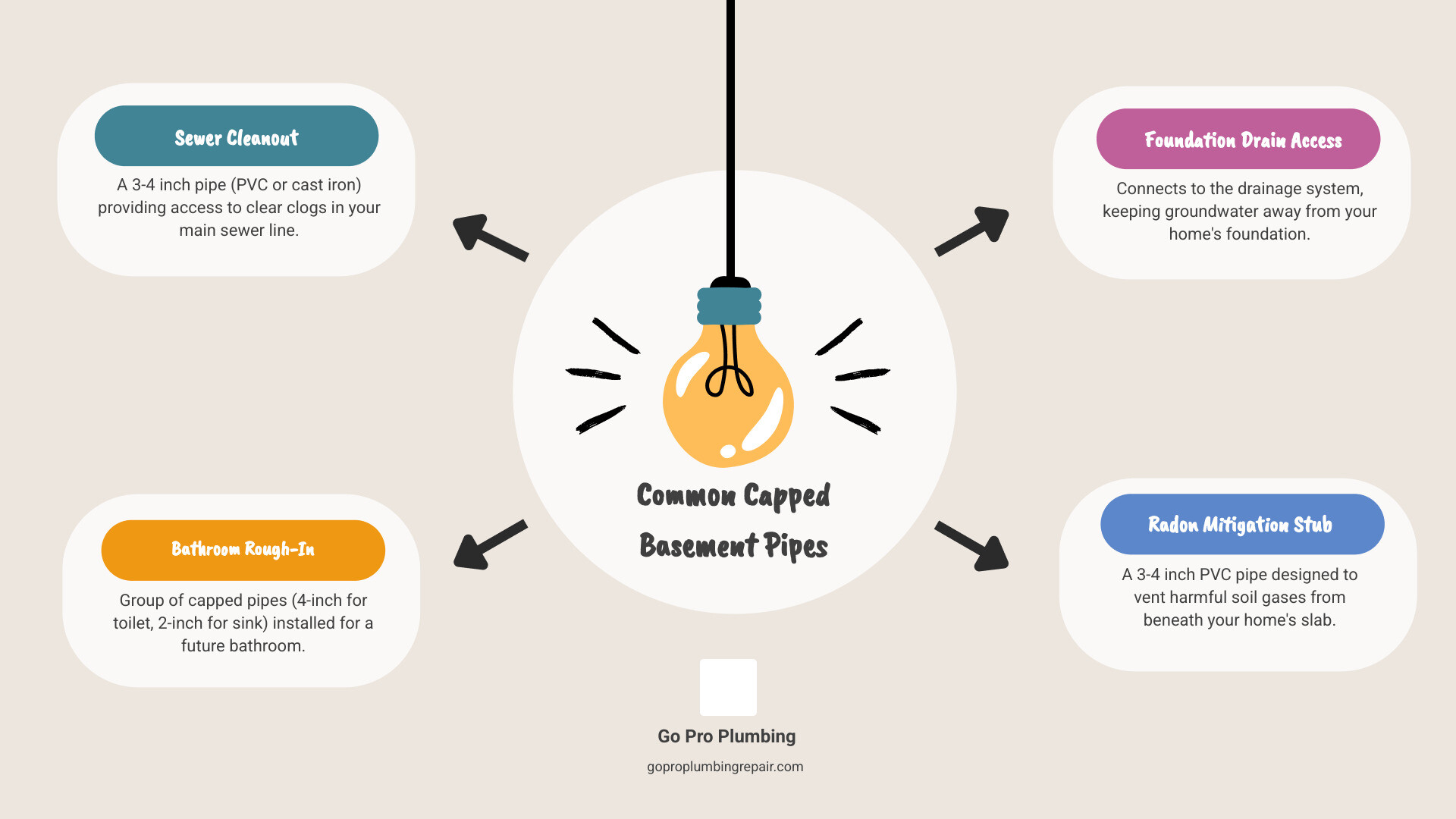
- Sewer Cleanout – A 3-4 inch pipe (usually PVC or cast iron) that provides access to clear clogs in your main sewer line.
- Bathroom Rough-In – A group of capped pipes (typically a 4-inch for a toilet and a smaller 2-inch for a sink) installed for a future bathroom.
- Foundation Drain Access – Connected to the drainage system that keeps groundwater away from your foundation.
- Radon Mitigation Stub – A 3-4 inch PVC pipe designed to vent harmful soil gases from beneath your home.
Finding a capped pipe can be puzzling, whether you’re planning a renovation or are just curious. Many homeowners share this uncertainty. For example, one was confused by a property description listing ‘basement capped drains’ instead of a clear ‘bathroom rough-in.’
Homes built after 1920 typically have networks of pipes beneath the basement floor, and understanding them is the first step to using them safely. Some are part of your current drainage system, others are for future additions like bathrooms, and some are critical for health, like radon mitigation systems.
With a few simple observations, you can narrow down what your capped pipe is for. This article will walk you through identifying your basement pipes, understanding their purposes, and knowing when to call a professional.
First Steps: How to Identify a Capped Pipe in Your Basement Floor
This section helps you play detective with that mystery pipe. Identifying its purpose is the first step before you can decide what to do with it, whether you’re planning a renovation or just want peace of mind.
Common Purposes of Capped Basement Pipes
Understanding the common uses for a capped pipe in basement floor is the first step in deciphering its mystery:
- Sewer Cleanout: A critical 3-4 inch pipe (PVC or cast iron) with a threaded cap. It provides direct access to your main sewer line, allowing plumbers in Rancho Cordova or Sacramento to clear blockages. It’s essential that these remain accessible.
- Future Bathroom Rough-in: Many homes have plumbing rough-ins for a future basement bathroom. These appear as a group of capped pipes: a large 4-inch pipe for the toilet and smaller 2-inch pipes for a sink, shower, or vent. They make future bathroom additions much simpler.
- Foundation Drainage Access: Homes built after 1920 often have foundation drains to collect groundwater. A capped pipe might be an access point for this system, allowing for inspection or maintenance.
- Radon Mitigation System: In areas with radon, a single 3-4 inch PVC pipe may be part of a radon mitigation system. It vents harmful soil gases from beneath the slab to the outside. This is a critical safety feature that requires professional guidance if altered.
A Homeowner’s Guide to Identifying Your Capped Pipe in Basement Floor
To identify your pipe, look for these clues:
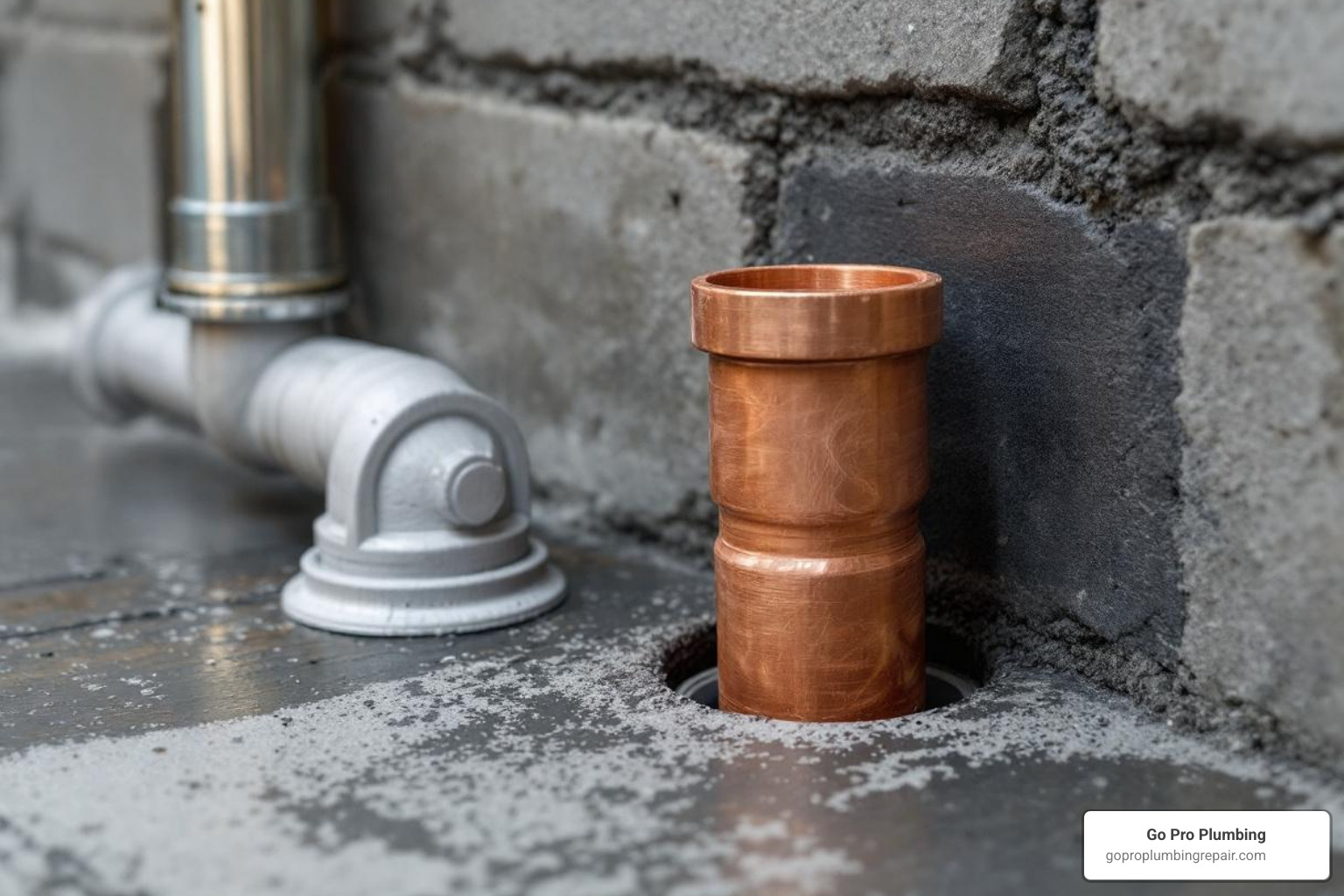
- Measure Pipe Diameter: Size is a strong clue. A 4-inch pipe is usually for a toilet. A 2-inch pipe is for a sink, shower, or vent. A copper pipe stub could be a sink waste or vent.
- Identify the Material: Common materials are PVC (white), ABS (black), cast iron, or copper. Cast iron is common in older Northern California homes and can indicate age and purpose, like an old toilet waste line.
- Note the Location: A cleanout is often near the sewer exit. A bathroom rough-in is a group of pipes in a suitable layout. A radon pipe might be in a corner or against a wall.
- Check for Groupings: Multiple pipes together (e.g., a 4-inch pipe with smaller 2-inch pipes) strongly suggest a bathroom rough-in.
When to Call a Professional for Identification
While this guide helps, some situations require a professional. Go Pro Plumbing is ready to help homeowners in Rancho Cordova and Sacramento. Call an expert if you have:
- Persistent Uncertainty: If you’re still not sure about the pipe’s purpose, it’s best to consult an expert to avoid costly mistakes.
- Signs of Moisture or Leaks Around the Pipe: Any dampness or discoloration is a red flag for a leak or drainage issue that needs immediate attention.
- Planning to Connect Fixtures or Build Over the Pipe: Before you modify, connect, or build over a pipe, confirm its function. Our team can use in-pipe cameras to verify the pipe’s destination and condition.
- Suspected Damage to the Pipe or Cap: A cracked or missing cap can risk sewer gas leaks, water intrusion, or pest entry.
- More info about sewer cleanout services
From Future Bathroom to Radon Vent: Specific Uses for Capped Pipes
Once you have an idea of what your pipe might be, you can explore its potential. Some capped pipes are opportunities for expansion, while others serve a critical, ongoing function for your home’s health and safety.
Is It a Bathroom Rough-In?
The dream of adding a basement bathroom often starts with those enticing capped pipes in basement floor. A cluster of pipes often indicates a bathroom rough-in.
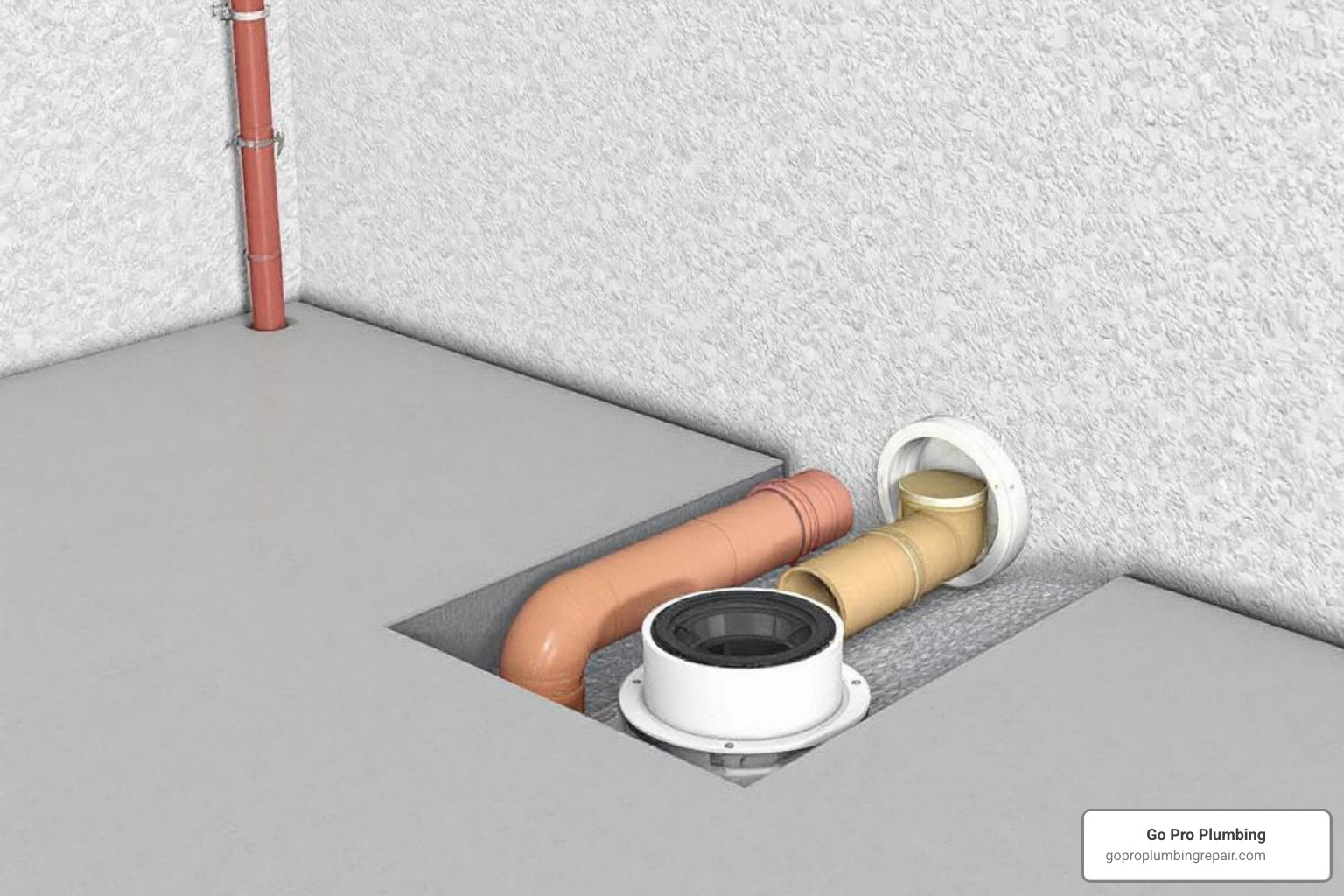
- What to Look For: A typical rough-in includes a 4-inch pipe for the toilet and one or more 2-inch pipes for a sink, shower, and vent. These are usually grouped in an area that makes sense for a bathroom layout.
- Connecting a Bathroom: Connecting a bathroom involves these general steps:
- Uncapping and Preparing: The caps must be removed.
- Toilet Connection: For the 4-inch toilet line, you’ll install a toilet flange. This is more involved with cast iron pipes and may require chipping concrete to fit a modern flange, a job often best left to experienced plumbers. A compression flange must sit flush with the finished floor.
- Sink/Shower Connections: Connect sink and shower drains to the smaller pipes, installing P-traps to block sewer gas. Exposed pipes can be concealed within a cabinet.
- Permits and Codes: Adding a bathroom requires permits and must meet local codes. Go Pro Plumbing can ensure your project is up to code in Sacramento and Northern California.
Could It Be for Radon Mitigation?
If you’ve found a single 3-4 inch PVC capped pipe in basement floor, it could be for radon mitigation.
- Radon Gas Basics: Radon is a naturally occurring radioactive gas from the soil that can seep into homes. It is colorless and odorless, and long-term exposure is a leading cause of lung cancer. In areas like Northern California, mitigation can be a concern.
- Radon Pipe Characteristics: A radon pipe is a 3-4 inch PVC pipe that vents soil gases, including radon, from under the slab to the outside. It’s often connected to a network of perforated pipes in the gravel bed below.
- Passive vs. Active Systems: A “passive” system uses natural air convection. If radon levels remain high, a fan can be added, creating an “active” system that pulls the gas out.
- Importance of Radon Testing: Even if you have what looks like a radon rough-in, it’s crucial to test your home for radon to confirm if the system is needed and working effectively. The EPA provides valuable information on this topic.
- Learn more about radon-resistant construction
Understanding Your Basement’s Water Management System
Many pipes in your basement floor are part of a larger system designed to keep your foundation dry. Understanding this system, from historic valves to modern pumps, is key to preventing water damage.
Foundation Drains and Their Role
A capped pipe in basement floor may connect to your foundation drain system, which is crucial for keeping your basement dry.
- Groundwater Collection: Foundation drains are perforated pipes under your basement floor that collect and channel groundwater away from your foundation to prevent seepage.
- Historical Context: Homes in Northern California built after 1920 almost certainly have this system to prevent dampness, leaks, and structural damage.
- How They Work: The pipes are laid in gravel, allowing water to enter easily and flow to a discharge point or a sump pit.
- Technical guide on Footing Drain Pipes
The Shift from Palmer Valves to Sump Pumps
How foundation drains discharge water has evolved from older palmer valves to modern sump pumps.
- Palmer Valve Definition: A palmer valve, found in homes built before approximately 1954, is a check valve that connected the foundation drain directly to the sanitary sewer. A flap allowed groundwater to flow into the sewer.
- Why They’re Being Removed: Palmer valves are now removed because they were prone to rust and failure. More importantly, releasing groundwater into the sanitary sewer is now illegal in many areas, including Northern California, as it can overwhelm public systems and cause backups. We help homeowners in Sacramento and Rancho Cordova avoid this costly problem.
- Post-1954 Sump Pump Requirement: Due to these issues, homes built after 1954 are required to direct foundation drains to a sump pump, which sends water to the lawn or storm sewer. Older homes with a palmer valve often need it replaced with a sump pump.
Sump Pump Essentials and Backup Systems
A sump pump is a critical part of your basement’s water management, especially in areas with heavy rain or high water tables.
- Sump Pump Function: A sump pump sits in a sump pit in your basement floor. As groundwater fills the pit, a float switch activates the pump, which moves the water away from your home to a safe discharge point at least six to ten feet away from your foundation.
- Common Problems and Solutions: Even the best sump pumps can encounter issues:
- Running Constantly: This could indicate a problem with the float switch, a high water table, or a discharge pipe obstruction. Check the float for obstructions.
- Not Running: Check if it’s plugged in and if the circuit breaker has tripped. Test the float switch by pouring water into the pit. If it still doesn’t activate, the motor might be faulty.
- Cycling Often: If the pump turns on and off too frequently, it might be due to a faulty check valve or an improperly sized pump.
- Noisy Operation: Unusual noises can signal debris in the impeller, a worn-out motor, or loose piping.
- Testing Your Pump: We recommend testing your sump pump regularly, especially before the rainy season in Northern California. Simply pour a bucket of water into the sump pit. The pump should activate, drain the water, and then shut off. If it doesn’t, it’s time to call in the pros.
- Should I Consider a Backup System? Absolutely! A sump pump is only effective if it has power. In areas like Rancho Cordova and Sacramento, power outages can occur during heavy storms—precisely when your sump pump is needed most. A backup system ensures your basement remains dry even when the power goes out.
- Types of Backup Systems: We typically recommend one of three main types of backup systems:
| Backup System | Pros | Cons |
|---|---|---|
| Battery Backup | – Automatic activation during power outages. – Relatively easy to install. – Can run for several hours, depending on battery size and pump activity. – No reliance on municipal water. |
– Limited run time; typically 6-12 hours of continuous pumping. – Batteries require regular maintenance and replacement (every 3-5 years). – May not be sufficient for prolonged power outages or extremely heavy rainfall. – Can be expensive to replace batteries. |
| Water-Powered | – Runs indefinitely as long as municipal water pressure is available. – No battery to maintain or replace. – Does not require electricity to operate. – Very reliable for long power outages. |
– Relies on municipal water supply; not suitable for homes with well water or if city water is interrupted. – Can significantly increase your water bill during use, as it uses city water to create suction. – Requires a certain level of water pressure to operate effectively. – May not be allowed by all local plumbing codes due to cross-connection concerns. |
| Generator Backup | – Can power the sump pump and other essential household appliances during a power outage. – Provides power for an extended duration, limited only by fuel supply. – Automatic (standby generators) or manual (portable generators) options. – Not reliant on municipal water. |
– High upfront cost for installation (especially standby generators). – Requires fuel (natural gas, propane, gasoline) which must be stored or supplied. – Portable generators must be operated outdoors due to carbon monoxide risk. – Requires regular maintenance (engine, fuel lines). – Not economical if solely used for a sump pump; best for whole-house backup. |
Risks, Repairs, and Finishing Your Basement
Whether you’re leaving the pipe as is or finishing your basement, you need to address it safely. Improperly handling a capped pipe in basement floor can lead to serious issues, but there are safe ways to conceal it while maintaining necessary access.
Dangers of an Improperly Capped Pipe in Basement Floor
An uncapped or improperly capped pipe poses several significant risks:
- Sewer Gas Leaks: If connected to the sewer, an improper cap can leak sewer gases (containing hydrogen sulfide) into your basement. This causes a foul smell and can lead to health risks like headaches and nausea.
- Water Damage and Flooding: A poorly sealed pipe is an entry point for water. A sewer backup could flood your basement through an open cleanout. Old, faulty palmer valves also created pressure that could crack floors and walls, causing water intrusion.
- Pest Entry Point: Gaps or loose caps are an open invitation for insects and rodents to enter your home.
- Mold and Mildew Growth: A small, persistent leak creates the perfect environment for mold and mildew, which can damage materials and cause health issues.
How to Safely Cover or Conceal Capped Pipes
When finishing your basement, a capped pipe in basement floor can be an eyesore. However, accessibility is non-negotiable, especially for sewer cleanouts. A cleanout must be easy to find when needed. Here are smart ways to conceal pipes while maintaining access:
- Install a Flush-Mounted Cleanout Plug: Replace the cap with a flush plug that sits level with the floor. You can paint it to match your flooring for a simple, effective solution.
- Use a Decorative, Removable Cover Plate: Fit your flooring around the flush plug and place a decorative cover plate on top. This allows for easy removal when access is needed.
- Build a Removable Access Panel: For a seamless look, build a small, removable access panel into your flooring, cut from the same material. This works well if the pipe isn’t flush or if you need to access multiple pipes.
- Strategically Place Furniture or a Rug: The simplest solution is often to place a rug or piece of furniture over the pipe. This conceals it without any modification and keeps it accessible.
For more creative ideas and discussions on covering floor pipes, you can check out some DIY ideas for covering a floor pipe.
Conclusion: Taking the Next Step with Your Basement Pipes
That capped pipe in basement floor is a clue to your home’s plumbing, drainage, or ventilation systems. Identifying its purpose—whether it’s a potential bathroom, a critical cleanout, a foundation drain access, or a radon mitigation stub—empowers you to make informed decisions for your home. If you’re in Northern California and need a professional eye to identify a pipe or address any plumbing concerns, the team at Go Pro Plumbing offers same-day service and expert advice.
Your Professional Plumbing Solution
Understanding the nuances of each capped pipe in basement floor can be complex, and sometimes, a professional’s insight is indispensable. Our team at Go Pro Plumbing is equipped with the knowledge and tools to identify, service, and maintain all types of basement plumbing. We offer:
- Expert Pipe Identification: We can accurately determine the purpose of any mysterious capped pipe in your basement.
- Drain Cleaning: Whether it’s a clogged cleanout or a slow floor drain, we provide efficient and thorough drain cleaning services.
- Sump Pump Services: From installation to troubleshooting common problems and recommending backup systems, we ensure your basement stays dry.
- Bathroom Plumbing Installation: If you’re ready to turn that bathroom rough-in into a functional space, we handle all aspects of plumbing installation.
Don’t let a mystery pipe turn into a problem. Schedule your professional plumbing service today with Go Pro Plumbing in Rancho Cordova or Sacramento, and let us help you understand and manage your home’s essential systems.