
Going Down the Drain: The Best Way to Unclog Tub Drains Fast
By Brian on July 24, 2026
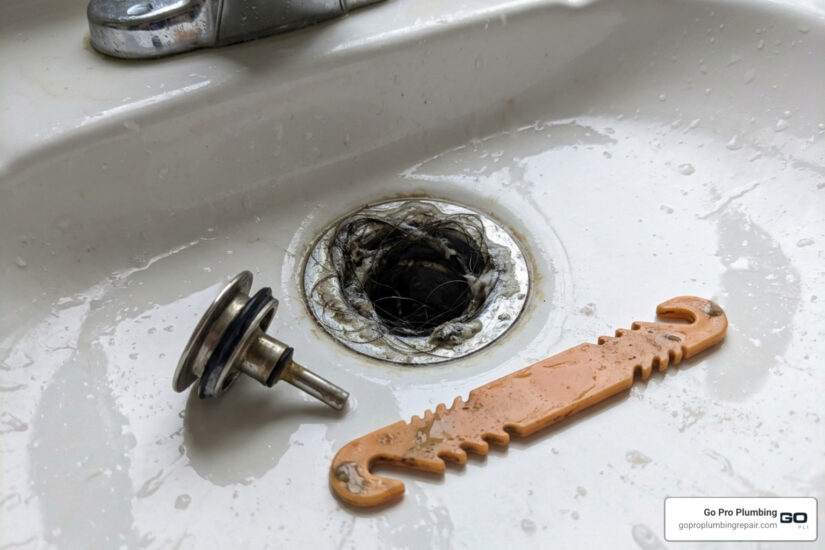
Why Your Bathtub is Clogged: Common Causes and Warning Signs
The best way to unclog tub drain blockages fast — without calling a plumber — is to work through these steps in order:
- Remove the drain stopper and pull out visible hair with your fingers or a Zip-It tool
- Seal the overflow drain with a wet rag, then plunge vigorously 20-30 times
- Snake through the overflow opening if plunging doesn’t work
- Try baking soda and vinegar for light buildup and odor
- Call a plumber if multiple drains are slow, sewage backs up, or the clog keeps returning
That simple sequence resolves the vast majority of bathtub clogs. In fact, according to experienced plumbers, roughly 80% of drain calls could have been handled at home with basic tools and a little patience — and simply pulling out a hair clog fixes the problem 90% of the time.
If your bathtub is draining slowly — or not at all — you’re not alone. It’s one of the most common plumbing complaints homeowners in Northern California deal with. The good news: most tub clogs sit right at the drain opening, inside the curved pipe just below it, and they’re almost always reachable without cutting into walls or pulling up tile.
This guide walks you through every method, from the quickest two-minute fix to knowing exactly when it’s time to stop DIYing and pick up the phone.
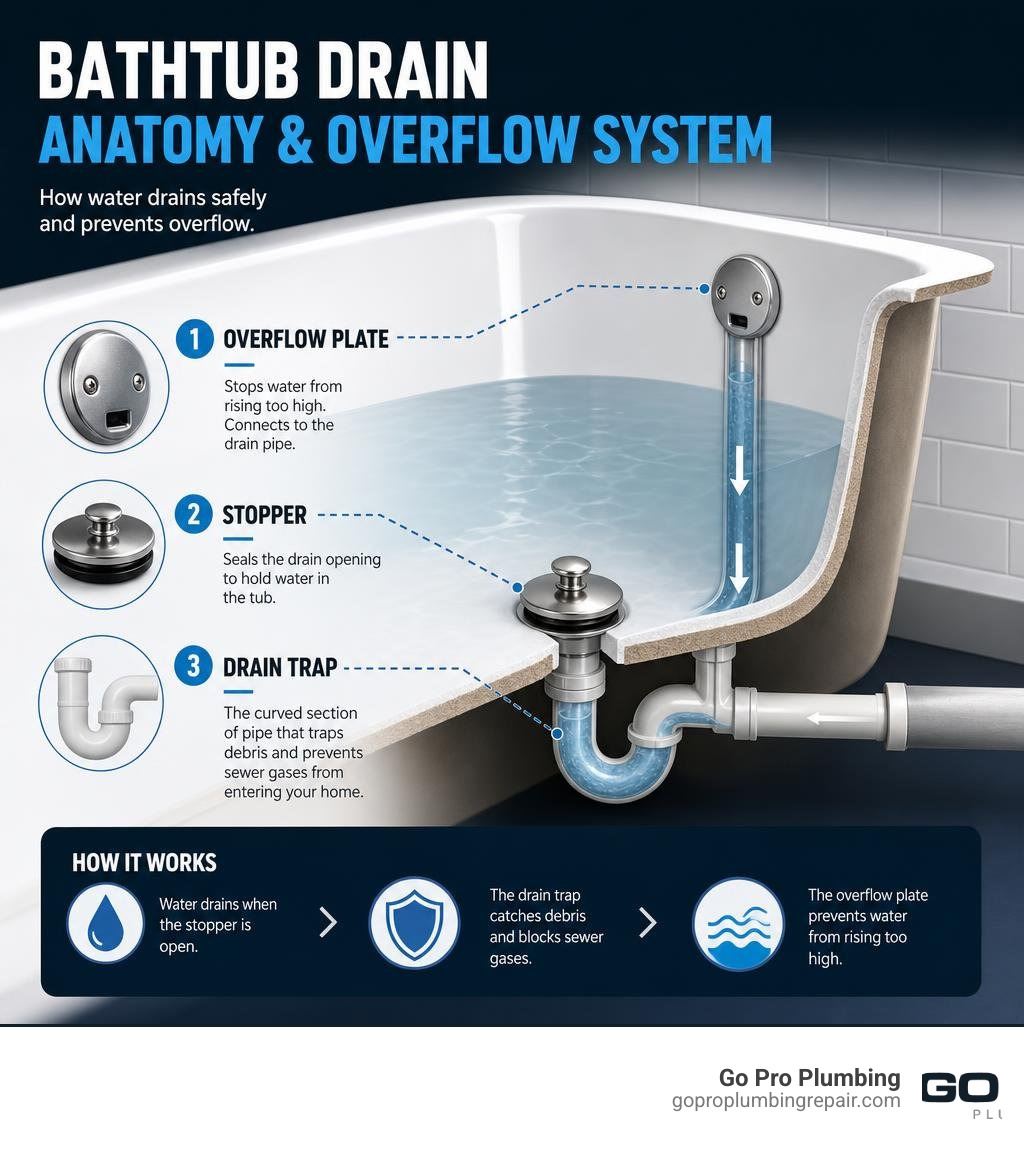
Best way to unclog tub drain vocab to learn:
Before we dive into the physical methods, it helps to understand what is actually happening beneath the surface. Bathtub drains are unique because they handle a very specific cocktail of waste: long hair, heavy soap scum, body oils, and skin cells.
When you lather up, soap residue mixes with the natural oils on your skin and hair. This sticky mixture, known as soap scum, clings to the rough interior walls of your pipes. As loose hair washes down the drain, it catches on this sticky residue. Over time, this forms a dense, fibrous mat that acts like a net, trapping more soap, dirt, and debris.
For homeowners in the Sacramento and Rancho Cordova areas, there is an additional culprit: hard water. The ground water in Northern California contains elevated levels of dissolved minerals like calcium and magnesium. As hard water flows down your drain, these minerals slowly precipitate out, forming a crusty, white scale on the inside of your pipes. This mineral scaling narrows the pathway for water and creates an incredibly rough surface that accelerates hair and soap scum buildup.
How do you know a complete blockage is on the horizon? Your drain will usually give you several warning signs:
- The Slow Drain: Water begins pooling around your ankles during what should be a quick shower. This is the classic “foot bath” scenario indicating a partial restriction.
- The Gurgling Sound: As water struggles to pass through a restricted pipe, air is forced back up, producing a distinct gurgling or burping sound.
- Foul Odors: Organic debris trapped in the drain becomes a breeding ground for bacteria and mold. This produces hydrogen sulfide gas, which smells like rotten eggs.
If you are experiencing these issues in a combined shower-tub unit, you might also want to check out our guide on Unclogging Shower Drain lines to see how shower-specific configurations differ.
The Best Way to Unclog Tub Drain: Step-by-Step DIY Methods
When you are facing a tub filled with dirty, standing water, it can be incredibly frustrating. However, you do not need to panic or immediately call for professional help. By taking a systematic approach, you can safely clear the blockage yourself.
Before starting, gather some basic safety gear. We strongly recommend wearing thick, waterproof protective gloves and safety glasses. Bathtub drains contain stagnant water, bacteria, and potentially harsh residues from previous cleaning attempts. Protecting your skin and eyes is a non-negotiable first step.
Step 1: Remove the Bathtub Stopper to Access the Drain
To access the physical clog, you must first remove the bathtub stopper. This is often the most intimidating part for beginners, but most stoppers can be removed in under two minutes once you identify the mechanism.

Here is how to handle the most common types:
- Lift-and-Turn: Set the stopper to the “open” position. Lift it slightly and turn it counterclockwise. Look closely under the cap; if it does not spin off easily, there is likely a small set screw hidden underneath the rim. Loosen this screw with a flathead screwdriver or Allen wrench, and the stopper will lift right out.
- Toe-Touch (Push-Button): Push down to open the stopper. Hold the base cylinder firmly with one hand while unscrewing the top cap counterclockwise with the other. If the entire shaft spins, look for a flat spot on the center post to grip with pliers while you unscrew the top.
- Push-Pull: Hold the bottom knob of the stopper while turning the top cap counterclockwise to unscrew and remove it.
- Trip-Lever Assembly: This type does not have a traditional stopper on the drain floor; instead, a lever on the overflow plate controls a plunger inside the pipe. To remove this, unscrew the two screws on the overflow plate under the faucet. Gently pull the plate away from the tub wall, and the entire metal linkage rod and brass plunger assembly will slide out of the overflow tube.
For a detailed visual guide on identifying and removing these mechanisms, you can watch How to Clear a Clogged Bathtub Drain | This Old House or refer to How to Unclog a Tub Drain – Bath – How To Videos and Tips at The Home Depot.
Step 2: Use a Zip-It Tool for the Best Way to Unclog Tub Drain Hair Clogs
Once the stopper is out of the way, you are ready to target the number one cause of tub blockages: hair.
The single best way to unclog tub drain hair clogs is using a cheap, plastic barbed drain tool, often called a Zip-It tool. These flexible plastic strips cost less than $5 at local hardware stores but are incredibly effective.
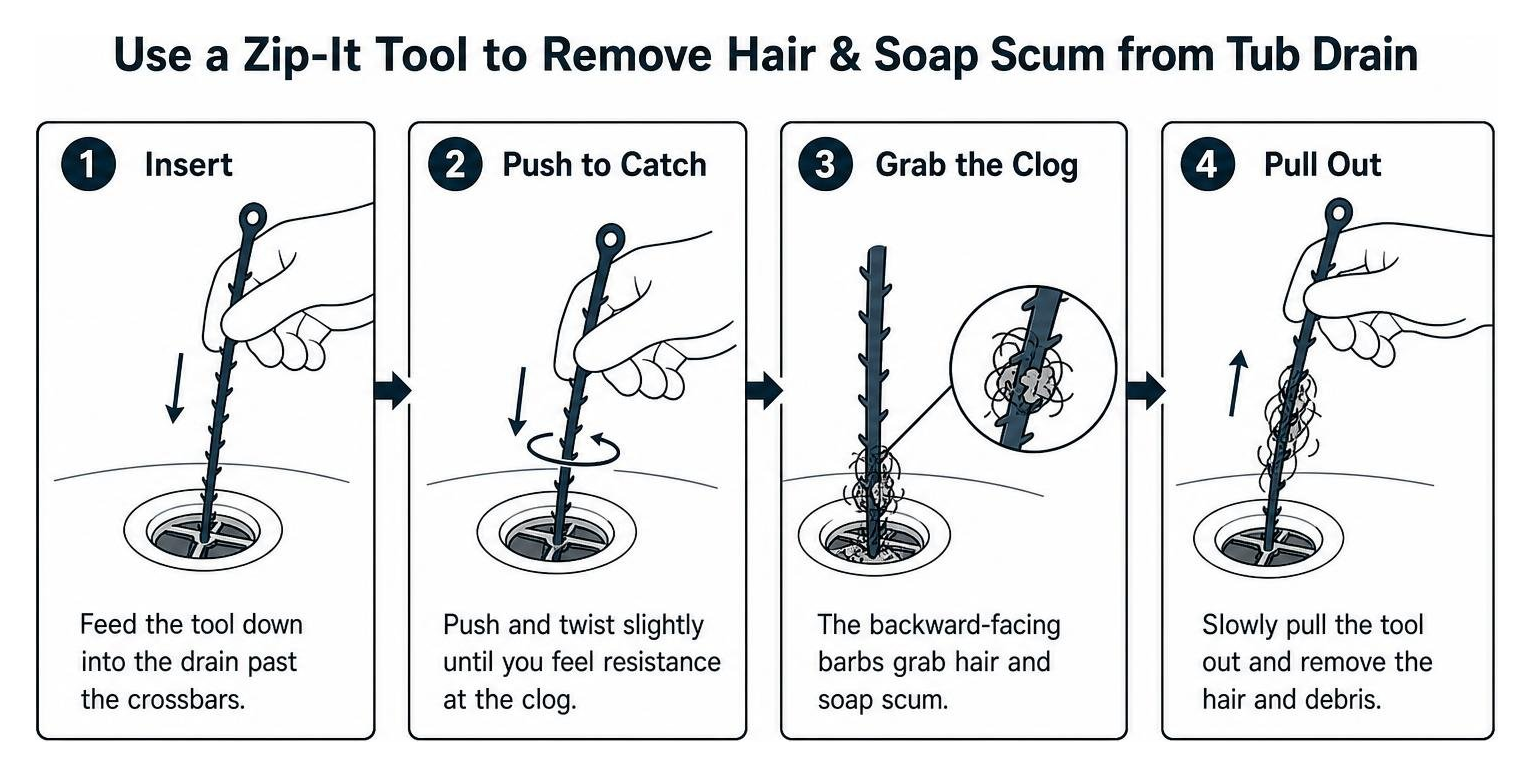
To use a Zip-It tool:
- Slowly feed the plastic tool directly down into the drain opening.
- Push it past the drain crossbars until you feel resistance (usually about 6 to 12 inches down, where the P-trap sits).
- Push and twist the tool slightly to ensure the backward-facing barbs grab onto the hair fibers.
- Slowly and steadily pull the tool back out of the drain.
- Be prepared: it will pull up a dense, wet, and often foul-smelling mass of hair and soap scum. Use a paper towel to slide the hair off the tool, and repeat the process until the tool comes back clean.
If you do not have a Zip-It tool, you can straighten a wire coat hanger and use needle-nose pliers to fashion a small hook on the end. This makeshift tool can hook and pull out shallow hair mats just as effectively. For stubborn hair blockages that are slightly deeper, you can also explore specialized products designed to dissolve organic materials, which we discuss in our guide on the Best Drain Cleaner for Hair and Grease.
Step 3: Plunge the Drain with the Overflow Trick
If manual hair removal does not completely clear the blockage, the clog is likely lodged deeper in the P-trap. The next logical step is to use physical pressure to push or pull the clog loose.
Plunging a bathtub is highly effective, but most homeowners do it wrong. If you simply place a plunger over a tub drain and push, nothing will happen. This is because of the tub’s overflow drain—the silver plate located on the tub wall beneath the faucet. The overflow pipe connects directly to the main drain line. When you plunge, the air and water pressure you generate simply escapes out of the overflow opening rather than pushing against the clog, reducing your plunging efficiency by up to 40%.
To plunge a bathtub correctly:
- Remove the overflow plate (if you haven’t already).
- Take a wet washcloth, rag, or a thick piece of duct tape and stuff it tightly into the overflow opening. This seals the system and prevents air from escaping.
- Ensure there are 2 to 3 inches of standing water in the tub basin so the rubber cup of your plunger is fully submerged.
- Apply a thin ring of petroleum jelly (Vaseline) around the rim of a standard flat-bottomed cup plunger to create a tighter seal.
- Place the plunger flat over the main drain opening, ensuring a tight seal against the tub floor.
- Plunge vigorously with 15 to 20 fast, controlled, up-and-down strokes. Focus on the upward pulling motion just as much as the downward push, as this helps dislodge and lift the clog back up.
- Remove the plunger. If the water rushes down the drain, you have successfully broken up the clog!
For more tips on dealing with standing water during this process, read How to Unclog a Bathtub Drain with Standing Water – Archute.
Step 4: Use a Drain Snake Safely Through the Overflow
If plunging fails, you need a mechanical tool that can reach deeper into the pipe. A standard 15- to 25-foot hand drum auger (drain snake) is the perfect tool for this.
However, never attempt to snake a bathtub drain through the bottom drain opening. The bottom drain has a sharp, 90-degree turn that can easily trap or damage your snake, and forcing a metal cable through this opening can scrape or puncture older pipes. Instead, you should always snake a bathtub through the overflow opening. This provides a much straighter, gentler path directly into the P-trap and main drain line.
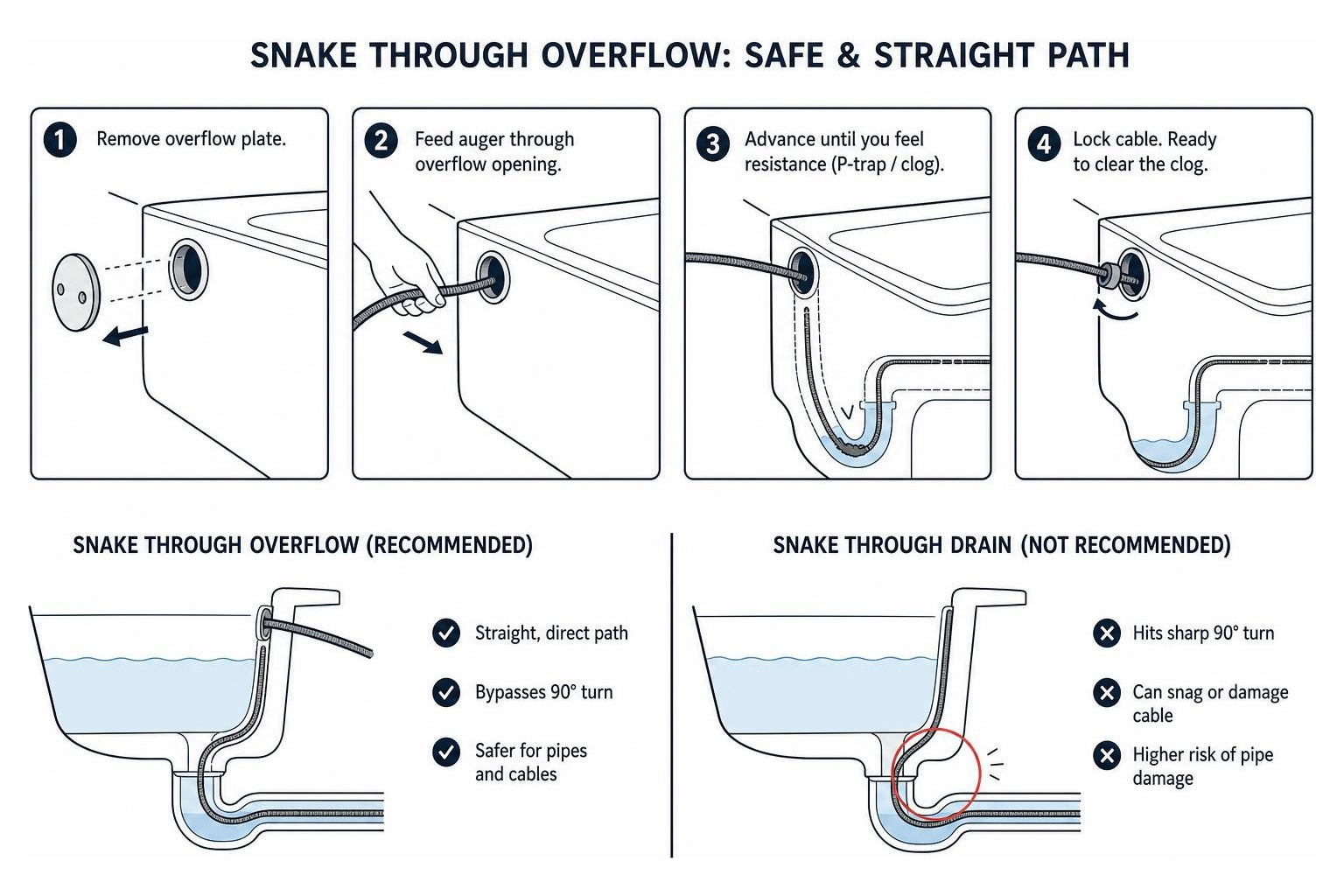
How to snake your tub safely:
- Lay down an old towel or dropcloth on the porcelain tub floor to prevent the metal cable from scratching the finish.
- Ensure the overflow plate is removed.
- Manually feed the snake cable down into the overflow opening. Keep feeding it until you feel resistance, which indicates you have reached the P-trap or the clog itself.
- Once you hit resistance, lock the cable slider.
- Turn the drum handle slowly clockwise while applying gentle forward pressure. This rotates the auger head, allowing it to “bite” into the clog or navigate the pipe curves.
- If the cable gets stuck, pull back slightly, then push forward again using short, controlled motions.
- Once you feel the cable pass through the restriction, slowly retrieve the cable, wiping it down with a rag as you wind it back into the drum.
- Flush the system with hot water for several minutes to verify that the drain flows freely.
For a broader overview of snaking techniques across different household fixtures, check out How to Unclog a Drain Pipe: A Step-by-Step DIY Guide.
Household Remedies and Chemical Cleaners: What Actually Works?
When physical tools aren’t enough, many homeowners turn to chemical or natural pour-in solutions. However, not all drain cleaners are created equal, and some can do far more harm than good.
To help you decide which approach is best for your situation, we have put together this comparison table:
| Method Type | Best For | Safety Risk | Effectiveness | Pipe Compatibility |
|---|---|---|---|---|
| Mechanical (Zip-It, Plunger, Snake) | Physical blockages, dense hair mats | Very Low | High (clears 80-90% of clogs) | All pipe types (PVC, Cast Iron, Brass) |
| Natural Remedies (Baking Soda & Vinegar) | Light organic buildup, preventative maintenance, deodorizing | None | Low to Moderate (won’t clear solid hair) | All pipe types |
| Enzyme Cleaners | Ongoing maintenance, organic sludge prevention | None | Slow (takes 6-8 hours) | All pipe types |
| Caustic Chemicals (Drano, Liquid-Plumr) | Last resort for single-fixture clogs | High (chemical burns, pipe corrosion) | Moderate (temporary fix) | Avoid on older metal/cast iron and PVC |
| Professional Hydro-Jetting | Severe, deep blockages, mineral scale | None (handled by pros) | Extremely High (95%+ success) | All structurally sound pipes |
Baking Soda and Vinegar: The Best Way to Unclog Tub Drain Debris Naturally
If you want to avoid harsh chemicals, a classic baking soda and vinegar flush is an excellent natural option. While this method is often overhyped online as a miracle cure for solid hair blockages, it is highly effective at breaking down light organic sludge, soap scum, and eliminating foul odors.
The science behind this trick is simple. Baking soda (sodium bicarbonate) is a base, and white vinegar (acetic acid) is an acid. When they mix, they undergo a chemical reaction that releases carbon dioxide gas. This foaming, fizzing action mechanically agitates and loosens the grimy buildup clinging to the pipe walls, making it easier to flush away.
To perform a baking soda and vinegar flush:
- Ensure all standing water has been removed from the tub.
- Pour 1/2 cup of baking soda directly down the drain opening.
- Follow with 1/2 cup of white vinegar.
- Immediately cover the drain with a plug or wet rag to trap the carbon dioxide gas and force the reaction downward into the pipe.
- Let the mixture fizz and sit for 15 to 30 minutes.
- Flush the drain thoroughly with a large pot of hot water.
For more details on how to use this natural remedy safely, see our comprehensive guide on Baking Soda and Vinegar Drain Cleaner.
The Truth About Chemical Drain Cleaners and Boiling Water
It is incredibly tempting to walk down the home improvement aisle and grab a bottle of caustic liquid drain cleaner. However, as professional plumbers, we strongly advise against using these products.
Most chemical drain cleaners contain highly corrosive ingredients like sodium hydroxide (lye) or sulfuric acid. These chemicals work by generating extreme exothermic heat to melt and dissolve organic matter. While this might clear a temporary path, that intense heat can warp or melt plastic PVC pipes and accelerate corrosion in older galvanized steel or cast iron pipes. Furthermore, if the chemical fails to clear the clog, you are left with a tub of highly toxic, caustic standing water. This poses a severe chemical burn hazard to you and any plumber who must work on the line afterward.
Additionally, you must be extremely careful with boiling water. While boiling water (212°F) is great for flushing grease out of metal pipes, never pour boiling water down a drain if you have PVC pipes. Modern homes standardly use PVC, which is only rated to withstand continuous temperatures of up to 140°F. Pouring boiling water directly down a PVC drain can soften the plastic, warp the joints, and cause hidden under-slab leaks. Instead, use hot tap water or let near-boiling water cool for a minute before pouring.
If you must use a pour-in product, look for enzyme-based or bacterial drain cleaners. These products use natural bacteria to consume organic waste over several hours, making them completely safe for your pipes and the environment. You can learn more about choosing safer alternatives in our article on the Best Drain Cleaner.
Dos and Don’ts of Bathtub Drain Maintenance
The easiest clog to clear is the one that never forms. By establishing a quick, simple maintenance routine, you can keep your bathtub draining perfectly year-round.
- DO install a hair catcher: A simple $5 to $12 mesh drain protector or a specialized product like a TubShroom catches 90% of hair before it ever enters your plumbing system. Simply clean it off after every few showers.
- DO brush your hair before bathing: Brushing your hair before you step into the tub removes loose strands, significantly reducing the amount of hair that washes down the drain.
- DO run a weekly hot water flush: At the end of every week, run hot tap water down your tub drain for 2 to 3 minutes to flush away fresh soap residue before it can solidify.
- DO warn your plumber if you used chemicals: If you attempted to use a chemical drain cleaner and it failed, always inform your plumber before they begin working to prevent chemical burns.
- DON’T wash heavy oils or bath bombs down the drain: Heavy bath oils, petroleum-based body products, and bath bombs containing glitter or clay congeal inside cold pipes, creating stubborn, waxy blockages.
- DON’T mix different drain cleaning products: Mixing acid-based and chlorine-based cleaners can create highly toxic, lethal chlorine or chloramine gases.
- DON’T force a drain snake: If you feel solid, metallic resistance while snaking, do not force the tool. You could puncture a pipe wall or damage your plumbing assembly.
For more information on selecting safe preventative products, explore our guide on Drain Cleaning Products.
Frequently Asked Questions about Bathtub Clogs
How do I unclog a bathtub drain with standing water?
Dealing with standing water requires a specific approach. First, you should manually scoop out the standing water using a bucket or cup, leaving just enough water (about 2 to 3 inches) to cover the rubber cup of a plunger.
Next, seal the overflow drain with a wet rag or duct tape to create a closed system. Place a cup plunger flat over the drain and plunge aggressively. The water in the tub will act as a hydraulic ram, transferring the physical force of your plunge directly to the clog. Avoid pouring chemicals into standing water, as this will only dilute the product and create a hazardous pool of caustic water.
For more detailed troubleshooting on this scenario, refer to How to Unclog a Bathtub Drain: From Hair Clogs to Full Blockages.
How do I know if the clog is in the trap or deeper in the main line?
If only your bathtub is draining slowly, the clog is almost certainly localized within the first 10 feet of the drain line, typically inside the P-trap directly beneath the tub.
However, if you notice multiple fixtures backing up simultaneously—for example, if water backs up into the bathtub when you flush the toilet, or if the toilet bubbles and gurgles when the tub drains—the blockage is located deeper in your home’s main sewer line. This is a severe issue that cannot be resolved with standard DIY hand tools and requires professional diagnostic equipment.
When should I stop trying DIY methods and call a professional plumber?
While DIY methods are highly successful, you should stop trying to fix the issue yourself and contact a professional if:
- Multiple drains in your home are backed up at the same time.
- Sewage is backing up into your tub or shower basin.
- You smell a persistent, foul sewer gas odor in your bathroom.
- You have cleared the exact same bathtub clog three or more times within a single year.
- You have tried plunging and snaking, but the water remains completely still.
Attempting to force heavy tools or continuing to use harsh chemicals when a clog won’t budge can lead to broken pipes and costly structural repairs. If you have reached your DIY limits, it is time to search for a trusted Drain Cleaning Plumber Near Me to resolve the issue safely.
Conclusion
Taking care of a clogged bathtub drain does not have to be a stressful or expensive ordeal. By following a safe, logical order of operations—starting with manual hair removal, moving to a properly sealed plunge, and snaking through the overflow—you can successfully clear 80% of blockages on your own.
However, if you are dealing with a stubborn, recurring clog, or if you suspect the blockage is located deep in your main sewer line, we are here to help.
At Go Pro Plumbing, we provide expert residential and commercial plumbing solutions throughout Northern California, including Sacramento and Rancho Cordova. We are committed to delivering outstanding customer service, transparent pricing, and same-day service when you need us most.
If your bathtub is giving you trouble and you want it fixed right the first time, contact us today to schedule our Professional Drain Cleaning Services. Let our licensed team restore your pipes to perfect flow!