
Stop the Squelch with These Easy Heating Pipe Repair Tips
By Brian on June 17, 2026
What to Do When Your Central Heating Pipe Is Leaking
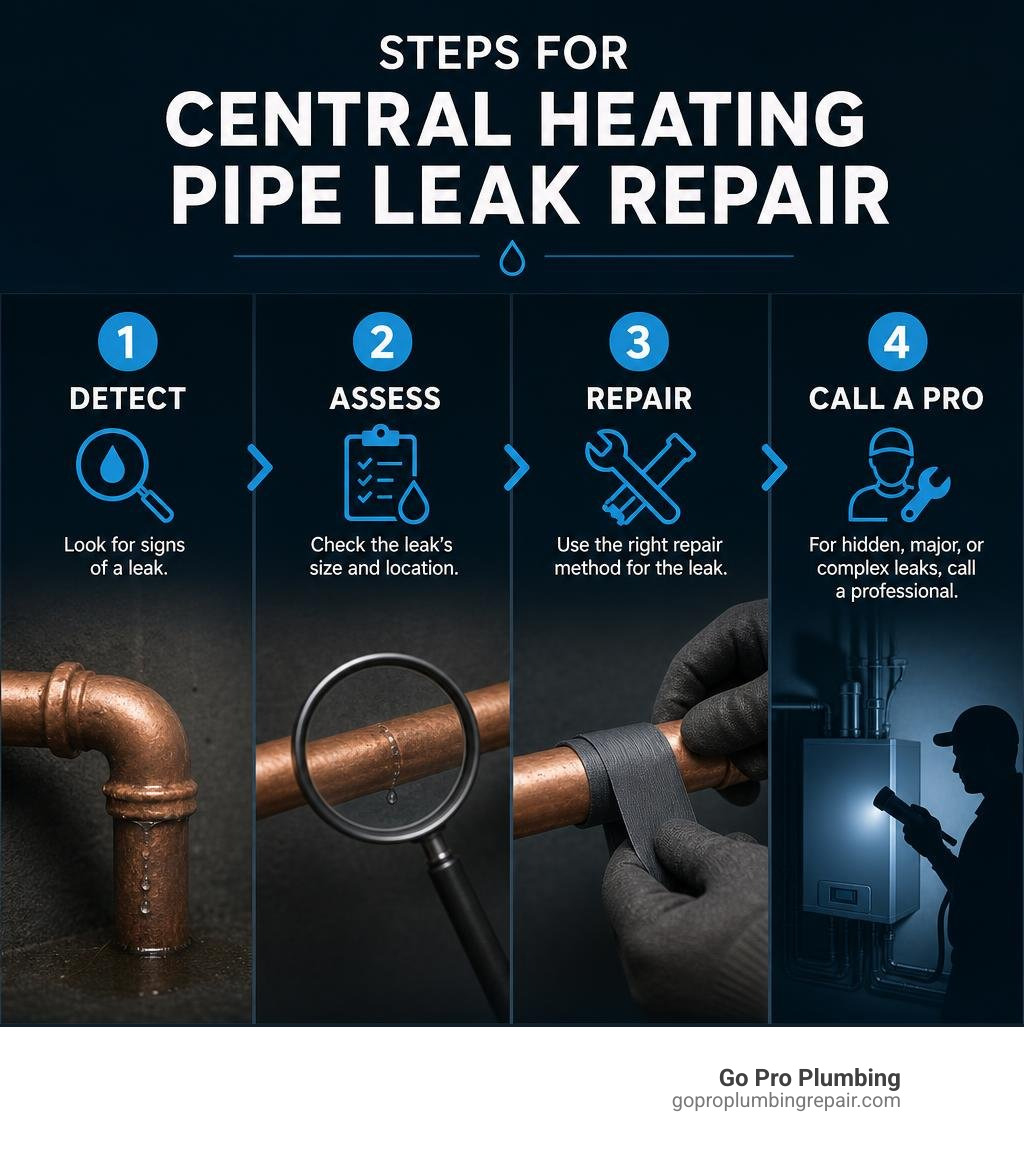
Central heating pipe leak repair is something most homeowners need to deal with at some point — and the sooner you act, the less damage you’ll face.
Here’s a quick overview of your options:
- Minor weeping joint or pinhole leak — Add an internal chemical leak sealer dosed through the system (no drainage needed).
- Small accessible leak on a copper or PEX pipe — Apply epoxy putty or self-fusing silicone tape as a fast temporary fix.
- Moderate leak on an accessible pipe — Use a fiberglass wrap repair kit for a pressure-resistant, longer-lasting seal.
- Hidden leak behind walls or under floors — Call a professional for thermal imaging or gas tracer detection.
- Major burst, galvanized steel pipe, or boiler-adjacent leak — Call a licensed plumber. Don’t DIY this one.
That squelching sound underfoot. A damp patch creeping across the ceiling. A boiler that keeps losing pressure for no obvious reason. These are the tell-tale signs of a central heating leak — and they rarely fix themselves.
The bad news? Even a small leak can cause serious damage over time. Rotting floorboards, mold growth, and boiler breakdowns are all real risks if a leak goes unaddressed. In some cases, homeowners have discovered that a hidden pipe was slowly dripping for months before any visible sign appeared.
The good news is that many central heating pipe leaks can be fixed quickly — sometimes in under 30 minutes — with the right products and a little know-how. This guide walks you through exactly how to find the leak, choose the right repair method, and know when it’s time to call in a pro.
Common central heating pipe leak repair vocab:
Common Causes and Hidden Risks of Heating Pipe Leaks
To understand how to tackle a central heating pipe leak repair, we first need to look at why these systems fail in the first place. Central heating systems in Northern California homes operate under constant stress. They endure high temperatures, fluctuating water pressure, and chemical reactions that happen inside the metal lines.
Here are the most common culprits behind a leaking central heating pipe:
- Corrosion from the Inside Out: Over time, the water circulating through your heating system reacts with the metal pipes. If the system is not treated with a corrosion inhibitor, rust and black iron oxide sludge build up. This causes pinhole leaks, particularly in older copper or steel pipes.
- Thermal Expansion and Contraction: When your heating turns on, hot water rushes through the lines, causing the metal to expand. When the system turns off, the pipes cool down and contract. This constant movement can cause pipes to rub against wooden floor joists, gradually wearing away the outer wall of the pipe until a leak develops.
- Poor Soldering and Weak Joints: Many older homes in Sacramento and Rancho Cordova have copper pipes joined by solder. If the original installer didn’t apply the solder perfectly, or if structural vibrations have stressed the joint over the years, these connections can begin to weep.
- Structural Vibrations: The physical movement of the home, foot traffic on the floors above, and the vibration from circulating pumps can put stress on rigid pipe joints, leading to hairline cracks.
Ignoring a small, slow drip is one of the most expensive mistakes a homeowner can make. Because heating pipes are often tucked away under floorboards or behind drywall, a minor leak can go unnoticed for months.
The hidden risks of letting a leak slide include:
- Structural Rot: Wood absorbs moisture rapidly. A slow drip can rot floor joists, subfloors, and drywall, leading to thousands of dollars in structural repairs.
- Toxic Mold Growth: Damp, warm spaces behind walls are the perfect breeding ground for mold and mildew, which can compromise your indoor air quality.
- Boiler Damage: A leaking pipe causes constant pressure drops in your heating system. To keep the heating running, you have to keep topping up the system with fresh, oxygen-rich water. This fresh water introduces more oxygen into the system, accelerating internal corrosion and eventually ruining your boiler’s heat exchanger.
- Slab Damage: If your heating pipes run through or beneath a concrete slab foundation, a leak can wash away the supporting soil, leading to foundation cracking. For more on how to spot and handle these deep-seated issues, check out our Slab Leak Repair Complete Guide.
How to Detect a Leak Without Tearing Down Your Walls
One of the biggest hurdles in central heating pipe leak repair is finding the exact spot where the water is escaping. Nobody wants to tear up beautiful hardwood floors or smash through pristine drywall on a wild goose chase. Fortunately, modern leak detection technology allows us to pinpoint hidden leaks with minimal disruption.
Before calling in the heavy equipment, you can perform a few simple checks yourself:
- Monitor the Pressure Gauge: If you have a sealed heating system, check the pressure gauge on your boiler. If you find yourself constantly topping it up because the pressure keeps dropping below 1 bar, you almost certainly have a leak.
- Look for Cold Spots: If a radiator has a cold spot near the bottom, or if a section of your floor feels unusually warm (or cold), it could indicate a localized loss of hot water or a pool of water escaping beneath the floorboards.
- Check for Damp Carpets or Stains: Walk your home barefoot to feel for damp spots on carpets, and inspect basement ceilings for water stains.
When these basic checks fail, professional leak detection methods are highly effective:
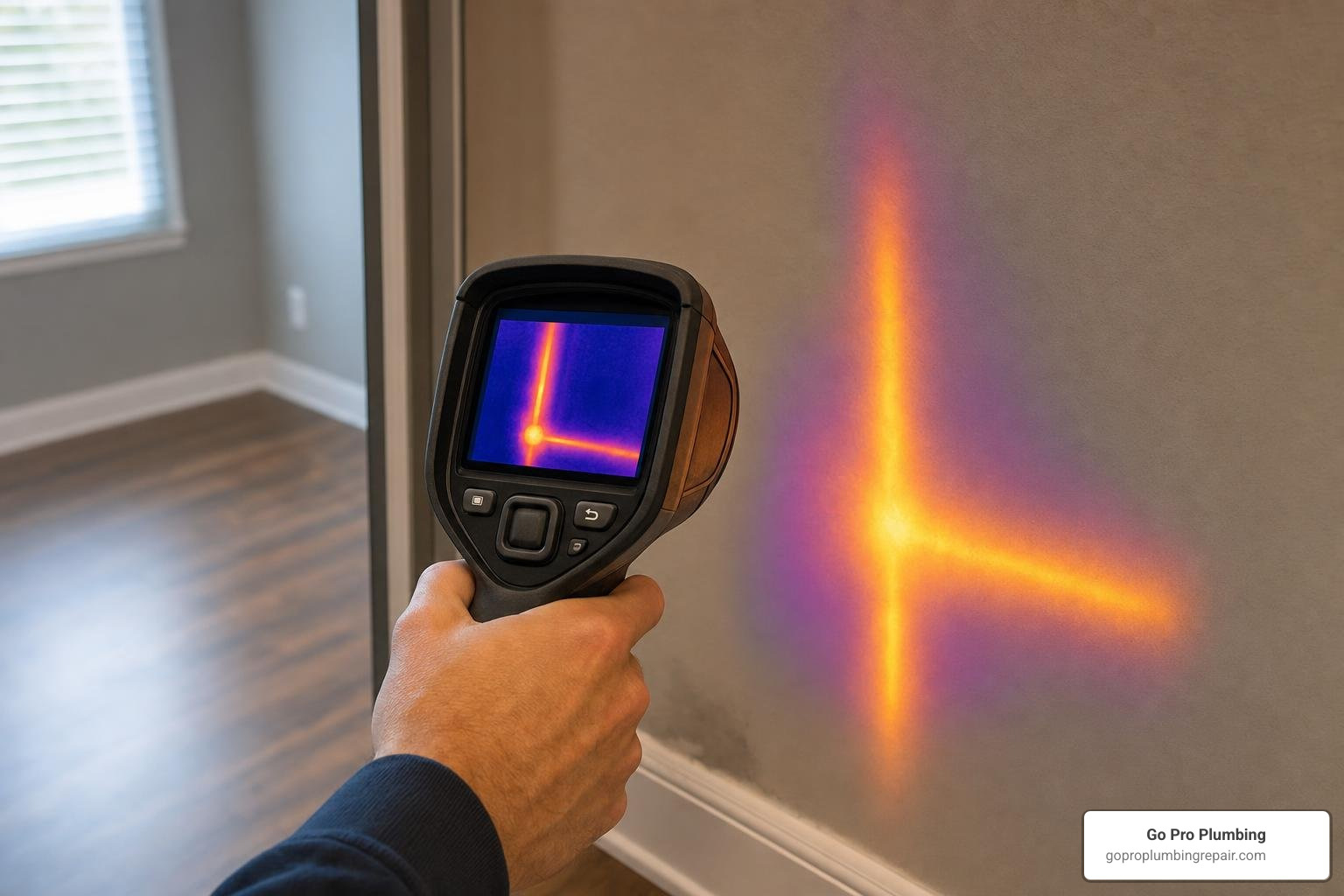
- Thermal Imaging: Using a specialized infrared camera, we can map the hot water lines directly through wood, plaster, and concrete. A leak will show up as a blooming plume of heat where the hot water is escaping into the surrounding structure.
- Acoustic Listening Devices: Water escaping from a pressurized pipe makes a distinct hissing or whispering sound. Using sensitive ground microphones, technicians can listen through floors and walls to find the exact source of the noise.
- Gas Tracer Detection: This is the gold standard for hard-to-find micro-leaks. The heating system is drained and filled with a safe, non-toxic tracer gas (usually a mixture of nitrogen and hydrogen). Because gas molecules are smaller than water, they escape through the tiniest cracks and rise to the surface, where sensitive gas detectors sniff them out. Specialist leak detection services using this equipment can save you thousands of dollars in unnecessary demolition.
If you suspect a hidden leak in your system, it is always wise to review your homeowner’s insurance policy. Many policies include a “trace and access” clause, which covers the cost of locating the leak (including the cost of hiring professionals with thermal and gas detection equipment), even if the actual pipe repair itself is not fully covered.
For comprehensive local assistance, you can learn more about our professional Leak Detection Sacramento services to get the problem diagnosed without making a mess of your home.
Step-by-Step Guide to DIY Central Heating Pipe Leak Repair
If the leaking pipe is easily accessible—such as under a sink, in an unfinished basement, or in a utility closet—you may want to attempt a DIY repair. Before you grab your toolbox, safety must be your top priority.
Safety Precautions to Take Before Starting
- Turn Off the Power: Central heating systems are connected to electricity. If water is spraying near electrical outlets, wiring, or the boiler itself, shut off the main electrical breaker to that zone immediately.
- Avoid Hot Water Burns: Heating systems operate at high temperatures (often up to 180°F or higher). Turn off the heating system and allow the water to cool down completely before touching any pipes or joints.
- Shut Down the System and Drain: Locate the isolation valves for the leaking section of pipe, or shut off the main water supply to the system. If you need to cut into a pipe, you must drain the system first to avoid a sudden flood of dirty heating water.
Essential DIY Pipe Repair Tools
Before starting, gather the following materials:
- Nitrile gloves and safety goggles
- Emery cloth or fine-grit sandpaper
- Deburring tool (for copper or PEX)
- A high-quality temporary repair kit, such as the 1/2 in. Push-to-Connect Brass Burst Pipe Repair Kit
- Epoxy putty or self-fusing silicone tape
Step-by-Step DIY Repair Process
Step 1: Clean and Prepare the Surface
For any external repair product to bond, the pipe must be completely clean. Use your emery cloth or sandpaper to vigorously scrub the pipe around the leak. Remove all rust, scale, dirt, and paint until you see bare, shiny metal or clean plastic. Wipe the area down to remove any remaining dust.
Step 2: Apply the Temporary Seal (For active weeps or pinholes)
If you are using epoxy putty, cut off a small piece and knead it in your gloved hands until it turns a uniform color. Press the putty firmly directly over the pinhole, smoothing the edges flat against the pipe.
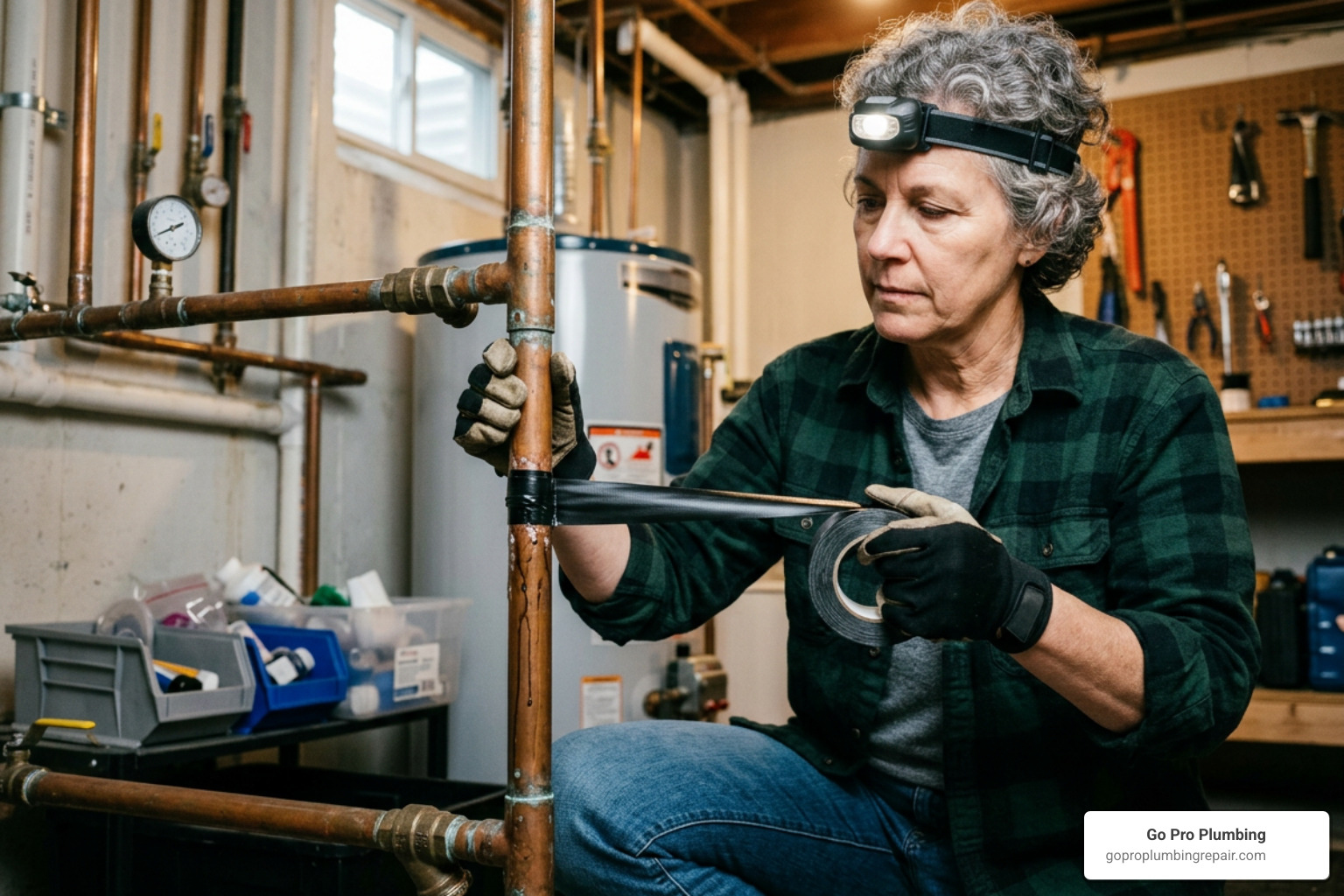
If using self-fusing silicone tape, wrap it tightly around the pipe, stretching it to 300% of its original length as you wrap. Ensure each layer overlaps the previous one by at least half the tape’s width to build a strong, cohesive seal.
Step 3: Install a Push-to-Connect Burst Kit (For broken or burst sections)
If a section of your copper or PEX pipe has split—often due to freezing temperatures—you can use a push-to-connect repair sleeve.
- Use a pipe cutter to remove the damaged section of the pipe. Make sure your cuts are straight and square.
- Use a deburring tool to clean the inside and outside edges of the cut pipe ends.
- Slide the push-to-connect fitting onto one end of the pipe, then slide it back over the other end using the disconnect tool, creating a solid, watertight bridge without the need for soldering or glue.
If you are dealing with a burst line caused by winter weather, you can read more about how to safely Repair Frozen Pipe systems to prevent further damage to your home.
Comparing the Best Central Heating Pipe Leak Repair Products
When you stand in the plumbing aisle of your local hardware store, the sheer number of leak repair products can be overwhelming. Choosing the right product depends on the size of the leak, whether you can shut off the water pressure, and how long you need the repair to last.
Here is a breakdown of the most common repair products on the market:
- Epoxy Putty: This is a hand-kneadable, steel-reinforced epoxy. It is incredibly easy to use and hardens in about 5 to 10 minutes. Once fully cured, high-quality epoxies are resistant to pressures up to 30 bar (435 psi) and can withstand high temperatures. It is an excellent choice for sealing pinholes in copper, steel, or iron pipes.
- Silicone Compression Tape: Often sold as “self-fusing” tape, this product does not use adhesive. Instead, it chemically bonds to itself when wrapped under tension. It is highly flexible and can be applied to wet pipes or even live, low-pressure leaks.
- Fiberglass Wraps: Products like the SylWrap Universal Leaking Pipe Repair Kit combine a water-activated fiberglass bandage with epoxy putty and silicone compression tape. This creates a multi-layered, structural repair that can withstand temperatures up to 200°C (390°F) and pressures up to 30 bar. It is ideal for larger cracks or joint repairs.
- Internal Chemical Sealers: For hard-to-reach weeping joints or micro-fractures, products like VITCAS Central Heating Leak Sealer are injected directly into the central heating water. These liquid sealers circulate through the system and react chemically with the air only at the point of the leak, forming a localized internal plug without blocking narrow boiler channels or pumps.
| Repair Product | Best For | Max Temp | Max Pressure | Curing Time |
|---|---|---|---|---|
| Epoxy Putty | Small pinholes, dry pipes, rigid joints | ~120°C (248°F) | Up to 30 bar | 10–30 minutes |
| Silicone Tape | Low-pressure live leaks, odd angles | ~200°C (392°F) | Up to 10 bar | Instant (self-fusing) |
| Fiberglass Wrap | Large cracks, high-pressure lines, structural strength | ~200°C (392°F) | Up to 30 bar | 30 minutes |
| Chemical Sealer | Inaccessible weeping joints, micro-leaks | System operating temp | N/A (Internal) | 1–24 hours |
When to Call a Professional for Central Heating Pipe Leak Repair
While DIY repairs are great for saving money on a Sunday afternoon, some situations require specialized skills, heavy-duty diagnostic tools, and professional licensing.
Attempting to fix a complex heating issue yourself can lead to costlier damage, voided equipment warranties, or a complete heating system failure. If you are dealing with an active emergency or a leak you cannot easily access, don’t hesitate to contact our team for rapid Emergency Plumbing Repair Service.
Evaluating the Complexity of Central Heating Pipe Leak Repair
Before you pick up a wrench, evaluate these four critical factors:
- Pipe Material: If your home has old galvanized steel pipes, DIY patches rarely hold. Galvanized steel corrodes from the inside out along the entire run of the pipe; patching one spot often causes the pipe to crumble further down the line. Transitioning older steel systems to modern copper or PEX requires professional equipment and fittings.
- Joint Location: A leak occurring directly at a welded joint or a complex manifold is incredibly difficult to seal with tape or putty. These areas experience intense thermal stress and require professional soldering or repiping.
- System Age: Older heating systems are fragile. Applying pressure to tighten a joint on an aging system can easily break a nearby pipe, turning a small drip into a major flood.
- Specialized Tools: If the leak is located beneath your floorboards, behind plaster walls, or inside a concrete slab, you need professional thermal imaging and acoustic detection equipment to avoid destroying your home’s interior.
Why Professional Central Heating Pipe Leak Repair Saves Money
Hiring a licensed plumber might seem like an added expense upfront, but it almost always saves you money in the long run:
- Diagnostic Accuracy: We don’t guess where the leak is. Our advanced tools locate the exact source of the problem, meaning we only cut drywall or lift flooring where absolutely necessary.
- Long-Term Durability: A DIY patch is a temporary bandage. A professional repair involves cutting out the bad section of pipe and installing permanent, code-compliant fittings that will last for decades.
- Water Damage Prevention: We have the equipment to quickly drain, isolate, and dry out the affected area, preventing mold growth and structural rot before they can take hold.
- Licensed Expertise: Our work is fully insured and compliant with Northern California building codes, protecting your home’s resale value and keeping your manufacturer warranties intact.
Frequently Asked Questions about Heating Pipe Leaks
Can I use a chemical leak sealer in a condensing boiler?
In general, most modern boiler manufacturers advise against using chemical leak sealers in systems with high-efficiency condensing boilers. Condensing boilers feature highly compact, narrow water channels within their aluminum or stainless steel heat exchangers.
Because chemical sealers are designed to react and harden, there is a risk they can build up inside these narrow pathways, reducing heat transfer efficiency or causing a complete blockage. Furthermore, using unapproved chemical additives can void your boiler’s manufacturer warranty. Always consult your boiler’s manual or ask a professional plumber before adding any chemicals to your system.
How long does a temporary pipe repair last?
Temporary repair products like epoxy putty, silicone compression tape, and emergency pipe clamps are designed to buy you time, not to serve as permanent fixes. Under the constant heat and pressure cycles of a central heating system, these materials will eventually degrade.
- Epoxy Putty & Silicone Tape: Typically last anywhere from a few weeks to a few months depending on the system’s operating temperature and pressure.
- Fiberglass Wraps: Can last significantly longer—sometimes several years—but they still should not replace a proper pipe replacement.
Treat all external wraps and putties as emergency solutions to keep your heat running until you can schedule a permanent, professional repair.
How can I prevent future central heating pipe leaks?
The best way to handle a pipe leak is to prevent it from happening in the first place. Follow these three maintenance steps to protect your heating system:
- Use Corrosion Inhibitors: Have a professional treat your heating system water with a high-quality chemical corrosion inhibitor. This chemical coats the inside of your pipes, preventing the chemical reactions that cause rust, scale, and pinhole leaks.
- Schedule Annual Maintenance: Have your heating system inspected every year before the winter chill sets in. A plumber can check system pressure, inspect visible joints, and catch minor weeps before they turn into major leaks.
- Monitor System Pressure: Check your boiler’s pressure gauge once a month. A sudden or gradual drop in pressure is your early warning system that a leak is developing somewhere in your home.
- Perform Regular System Flushes: If your system is older, a professional power flush can remove accumulated black iron oxide sludge, restoring heating efficiency and preventing localized corrosion.
Conclusion
A leaking central heating pipe is a headache, but it doesn’t have to ruin your home. By acting quickly, identifying the source of the leak, and applying the right temporary fix, you can protect your property from costly water damage.
However, when temporary patches aren’t enough, or if your pipes are hidden deep behind your walls or under your floors, you need a team you can trust. Go Pro Plumbing is proud to serve homeowners throughout Rancho Cordova, Sacramento, and Northern California with outstanding customer service and reliable same-day service.
Whether you need a quick diagnostic check or a complete pipe replacement, our licensed team is here to help. Contact us today to schedule your professional Water Line Repair and keep your home warm, dry, and safe all year round!