
The Throne Whisperer: Easy DIY Toilet Repairs for Any Skill Level
By Brian on January 30, 2026

Why Learning to Repair a Toilet Saves You Time and Money
When you need to repair a toilet, most problems fall into these common categories that you can fix yourself:
Most Common Toilet Problems & Quick Fixes:
- Running Toilet – Replace the flapper or adjust the float ($10-20, 30 minutes)
- Weak or No Flush – Check water level, clean rim jets, or replace flapper ($0-20, 15-45 minutes)
- Leaking at Base – Replace wax ring and reset toilet ($15-30, 2-3 hours)
- Slow Filling – Clean or replace fill valve ($15-25, 30 minutes)
- Rocking Toilet – Tighten bolts or add shims ($5-10, 20 minutes)
Toilets are simple devices, meaning most toilet repairs don’t require a plumber. A professional plumber in Northern California can charge $75 to $150 per hour, turning a $15 DIY fix into a $200 bill. Plus, a running toilet wastes thousands of gallons of water annually, increasing your utility bills.
You don’t need specialized skills to handle common issues. With basic tools and this guide, you can tackle everything from a running toilet to a leak at the base. We’ll walk you through the most common problems step-by-step, showing you what parts you need and when it’s time to call the pros at Go Pro Plumbing.
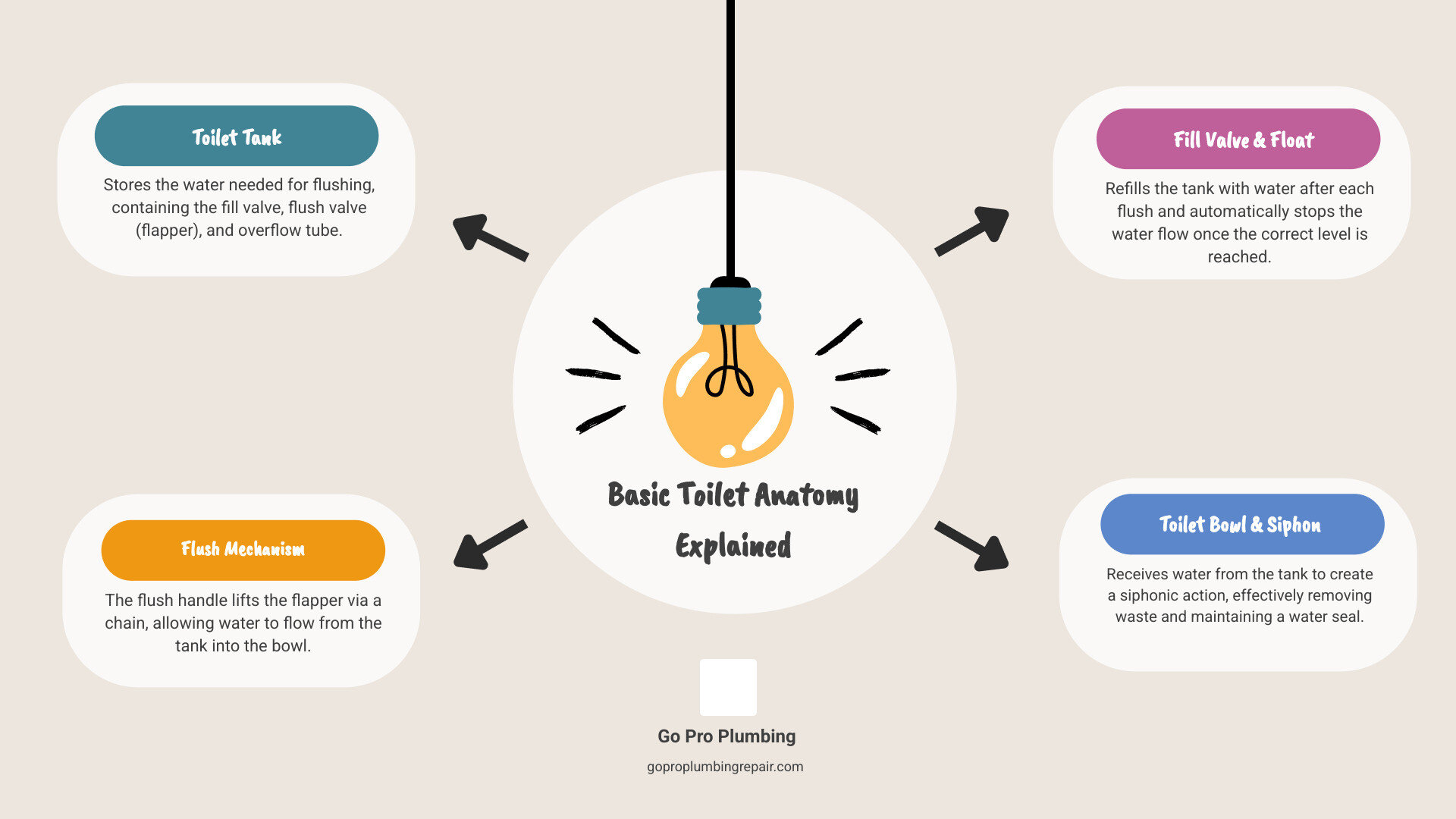
Basic repair a toilet vocab:
Before You Begin: Essential Prep for Any Toilet Repair
Before diving into specific problems, proper preparation is key. Understanding your toilet, gathering tools, and safely shutting off the water are the first steps to a successful toilet repair.
Understanding How Your Toilet Works
A toilet uses gravity to flush. Pressing the handle lifts a flapper, letting water rush from the tank to the bowl, creating a siphon that pulls waste away. The flapper then closes, and a fill valve refills the tank and bowl. Understanding this process helps diagnose problems: a running toilet often means a bad flapper seal or a faulty fill valve. You can learn more about the inner workings on pages like Toilet Repair Help: Learn How to Fix It Yourself. .
Here are the key components:
- Tank & Bowl: The main parts of the toilet.
- Flush Handle & Flapper: The handle lifts the flapper to start the flush.
- Fill Valve & Float: Refills the tank and stops when the float reaches the set water level.
- Flush Valve & Overflow Tube: The flush valve is the opening the flapper covers. The overflow tube prevents the tank from overflowing.
- Water Supply Line: Connects the toilet to the wall’s water supply.
- Wax Ring & Toilet Flange: The flange connects the toilet to the drain, and the wax ring seals it.
Gathering Your Tools and Materials
Have these common tools ready before you start:
- Adjustable Wrench
- Pliers (Channel Locks)
- Screwdrivers (Phillips and Flathead)
- Bucket and Sponge
- Rubber Gloves
- Putty Knife
- Toilet Plunger (Bell-shaped)
- Toilet Auger (Closet Auger)
Depending on the repair, you might also need a replacement flapper, fill valve, wax ring, or shims. For specific needs, check out our Toilet Repair Kit options.
How to Safely Shut Off the Water and Drain the Toilet
This is the most important step. Always shut off the water first!
- Turn Off Water: Find the shut-off valve on the wall or floor behind the toilet and turn it clockwise until tight.
- Empty the Toilet: Flush the toilet, holding the handle down to drain as much water as possible from the tank and bowl.
- Sponge Dry: Use a sponge and bucket to remove all remaining water from the tank and bowl.
- Disconnect Supply Line (If Needed): For certain repairs, use a wrench to disconnect the water supply line from the bottom of the tank. Keep a towel handy for drips.
Diagnosing and Fixing Common Toilet Problems
Now that you’re prepped, let’s tackle the most frequent toilet woes.
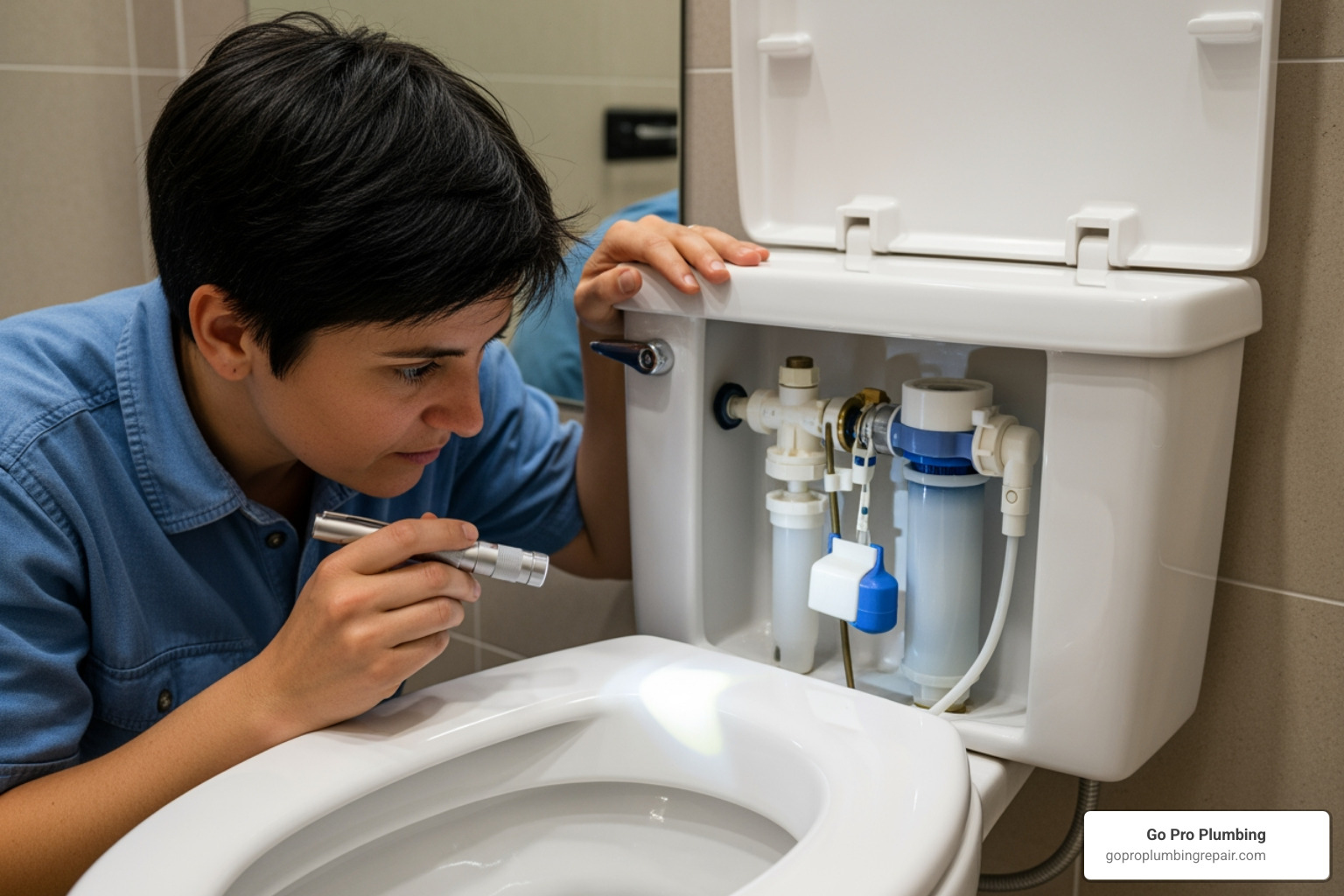
How to Fix a Constantly Running Toilet
A running toilet wastes significant water and money. Fixing it is a manageable DIY task. For more details, check resources from the EPA.
Signs: You hear water continuously filling the tank or see ripples in the bowl.
Common Causes and Fixes:
- Faulty Flapper: A worn, warped, or dirty flapper is the most common cause.
- Fix: Turn off the water, drain the tank, and replace the flapper if it looks damaged. Kits are inexpensive ($10-$20). Find guides on how to fix a running toilet or from This Old House.
- Incorrect Flapper Chain Length: If the chain is too short, the flapper won’t close. If it’s too long, it can get tangled.
- Fix: Adjust the chain to have about 1/2 inch of slack.
- Fill Valve Issues: The fill valve may be set too high, causing water to spill into the overflow tube, or the valve itself may be faulty.
- Fix: The water level should be an inch below the overflow tube. Adjust the float to lower it. If that fails, the fill valve may need cleaning or replacement. For more, see our page on Running Toilet Repair.
How to repair a toilet that won’t flush or has a weak flush
Signs: Water barely swirls, doesn’t drain, or waste remains after flushing.
Common Causes and Fixes:
- Clogged Toilet: This is the most common cause.
- Fix: Use a bell-shaped toilet plunger, creating a tight seal and pumping vigorously. If that fails, use a toilet auger to break up the clog without scratching the porcelain. For severe clogs, you may need our Clogged Toilet Repair Service.
- Low Water Level in Tank: Not enough water means a weak flush.
- Fix: Ensure the water level is about an inch below the overflow tube. Adjust the fill valve float if it’s too low.
- Flapper Not Lifting Fully: This results in a weak flush.
- Fix: Check the chain for proper slack. If the flapper is worn, replace it.
- Clogged Rim Jets: Mineral buildup in the small holes under the rim weakens the flush.
- Fix: Turn off the water and use a small wire or Allen wrench to clear the jets. Pouring vinegar into the overflow tube can help dissolve deposits.
Solving a Slow-Filling or Noisy Toilet
Signs: The tank takes too long to refill, or you hear hissing, whistling, or gurgling noises.
Common Causes and Fixes:
- Partially Closed Shut-Off Valve:
- Fix: Ensure the water shut-off valve is fully open (turned counter-clockwise).
- Clogged or Faulty Fill Valve: Debris can clog the fill valve, causing a slow fill or hissing noises.
- Fix: Turn off the water and drain the tank. Remove the fill valve cap, cover the valve with a cup, and briefly turn the water on to flush debris. If cleaning doesn’t work, replace the valve. See our page on toilet tank not filling for more.
- “Ghost Flushing”: This is a random refilling noise caused by a slow leak from the tank to the bowl.
- Fix: It’s usually a faulty flapper. Follow the steps for a “Constantly Running Toilet.” Also, ensure the refill tube is clipped above the water line in the overflow tube.
Fixing a Loose Handle or Noisy Seat
Signs: The flush handle is loose or stuck; the toilet seat shifts or slams down.
Common Causes and Fixes:
- Loose or Stuck Toilet Handle:
- Fix: Tighten the mounting nut inside the tank (it may be reverse-threaded). Check that the lift chain isn’t tangled or too tight.
- Noisy or Slamming Toilet Seat:
- Fix: Tighten the bolts under the hinge caps. For slamming, upgrade to a slow-close seat. Replace the seat if it’s cracked or the hinges are broken.
Advanced DIY Guide to repair a toilet
Some problems, like leaks at the base, are more involved but still manageable with patience.
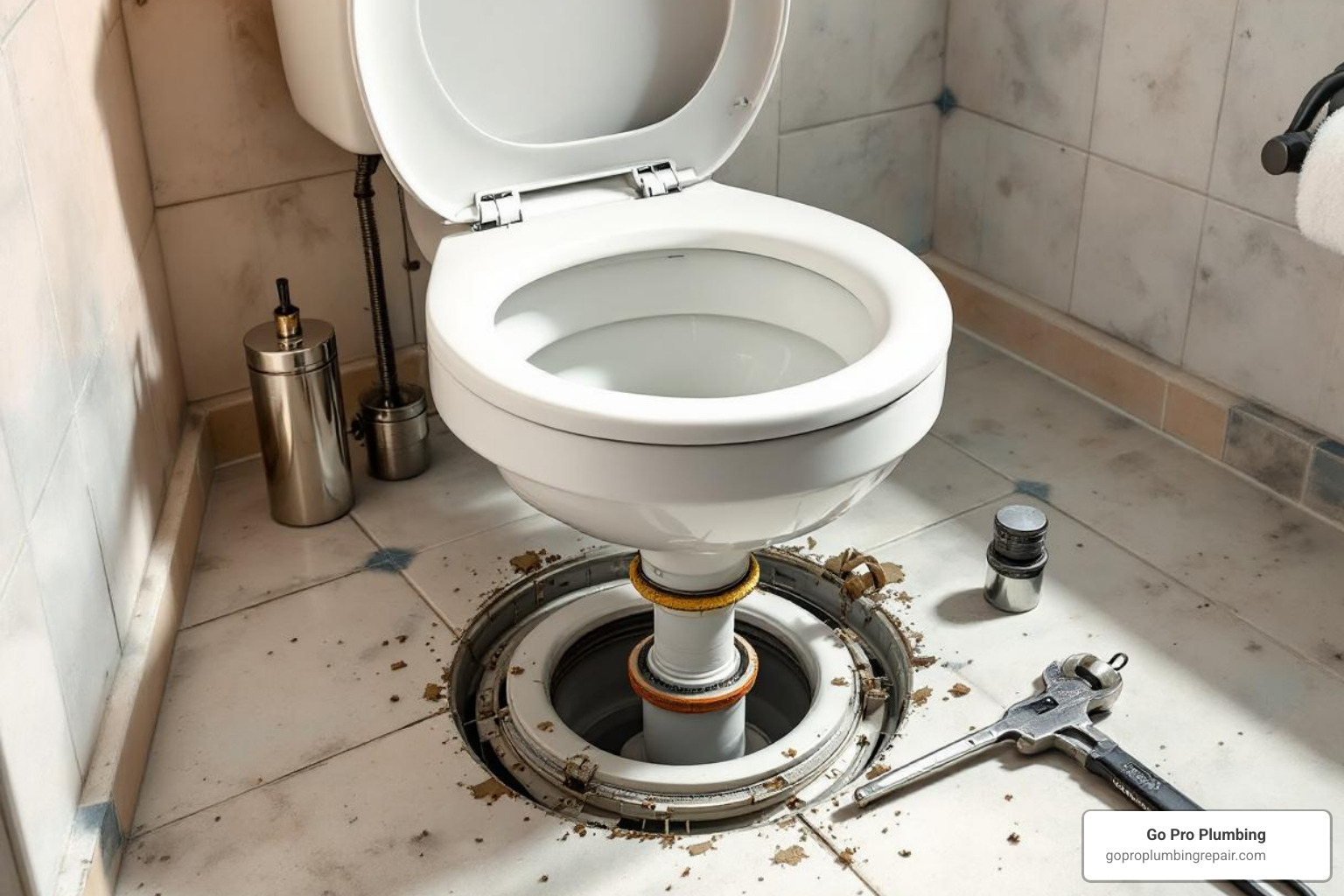
Step-by-step guide to repair a toilet leak at the base
A leak at the toilet base is serious, causing water damage and sewer gas smells. Look for puddles or water stains on the ceiling below. The cause is usually a failed wax ring or loose toilet bolts. This repair involves removing the toilet, which is heavy. A full guide is at The Family Handyman.
- Prep: Shut off and drain the toilet (see Section 1). Disconnect the water supply line.
- Unbolt: Pry off the bolt caps at the toilet base and remove the nuts.
- Remove Toilet: Gently rock the toilet to break the seal, then lift it straight up and set it aside on old towels.
- Clean and Inspect: Stuff a rag in the open drain to block sewer gas. Scrape all old wax off the toilet base and the floor flange. Inspect the flange for cracks. If it’s damaged, it needs repair. See our Toilet Flange Repair guide. Repair any subfloor damage before proceeding.
Replacing the Wax Ring and Resetting the Toilet
- Install New Bolts: Insert new closet bolts into the flange slots.
- Place Wax Ring: Place a new wax ring (reinforced ones are best) onto the flange or the bottom of the toilet.
- Set the Toilet: Align the holes in the toilet base with the bolts and lower it straight down. Press down firmly to seat the ring.
- Tighten Bolts: Add washers and nuts. Tighten them evenly, alternating sides. Do not overtighten, as this can crack the porcelain. Snug is enough.
- Reconnect and Test: Reconnect the water supply, turn the water on, and flush several times, checking for leaks.
- Finish: Snap on the bolt caps. You can caulk around the base, but leave a small gap at the back to reveal future leaks. Check local codes in Sacramento or Rancho Cordova, as some may require full caulking.
How to Fix a Rocking Toilet
A rocking toilet can break the wax seal and cause leaks.
Fix:
- Tighten Closet Bolts: First, try carefully tightening the bolts at the base. Do not overtighten. If the bolts spin, they must be replaced.
- Use Shims: If tightening doesn’t work, slide plastic toilet shims into the gaps until the toilet is stable. Trim the excess shim with a utility knife and caulk the base to secure them, leaving a small gap at the back.
When and How to Replace a Fill Valve or Flush Valve
If cleaning and adjustments don’t fix running or slow-filling toilets, you may need to replace a valve.
- Fill Valve Replacement: Universal kits are widely available.
- Steps: Shut off water and drain the tank. Disconnect the supply line. Unscrew the locknut under the tank to remove the old valve. Install the new valve, tighten the locknut, connect the refill tube to the overflow pipe, and reconnect the supply line. Turn on the water and adjust the float to the correct water level. For cost info, see our Cost Replacing Toilet Fill Valve Guide.
- Flush Valve Replacement: This is more involved as it requires removing the tank from the bowl.
- Steps: After draining the tank and disconnecting the supply line, unbolt the tank from the bowl and lift it off. Unscrew the large nut under the tank to remove the old flush valve. Install the new one, then reassemble the tank onto the bowl with a new tank-to-bowl gasket. Reconnect everything and test for leaks. Some kits allow for Replacing Toilet Flush Valve Without Removing Tank. See our Toilet Flush Valve Replacement Guide for more.
For a full cost breakdown, see our Toilet Valve Replacement Cost Ultimate Guide.
Maintenance and Knowing When to Call a Professional
Preventive maintenance goes a long way, but it’s also crucial to recognize when a problem is beyond your skill set.
DIY vs. Professional Plumber
While many toilet problems are perfect for DIY, some issues are best left to the pros.
| Feature | DIY Repair | Professional Repair (Go Pro Plumbing) |
|---|---|---|
| Cost | $10-$20 for a flapper kit, $15-$30 for a wax ring | Plumber labor costs $75-$150 per hour in Northern California; total costs vary |
| Time | 15 minutes to 3 hours, depending on complexity | Often quicker, especially for complex issues; same-day service available |
| Complexity | Simple fixes like flapper, handle, seat, minor clogs | Major leaks, broken flanges, main drain issues, toilet replacement, subfloor repair |
| Tools | Basic household tools, plunger, auger | Specialized tools, diagnostic equipment |
| Risk | Potential for water damage, incorrect parts, injury | Professional expertise, insurance, warranty on work |
Call a professional when:
- The toilet is overflowing and you can’t stop it.
- A clog persists after plunging and augering.
- The porcelain tank or bowl is cracked.
- You see significant water damage to the floor.
- You suspect a main drain line problem.
- You’re uncomfortable with the repair.
For reliable service in Rancho Cordova and Sacramento, contact Go Pro Plumbing. Visit our Plumber for Toilet Repair page to learn more.
Preventive Maintenance Checklist
- Check for Leaks: Add food coloring to the tank. If color appears in the bowl after 20 minutes (without flushing), the flapper is leaking.
- Inspect Annually: Visually check the flapper and chain for wear.
- Clean Rim Jets: Every few months, use a wire to clear the holes under the rim to ensure a strong flush.
- Don’t Use Tank for Storage: Placing items on the lid can cause damage.
- Avoid Harsh Chemicals: They can degrade rubber parts and cause leaks.
- Flush Only Toilet Paper: Avoid flushing wipes (even “flushable” ones), paper towels, or hygiene products.
- Inspect Supply Line: Check the water line for wear or leaks.
Frequently Asked Questions about Toilet Repair
Here are answers to some of the most common toilet questions we hear in Northern California.
Why is my toilet bowl water level too low or too high?
Low Water Level: This can cause odors and poor flushing. Usually, the refill tube isn’t correctly positioned in the overflow tube. Ensure it’s clipped in place and sending water to the bowl. A clogged plumbing vent could also be the cause, which requires a professional.
High Water Level: This wastes water. It typically means the fill valve float is set too high. Adjust the float to lower the water level in the tank.
How do I unclog a toilet without a plunger?
If you don’t have a plunger:
- Hot Water and Dish Soap: Pour about 1/4 cup of dish soap into the bowl, followed by a gallon of hot (not boiling) water. Wait 20-30 minutes for it to break down the clog.
- Wire Coat Hanger: For shallow clogs, you can carefully probe the drain with an unbent wire hanger (wrap the end in a rag to prevent scratches).
- Toilet Auger: This is the best non-plunger tool for clearing deeper clogs without damaging the toilet. Find more tips in our Toilet Drain Cleaner Complete Guide.
If these methods don’t work, it’s time to call a professional.
How much does it cost to repair a toilet?
Costs vary based on the problem and whether you DIY or hire a pro.
- DIY Repairs: Parts are inexpensive. A flapper costs $10 to $20, a wax ring is $15 to $30, and a fill valve is $15 to $25.
- Professional Repairs: In Northern California, plumber labor runs $75 to $150 per hour, plus parts. A simple repair might cost $150, while a full toilet installation can be closer to $500.
DIY is more budget-friendly, but a pro offers expertise and peace of mind. For a detailed breakdown, see our Cost to Repair Toilet page.
Your Partner in Plumbing: From DIY Fixes to Major Repairs
You now have the knowledge to tackle many common toilet problems, from a running toilet to a leaky base. While this guide empowers you to handle DIY repairs, we understand that some jobs are too complex or time-consuming.
For persistent issues or when you prefer a professional touch, Go Pro Plumbing is here to help. We provide outstanding customer service and same-day toilet repair across Northern California, including Sacramento and Rancho Cordova. Don’t let a stubborn toilet disrupt your life. For expert help, explore our professional toilet plumbing services. We’re always ready to ensure your bathroom functions perfectly.