
The Real Cost of a New Hot Water Heater: No Surprises
By Brian on February 28, 2026
Understanding What You’ll Really Pay
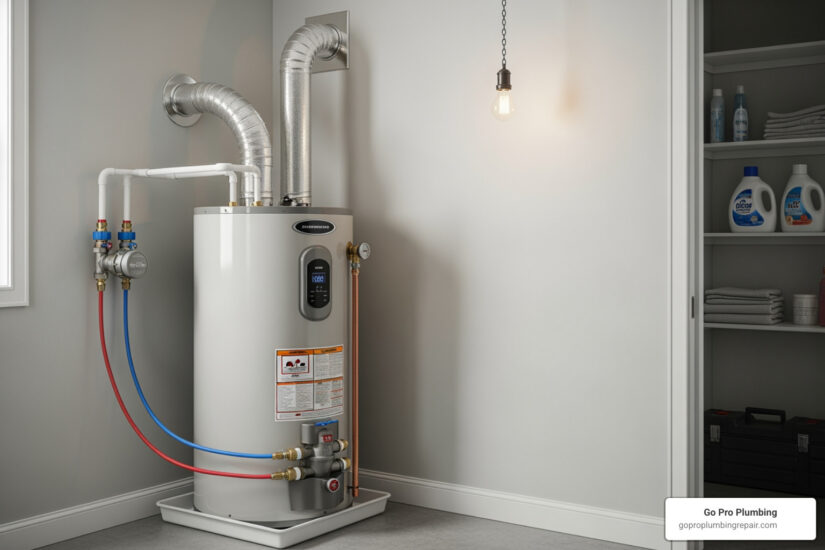
The cost to change hot water heater typically ranges from $600 to $3,500 for most homeowners, but the final price depends on several key factors:
- Standard tank water heaters: $600–$2,500 (unit + installation)
- High-efficiency tank water heaters: $1,200–$3,500 (unit + installation)
- Basic installation labor: $640–$850
- Additional costs: Permits ($25+), disposal ($100–$500), venting ($300–$600)
Your hot water heater will not last forever. Most units give you 8 to 12 years of service before they start showing their age. You may notice your morning shower is not as hot as it used to be, or you might spot a puddle forming around the base of your tank. These are signs that replacement time is coming.
Planning ahead for this expense helps you avoid the stress of an emergency replacement. When your water heater fails suddenly, you are often forced to make rushed decisions and pay premium prices for after-hours service.
Once you understand the real costs involved, you can budget properly and avoid surprises. A new water heater is not just an expense; it is an investment in your home’s comfort and efficiency. Modern units are more energy-efficient than older models, which can mean lower utility bills over time.
In Northern California, some additional factors can affect your final price. Local building codes may require specific permits. Your home’s existing plumbing setup might need modifications. Labor costs vary across the Sacramento region.
This guide breaks down every cost you may encounter, from the unit itself to labor, permits, and those hidden fees that catch many homeowners off guard. You will learn when to repair versus replace, how to save money, and what questions to ask before hiring a plumber.
Simple cost to change hot water heater glossary:
Average Replacement Costs: What to Expect
When considering the cost to change hot water heater, it’s helpful to start with the national averages, which typically fall between $600 and $3,500 for a full replacement, including both the unit and installation. This broad range accounts for the many variables we’ll explore in detail.
For homeowners in Sacramento, Rancho Cordova, and throughout Northern California, these national averages serve as a good starting point. While specific local pricing can fluctuate, the general breakdown of costs remains consistent. According to industry estimates, the total cost range for water heater replacement can be anywhere from $600 to $3,500.
Danny Margagliano, a real estate agent and co-owner of a home improvement website, states, “The average cost for a water heater replacement ranges from $600 to $3,500, with standard tank-style water heaters typically priced between $600 to $2,500, and high-efficiency tank water heaters from $1,200 to $3,500. However, additional expenses may apply depending on installation complexity and local requirements.” This quote perfectly encapsulates the range we often see.
Standard Tank Water Heater Costs
Standard tank water heaters are the most common type found in homes across Northern California. They store a specific amount of hot water, keeping it ready for use. The unit price for these models generally ranges from $600 to $2,500, with the overall replacement cost falling within the $600 to $2,500 bracket when installation is included.
These units are typically available in capacities like 40 to 50 gallons, which are suitable for most average-sized households. Their installation is often more straightforward compared to other types, especially if you’re replacing a similar unit in the same location. This makes them a common and often budget-friendly choice for many homeowners.
High-Efficiency Tank Water Heater Costs
For those looking to reduce their energy consumption and utility bills, high-efficiency tank water heaters are an excellent option. These units typically cost between $1,200 and $3,500 for both the unit and installation. While they represent a higher upfront investment than standard models, their improved energy efficiency means potential long-term savings on your energy bills.
These heaters are designed to minimize heat loss and use less energy to maintain water temperature, making them a smart choice for environmentally conscious homeowners or those looking to reduce their carbon footprint in places like Sacramento and Rancho Cordova.
Key Factors That Influence the Cost to Change a Hot Water Heater
Understanding the various elements that contribute to the final cost to change hot water heater is crucial for accurate budgeting. It is not just about the unit itself; several other factors play a significant role.
These key factors include:
- Unit type: Whether you choose a standard tank or a high-efficiency tank model.
- Fuel source: Gas versus electric, and the associated infrastructure.
- Size and capacity: The gallon capacity of the tank, which impacts both unit cost and heating efficiency.
- Labor complexity: How difficult the installation process is, which can be affected by the unit’s location.
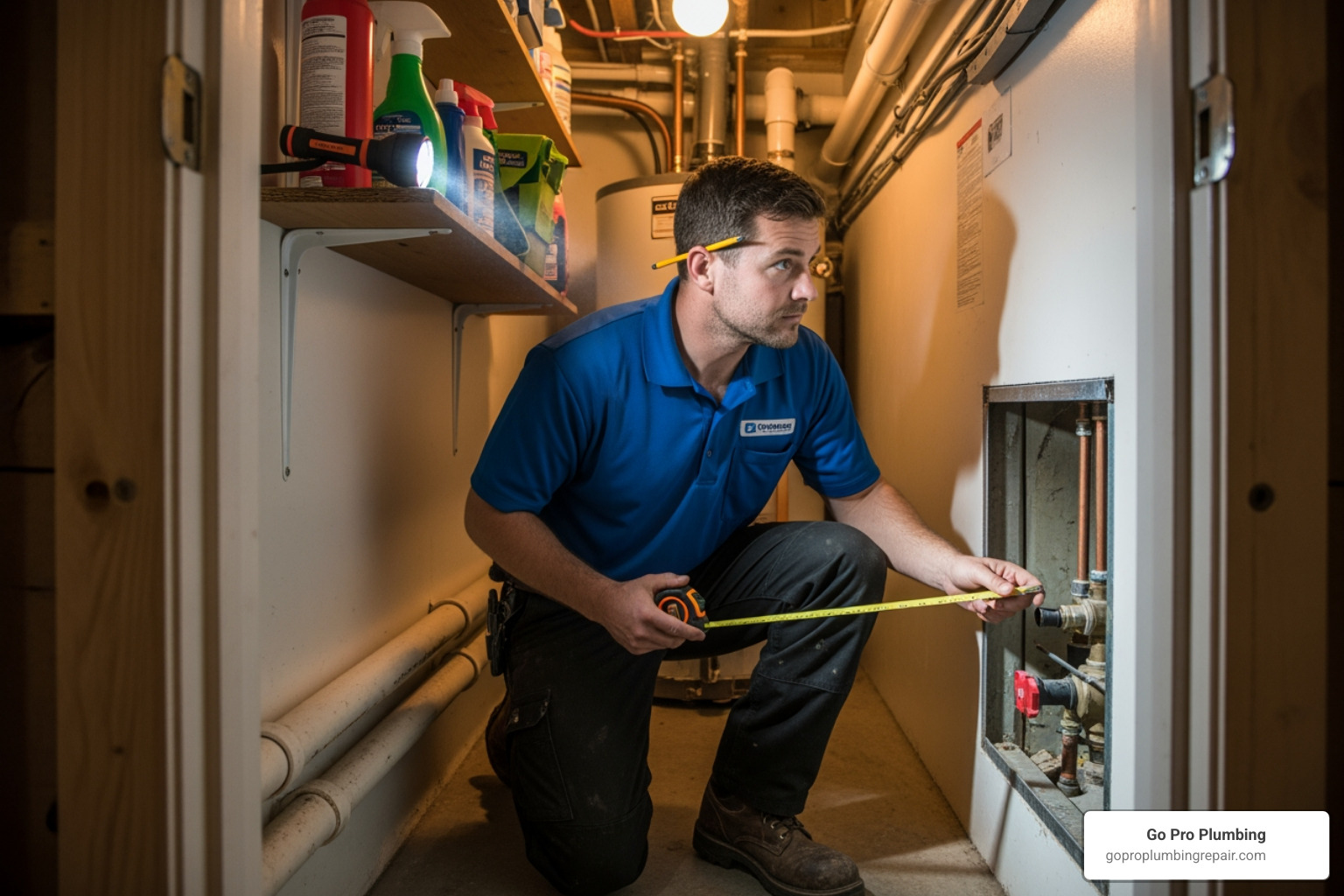
- Location accessibility: A unit in a tight closet or crawl space will usually incur higher labor costs.
Unit Type and Size
The type and size of your water heater are primary drivers of its overall cost. We primarily focus on tank-style heaters in this section, comparing standard and high-efficiency models.
| Feature | Standard Tank Water Heater | High-Efficiency Tank Water Heater |
|---|---|---|
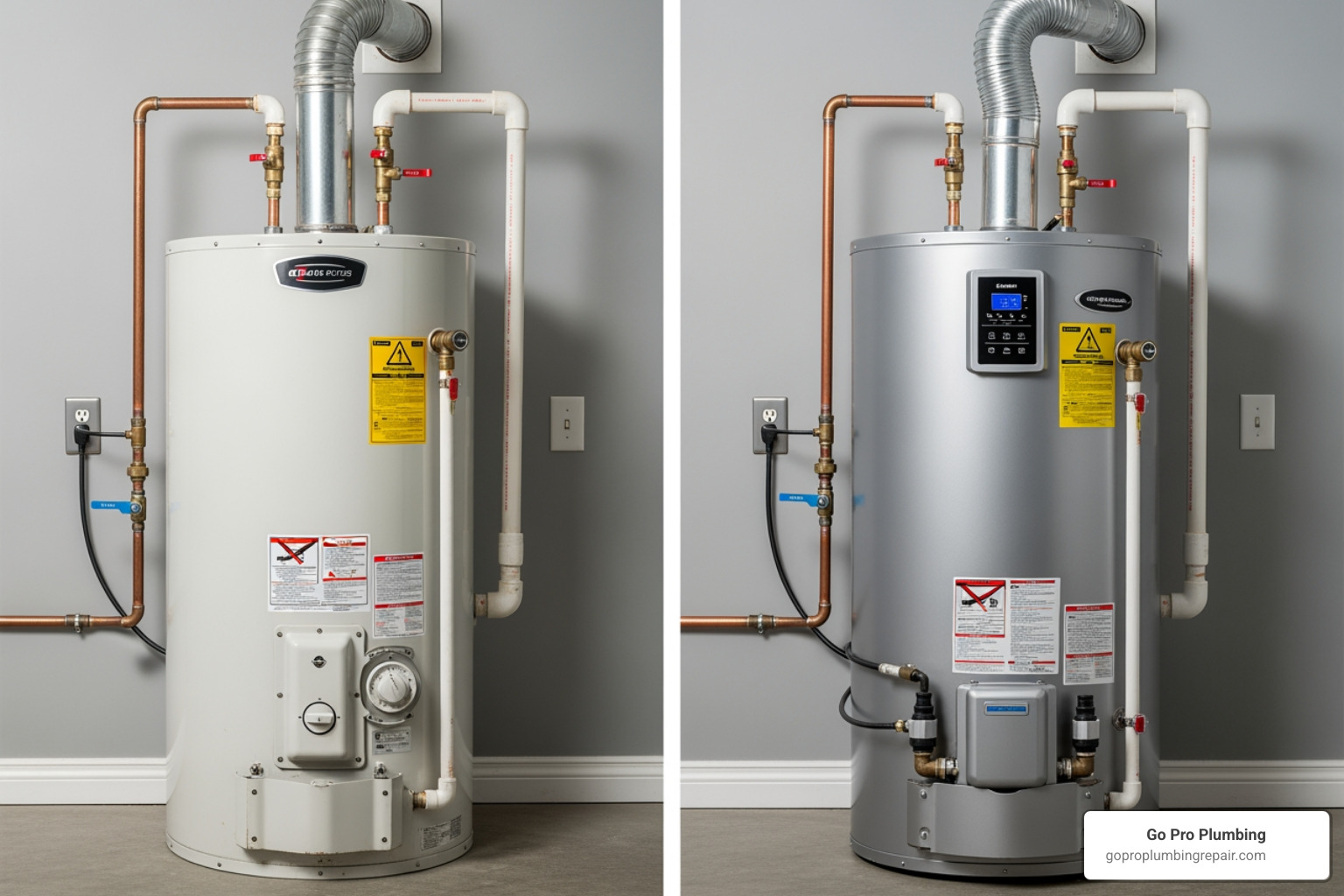
| Unit Cost Range | $600 – $2,500 | $1,200 – $3,500 |
| Lifespan | 6 – 15 years | 15+ years |
| Energy Efficiency | Standard | Improved, lower operating costs |
When we talk about tank capacity, we are usually looking at gallons. For instance, a 40-50 gallon unit is often ideal for a household of three people, providing enough hot water for daily needs. It is important to match the capacity to your household’s needs; purchasing a unit that is too large for your household is not cost-effective due to higher utility fees over its lifespan.
Beyond capacity, consider the physical dimensions. Newer water heater units often require more insulation to meet federal energy standards, which can make them slightly larger than older models. This means we might need to ensure proper clearance, typically 0.5 inches on the sides, 12 inches on the front, and 18 inches off the floor. If the new unit does not fit the existing space, additional labor for carpentry or modifications may be required, adding to your overall cost to change hot water heater.
Fuel Source: Gas vs. Electric
The fuel source of your water heater, whether it is gas or electric, significantly impacts both the initial replacement cost and your long-term operating expenses.
- Electric units are typically up to $300 cheaper initially than gas models. They are also convenient, easy to use, and do not require venting, making their installation generally more affordable. However, depending on local utility prices in Northern California, their long-term usage cost can sometimes be higher.
- Gas units (natural gas or propane) heat water faster than electric ones and often have lower long-term operational costs due to utility prices. They also provide hot water during many power outages, which can be a plus. The catch is that gas water heaters require venting for exhaust gases, which makes their installation more complex and more expensive. Venting system installations alone can add $300 to $600 to your bill.
Cost of Switching Fuel Types: If you are considering switching from an electric water heater to a gas one, or the other way around, be prepared for substantial additional costs. Installing a new gas line can average $260 to $820, but can go upwards of $1,500 if you are making a complete switch. Similarly, if you are moving to an electric unit and need electrical upgrades, costs can range from $500 to $1,000 for a new electrical line or even up to $2,300 for more extensive electrical wiring, especially for electric tankless models that might require upgrading your electrical service to 200 amps. Most of the time, if you are replacing an old gas water heater with a new one, we can use your existing gas line, which saves you money.
Understanding the Labor Cost to Change a Hot Water Heater
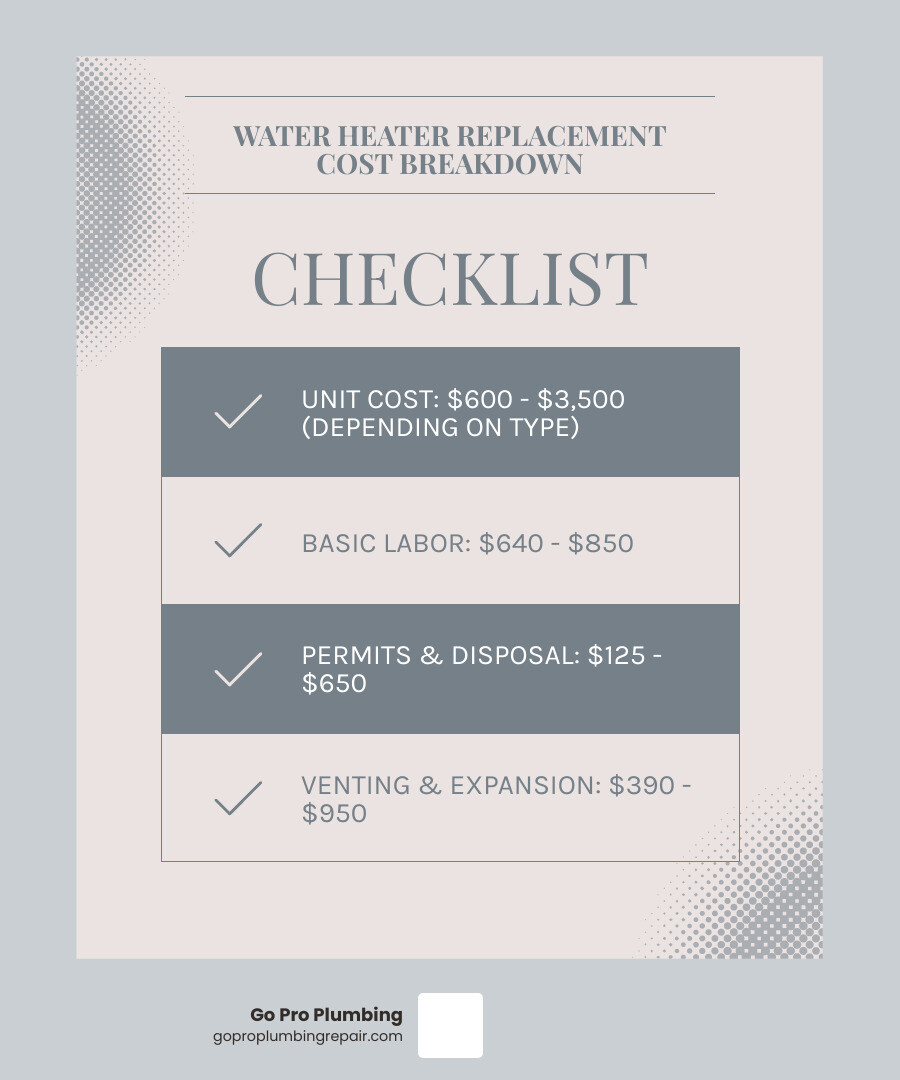
Labor is a significant component of the overall cost to change hot water heater, often accounting for as much as 50 percent of the total budget. Basic installation, which includes connecting to existing gas, water, and vent lines, leak testing, and a connection kit, typically costs between $640 and $850.
Our plumbers in Northern California work diligently, and an average installation usually takes 2-3 hours. This involves carefully removing the old unit, installing the new one, and thoroughly checking to ensure everything operates correctly.
However, several factors can increase labor costs:
- Relocating the unit: If you decide to move your water heater to a different part of the house, this will significantly increase labor time and material costs, as it requires installing new water lines and potentially new gas or electrical lines.
- Accessibility issues: A water heater located in a tight closet, a small attic, or a cramped crawl space will naturally take longer to remove and install. The less accessible the unit, the more time and effort our team needs, which translates to higher labor costs.
- Unexpected complications: Sometimes, during removal, we uncover damaged existing lines or other plumbing issues that must be addressed before the new unit can be installed safely and correctly.
We always strive for transparent pricing, and our team will discuss any potential complexities with you upfront so you understand the labor involved.
Beyond the Sticker Price: Uncovering Additional Costs
The purchase price of the water heater unit and basic installation labor are just the beginning. Many homeowners are surprised by additional costs that can significantly impact the overall cost to change hot water heater. We believe in full transparency, so this section uncovers potential hidden fees, permits, disposal charges, and necessary upgrades.
Permits, Disposal, and Structural Modifications
- Building Permit Costs: In Sacramento and other parts of Northern California, local building codes often require a permit for water heater replacement. While these can be as little as $25, they ensure your installation meets safety standards and local regulations. We handle the permit process to help ensure compliance.
- Old Unit Disposal Fee: Once your old water heater is disconnected, it needs to be hauled away and properly disposed of. This service typically costs between $100 and $500. The cost can move toward the higher end if the unit is particularly large, heavy, or located in an inaccessible area.
- Venting System Installation: If you have a gas water heater, a proper venting system is crucial for safety. If your existing venting is outdated, damaged, or insufficient for a new, more efficient unit, installing a new venting system can add $300 to $600 to the cost.
- Expansion Tank Installation: An expansion tank is a small, often overlooked component that protects your plumbing system from pressure fluctuations caused by heating water. Installing one costs $90 to $350. It is often a requirement in new construction in our area and is highly advisable to help prevent undue stress on your pipes.
- Drywall Repair Costs: In some cases, especially if a water heater needs to be relocated or if new lines need to be run through walls, we might need to open up drywall. Drywall installation costs can range from $1,000 to $3,000, or $1.50 to $3 per square foot, for repair work.
Utility Line Adjustments
Sometimes, the existing utility connections are not quite right for your new water heater, leading to additional costs.
- New Gas Line Installation: If you are switching from an electric unit to a gas one, or if your current gas line is inadequate or needs to be rerouted, installing a new gas line can cost an average of $260 to $820, and sometimes upwards of $1,500 for more complex scenarios.
- Electrical Upgrades: High-efficiency electric water heaters, particularly electric tankless models, can draw a significant amount of power, often well over 100 amps. If your home’s electrical service is not up to the task, you might need an upgrade to 200 amps or more. This can involve installing a new electrical line and a sub-panel, costing $500 to $1,000, with total electrical wiring costs potentially reaching upward of $2,300.
- New Water Line Installation: If your water heater installation requires a new water line due to relocation or significant changes in plumbing configuration, expect to spend an additional $400 to $2,000.
Emergency Replacement Costs
A sudden water heater failure can lead to more than just cold showers; it can also result in costly emergency repairs.
- Water Damage Repair: If your old water heater leaks or bursts, it can cause significant water damage to your home. Repairing water damage generally costs $3.75 to $7 per square foot, with many homeowners spending $1,300 to $5,550.
- Mold Remediation: If water damage is not addressed quickly, mold can become a problem, significantly increasing repair costs.
- After-Hours Service Fees: If your water heater fails outside normal business hours, you might incur higher labor rates for emergency service to get hot water restored quickly. This is another reason planning ahead for replacement, rather than waiting for a crisis, is a smart idea.
Making Smart Financial Decisions
Replacing a hot water heater is a significant investment, but with careful planning, you can make smart financial decisions that benefit your home and your budget. This involves understanding when to repair versus replace, exploring ways to save money, and considering the long-term implications of buying versus renting.
When to Repair vs. Replace
One of the first questions homeowners in Northern California ask us is whether to repair their existing unit or invest in a new one. The answer largely depends on the water heater’s lifespan, the nature of the problem, and the cost of the repair.
- Water Heater Lifespan: A standard tank water heater typically lasts between 6 and 15 years with regular maintenance. High-efficiency tank water heaters, with proper care, can last 15 years or more. If your unit is approaching or has exceeded its expected lifespan (generally over 10-12 years), replacement is often the more cost-effective choice in the long run.
- Common Repair Costs: Minor repairs, like replacing a faulty gas valve, can cost between $150 and $500. If the repair cost is a significant percentage (for example, 50 percent or more) of the cost of a new unit, or if the unit is old and likely to face more issues soon, replacement makes more sense.
- Age of Unit: An older unit, even with a seemingly minor repair, might be signaling larger, impending failures. Continuous repairs on an aging system can quickly add up, making a new, more efficient model a better investment. Signs like rusty water, frequent leaks, or inconsistent heating are often indicators that your unit is nearing the end of its life.
How to Save Money on Your Hot Water Heater Replacement
We understand that the cost to change hot water heater can be substantial, so we are always looking for ways to help our customers save money without compromising quality or safety.
- Government Rebates and Incentives: Always check for federal tax credits available for high-efficiency models. Additionally, state and local utility companies in Northern California often offer rebates for upgrading to energy-efficient water heaters, especially ENERGY STAR certified models. These programs can significantly reduce your upfront costs.
- Choose the Same Fuel Type: If your existing unit is gas, replacing it with another gas unit (and the same idea for electric) can save you money by avoiding the costly installation of new gas lines or extensive electrical upgrades.
- Proper Insulation: Ensuring your new water heater and its pipes are well-insulated reduces heat loss, improving efficiency and saving you money on utility bills over time.
- Opt for Mid-Range Models: While high-end units offer advanced features, a mid-range model with essential features can provide excellent performance and efficiency at a more budget-friendly price point.
- Research Deals: Keep an eye out for manufacturer discounts or promotions from local retailers.
Buying vs. Renting: What to Consider
In some regions, homeowners have the option to rent a water heater instead of purchasing one outright. While renting might seem appealing due to the lack of an upfront purchase cost, it is crucial to consider the long-term financial implications.
- Upfront Purchase Cost: Buying a water heater requires an initial investment for the unit and installation. However, once paid for, you own the asset.
- Long-Term Cost Comparison: Renting a water heater involves monthly fees that, over the lifespan of the unit, can often exceed the cost of purchasing and installing one. Many homeowners who purchase their tank outright see notable savings over a 10-year period compared to renting. Ownership usually proves to be the more economical choice in the long run.
- Ownership Benefits: When you buy your water heater, you gain equity in your home, have the freedom to choose the model that best suits your needs and budget, and are not tied to a rental contract.
Frequently Asked Questions about Water Heater Costs
We hear many questions from homeowners in Sacramento and Rancho Cordova about their water heaters. Here are some of the most common ones regarding the cost to change hot water heater and related issues.
How can you tell when a hot water heater needs to be replaced?
There are several clear signs that your hot water heater is nearing the end of its life and might need replacement:
- Age: If your unit is over 10-12 years old, it is likely approaching or has exceeded its average lifespan.
- Leaks or Corrosion: Any visible leaks around the base of the tank or corrosion on the tank or connections are serious indicators of failure.
- Rusty Water: If your hot water comes out rusty or discolored, it is a sign that the inside of your tank is corroding.
- Strange Noises: Rumbling, popping, or banging sounds often indicate sediment buildup inside the tank, which reduces efficiency and can damage the unit.
- Insufficient Hot Water: If you are consistently running out of hot water faster than usual, or the water is not getting as hot as it used to, the heating elements might be failing, or the tank’s capacity is no longer sufficient.
How long does it take to replace a hot water heater?
For a straightforward, like-for-like replacement in Northern California, the job typically takes our skilled technicians about 2-3 hours. This involves disconnecting and removing the old unit, installing the new one, connecting all lines, and ensuring everything is functioning correctly and safely.
However, the process can take longer if:
- The water heater is difficult to access (for example, in a cramped space).
- New utility lines (gas, water, electrical) need to be run.
- Venting systems need to be installed or upgraded.
- We need to make structural modifications, like drywall repair.
- Unexpected plumbing issues are found during the process.
Are there government rebates for new water heaters?
Yes, there often are incentives available.
- Federal Tax Credits: The federal government frequently offers tax credits for homeowners who install high-efficiency water heaters, such as certain heat pump water heaters or tankless models.
- State and Local Utility Rebates: Many local utility providers in the Sacramento area and throughout California offer rebates for upgrading to energy-efficient appliances. These can include traditional tank models with high energy factor ratings.
- ENERGY STAR: The ENERGY STAR program is a helpful resource. We recommend checking their website for the most current information on eligible models and available incentives in your area. These rebates can significantly offset the initial cost to change hot water heater.
Get a Clear Quote for Your Sacramento Water Heater Installation
Understanding the full cost to change hot water heater is key to avoiding surprises. A new, efficient unit is an investment in your home’s comfort and value, providing reliable hot water for years to come and potentially lowering your energy bills.
For a transparent and professional installation in the Sacramento area, trust the experts at Go Pro Plumbing. We pride ourselves on outstanding customer service and same-day service, ensuring your hot water needs are met quickly and efficiently, with no hidden fees.
Get a no-surprise quote for your Sacramento water heater installation today!