
Finding Reliable Local Drain Repair Services Made Simple
By Brian on September 25, 2026

Find Reliable Drain Repair Services Near You Before Damage Spreads
For dependable drain repair services near me, look for a licensed local plumber who can inspect the line with a camera, explain whether the problem needs cleaning or repair, and provide a clear estimate before work starts. Same-day or emergency service matters when sewage is backing up, several drains are failing, or water is reaching floors, walls, or foundations.
A slow sink may only need cleaning. But recurring clogs, gurgling fixtures, sewer odors, water stains, or backups in more than one room can point to a damaged or blocked main drain line. Professional diagnosis helps identify causes such as grease buildup, invasive tree roots, corrosion, cracks, or a collapsed pipe.
This guide makes it easier to compare local specialists, recognize urgent warning signs, and understand modern options such as hydro-jetting, camera inspections, and trenchless repair.
Drain repair services near me further reading:
How to Choose the Best Drain Repair Services Near Me
Dealing with a stubborn drainage problem can throw your entire household routine off balance. When you start searching for help, finding a qualified specialist who treats your home with respect and delivers long-lasting results makes all the difference.
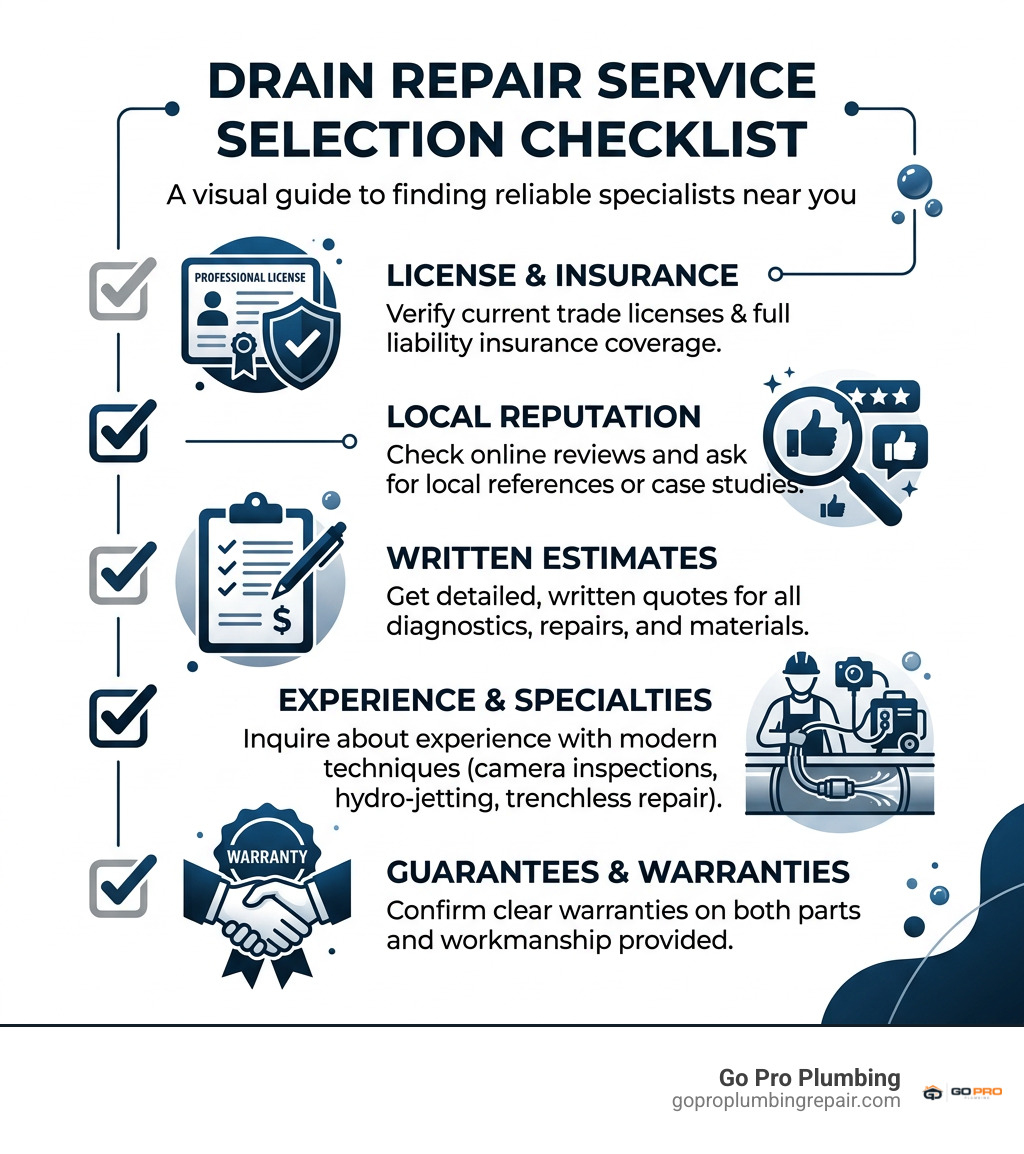
The right local plumbing professional provides upfront, transparent pricing rather than ambiguous hourly rates that balloon once work begins. Modern plumbing standards prioritize comprehensive diagnostics: a trustworthy contractor will walk you through video footage of your pipe’s interior, outline every available option, and offer solid warranty protection on parts and labor.

Key Criteria for Evaluating Drain Repair Services Near Me
When vetting potential specialists across Northern California, evaluate providers using practical service benchmarks:
- Licensing and Insurance: Ensure technicians are fully licensed, bonded, and carry comprehensive liability insurance to safeguard your property.
- Upfront Flat-Rate Estimates: Look for contractors who diagnose the issue first and give clear, written quotes before picking up a wrench.
- Rapid Emergency Availability: Severe drain emergencies do not wait for business hours. Look for companies providing prompt, same-day service and 24/7 dispatch.
- Proven Local Track Record: Check verified feedback on top-rated local plumbing directories to see how consistently the company resolves complex drain problems for neighbors in your community.
- Comprehensive Equipment Inventory: Ensure the company owns modern diagnostic tools, such as self-leveling sewer cameras and hydro-jetters, rather than relying solely on basic handheld snakes.
Red Flags and Why Chemical Cleaners Fall Short
When faced with a slow-draining sink or tub, reaching for a bottle of liquid chemical drain cleaner is a common temptation. However, store-bought chemical cleaners rely on caustic chemicals like sodium hydroxide or concentrated sulfuric acid. These agents generate intense heat through chemical reactions to melt blockages.
While that heat may burn a tiny pinhole through a grease clog, it causes severe collateral damage:
- Accelerated Pipe Corrosion: The corrosive mixture sits trapped against old cast iron, galvanized steel, or PVC joints, weakening pipe walls and causing pinhole leaks.
- Toxic Chemical Exposure: Fumes can seep back through fixture traps, irritating eyes and respiratory tracts. If a professional plumber must later snake the line, trapped chemicals can splash back, posing major safety hazards.
- Inability to Solve Structural Failures: Liquid chemicals wash straight past tree roots, misaligned joints, offset pipe connections, and bellied sections without solving the underlying cause.
6 Warning Signs You Need Urgent Drain Repair Instead of Simple Cleaning
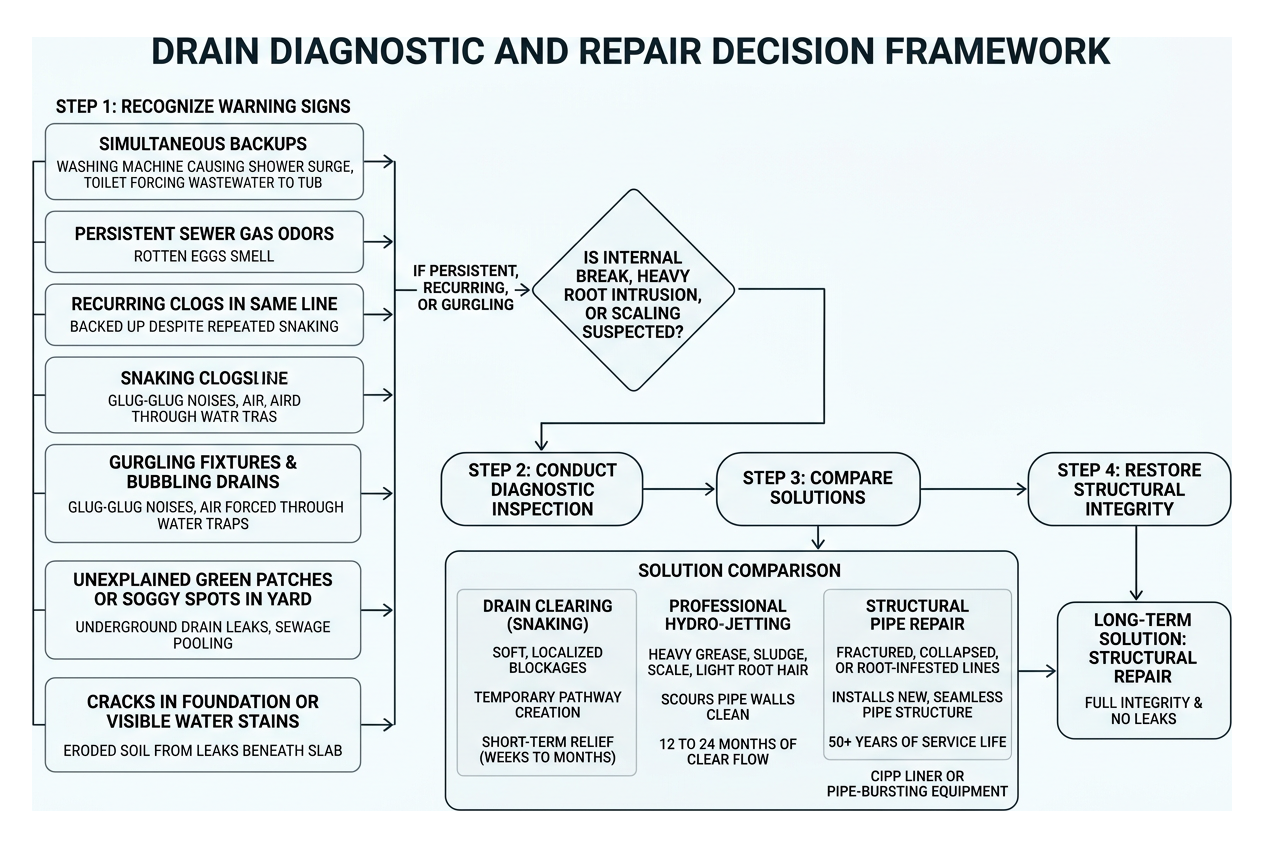
Routine drain clogs are annoying, but structural drain failures threaten your home’s foundation and indoor air quality. Watch for these six critical warning signs indicating your plumbing system needs structural repair rather than basic clearing:
- Simultaneous Backups Across Multiple Fixtures: When running the washing machine causes water to surge into your shower or flushing a toilet forces wastewater up into a nearby tub, the main sewer lateral is compromised.
- Persistent Foul Sewer Gas Odors: A continuous smell of rotten eggs inside the house or around the yard points to cracked pipes or dried-out trap seals allowing toxic sewer gases to escape.
- Recurring Clogs in the Same Line: If a drain backs up every few weeks despite repeated snaking, the line likely has severe root intrusion, heavy scaling, or an internal break.
- Gurgling Fixtures and Bubbling Drains: Air trapped behind an underground structural restriction will force its way up through water traps, producing distinctive glug-glug noises when fixtures drain.
- Unexplained Green Patches or Soggy Spots in the Yard: Underground drain leaks fertilize surrounding soil and create localized sinkholes, pooling sewage, or overly lush patches of grass above the sewer line.
- Cracks in Foundation or Visible Water Stains: A fractured underground drain leaking beneath a concrete slab can erode sub-base soil, leading to foundation settling and damp spots on baseboards.
Persistent Backups and Gurgling Fixtures
When you drain a sink and hear a distinct bubbling sound from your toilet, your plumbing system is struggling to breathe. Waste drainage requires smooth airflow through the vent stacks to push water outward.
When an underground sewer pipe is crushed, sagging, or choked with tree roots, descending wastewater creates a vacuum. That vacuum siphons water right out of nearby P-traps. Once that protective water barrier vanishes, hazardous sewer odors enter your living space.
Mechanical cabling might punch a small opening through a clog, but tree roots quickly regrow inside cracked pipes, catching toilet paper and solids until the line backs up completely.
Drain Cleaning vs. Structural Drain Repair
Understanding the difference between temporary clearing, thorough cleaning, and structural restoration ensures you invest in the right long-term solution.
| Feature / Metric | Drain Clearing (Snaking) | Professional Hydro-Jetting | Structural Pipe Repair |
|---|---|---|---|
| Primary Tool Used | Mechanical auger / cable snake | High-pressure water jetting (3,000–4,000 PSI) | CIPP liner or pipe-bursting equipment |
| Best Used For | Soft, localized blockages (hair, food chunks) | Heavy grease, sludge, scale, and light root hair | Fractured, collapsed, cracked, or root-infested lines |
| Interior Pipe Cleaning | Creates a temporary pathway through clog | Scours pipe walls clean to bare metal or PVC | Installs a brand-new, seamless pipe structure |
| Structural Integrity | Does not repair cracked or broken pipe walls | Cleans existing pipe; cannot fix structural breaks | Fully restores line integrity and stops leaks |
| Long-Term Longevity | Short-term relief (weeks to months) | 12 to 24 months of clear flow | 50+ years of structural service life |
Modern Solutions: What to Expect from Professional Drain Specialists
Drain restoration techniques have advanced significantly. Where plumbers once had to excavate entire yards to reach damaged lines, today’s professionals utilize non-invasive diagnostics and trenchless technologies that save time, money, and landscaping.
Advanced Diagnostic Video Inspections and Hydro-Jetting
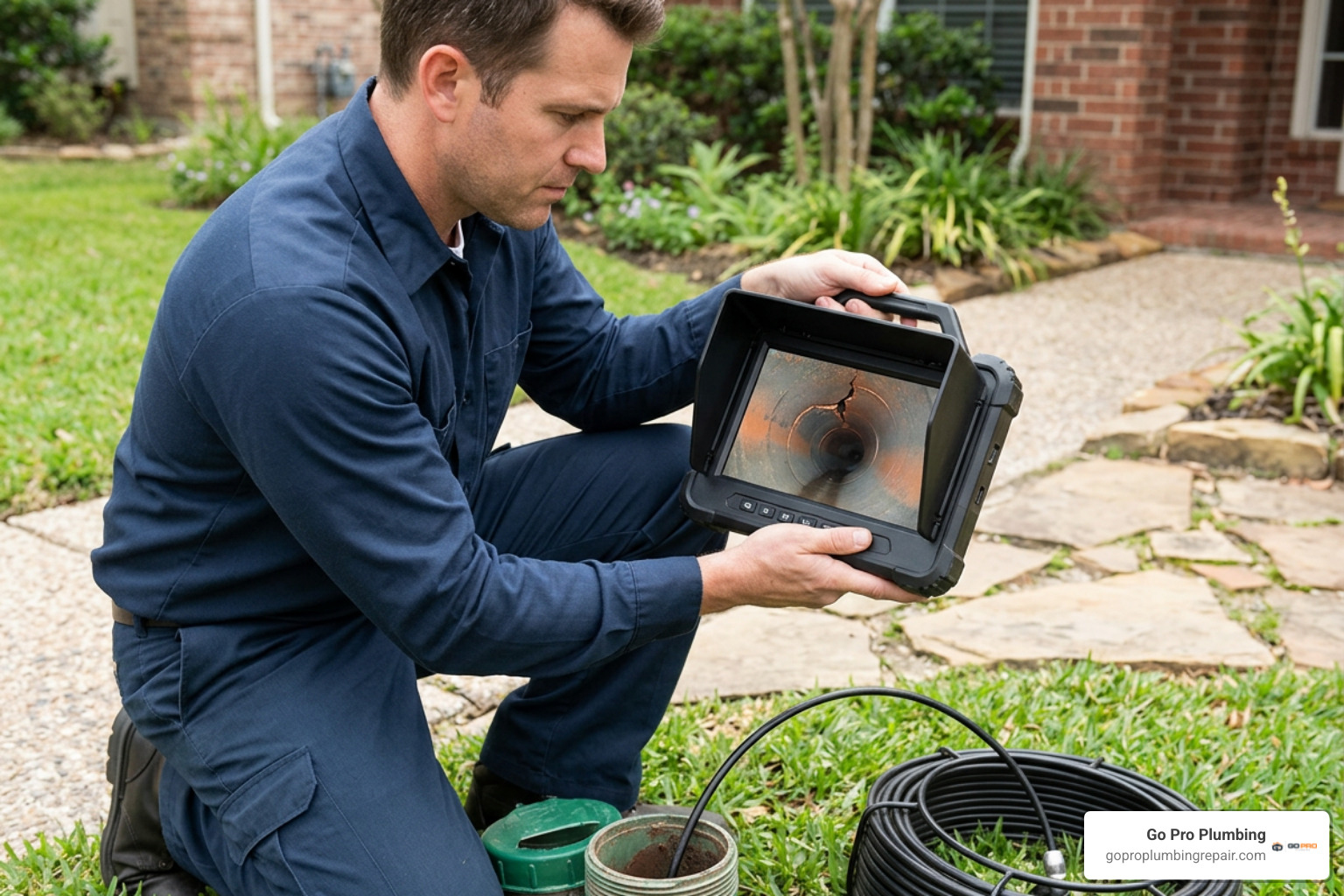
Professional drain work begins with an in-depth video camera inspection. A technician feeds a high-resolution, waterproof camera attached to a flexible fiber-optic cable through your cleanout. The camera transmits real-time video to a high-definition monitor, showing the exact depth, location, and nature of the issue.
If the pipe structure remains sound but is heavily fouled by hardened grease, scale, or tree roots, hydro-jetting is the preferred solution. Operating at pressures up to 4,000 PSI with specialized rotating nozzles, hydro-jetting scrubs the full interior diameter of the pipe. It washes away years of sludge and mineral scale without abrasive chemicals.
Trenchless Pipe Lining vs. Traditional Excavation
When an underground pipe suffers structural cracks, corrosion, or joint displacement, modern trenchless repair methods can restore the line without tearing up your lawn, driveway, or patio:
- Cured-in-Place Pipe (CIPP) Lining: Technicians insert an epoxy-saturated felt tube into the damaged host pipe. Once positioned, an internal bladder inflates the liner against the existing pipe walls. The epoxy cures, forming a smooth, jointless “pipe within a pipe” that resists future root penetration.
- Pipe Bursting: For severely collapsed pipes where lining is not viable, a hydraulic bursting head pulls a new high-density polyethylene (HDPE) pipe directly through the old line, fracturing the damaged pipe outward while pulling the replacement into place.
- Traditional Open Trenching: Open excavation is reserved for situations with severe pipe bellies, major ground shifts, or complex utility crossings where trenchless machinery cannot safely navigate.
Frequently Asked Questions About Local Drain Repair
When should I book emergency drain repair services near me?
You should arrange immediate emergency service if raw sewage is backing up into tubs, showers, or floor drains, or if multiple toilets in the house fail simultaneously. Water overflowing from plumbing fixtures can quickly soak into subflooring, drywall, and framing, creating mold risks and biohazard conditions. Shut off your main water supply to prevent additional fixture usage and reach out to a 24/7 plumbing team immediately.
How often should residential drain lines undergo preventative maintenance?
Most residential plumbing systems benefit from a professional drain inspection and maintenance cleaning every 12 to 18 months. Routine maintenance removes grease accumulation, soap scum, and early root growth before they form an impenetrable obstruction. Properties with large shade trees near the sewer lateral or older cast-iron infrastructure may need annual video evaluations to monitor pipe condition.
What factors determine the overall cost of underground drain repair?
The total investment required for drain repair depends on several distinct factors:
- Depth and Location of the Pipe: Lines buried two feet beneath a lawn require less labor than pipes eight feet deep beneath a reinforced concrete driveway.
- Total Linear Footage: The length of damaged pipe directly affects material quantities for pipe liners or replacement segments.
- Repair Method: Trenchless CIPP lining often saves money overall by eliminating the need to rebuild driveways, replace custom turf, or repair hardscaping.
- Municipal Permits and Inspections: Local building codes across Sacramento and Rancho Cordova require plumbing permits and official inspections to verify compliance with sanitation codes.
Conclusion
Plumbing problems rarely fix themselves, and delaying repairs can turn a minor issue into structural water damage. Choosing a licensed, experienced plumbing contractor who provides transparent pricing, advanced video diagnostics, and modern repair options gives you lasting peace of mind.
At Go Pro Plumbing, we take pride in delivering dependable, same-day plumbing solutions to our neighbors across Sacramento, Rancho Cordova, and the greater Northern California region. If your drains are gurgling, backing up, or draining slowly, contact our friendly team today to schedule professional drain and sewer services and restore smooth, worry-free flow to your home.