
From Mainline to Meter: What to Look for in Commercial Gas Line Contractors
By Brian on July 23, 2026
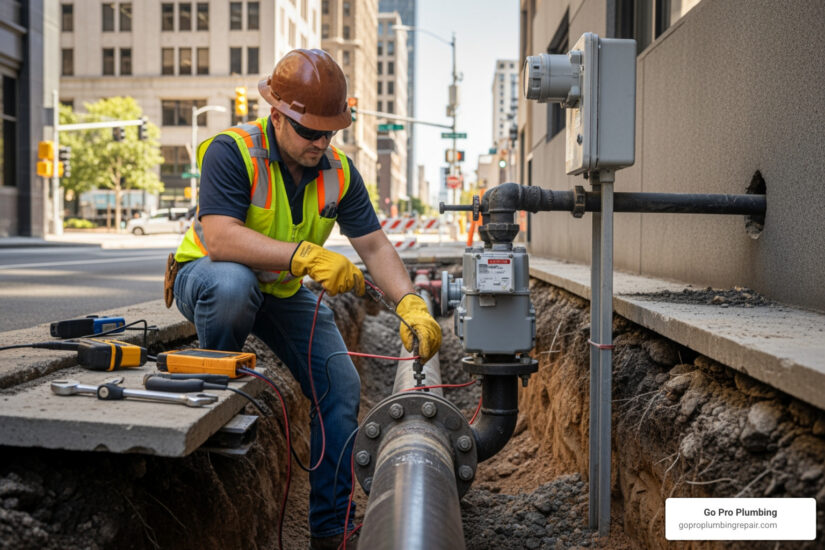
Recognizing the Need for Professional Assistance
Gas line service covers everything from inspecting and repairing your existing pipes to installing brand-new lines that run from the utility main to your building’s meter.
Here’s what commercial gas line service typically includes:
- Leak detection and emergency response – identifying and stopping dangerous gas escapes
- Repairs and replacements – fixing damaged sections or swapping out aging pipe materials
- New installations – running lines to commercial kitchens, boilers, rooftop units, and outdoor equipment
- Inspections and maintenance – routine checks to catch corrosion, wear, or code violations early
- Meter and regulator work – coordinating with your utility on connections, sizing, and placement
For businesses in Northern California, getting this work done right isn’t just a matter of convenience. A gas leak in a commercial building puts employees, customers, and the entire property at risk.
Natural gas is naturally odorless. Utility companies add a chemical called mercaptan to give it that distinct rotten egg smell — so you have a warning before things get dangerous. But not every leak announces itself that clearly. Sometimes the first sign is a spike in your gas bill, a hissing sound near a pipe, or dead patches of grass above a buried line.
That’s why understanding what commercial gas line service actually involves — and knowing when to call a licensed contractor — matters so much.
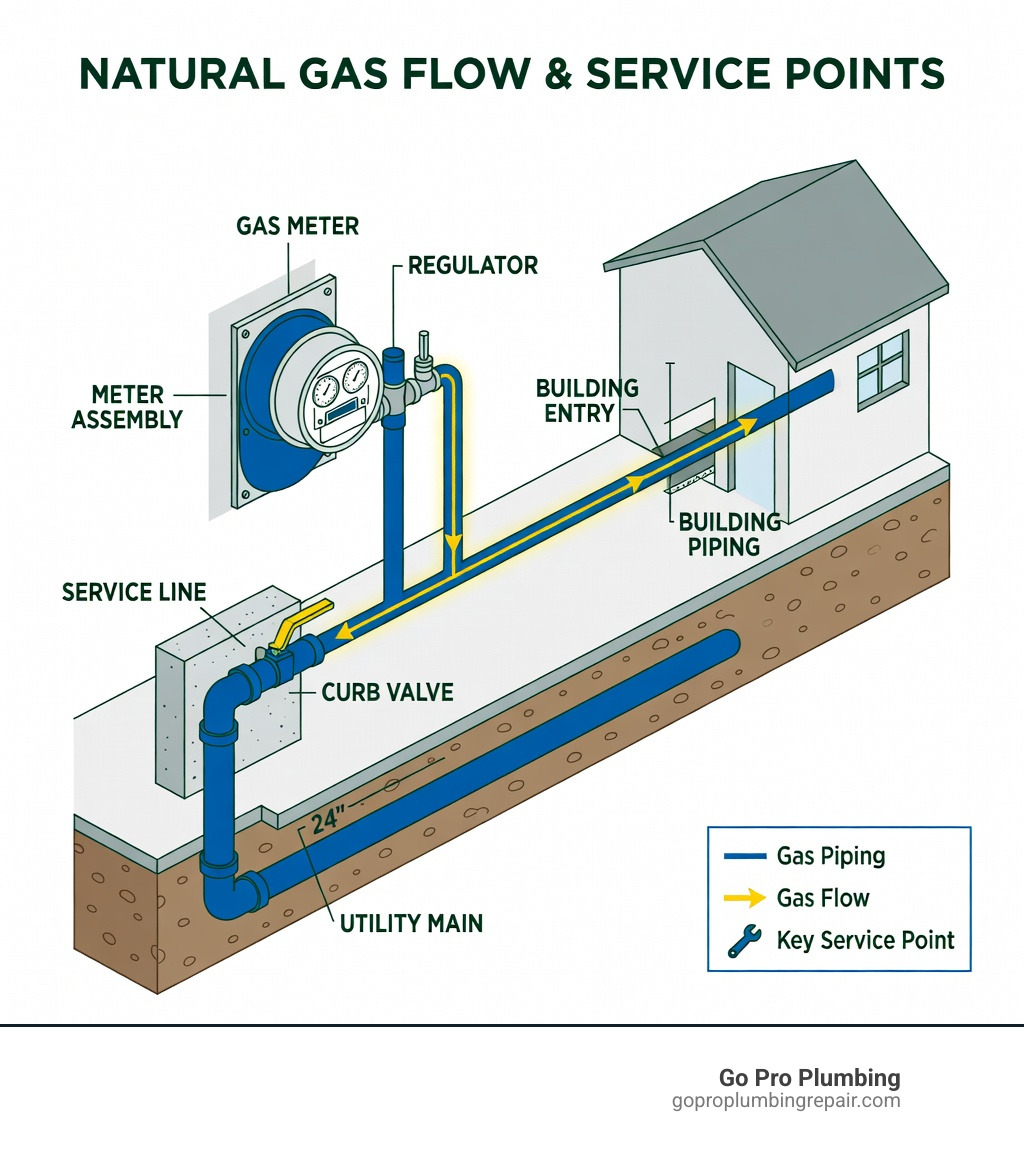
Gas line service vocab explained:
Common Signs of a Gas Leak
Recognizing a leak early can be the difference between a simple repair and a catastrophic event. While the “rotten egg” smell is the most famous indicator, commercial properties often have complex layouts where odors might be vented away or masked by industrial processes. You should keep a sharp eye out for:
- Spiking Utility Bills: If your gas consumption jumps and you haven’t added new equipment or increased production, you likely have a “silent” leak.
- Physical Symptoms: In enclosed spaces, gas displaces oxygen. Employees might complain of sudden dizziness, persistent headaches, nausea, or fatigue.
- Hissing or Whistling: Large leaks often create a distinct sound as high-pressure gas escapes through a small crack or loose fitting.
- Bubbling Water: If you have standing water or puddles near your gas line after rain, look for bubbles. This is a classic sign of an underground leak.
- Vegetation Changes: Natural gas prevents roots from absorbing oxygen. If you notice a random brown patch in an otherwise green lawn or dead plants near the meter, the soil may be saturated with gas.
- Appliance Malfunction: If your boilers or ranges are struggling to stay lit or showing yellow/orange flames instead of a crisp blue, the pressure in the line may be dropping due to a leak.
If you suspect a leak, your first move is safety. You must shut off your gas supply if it is safe to do so, evacuate the building, and avoid using any electronics (including light switches or cell phones) inside the area. Once you are in a safe location, call 911 or your utility company. For a deeper dive into identifying these hazards, check out our gas line leak detection complete guide.
Understanding the Scope of Commercial Gas Line Service
Commercial gas line service is significantly more complex than residential work. While a home might only power a stove and a water heater, a commercial system often supports high-demand equipment like industrial boilers, massive rooftop HVAC units, and commercial-grade kitchens.
A professional gas line contractor must handle:
- System Design and Load Calculations: We calculate the “BTU load” of every piece of equipment to ensure the pipes are sized correctly. If the pipe is too small, your appliances won’t function; if it’s too large, you’re wasting money on materials.
- High-Pressure Lines: Many commercial buildings require high-pressure gas delivered to specific zones, which necessitates specialized regulators and heavy-duty fittings.
- Rooftop and Outdoor Routing: Commercial lines often run across roofs or through complex crawlspaces, requiring specific supports and weatherproofing to prevent corrosion.
Essential Materials and Modern Techniques in Gas Piping
The materials used in your gas system determine its lifespan and safety. In Northern California, we see a variety of materials, each with specific use cases.
- Black Iron Pipe: The industry standard for decades. It is incredibly durable and fire-resistant, though it is heavy and requires labor-intensive threading.
- CSST (Corrugated Stainless Steel Tubing): A flexible alternative that is much faster to install. It’s great for retrofitting older buildings where snaking a rigid pipe through walls is impossible.
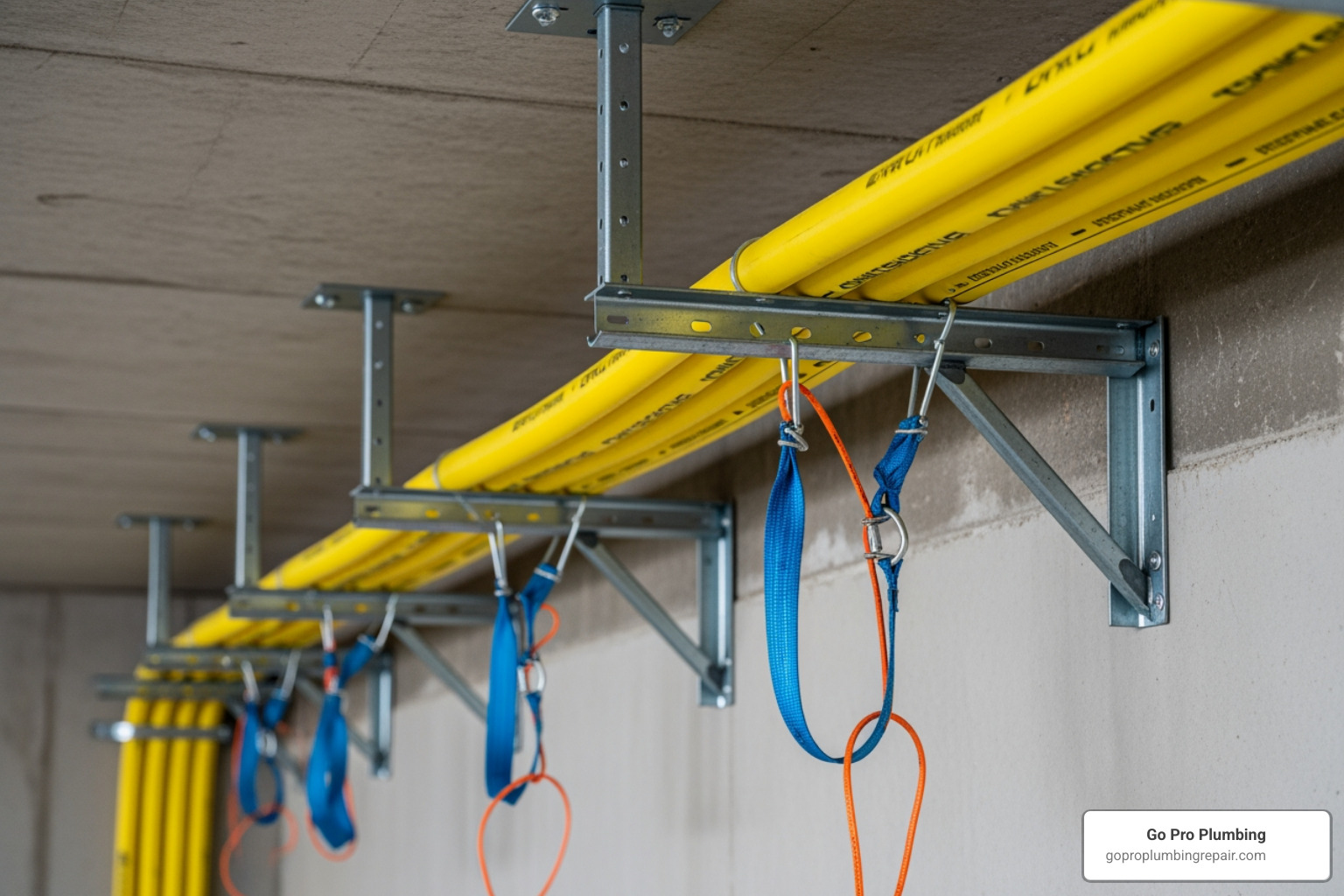
- HDPE (High-Density Polyethylene): This bright yellow plastic is used strictly for underground lines. It doesn’t corrode like metal, making it perfect for the journey from the street to your building. You can read more about this in our plastic gas line repair guide.
- Copper and Brass: Occasionally used for smaller appliance connections, though they must meet strict local codes to ensure they aren’t vulnerable to certain types of gas additives.
- Galvanized Steel: While once common, galvanized steel is now largely outdated for gas because the zinc coating can flake off and clog regulators.
Modern Trenchless Repair Methods
The days of digging a massive trench through your parking lot just to fix a single leak are over. Modern gas line service utilizes “trenchless” technology to save time and money.
CIPP (Cured-In-Place Pipe): This involves inserting a resin-saturated liner into the existing damaged pipe. Once it cures, it forms a brand-new, structural pipe inside the old one. It’s essentially “building a pipe within a pipe” without the need for major excavation.
SIPP (Sprayed-In-Place Pipe): Similar to CIPP, this uses a robotic spray head to coat the interior of the pipe with an epoxy that seals small cracks and prevents future corrosion.
Directional Boring: If we need to install a new line under a driveway or sidewalk, we use a machine to “bore” a hole horizontally. This allows us to pull the new HDPE pipe through without disturbing the surface.
The Installation and Repair Process: From Mainline to Meter
Whether you are dealing with a leak or expanding your business, the process follows a strict sequence to ensure safety and compliance.
Repair vs. Replacement: Making the Call
| Feature | Gas Line Repair | Full Replacement |
|---|---|---|
| Best For | Minor cracks, single loose fitting | Widespread corrosion, outdated materials |
| Cost | Lower upfront ($300 – $800 avg) | Higher ($1,300+ depending on length) |
| Longevity | Fixes the immediate issue | Resets the clock for 20-50 years |
| Invasive Level | Low (often trenchless) | Moderate to High |
For many businesses in Rancho Cordova or Sacramento, we recommend a residential gas line installation approach even for light commercial properties to ensure every foot of pipe meets modern safety standards.
The Standard Process:
- Site Inspection: We evaluate the current system and identify the “load” requirements.
- Utility Locates (811): Before any digging or boring, we call 811 to have all underground utilities marked. Never dig without this step.
- Permit Processing: Gas work requires city or county permits. We handle the paperwork to ensure your business stays legal.
- Installation/Repair: The actual physical work, using the materials discussed above.
- Pressure Testing: This is the most critical step. We pressurize the system with air to ensure there are zero leaks before gas is ever turned back on.
Timelines for New Gas Line Service Connections
If you are applying for a brand-new gas service from the utility company (like PG&E or a local municipal works), patience is key.
- Urban Areas (Sacramento/Rancho Cordova): Typically takes 4 to 6 weeks from application to the meter being set.
- Rural Northern California: Can take up to 3 months if main extensions are required.
- Factors Affecting Speed: Weather is a major factor; heavy rain can delay trenching for weeks. Additionally, your site must be “ready,” meaning the foundation must be backfilled and the meter location must be clear of obstructions.
For a standard turn-on or transfer of service at an existing location, the timeline is much shorter—usually 3 to 5 business days.
Safety Standards and Regulatory Compliance
Gas is inherently dangerous, which is why the codes governing its installation are so strict. We follow NFPA 54 (National Fuel Gas Code) and local pipeline safety regulations to the letter.
Key Safety Requirements:
- The 3-Foot Rule: Meters must be at least 3 feet away from any building openings (doors, windows, or vents).
- The 10-Foot Intake Rule: Meters must be at least 10 feet away from mechanical air intakes to prevent gas from being sucked into the building’s HVAC system during venting.
- Burial Depth: Underground lines must be buried at least 12 inches deep.
- Locating Wire: All plastic underground lines must have a yellow copper “tracer wire” buried with them so they can be found by metal detectors in the future.
- Impact Barriers: If a meter is located near a driveway or loading dock, steel bollards (impact barriers) must be installed to protect it from vehicle strikes.
Regular gas line maintenance is the best way to ensure you stay in compliance. An annual inspection can catch a tiny bit of corrosion on a riser before it becomes a major emergency.
Requirements for Meter Location and Installation
The utility company generally decides where the meter goes, but you have some say based on your building’s layout.
- Accessibility: The meter must be accessible to utility workers at all times.
- Height: Meters are usually installed approximately 2 feet above the final grade.
- Clearance: There must be a clear path to the meter, free of overgrown bushes or stored equipment.
Frequently Asked Questions about Gas Line Service
Can I install or repair my own gas lines?
Absolutely not. In California, and specifically in the Sacramento area, working on gas lines without a license is not only dangerous—it’s often illegal. A DIY mistake can lead to explosions, carbon monoxide poisoning, or fire. Furthermore, if an unpermitted DIY repair causes damage, your insurance company will likely deny your claim. Always hire a professional for any gas line service.
How often should gas lines be inspected?
We recommend a professional inspection at least once a year. This is especially important for older commercial buildings in Northern California or any time you install a new high-demand appliance. During these checks, we look for pipe corrosion, test shut-off valves, and ensure your regulators are venting properly.
How long do gas lines typically last?
With proper installation, gas lines generally last 20 to 50 years.
- Black Iron: Can last 50+ years if kept dry and painted.
- Copper: 40-50 years, though it can be susceptible to “pitting” in certain environments.
- Flexible Lines: Usually have a shorter lifespan of 20-30 years and are more prone to physical damage.
Conclusion
Managing a commercial property comes with a long list of responsibilities, but nothing sits higher on that list than the safety of your gas system. From the initial load calculations to the final pressure test, every step of gas line service requires precision and expertise.
At Go Pro Plumbing, we pride ourselves on being the go-to experts for businesses throughout Rancho Cordova, Sacramento, and Northern California. We understand that downtime costs you money, which is why we offer same-day service and a commitment to getting the job done right the first time.
Whether you need a quick repair, a complex new installation for a commercial kitchen, or a routine safety audit, our team is ready to help. Don’t leave your property’s safety to chance. Expert gas line repair and installation services are just a phone call away. Let us handle the mainline to the meter so you can focus on running your business.