
Is an Instant Hot Water Pump Worth the Extra Energy Cost
By Brian on September 11, 2026

Are Hot Water Recirculating Pumps Worth the Energy Cost?
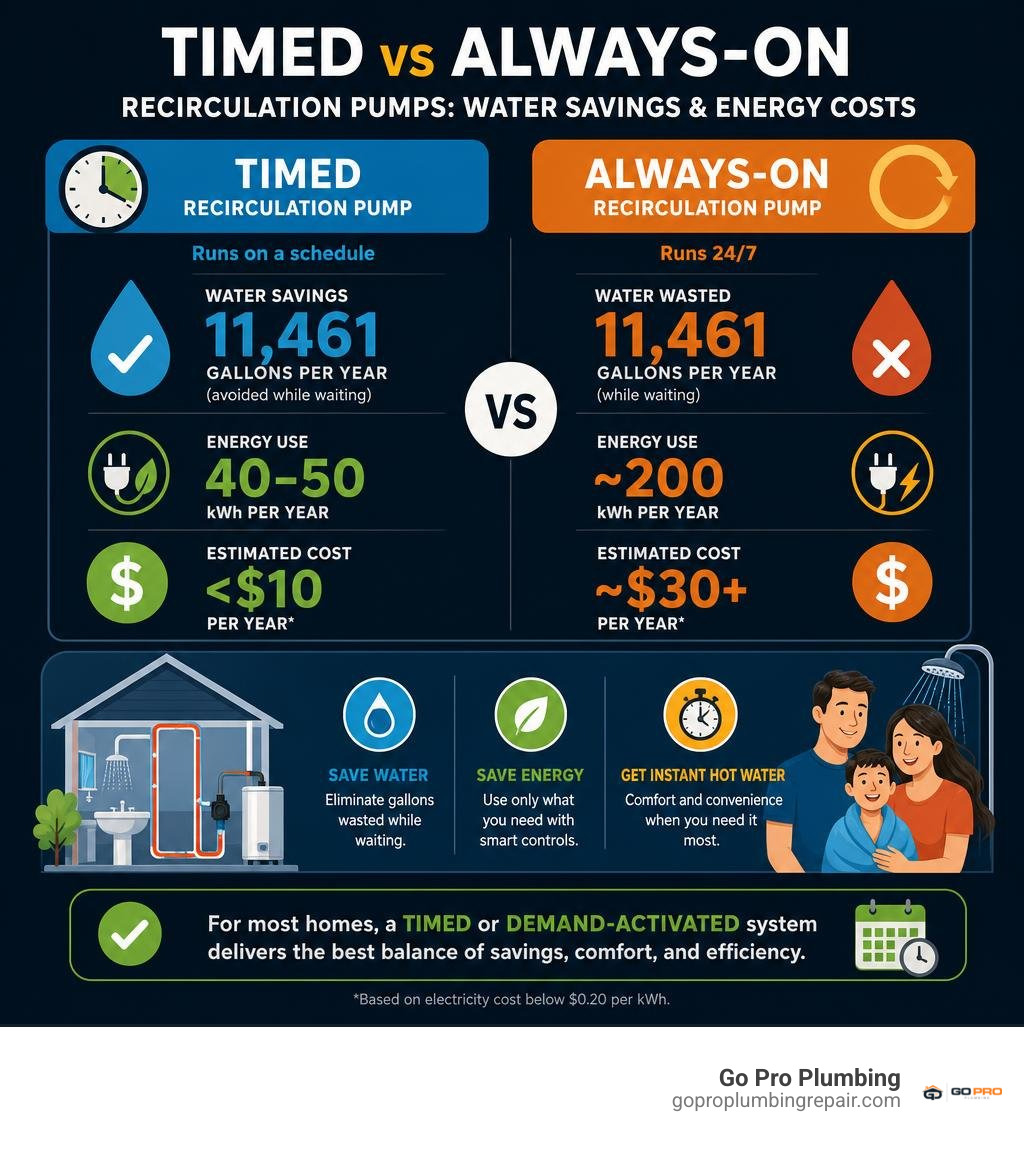
Hot water recirculating pumps are worth it when you have long waits for hot water, high water costs, or a strong goal to reduce water waste. For most homes, the best value comes from a timer-controlled or demand-activated system, not a pump that runs around the clock.
A continuously running 25-watt pump can use about 200 kWh per year, plus it can increase heat loss from the water heater and pipes. But a scheduled pump may use only 40 to 50 kWh annually. That can keep the electricity cost below $10 per year in many areas.
The water savings can be meaningful. The average U.S. household may waste about 11,461 gallons each year while waiting for hot water. If your farthest shower or sink takes a minute or more to warm up, a recirculation system can save water and make everyday routines much easier.
The key is matching the system to your home. A well-insulated loop and smart controls can make instant hot water a practical upgrade. An always-on pump in a small home with short pipe runs usually is not.
Are hot water recirculating pumps worth it terms to remember:
- hot water recirculation
- does a hot water recirculating pump run all the time
- how does a hot water recirculation work
What Is a Hot Water Recirculating System and How Does It Work?
At its core, a hot water recirculation system solves a basic physics issue: water sitting in your pipes between uses loses its heat to the surrounding air. When you turn on a faucet 40, 60, or 80 feet away from your water heater, you have to flush out all that cooled, resting water before fresh hot water can arrive.
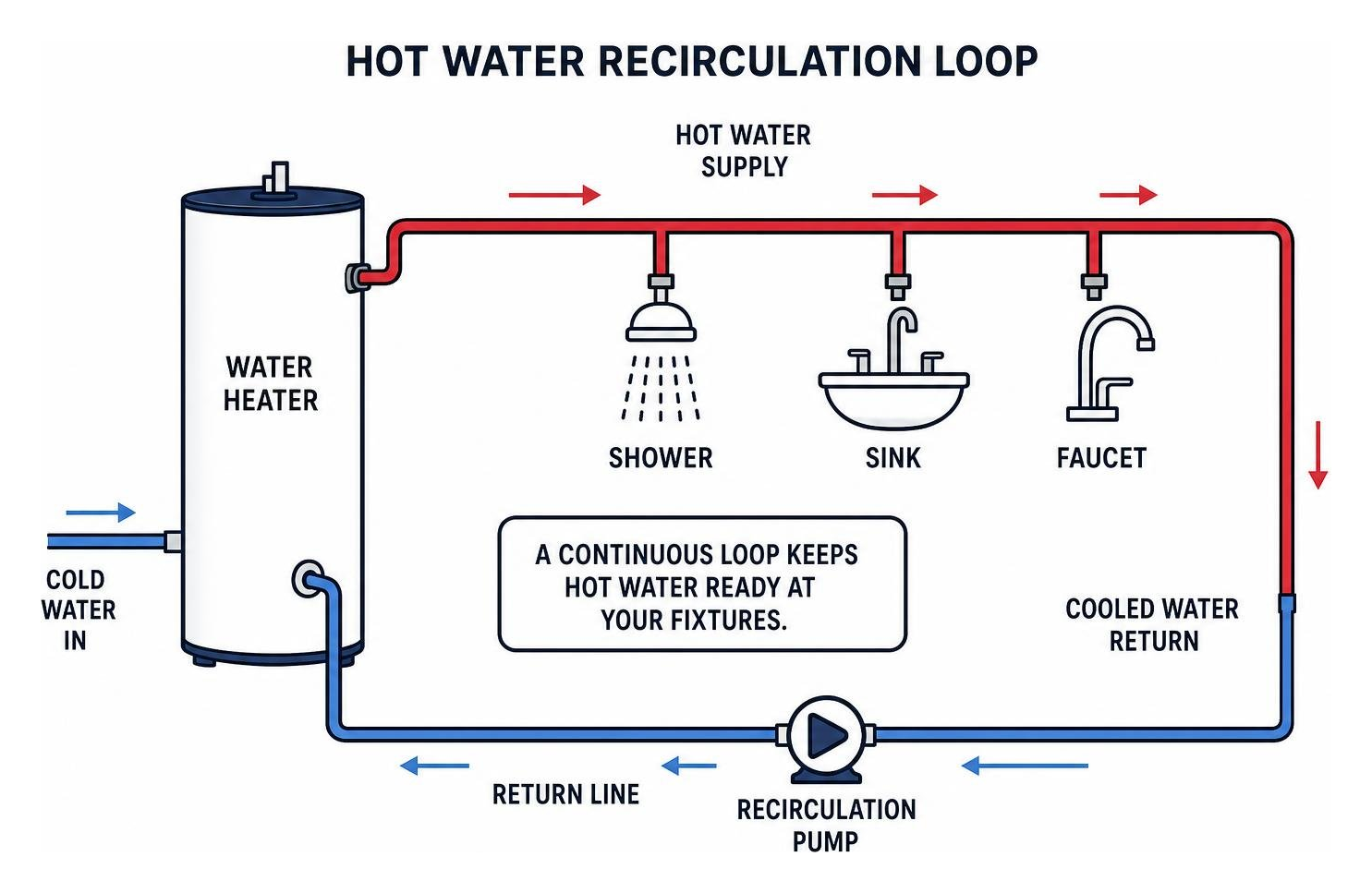
Understanding how does a hot water recirculating system work comes down to continuous loop dynamics. Instead of letting cooled water sit idle or dumping it down the drain, a small circulating pump actively moves the water back toward the water heater. This loop keeps hot water primed at your fixtures, dropping wait times from minutes down to 5 to 10 seconds.
Examining why you are waiting for hot water and how recirculators fix it helps explain why pipe length matters. A standard 3/4-inch residential pipe holds about 3.14 gallons of water for every 125 feet of run. Every time you wait for a distant master bath shower to heat up, several gallons go straight into the sewer.
Dedicated Return Line Systems
A dedicated return line system is the gold standard for hot water recirculation. In this design, a dedicated third pipe runs from the furthest fixture directly back to the water heater.
- How it functions: The pump pulls cooled water from the hot water supply pipe through this separate return line and injects it back into the water heater’s cold intake.
- Ideal application: This setup is easiest to install during new home construction or extensive remodels when wall framing is open.
- Key advantage: Dedicated return systems keep hot and cold supply lines completely isolated, preventing any warm water bleed into your drinking taps.
Crossover Valve and Integrated Comfort Loops
If your home does not have a dedicated return line and you do not want to tear open drywall, an integrated comfort loop or crossover system is the preferred alternative.
In this configuration, a small pump is installed atop your water heater, and a thermostatic bypass valve is installed under the sink at the fixture furthest from the heater. When the water in the hot line drops below a set temperature, the valve opens slightly, pushing the lukewarm water back into the existing cold water line to return to the heater. Discovering the secret to speedy showers: hot water recirculation pumps explained often comes down to this simple, non-invasive retrofit.
Are Hot Water Recirculating Pumps Worth It? Water Savings vs. Energy Costs
Deciding whether to install a system involves balancing the reduction in water waste against pump electricity and standby thermal losses. Evaluating your potential hot water recirculation system cost requires looking at both sides of your utility bill.
| Metric / Scenario | Continuous (Always-On) System | Timer or Smart Controlled System | Demand-Activated System |
|---|---|---|---|
| Annual Electricity Use | ~200 kWh | 40 – 50 kWh | 10 – 25 kWh |
| Estimated Annual Electric Cost | $26 – $40 | $6 – $12 | $2 – $5 |
| Standby Water Heater Gas/Electric Impact | High ($15 – $40/mo extra) | Moderate ($3 – $8/mo extra) | Minimal (<$1/mo extra) |
| Annual Water Savings | 8,000 – 12,000 gallons | 8,000 – 11,500 gallons | 8,000 – 11,500 gallons |
| Average Annual Water & Sewer Bill Savings | $50 – $150 | $50 – $150 | $50 – $150 |
| Net Financial Return | Negative to Neutral | Moderately Positive | Highest Financial Payback |
Evaluating Water Savings in Gallons and Dollars
The average American household wastes thousands of gallons annually simply waiting for water to reach shower temperature. Installing a dedicated hot water recirculating pump can save between 8,000 and 12,000 gallons of clean municipal water every year.
In Northern California communities like Sacramento and Rancho Cordova, tiered water structures and combined sewer-volume fees make water conservation particularly valuable. When you factor in combined volumetric rates, saving 10,000+ gallons per year translates to roughly $50 to $150 in annual utility bill reductions.
Electricity Consumption and Operational Running Costs
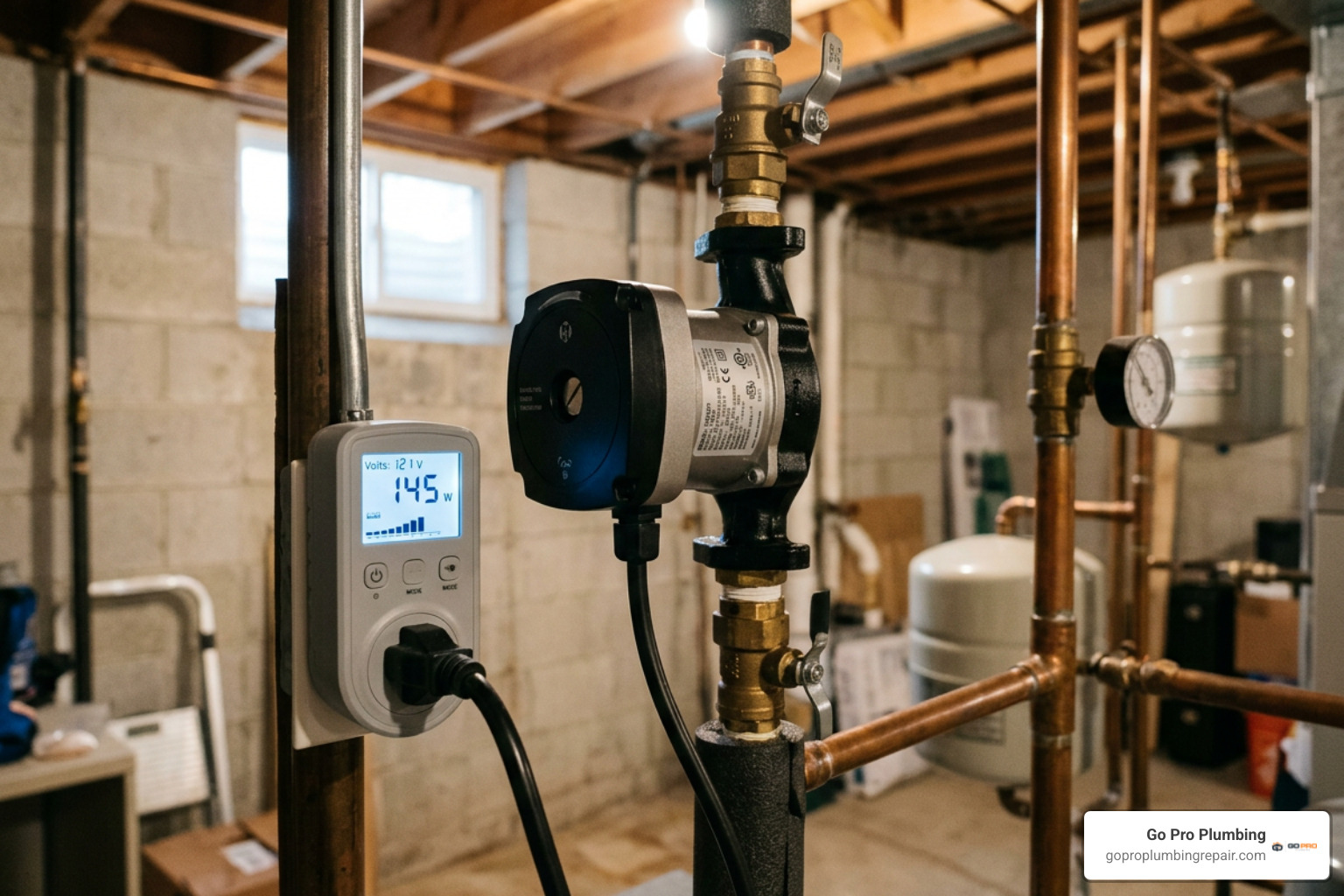
A standard residential recirculation pump draws about 25 to 85 watts while active. If left running 24 hours a day, 365 days a year, a 25-watt pump uses roughly 200 kWh of electricity.
However, running the pump continuously creates a larger cost issue: standby heat loss. When hot water constantly travels through uninsulated pipes inside crawl spaces or walls, heat dissipates quickly, forcing your primary water heater to cycle on repeatedly. This continuous cycling can add $20 to $40 per month to natural gas or electric heating bills. Asking does a hot water recirculating pump run all the time is vital, because scheduling the pump directly controls this standby energy draw.
How Controls and System Types Impact Efficiency
The choice of control system determines whether your pump operates as an efficient convenience or an unnecessary energy drain. Modern control strategies ensure the pump runs only when your household actually needs hot water. Reviewing whether are hot water recirculation systems efficient highlights that control selection is the single most important factor in operating efficiency.
Demand-Activated Controls: Are Hot Water Recirculating Pumps Worth It with Smart Sensors?
Demand-activated pumps are the most energy-efficient option available. Instead of cycling constantly on a clock, a demand system activates only when prompted by a physical push-button, motion sensor, or smart home trigger.
- Operation: When you enter the bathroom, a sensor activates the pump, moving primed hot water to the fixture in 15 to 30 seconds.
- Thermal shutoff: An internal temperature switch (aquastat) senses when water reaches 100°F–105°F and immediately shuts the pump off.
- Efficiency gains: Because the pump operates for only a few minutes per day, electricity consumption drops to under $5 per year. Furthermore, standby pipe heat loss is virtually eliminated. This approach meets strict Demand Hot Water Recirculating System standards recognized by efficiency programs.
Timer-Controlled vs Always-On Pumps
Timer-controlled systems use integrated mechanical pins or digital scheduling apps.
- Peak Scheduling: You program the pump to run during peak usage hours—for instance, 6:00 AM to 8:30 AM and 5:30 PM to 10:00 PM.
- Night and Mid-Day Shutoff: During the middle of the night and working hours, the pump remains idle.
- Consumption Reduction: A timer reduces annual electrical draw from 200 kWh down to 40–50 kWh, cutting power costs to under ten dollars per year while protecting the water heater from continuous cycling.
Pros, Cons, and Key Considerations Before Installing

Understanding the trade-offs helps homeowners set realistic expectations before calculating their total recirculation pump installation cost.
Pros:
- Instant Hot Water: Reduces tap wait times from 3–5 minutes down to 5–10 seconds.
- Significant Water Conservation: Saves 8,000 to 12,000+ gallons of potable water annually.
- Plumbing Longevity: Reduces scale accumulation in dead-leg pipe runs.
Cons & Downsides:
- Upfront Cost: Equipment and labor require an upfront investment.
- Thermal Standby Losses: Uninsulated lines lose heat if circulation runs unchecked.
- Lukewarm Cold Tap: Crossover retrofit valves can temporarily warm the cold water line for 15–30 seconds.
- Pump Noise & Airlocking: Air bubbles in the plumbing loop can cause humming or rattling if lines are not properly bled during setup.
Comparing Alternatives: Are Hot Water Recirculating Pumps Worth It Compared to Point-of-Use Heaters?
Before committing to a recirculation system, consider how other water-heating upgrades compare. Reviewing our hot water recirculation complete guide provides additional detail on these competing options:
- Point-of-Use Electric Tankless Units: Installing a small 2-to-4-gallon electric water heater directly inside a vanity cabinet delivers instant hot water to that single fixture. However, these units require dedicated 120V or 240V high-amperage electrical wiring and take up under-sink storage space.
- Pipe Insulation: Adding closed-cell foam insulation around exposed hot water pipes in basements or crawlspaces slows thermal dissipation. While insulation cannot supply instant hot water after hours of disuse, it extends hot water retention between uses at a fraction of the cost.
Compatibility with Solar Panels, Well Water, and Tankless Units
- Tankless Water Heaters: Tankless units require a specific activation flow rate (typically 0.4 to 0.75 GPM) to fire up their burners. If you pair an incompatible recirculation pump with a tankless unit, the heater may short-cycle or fail to ignite. Look for tankless models with built-in internal recirculation or ensure the pump meets manufacturer-specified flow minimums.
- Well Water Systems: For rural homes operating on private wells, every gallon saved directly reduces well pump cycling and pressure tank wear, extending pump life and lowering overall electrical usage.
- Solar PV Arrays: Homes with rooftop solar can offset recirculator power consumption entirely by setting smart pump schedules to run during peak solar generation hours.
Frequently Asked Questions About Hot Water Recirculating Pumps
How long do hot water recirculation pumps typically last?
A quality hot water recirculation pump constructed with a stainless steel or bronze casing typically lasts 10 to 15 years. Longevity depends heavily on water hardness and operational runtime. Units operating on scheduled timers or demand sensors outlast always-on pumps because their mechanical impellers and bearings experience significantly less rotational wear.
Does a crossover recirculation pump make cold tap water warm?
In crossover systems that utilize the existing cold line as a return loop, you may experience a brief 10-to-30-second burst of lukewarm water when turning on the cold tap. The thermostatic bypass valve closes once hot water reaches 100°F–105°F, preventing further crossover. Once the warm water in the line flushes through, cold water flows normally.
What is the average payback period for a recirculation pump?
For an under-sink crossover retrofit costing roughly $300 to $600 installed, the financial payback period through lower water and sewer bills ranges between 2 to 5 years, especially in regions with tiered water utility rates. For dedicated return lines retrofitted into existing walls ($1,500 to $3,500), the payback is driven primarily by convenience, time savings, and water conservation rather than strict financial return.
Conclusion
A hot water recirculating pump is an effective home upgrade for eliminating long cold-water wait times and preventing water waste. When paired with digital timers, thermal aquastats, or on-demand push buttons, modern recirculation systems operate with minimal electrical overhead.
If you are ready to stop wasting water and enjoy instant hot water at every tap, our team at Go Pro Plumbing is here to help. We provide prompt, high-quality residential plumbing across Sacramento, Rancho Cordova, and surrounding Northern California communities, featuring outstanding customer service and dependable same-day scheduling. Contact us today to explore our water recirculation pumps services and find the right solution for your home.