
Is Your Sewer Line Clogged? 5 Warning Signs You Can’t Ignore
By Brian on July 21, 2026
When Your Drains Stop Working, It’s Not Always Just One Pipe
Knowing how to tell if main sewer line is clogged could save you thousands of dollars — and a lot of stress.
Here’s a quick answer:
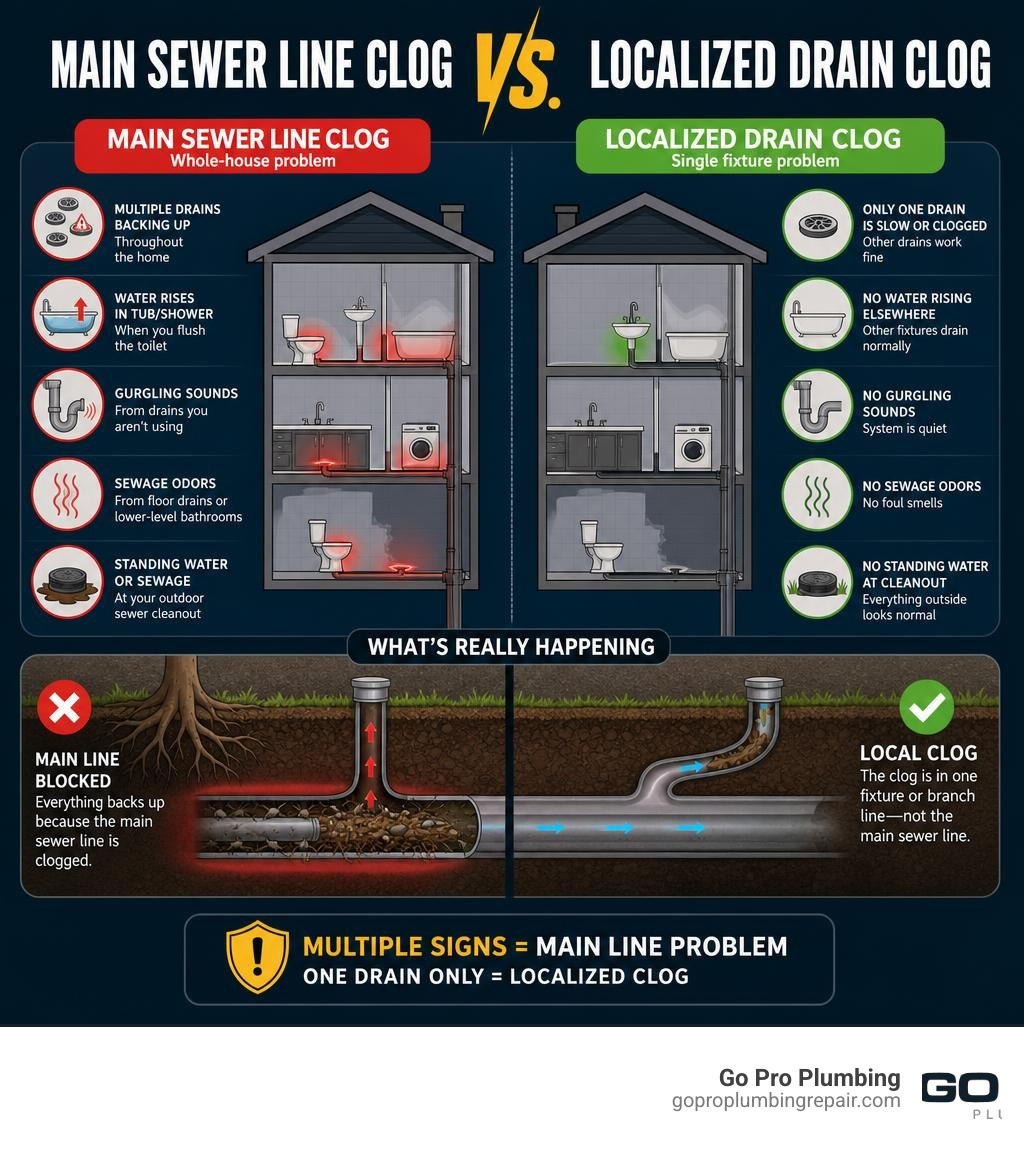
Your main sewer line is likely clogged if you notice any of these signs:
- Multiple drains backing up or running slow at the same time
- Water rises in the tub or shower when you flush a toilet
- Gurgling sounds from drains you aren’t currently using
- Sewage odors coming from floor drains or lower-level bathrooms
- Standing water or sewage pooling at your outdoor sewer cleanout
A single slow drain is usually a local problem — a clog in just that one pipe. But when multiple fixtures back up at the same time, or when using one fixture causes a reaction in another, the problem is almost certainly deeper in your plumbing system.
Every drain in your home connects to one main sewer line. Think of it like a tree: the individual drains are branches, and the main sewer line is the trunk. When the trunk is blocked, nothing drains properly.
And unlike a simple drain clog, a main sewer line blockage can back sewage up into your home — creating a serious health hazard and potentially causing thousands of dollars in water damage.
Discover more about how to tell if main sewer line is clogged:
How to Tell if Main Sewer Line Is Clogged: 5 Warning Signs
Your home’s plumbing system usually does its job silently in the background. But when the main sewer lateral—the pipe connecting your home to the municipal sewer system under the streets of Sacramento or Rancho Cordova—becomes blocked, the warning signs are hard to ignore.
Because the main line is the single exit point for all wastewater, a blockage creates hydraulic backpressure. Since the water has nowhere to go, it begins to rise back up through your pipes, seeking the lowest physical exit points in your home.
If you want to know how to tell if main sewer line is clogged, look out for these five critical warning signs:
- Multiple Drains Backing Up Simultaneously: If your kitchen sink, guest bathroom toilet, and basement floor drain are all draining at a snail’s pace on the same day, you aren’t just having bad luck with your drains. A single clogged pipe only affects one sink or shower. Multiple slow drains across different rooms mean the main trunk of your plumbing tree is blocked.
- Gurgling or Bubbling Noises: Your plumbing should not sound like it is trying to talk to you. When waste water is blocked by a clog, trapped air is forced backward through the system. This creates a distinct “glug-glug” or gurgling sound in your toilets, tub drains, or wet bars when you run water elsewhere.
- Foul Sewage Odors: A persistent smell of rotten eggs, sulfur, or raw sewage inside your home is a major red alert. These gases escape from your drains when the water barrier in your P-traps is pushed out or when sewage is actively backing up into your lower pipes. This is not a smell you should just brush off and hope disappears.
- Lush, Soggy Lawn Patches: Sometimes the yard shows signs of a sewer line problem before the inside of the house does. Because sewage acts as an accidental, nutrient-rich fertilizer, a cracked or clogged sewer line leaking underground can cause a specific strip of grass to grow faster and look significantly greener than the rest of your lawn. You may also notice sunken or soggy patches of soil directly over your sewer lateral’s path.
- Sewage Backing Up into Lower Fixtures: This is the ultimate, unmistakable warning sign. When wastewater starts rising into your ground-floor bathtubs, basement floor drains, or laundry standpipes, you are facing a Class B biological hazard under EPA waste classification standards.
If you notice these symptoms developing in your home, it is time to check out our detailed guide on How to Spot a Main Sewer Line Clog to understand exactly what is happening behind your walls.
The Bathtub Test: A Simple Way to Tell if Main Sewer Line Is Clogged
If you suspect a main sewer line blockage but want to confirm it before calling us out to your Sacramento or Rancho Cordova home, you can perform a quick, non-invasive diagnostic check known as “The Bathtub Test.”
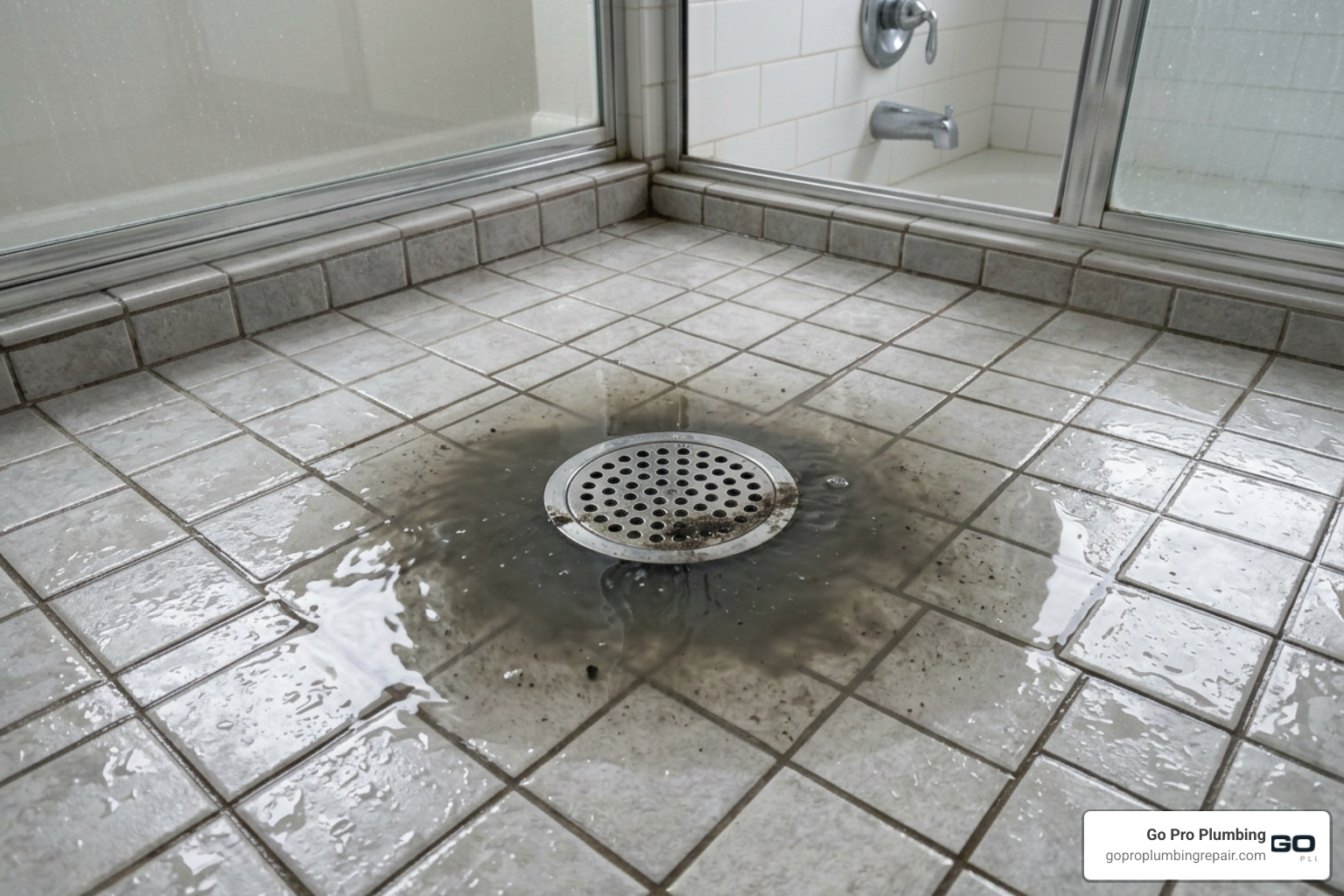
Because water naturally flows to the lowest available gravity point, your first-floor or basement bathtubs and showers are the first places where main line backups will appear.
Here is how you can use cross-fixture reactions to test your line:
- The Toilet Flush Test: Go to the toilet closest to the lowest point in your home. Flush it while keeping a close eye on your nearby bathtub or shower drain. If the water in the toilet bowl bubbles, rises, or if dirty water starts seeping up into the tub drain, you have confirmed a main sewer line clog.
- The Bathroom Sink Test: Run the water in your bathroom sink for about 30 to 60 seconds. Watch the toilet bowl next to it. If the water level in the toilet rises or begins to bubble, air and water are being forced backward because the main line cannot handle the flow.
- The Washing Machine Test: Your washing machine discharges a massive volume of soapy water in a very short period during its spin and drain cycle. If running a load of laundry causes your nearby kitchen sink to overflow or forces soapy water to bubble up into your master shower, the main lateral is restricted.
These cross-fixture reactions are classic indicators of main line distress. If you see these signs, check out the resources from the Three Warning Signs That Your Sewer Line is Clogged to learn more about how home drains interact.
Using the Sewer Cleanout to Tell if Main Sewer Line Is Clogged
The sewer cleanout is your plumbing system’s designated emergency release valve and diagnostic window. It is a dedicated pipe that connects directly to your main sewer line, providing direct access to clear blockages.
Most modern homes built after 1978 feature a sewer cleanout. In Northern California, it is typically located outside the home near the foundation (often hidden behind bushes or garden beds) or in the basement. It is usually a 4-inch white PVC pipe capped with a threaded plastic plug or rubber cap. In older homes built before 1978, the cleanout may feature a cast-iron “mushroom” cap, or it may be entirely absent.
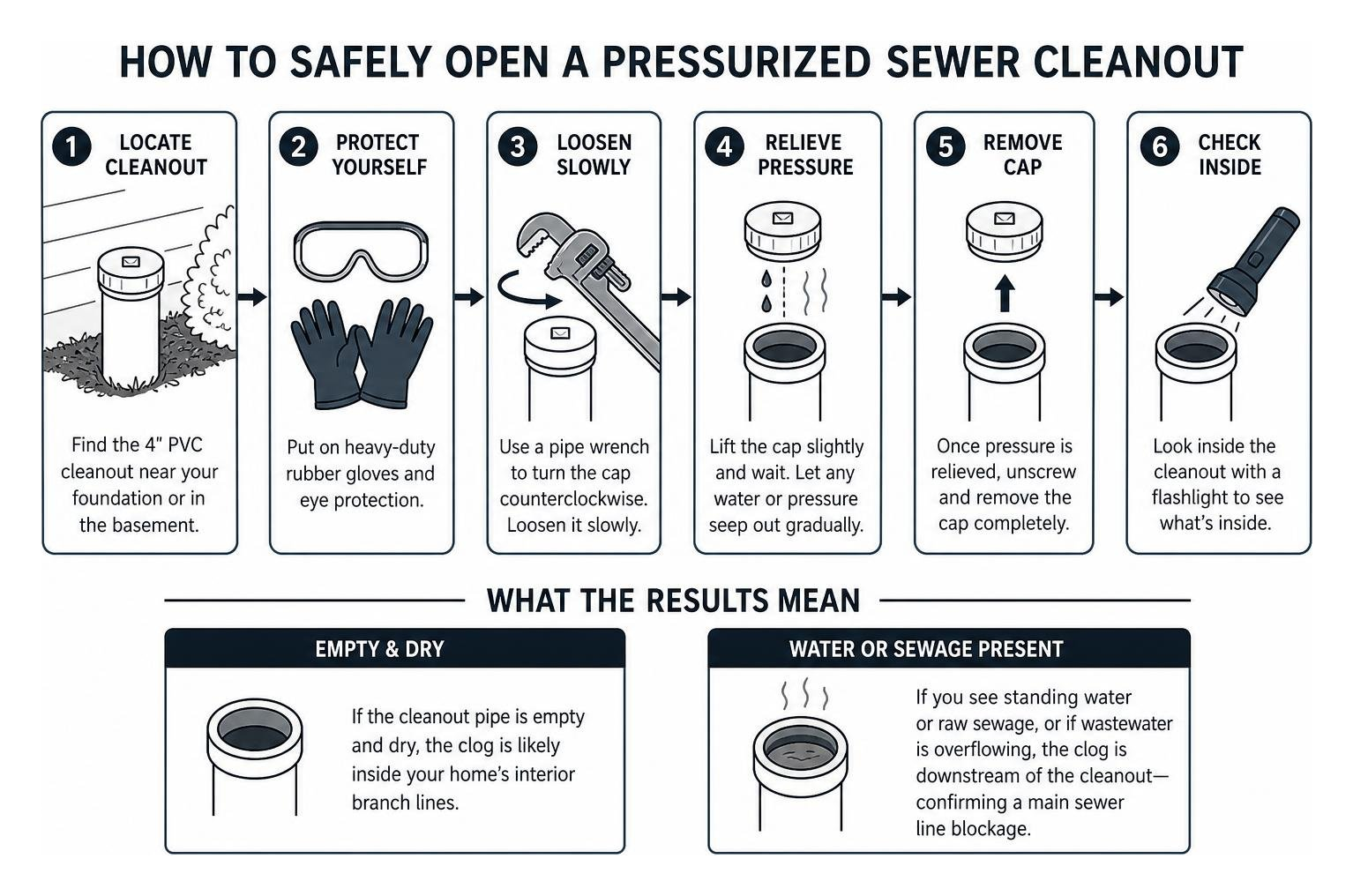
Checking your sewer cleanout is a definitive way to tell if your main sewer line is clogged:
- How to Check It Safely: Put on heavy-duty rubber gloves and eye protection. Slowly unscrew the cleanout cap counterclockwise using a pipe wrench. Do not pull it off quickly. If there is a major backup, the pipe may be pressurized. Loosening it slowly allows any standing water to seep out gradually, preventing a sudden, messy surge of raw sewage.
- What the Results Mean: Once the cap is off, look inside with a flashlight. If the cleanout pipe is empty and dry, the clog is likely localized inside your home’s interior branch lines. However, if you see standing water or raw sewage pooled inside the cleanout pipe—or if wastewater is actively overflowing onto the ground—the clog is downstream of the cleanout, confirming a main sewer line blockage.
If you need help locating or safely opening your cleanout, our Main Line Plumbing Clog Guide offers a step-by-step walkthrough to assist you.
Main Line Blockage vs. Localized Drain Clog
Understanding the difference between a localized drain clog and a main sewer line blockage is the difference between a quick DIY plunge and a serious plumbing emergency.
A localized clog is restricted to a single “branch” line. This occurs when hair, soap scum, or food debris blocks the pipe directly beneath a single sink, tub, or toilet. It only affects that one specific fixture while the rest of your home’s plumbing runs perfectly.
A main sewer line clog blocks the “trunk” of your system. This is a whole-house backup that prevents any wastewater from leaving your property.
Here is a quick reference table to help you compare the two:
| Symptom / Feature | Localized Drain Clog | Main Sewer Line Clog |
|---|---|---|
| Number of Fixtures Affected | Only one single fixture (e.g., one slow sink) | Multiple fixtures across different rooms |
| Cross-Fixture Reactions | None (running the sink does not affect the toilet) | Yes (flushing the toilet backs up into the shower) |
| Gurgling Sounds | Rare, localized only to the clogged drain | Common, heard across multiple unused drains |
| Sewage Odors | Rare, or limited to the single dirty drain | Strong, persistent sewer gas smells throughout the home |
| Sewer Cleanout Status | Empty and dry | Full of standing water or actively overflowing |
| Risk Level | Low (nuisance only) | High (biological hazard and water damage risks) |
If you are still trying to determine which type of clog you are dealing with, our guide on Sewer Line Blockage Symptoms and Solutions breaks down these distinctions in even greater detail.
Common Causes of Main Sewer Line Blockages
Main sewer lines are typically 4 to 6 inches in diameter, meaning they do not clog easily from simple daily use. When a main line blocks, it is usually due to a combination of structural issues, environmental factors, and poor drain habits.
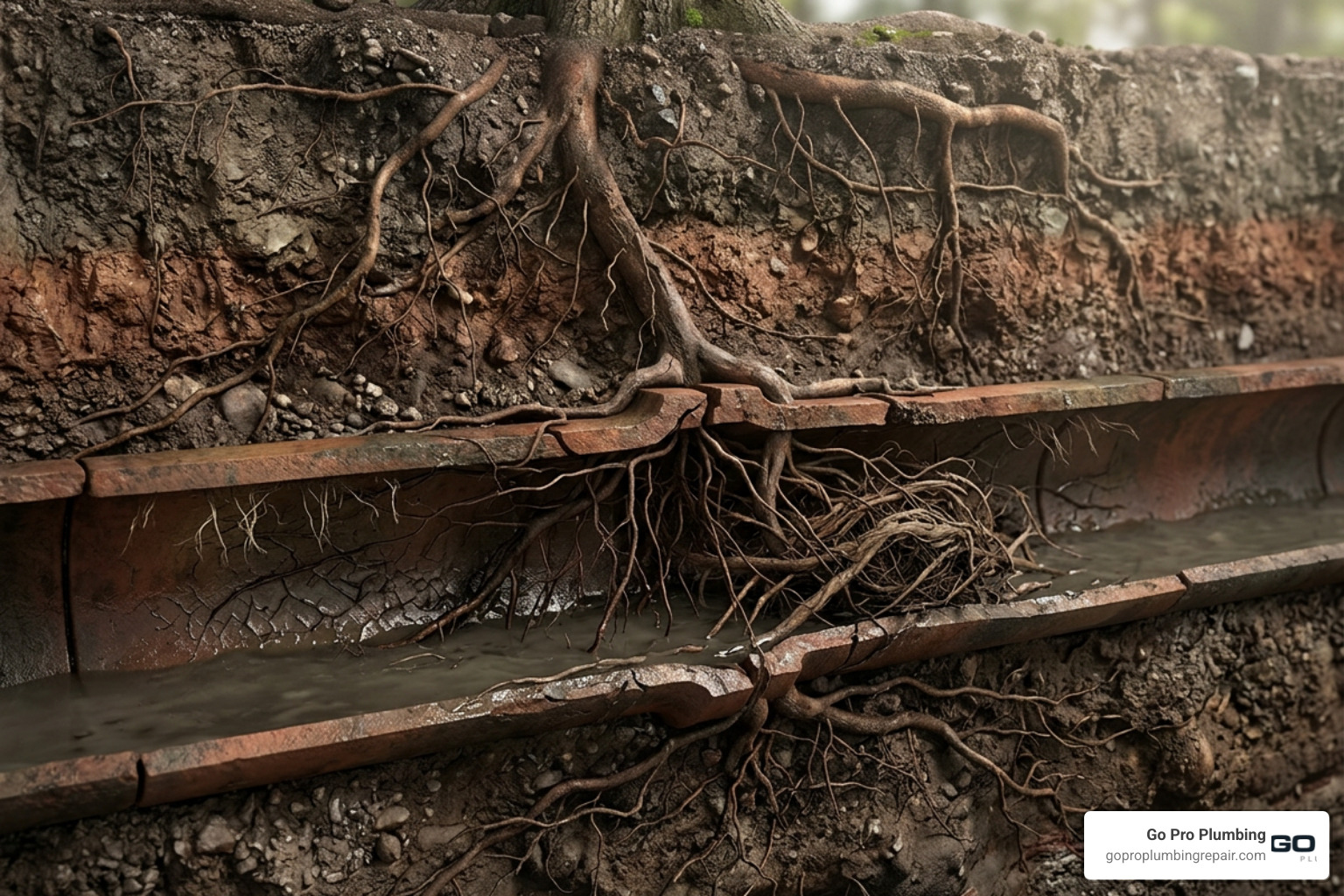
Here are the most common causes of main sewer line blockages we see in Northern California:
- Tree Root Intrusion: This is the number one cause of sewer line problems in older, established neighborhoods throughout Sacramento and Rancho Cordova. Mature trees (especially maples, willows, poplars, and oaks) have expansive root systems that can spread up to 50 feet or more. Seeking moisture and nutrients, these roots enter tiny cracks or joints in underground pipes. Once inside, they act as a net, trapping toilet paper and debris until the pipe is completely choked. Note: Trimming these roots is only a temporary fix; cutting them actually stimulates more aggressive regrowth, much like pruning a tree branch.
- Grease and FOG Buildup: FOG stands for Fats, Oils, and Grease. When poured down the kitchen sink, hot grease cools down, solidifies, and sticks to the inner walls of your sewer pipe. Over decades, this grease layer grows, reducing a 4-inch pipe’s effective diameter down to 2 inches or less, making a major blockage inevitable.
- Pipe Degradation and Materials: The era your home was built plays a massive role in your risk level.
- Clay Tile Pipes (Pre-1970): Highly porous and brittle. They typically last 50 to 60 years before the mortar joints separate, inviting root intrusion.
- Cast Iron Pipes (Pre-1980): These pipes generally last 50 to 75 years but are highly susceptible to internal corrosion and scale buildup, which creates a rough surface that catches debris.
- Orangeburg Pipes (1945–1972): Made of compressed wood pulp and coal tar, these “tar paper” pipes are prone to flattening, delamination, and complete structural collapse.
- Structural Pipe Failures (Bellies and Offsets): Shifting soil or seismic movement in Northern California can cause sewer pipes to sink, creating a “belly” or sag. Waste pools in these low spots instead of flowing downward. Pipes can also offset or collapse entirely, blocking all flow.
- Flushed Foreign Items: Your toilets are designed to handle only two things: human waste and toilet paper. Flushing items like baby wipes, “flushable” wipes (which do not actually disintegrate), feminine hygiene products, paper towels, and dental floss will quickly lead to a main line disaster.
What to Do Immediately If You Suspect a Clog
If you have confirmed that your main sewer line is clogged, you must act quickly to prevent a minor issue from turning into a costly indoor flood.
Take these immediate steps:
- Stop Using All Water Immediately: Do not flush any toilets, run showers, wash dishes, or use water-heavy appliances like your dishwasher or washing machine. Any water you put down your drains will have nowhere to go and will force its way back up through your lowest floor drains or showers.
- Shut Off the Main Water Supply: To prevent anyone in your household from accidentally running water, locate your main water shut-off valve (usually in the garage, basement, or near your outdoor water meter box near the street) and turn it off completely.
- Avoid Chemical Drain Cleaners: Do not pour liquid drain cleaners down your pipes. These caustic chemicals are completely ineffective against deep, structural main line blockages like tree roots or collapsed pipes. Instead, they will sit in your pipes, generating heat that can melt PVC or corrode older metal plumbing, creating a toxic hazard for the plumbers who eventually clear your line.
- Take Safety Precautions: If sewage has already backed up into your home, keep children and pets away from the contaminated area. Wear waterproof boots, long sleeves, eye protection, and heavy-duty rubber gloves if you must clean up minor spills. Disinfect all tools and surfaces with hot, soapy water followed by a heavy bleach solution.
For more detailed, step-by-step emergency troubleshooting, refer to our guides on How to Unclog a Main Sewer Line and Main Drain Clog Troubleshooting to protect your property.
Professional Diagnostics, Clearing Methods, and Costs
Because main sewer lines are buried deep underground, diagnosing and clearing them requires specialized professional equipment. When you call us out to resolve a main line issue, we follow a systematic, professional approach to restore your plumbing safely.
Professional Diagnostics and Clearing Methods
- CCTV Sewer Camera Inspection: We use a high-definition, fiber-optic camera attached to a flexible cable, feeding it directly down your sewer cleanout. This allows us to see the exact cause of your blockage—whether it is tree roots, a grease clog, or a collapsed pipe—without any destructive digging. A professional camera inspection typically costs between $150 and $350.
- Mechanical Augering (Snaking): For soft blockages or minor root intrusions, we use a heavy-duty motorized drain snake with a cutting head. This cuts a channel through the obstruction to restore flow. Mechanical augering typically costs $150 to $500.
- Hydro-Jetting: For severe grease buildup or heavy root masses, we use hydro-jetting. This method blasts water through your pipes at 3,000 to 4,000 PSI, scouring the pipe walls completely clean. Hydro-jetting typically costs between $350 and $900. Note: Hydro-jetting should not be used on severely deteriorated or fragile pipes, as the high pressure can cause further structural damage.
- Trenchless Sewer Repair (CIPP Relining): If your pipe is cracked or damaged but still structurally sound, we can perform Cured-In-Place Pipe (CIPP) relining. We insert an epoxy-saturated sleeve into the old pipe, inflating it to create a brand-new, seamless pipe-within-a-pipe without digging up your yard. CIPP relining typically costs $75 to $250 per foot.
- Traditional Excavation and Replacement: If your sewer line has collapsed or suffered severe structural failure, full replacement is required. This involves excavating a trench to lay new pipes. Full sewer line replacements can range from $3,000 to $25,000+ depending on the depth and length of the pipe.
Does Homeowner’s Insurance Cover Sewer Line Clogs?
Standard homeowner’s insurance policies typically do not cover routine sewer line clearing or wear-and-tear damage (like gradual root intrusion or aging pipes). However, if you have a “Sewer Backup Endorsement” or “Service Line Coverage” rider added to your policy, you may be covered for physical water damage cleanup and the cost of repairing the lateral line itself. Always check with your insurance provider before an emergency occurs.
How to Prevent Future Sewer Line Clogs
The best way to handle a main sewer line emergency is to prevent it from ever happening in the first place. By adopting smart drain habits and staying proactive with maintenance, you can keep your sewer lines flowing smoothly for years to come.
- Watch What You Flush: Keep a strict “toilet paper and human waste only” policy for your toilets. Keep a trash can in the bathroom for wipes, feminine products, and paper towels.
- Dispose of Grease Responsibly: Never pour cooking oils, fats, or grease down your kitchen sink. Let them cool in an empty can, then throw them in the trash. Use mesh strainers in all your sinks to catch food debris and hair.
- Apply Foaming Root Killer Annually: If you have mature trees within 50 feet of your sewer lateral, apply a foaming root killer down your toilet once a year. The foam fills the entire pipe, killing off invading root tips without harming the tree itself.
- Schedule Proactive Inspections: Have your sewer line camera-inspected every 5 to 7 years—especially if your home was built before 1980. If your home has a history of slow drains, schedule a professional hydro-jetting every 3 to 5 years to keep the line free of scale and grease.
For more helpful preventative tips, read our comprehensive guide on How to Keep Your Main Sewer Line From Clogging to protect your home’s value.
Frequently Asked Questions about Sewer Line Clogs
Can I rent a drain auger and clear the main line myself?
While you can rent a commercial drain auger from a local home improvement store, we do not recommend DIY snaking for main sewer lines. These machines are incredibly powerful and can cause severe physical injury if the cable kinks. Furthermore, using the wrong size cutting head or applying too much force can easily crack older clay pipes or punch holes through fragile cast iron, turning a simple clog into a multi-thousand-dollar pipe replacement.
How long does it take to clear a main sewer line?
A straightforward mechanical snaking or augering job typically takes 1 to 2 hours to complete on-site. If your line requires a detailed sewer camera inspection followed by high-pressure hydro-jetting, the process usually takes 3 to 4 hours. Structural pipe repairs or full sewer replacements can take anywhere from one day to several days depending on the depth and location of the pipe.
Is the blockage on my property or the city’s responsibility?
As a general rule, the homeowner is responsible for the “lateral” sewer line that runs from the foundation of the house all the way to the property line or the connection point at the municipal main in the street. If the blockage occurs within your property boundaries, the repair costs are your responsibility. However, if the main municipal sewer line under the street is backed up, or if recent city construction damaged your pipe, the local municipality is responsible for the repairs.
Conclusion
A main sewer line clog is a serious plumbing emergency that can disrupt your entire household. Recognizing the warning signs early—such as multiple slow drains, gurgling toilets, and sewage backing up in your shower—allows you to take immediate action before costly water damage occurs.
At Go Pro Plumbing, we are dedicated to keeping your home safe and dry. Based in Northern California, we proudly serve homeowners and businesses throughout Sacramento and Rancho Cordova. We stand out by offering outstanding customer service and reliable, same-day service to resolve your plumbing emergencies quickly and professionally.
If you suspect your main sewer line is clogged, do not wait for the problem to get worse. Schedule Sewer Line Service with Go Pro Plumbing today, and let our licensed team restore your peace of mind!